Plot Explained Spoilers guaranteed!
Plot Explained

Browse by genre

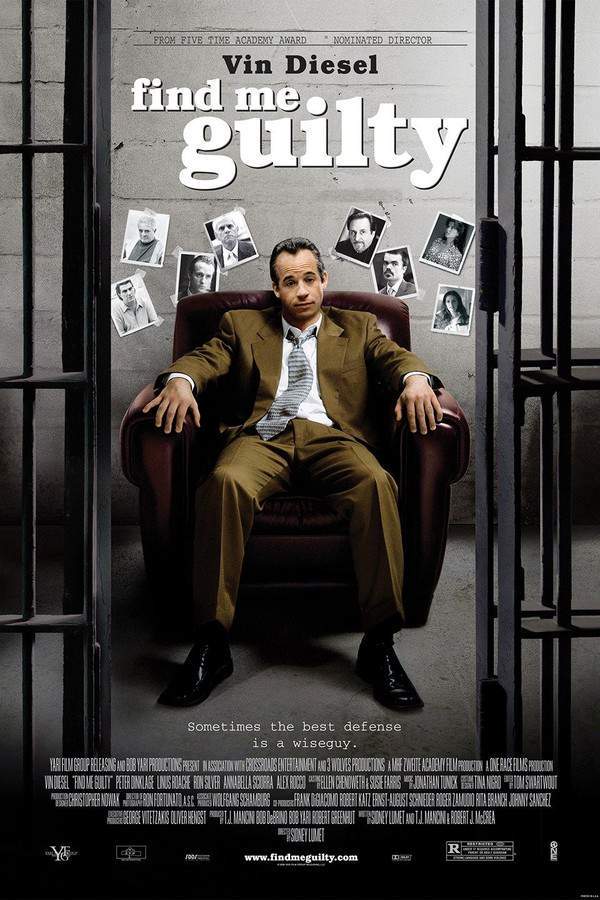
Find Me Guilty (2006) movie poster

Timeline

Find Me Guilty (2006) Timeline Explained – Every Event in Order

Release, runtime and language
2006 · 125 min · English
Loading streaming availability…
Directed by
Sidney Lumet
Starring
Vin Diesel, Peter Dinklage
Budget
$13M

Facing a massive investigation into the Lucchese crime family, twenty members are indicted on seventy-six charges. Already serving a thirty-year sentence, Jackie Dee DiNorscio finds himself in a precarious position. He must choose between loyalty to his family and the daunting task of defending himself in what becomes the longest criminal trial in history, a tense exploration of devotion and moral integrity.

On this page (6)
  1. 1 Where to watch
  2. 2 Events in order (15)
  3. 3 Timeline questions answered
  4. 4 Movie threads
  5. 5 Movies like Find Me Guilty
  6. 6 Every angle
Loading streaming availability…

15 events in order · contains spoilers

Find Me Guilty Timeline: Events in Chronological Order

Every key event of Find Me Guilty (2006) in order, scene by scene, with when and where it takes place. Use it to untangle flashbacks, time jumps and parallel storylines, to refresh your memory before the sequel or to find the exact scene you are thinking of.

  1. The Mafia Conflict Begins

    In the mid-1980s, New York is embroiled in a fierce battle against the Organized Mafia. Jackie DiNorscio and his associates are caught in the middle, awaiting a crucial federal racketeering trial.

    When
    1980s
    Where
    New York
  2. Gunfire at Home

    Jackie's life takes a dangerous turn when his cousin, Tony Compagna, enters his home and shoots at him while he sleeps. Miraculously, Jackie survives the brutal attack despite being shot at four times.

    Where
    Jackie's Home
  3. Hospital Loyalty

    In the hospital, Jackie maintains his loyalty and refuses to identify Tony to the authorities. Despite the mounting evidence against his cousin, he insists, 'I never saw anything.'

    Where
    Hospital
  4. Tony Testifies

    Driven by fear of retaliation from the mafia, Tony decides to testify against Jackie. His cooperation with district attorney Sean Kierney places Jackie in a precarious position as the legal battles ensue.

    Where
    Court
  5. Jackie's Arrest

    Jackie is arrested and framed in an unrelated drug operation orchestrated by the DEA. He faces a daunting sentence of 22 to 30 years in prison, drastically altering his life trajectory.

    Where
    Court
  6. Refusal to Cooperate

    Despite intense pressure from Kierney to cooperate with the government, Jackie remains steadfast in his refusal. He decides to fight his case without a lawyer, dismissing legal help that cost him a staggering $250,000.

    Where
    Courtroom
  7. Trial Commences

    The trial begins with a complex web of mafia figures involved, including Carlo and Gino Mascarpone. Jackie’s decision to represent himself creates a unique and challenging courtroom environment.

    Where
    Courtroom
  8. Courtroom Tensions Rise

    As the trial progresses, Jackie's arrogant demeanor begins to interfere with his defense. Ultimately, his lead attorney Ben Klandis recognizes the challenge in maintaining jury sympathy amidst Jackie's behavior.

    Where
    Courtroom
  9. Punitive Measures

    In retaliation for Jackie's conduct in court, Kierney imposes punitive measures that worsen Jackie's conditions in prison. These measures include the removal of a lounger essential for his back issues.

    Where
    Prison
  10. Confrontations with FBI Agents

    Months into the proceedings, Jackie confronts key FBI agents, disputing their credibility. His challenges, however, lead to fines for contempt which further complicate his case.

    Where
    Courtroom
  11. Cross-Examinations Begin

    As the trial nears its climax, Jackie capitalizes on the testimony of undercover agents to discredit key witnesses. His confrontations during cross-examinations strategically weaken the case against him.

    Where
    Courtroom
  12. Trial Conclusion

    After an exhaustive 21 months of testimony, the jury finally deliberates. The courtroom atmosphere is tense as they prepare to deliver what everyone hopes will be a favorable verdict.

    Where
    Courtroom
  13. Verdict Delivered

    In a shocking turn, the jury returns with a 'not guilty' verdict on all counts in just 14 hours. While his associates bask in freedom, Jackie is led back to prison to serve his remaining time.

    Where
    Courtroom
  14. Return to Prison

    Upon returning to prison, Jackie receives a hero's welcome from fellow inmates. They chant his name, recognizing the struggle he faced during the trial and his ability to stand firm.

    Where
    Prison
  15. Jackie's Later Years

    In the film's closing moments, title cards reveal that the real Jackie DiNorscio served 17 and a half years in prison before his eventual release in 2002. He passed away from natural causes shortly after.

    When
    2002

Last updated: November 03, 2024 at 15:26

Was this helpful?

Timeline questions answered

Find Me Guilty Timeline Explained: Your Questions Answered

When does it happen, and why in that order? The questions people ask about the chronology of Find Me Guilty (2006): time jumps, flashbacks, cause and effect between scenes and the correct order of events, each answered with spoilers.

Q1

Why does Jackie decide to represent himself in court?

Jackie fires his lawyer after becoming frustrated with the outcome of his case. His lawyer had already charged him $250,000, and Jackie believed he could better defend himself. Additionally, the prosecution offered him a deal to cooperate in exchange for a shorter sentence, which Jackie refused. His lead attorney Ben Klandis later agrees to assist Jackie pro se, recognizing that Jackie's charm might appeal to the jury.

  • self-representation
  • defense attorney
  • courtroom strategy
  • RICO trial
Q2

Why does Jackie refuse to identify Tony as his shooter?

After Jackie is shot by his cousin Tony Compagna while sleeping, he maintains his loyalty to the family and refuses to cooperate with authorities. In the hospital, he tells police he never saw anything, despite knowing Tony was responsible. This loyalty stems from the mob code of omertà - refusing to testify against family, even after being betrayed.

  • Tony Compagna
  • loyalty
  • omertà
  • shooting
  • betrayal
Q3

Why does Jackie return to prison after being acquitted?

Jackie is acquitted of all charges in the RICO trial, but he was already serving a 30-year sentence for an unrelated drug conviction when the trial began. The not guilty verdict only cleared him of the new charges, not the original sentence. Since he was convicted before the trial started, he had to finish serving that time.

Foreshadowing: The timeline establishes Jackie was already incarcerated before the trial began.

  • acquitted
  • verdict
  • sentence
  • prison
  • RICO trial
Q4

What was Jackie DiNorscio's original sentence?

Jackie was already serving a 30-year sentence when he was indicted in the RICO case. He was also framed in an unrelated DEA drug operation, which added 22 to 30 years to his sentence, though the exact details of how this sentence was handled are unclear from the summary.

  • 30-year sentence
  • drug conviction
  • prison time
Q5

Why does the prosecutor specifically target Jackie?

District attorney Sean Kierney pressures Jackie to cooperate with the government against the Lucchese crime family. By targeting Jackie, who is already serving time, Kierney hopes to flip him as a witness against higher-ranking mob members. When Jackie refuses to cooperate, the prosecution pursues the full RICO case against all twenty defendants.

  • Sean Kierney
  • prosecutor
  • cooperation
  • witness
  • RICO
Q6

Why does Tony testify against Jackie?

Tony Compagna testifies against Jackie primarily out of fear. After shooting Jackie, Tony fears retaliation from the powerful mob family led by Nick Calabrese. He decides to cooperate with district attorney Sean Kierney in exchange for protection and a potentially reduced sentence.

  • Tony Compagna
  • testimony
  • cooperation
  • fear
  • retaliation
Q7

How long did the Find Me Guilty trial last?

The trial lasted 21 months of testimony, making it the longest criminal trial in U.S. history at the time. The jury then deliberated for just 14 hours before returning a not guilty verdict on all counts.

  • 21 months
  • trial duration
  • jury deliberation
  • longest trial
Q8

Why do the other inmates treat Jackie like a hero?

Despite being acquitted, Jackie returns to prison to finish his original sentence. His fellow inmates greet him as a hero and chant his name because he refused to cooperate with the prosecution, stood by the omertà code, and successfully defended himself and 19 other defendants against powerful RICO charges for 21 months without breaking.

  • inmates
  • hero
  • respect
  • omertà
  • loyalty
Q9

How does Jackie use the jury to his advantage?

Jackie relies on his natural charm and humor to win over the jury. His attorney Ben Klandis believes that a laughing jury is not a hanging jury. Jackie capitalizes on moments of doubt during witness testimony, particularly when cross-examining his cousin Tony, strategically discrediting testimonies that work against him.

  • jury
  • charm
  • humor
  • cross-examination
  • defense strategy
Q10

What happened to the real Jackie DiNorscio after the trial?

According to the film's closing title cards, the real Jackie DiNorscio served 17 and a half years in prison total before his release in 2002. He passed away from natural causes shortly after being released.

  • real Jackie DiNorscio
  • release 2002
  • death
  • prison years

Movie threads

More Movies Like Find Me Guilty, by Mood & Story

Curated lists built around what makes Find Me Guilty tick: the same mood, the same kind of story or the same emotional payoff. Each list explains why these movies belong together.

Movies about defiant underdogs like Find Me Guilty

Charismatic individuals challenge powerful institutions against overwhelming odds. If you liked the defiant spirit of Jackie DiNorscio in Find Me Guilty, explore these movies about charismatic individuals taking on powerful systems. This thread features similar stories of stubborn underdogs fighting for justice or survival against overwhelming institutional odds, blending tense drama with moments of resilient character.

  • defiant
  • tense
  • resilient
  • underdog
  • stubborn
  • anxious
  • Tone: tense, defiant
  • Pacing: steady, procedural
Why these movies?

The story pattern: The narrative follows a protagonist who, often by choice or circumstance, operates outside the established norms to challenge a formidable institution. The conflict is a battle of wills and wits, where personal charisma and unorthodox tactics are the main weapons against systemic power. The journey is less about outright victory and more about the moral and personal cost of defiance.

Why they belong together: Movies in this thread share a core dynamic: a tense, character-driven conflict between a singular, defiant individual and a monolithic system. They feature steady pacing that allows for deep dives into legal or bureaucratic maneuvering, a medium intensity driven by high-stakes personal consequences, and a tone that balances tension with the protagonist's resilient, often humorous, spirit.

Bittersweet courtroom drama movies like Find Me Guilty

Legal battles where winning the case comes with a profound personal cost. For viewers who appreciated the complex ending of Find Me Guilty, this collection features similar courtroom dramas with bittersweet conclusions. These films explore legal battles where the verdict is a victory on paper but carries a heavy personal toll, mirroring the poignant cost of justice seen in Find Me Guilty.

  • bittersweet
  • tense
  • exhausting
  • dramatic
  • resilient
  • solemn
  • Tone: tense, bittersweet
  • Pacing: steady, lengthy
Why these movies?

The story pattern: The narrative builds through a protracted legal process, establishing the high stakes of the trial. The climax is typically a legal victory, but the resolution immediately undercuts this win by revealing its personal cost—such as lost relationships, a tarnished reputation, or a return to confinement. The emotional journey ends on a note of somber reflection rather than pure celebration.

Why they belong together: These films are connected by their shared focus on the moral and emotional complexity of justice. They deliver a steady-paced, tense procedural experience that culminates in a bittersweet ending, challenging the simple notion of 'winning.' The emotional weight is medium to heavy, leaving the audience to ponder the true price of a legal victory.

If you liked this

Movies Like Find Me Guilty

Similar movies to Find Me Guilty: the same genre, themes or kind of story. Each one comes with its own plot summary, timeline and ending explained.

Browse all movie summaries

Every angle

Find Me Guilty (2006) Explained: Plot, Timeline & Characters

Everything about Find Me Guilty in one place: what happens in the plot summary, the timeline in chronological order, the characters and meaning and a spoiler-free summary. What's After the Movie adds the cast, box office and post-credit scenes.

Coming soon on iOS and Android

The Plot Explained Movie Summary App

Plot summaries, endings explained and timelines on your phone. Catch up on any movie in minutes, save your favorites and never miss a twist again.

Be the first to know when we launch. Your email stays private, always.

Learn more about the app