Plot Explained Spoilers guaranteed!
Plot Explained

Browse by genre

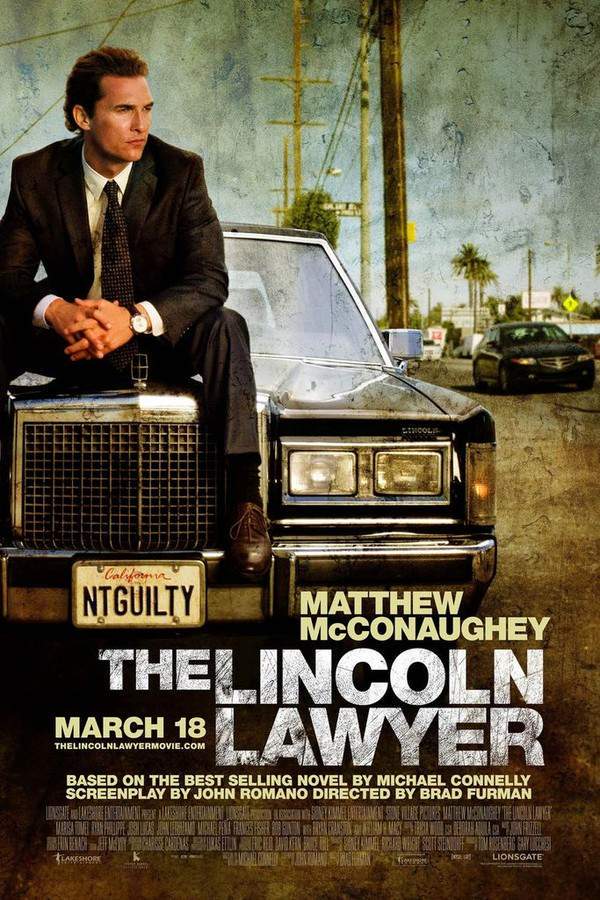
The Lincoln Lawyer (2011) movie poster

Plot Summary

The Lincoln Lawyer (2011) Plot Summary Explained

Release, runtime and language
2011 · 119 min · English
Directed by
Brad Furman
Starring
Matthew McConaughey
Budget
$40M

Mickey Haller is a Los Angeles defense attorney who conducts his business from the back seat of his Lincoln Continental. While representing a wealthy playboy accused of assault, Haller finds himself embroiled in a complex and dangerous case. What initially appears to be a routine legal matter quickly escalates, forcing him and his client to fight for their survival amidst the city's criminal underbelly. Haller must use all his skills to uncover the truth and protect himself from unexpected threats.

On this page (7)
  1. 1 Where to watch
  2. 2 What happens: full plot
  3. 3 Plot questions answered
  4. 4 The book behind the movie
  5. 5 Movie threads
  6. 6 Movies like The Lincoln Lawyer
  7. 7 Every angle

Where to watch

Where to Watch The Lincoln Lawyer (2011)

Where can you watch The Lincoln Lawyer? Stream, rent or buy it in the US, including on Apple TV Store, Fandango At Home and Google Play Movies: current JustWatch availability with up-to-date prices.

Streaming availability powered by JustWatch

Full plot summary · contains spoilers

What Happens in The Lincoln Lawyer: Full Plot Summary

The whole story of The Lincoln Lawyer (2011) explained, from the opening scene to the final frame: every key event, every twist and what it all adds up to. Read it as a quick recap before the sequel, to check a scene you missed, or to finally understand what really happened.

Moderately successful criminal defense attorney Mickey Haller, represented by Matthew McConaughey, navigates the bustling streets of Los Angeles County from his unique office—a Lincoln Town Car—driven by a former client serving his legal fees. Haller has largely dedicated his career to defending common criminals, but everything changes when he becomes involved in a case that could define his profession: Louis Roulet, a charismatic Beverly Hills playboy and the son of real estate mogul Mary Windsor, accused of savagely beating a prostitute.

At first glance, the case seems uncomplicated. Roulet’s narrative portrays him as falsely accused, merely a victim of circumstance, while Haller and his investigator, Frank Levin (William H. Macy), meticulously dissect the evidence, uncovering striking similarities between this case and a previous one that caused a wrongful conviction for Jesús Martínez (Michael Peña). This spirals Haller into doubt, questioning whether he did enough to defend Martínez, who has steadfastly maintained his innocence from prison.

As Haller delves deeper, he spends time with his ex-wife, Maggie McPherson (Marisa Tomei), a prosecutor whose disdain for Haller's defense tactics only complicates matters further. She's critical of his commitment to clients who may actually merit punishment, and Haller begins to see the cracks in his righteous facade as he navigates legal and ethical dilemmas. Doubt festers when Martínez reacts violently to Roulet’s photograph, igniting suspicions in Haller that Roulet may actually be responsible for the past murder that unjustly imprisoned Martínez.

The stakes escalate when Levin is found dead under suspicious circumstances right after hinting he’d uncovered evidence that could turn the Martínez case on its head. With Haller unfortunate to be implicated in Levin's murder due to a weapon linked to him, he finds himself in a race against time to exonerate his ally and maintain his own innocence.

Amidst these unfolding events, Haller conducts a brutal cross-examination of the battered prostitute, striving to steer public perception in favor of Roulet. Success temporarily seems at hand when the defense successfully has all charges dismissed. While Roulet basks in his newfound freedom, it isn't long before law enforcement closes in on him for the separate murder, galvanized by information Haller extracted from a witness.

In a desperate attempt to protect his family from Roulet’s wrath, Haller arms himself, anticipating the playboy's next move. As events crescendo, Haller confronts Roulet, who derisively warns him about his inability to safeguard his loved ones perpetually. The tide turns dramatically when a group of bikers, previously represented by Haller, viciously attack Roulet.

In a final twist of fate upon his return home, Haller is confronted by Roulet's mother, who fatally wounds him with Haller’s own weapon before confessing to the murder of Levin. Despite his injuries, Haller regains composure and retaliates, eliminating the immediate threat.

After his hospital stay, Haller uncovers further evidence linking Roulet to the murder case—critical insights that may prove pivotal for Martínez's release. With a renewed sense of purpose and justice as his priority, Haller prepares to embark on his next challenging case, determined to uphold the integrity of his profession.

Last updated: October 27, 2024 at 18:57

Was this helpful?

Plot questions answered

The Lincoln Lawyer Plot Explained: Your Questions Answered

The questions people ask most about The Lincoln Lawyer (2011): what happens in the confusing scenes, why the characters do what they do, the twists, hidden details and what the ending means. Each answer contains spoilers.

Q1

Why does Mary Windsor kill Frank Levin?

Mary Windsor, Louis Roulet's mother, kills Frank Levin to protect her son. Levin had discovered evidence linking Roulet to the murder that wrongfully convicted Jesús Martínez. By eliminating Levin, Mary prevents him from revealing the truth that would expose her son's true nature and connect him to the original murder case.

Foreshadowing: Earlier in the film, Levin hints to Haller that he's uncovered evidence that could 'turn the Martínez case on its head,' foreshadowing his discovery and subsequent murder.

  • mary windsor
  • frank levin
  • death
  • cover-up
  • roulet murder
Q2

Why does Jesús Martínez react violently to seeing Roulet's photo?

Jesús Martínez reacts violently because he immediately recognizes Louis Roulet as the actual killer of the woman he was wrongfully convicted for murdering. When Haller shows him Roulet's photograph during a prison visit, Martínez's violent reaction confirms Haller's suspicion that Roulet is connected to the original murder case.

Foreshadowing: The investigation revealed disturbing similarities between the current assault case and the earlier murder case, setting up this revelation.

  • jesús martinez
  • roulet photo
  • recognition
  • wrongful conviction
Q3

How does Haller become implicated in Frank Levin's murder?

Haller becomes implicated when a weapon linked to him is found at the scene of Levin's murder. The weapon belongs to Haller, creating circumstantial evidence that points to him as the killer, even though Mary Windsor actually committed the crime using Haller's own gun.

  • frank levin
  • murder
  • implicated
  • weapon
  • evidence
Q4

Why does Mary Windsor attack Haller at his home?

Mary Windsor attacks Haller at his home to silence him and protect her son permanently. She uses Haller's own weapon to wound him, then confesses to killing Levin. Her attack is an attempt to eliminate the threat Haller poses to her son's freedom after he uncovers evidence linking Roulet to the murder case.

Foreshadowing: Earlier, Roulet warned Haller about his inability to protect his loved ones perpetually, hinting at this violent confrontation.

  • mary windsor
  • attack
  • home
  • confession
  • levin murder
Q5

Why do bikers attack Louis Roulet?

The bikers who attack Roulet are clients previously represented by Mickey Haller. They attack Roulet in what appears to be a violent confrontation orchestrated or facilitated by the web of criminal connections Haller has developed through his legal career. This attack serves as poetic justice for Roulet's crimes.

Foreshadowing: Haller notes the complicated network of relationships surrounding his clients and their violent lifestyles.

  • bikers
  • attack
  • roulet
  • justice
  • clients
Q6

Why does Haller arm himself before the confrontation with Roulet?

Haller arms himself because he recognizes the imminent danger Roulet poses to him and his family. After the charges against Roulet are dismissed but with murder allegations looming, Haller anticipates retaliation. His preparation reflects his understanding that Roulet is a dangerous predator who will not hesitate to attack those who threaten him.

  • haller
  • arm
  • weapon
  • protection
  • family
  • roulet threat
Q8

Why does Haller doubt his past defense of Jesús Martínez?

Haller doubts his past defense because he realizes he may not have done enough to prove Martínez's innocence. The disturbing similarities between the Martínez case and Roulet's current case trigger Haller's guilt, especially as he uncovers evidence suggesting Roulet was the actual killer. This doubt reflects his broader ethical crisis about defending guilty clients.

  • haller
  • doubt
  • martinez
  • guilt
  • defense attorney
Q9

Why are the assault charges against Roulet dismissed?

The assault charges against Roulet are dismissed because Haller successfully challenges the prosecution's case during cross-examination of the battered prostitute. His legal strategy sows enough doubt about the evidence and the victim's account to secure a dismissal, temporarily freeing Roulet despite his guilt, a victory that later proves hollow as murder charges loom.

  • roulet
  • charges dismissed
  • assault
  • cross-examination
  • trial
Q10

How does Haller's ex-wife Maggie complicate his situation?

Maggie McPherson, Haller's ex-wife and a prosecutor, complicates his situation by criticizing his defense tactics and questioning his commitment to clients who may deserve punishment. Her disdain for his work creates tension and forces Haller to confront the ethical dilemmas of his profession. Their conflicting legal perspectives highlight the moral complexity of his case.

  • maggie mcpherson
  • ex-wife
  • prosecutor
  • tension
  • ethics

Movie threads

More Movies Like The Lincoln Lawyer, by Mood & Story

Curated lists built around what makes The Lincoln Lawyer tick: the same mood, the same kind of story or the same emotional payoff. Each list explains why these movies belong together.

Thrilling Legal Suspense Movies like The Lincoln Lawyer

Intellectual legal puzzles that build into dangerous, high-stakes survival stories. If you liked the investigative tension and legal maneuvering in The Lincoln Lawyer, explore these other gripping movies. This collection features sharp legal dramas and thrillers where attorneys find themselves in perilous situations, fighting for justice and survival against dangerous adversaries.

  • suspenseful
  • methodical
  • gripping
  • anxious
  • calculated
  • determined
  • Tone: tense, gripping, methodical
  • Pacing: steady, investigative
Why these movies?

The story pattern: Stories typically begin with a professional taking on a new case that appears routine. As the investigation deepens, the protagonist uncovers a connection to a larger, more dangerous conspiracy, forcing them to use their specialized skills not just to win, but to survive. The pacing is steady and methodical, building suspense through procedural detail rather than action.

Why they belong together: This group is defined by a shared focus on the legal world as a setting for high-tension thrillers. They combine intellectual satisfaction from solving a complex puzzle with the visceral thrill of life-or-death stakes, creating a consistently gripping and suspenseful experience.

Crime Dramas with Bittersweet Endings like The Lincoln Lawyer

Stories where achieving justice comes with a heavy personal cost and moral complexity. If you appreciated the complex moral landscape and costly victory in The Lincoln Lawyer, you'll find similar resonance in these films. Discover movies like The Lincoln Lawyer where justice is achieved, but the ending feels weighted by sacrifice and a lingering sense of imperfection.

  • bittersweet
  • gritty
  • determined
  • solemn
  • weighted
  • reflective
  • Tone: bittersweet, gritty, determined
  • Pacing: steady, character-driven
Why these movies?

The story pattern: The narrative follows a protagonist navigating a morally grey world, often within a broken system. They achieve their primary goal—solving the case, exposing the truth—but at a significant personal price, such as the loss of an ally or a shaken belief in their work. The ending provides closure but carries a somber, reflective tone.

Why they belong together: These films are grouped by their shared emotional arc: a journey towards a resolution that is functionally successful but emotionally and morally complicated. They resonate because they reflect the complexity of real-world justice, offering satisfaction without simplistic happily-ever-afters.

If you liked this

Movies Like The Lincoln Lawyer

Similar movies to The Lincoln Lawyer: the same genre, themes or kind of story. Each one comes with its own plot summary, timeline and ending explained.

Browse all movie summaries

Every angle

The Lincoln Lawyer (2011) Explained: Plot, Timeline & Characters

Everything about The Lincoln Lawyer in one place: what happens in the plot summary, the timeline in chronological order, the characters and meaning and a spoiler-free summary. What's After the Movie adds the cast, box office and post-credit scenes.

Coming soon on iOS and Android

The Plot Explained Movie Summary App

Plot summaries, endings explained and timelines on your phone. Catch up on any movie in minutes, save your favorites and never miss a twist again.

Be the first to know when we launch. Your email stays private, always.

Learn more about the app