Plot Explained Spoilers guaranteed!
Plot Explained

Browse by genre

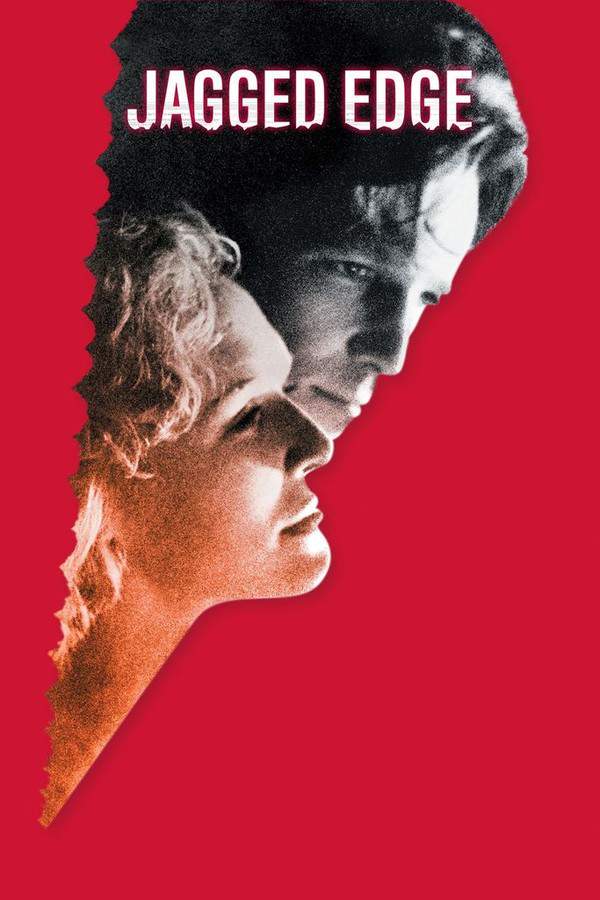
Jagged Edge (1985) movie poster

Plot Summary

Jagged Edge (1985) Plot Summary Explained

Release, runtime and language
1985 · 108 min · English
JustWatch #11,211 8
Directed by
Richard Marquand
Starring
Jeff Bridges, Glenn Close, Lance Henriksen, Peter Coyote, Ben Hammer, Dave Austin

A high-powered publishing lawyer, Teddy Barnes, finds herself embroiled in a complex murder case involving her husband. As she investigates the death, she confronts a shrewd suspect and must carefully examine a series of conflicting motives and alibis. The case forces her to question everything she thought she knew about her marriage and the people around her, leading her to uncover a web of deceit and hidden agendas.

On this page (6)
  1. 1 Where to watch
  2. 2 What happens: full plot
  3. 3 Plot questions answered
  4. 4 Movie threads
  5. 5 Movies like Jagged Edge
  6. 6 Every angle

Where to watch

Where to Watch Jagged Edge (1985)

Where can you watch Jagged Edge? Stream, rent or buy it in the US, including on Amazon Prime Video, Tubi TV and Amazon Video: current JustWatch availability with up-to-date prices.

Streaming availability powered by JustWatch

Full plot summary · contains spoilers

What Happens in Jagged Edge: Full Plot Summary

The whole story of Jagged Edge (1985) explained, from the opening scene to the final frame: every key event, every twist and what it all adds up to. Read it as a quick recap before the sequel, to check a scene you missed, or to finally understand what really happened.

A masked intruder breaks into the beach house of San Francisco socialite Page Forrester, ties her to her bed, rips open her shirt, and kills her with a hunting knife. The maid is also murdered. Husband Jack Forrester, Jeff Bridges arrested for her murder, tries to hire high-profile lawyer Teddy Barnes, Glenn Close, to defend him. Barnes is reluctant to take the case since an incident with district attorney Thomas Krasny, Lance Henriksen, her former boss, caused her to quit practicing criminal law.

Krasny tells Barnes that prisoner Henry Styles hanged himself, which distresses her. Barnes visits Sam Ransom, Peter Coyote, a private detective who also used to work for Krasny and who changed careers at the same time as Barnes. Barnes decides to take the case.

Barnes and Forrester prepare for the trial and eventually sleep together. Ransom warns Barnes that Forrester is just trying to make her care more about his case. Her office begins receiving anonymous letters containing non-public case details, and an analysis shows they were typed on a 1942 Corona typewriter.

In a pre-trial meeting, Barnes tells the judge that Krasny has a history of not meeting discovery obligations. The prosecution's case relies on circumstantial evidence, and two of its key witnesses are discredited by Barnes.

Krasny calls Eileen Avery, who had an affair with Forrester, and Bobby Slade, who had an affair with Page, to testify. As Slade details his relationship with Page Forrester, he explains how Forrester manipulates women with his horses. Barnes finds it eerily similar to her own relationship with him. She feels manipulated and briefly believes Forrester is guilty. However, mountains of evidence make her doubt he is guilty and she continues to defend him.

Another note arrives at her office saying, "He is innocent. Santa Cruz. January 21, 1984. Ask Julie Jensen." Barnes calls Jensen to testify that she was attacked in the same manner as Page Forrester. All the details match, but she says her attacker seemed to stop himself from killing her. As Krasny objects that the attack on Jensen is unrelated to the one on Forrester, he lets slip that his office had investigated the attack and not revealed it in discovery. In chambers, the judge threatens to have Krasny disbarred. Krasny insists that Forrester planned Page's murder for 18 months, he attacked Jensen to create an alibi for himself, and he is the writer of the anonymous letters.

The judge forbids Krasny from presenting his theory to the jury and Forrester is found not guilty. Barnes announces to the media that she left the district attorney's office when Krasny suppressed evidence that proved Henry Styles was innocent. Krasny walks off in disgust.

Barnes goes to Forrester's house to celebrate, and they sleep together again. After waking the next afternoon, she discovers, in a closet, a 1942 Corona typewriter matching the analysis of the anonymous notes. She takes it and flees.

When Forrester calls, she tells him she found the typewriter. Forrester insists on coming over. Barnes calls Ransom, on the brink of telling him that Forrester is the killer, but instead hangs up. A masked figure breaks in and confronts her in her bedroom. As he starts to attack, Barnes throws back the covers to reveal a handgun. She shoots him several times until he falls to the floor. Ransom comes in and unmasks the attacker: Forrester.
Last updated: November 22, 2025 at 15:58

Was this helpful?

Plot questions answered

Jagged Edge Plot Explained: Your Questions Answered

The questions people ask most about Jagged Edge (1985): what happens in the confusing scenes, why the characters do what they do, the twists, hidden details and what the ending means. Each answer contains spoilers.

Q1

Why does Teddy Barnes initially refuse to defend Jack Forrester?

Teddy Barnes refuses because she previously worked under District Attorney Thomas Krasny, who forced her out of criminal law. Krasny had suppressed evidence that proved prisoner Henry Styles was innocent, and Barnes could not tolerate working for an office that hid exculpatory information. Taking Forrester's case means defending a man she may have to oppose morally if she discovers his guilt.

Foreshadowing: Earlier, Krasny mentions Henry Styles' suicide to emotionally manipulate Barnes into taking the case.

  • Teddy Barnes
  • Jack Forrester
  • Thomas Krasny
  • criminal defense
  • case refusal
Q2

Who was Henry Styles and why does his suicide matter?

Henry Styles was a prisoner who hanged himself in custody. His death matters because District Attorney Krasny had suppressed evidence proving Styles was innocent. This wrongful conviction and subsequent suicide represents the corruption in Krasny's office that caused Barnes to quit. Styles' death becomes central to Barnes's public reason for leaving the DA's office after the trial.

Foreshadowing: Krasny strategically reveals Styles' suicide to draw Barnes back into his orbit and control her involvement in the Forrester case.

  • Henry Styles
  • prisoner suicide
  • suppressed evidence
  • wrongful conviction
  • Krasny
Q3

What is the significance of the 1942 Corona typewriter?

The 1942 Corona typewriter is the machine used to type the anonymous letters arriving at Barnes's office. Forensic analysis matches the letters to this specific model. When Barnes discovers an identical typewriter in Jack Forrester's closet after his acquittal, she realizes he wrote the letters himself, possibly to influence the case or create doubt about his guilt.

Foreshadowing: The anonymous letters begin arriving early in the case, hinting that someone close to the trial has insider knowledge.

  • 1942 Corona typewriter
  • anonymous letters
  • forensic evidence
  • Jack Forrester
Q4

How does Julie Jensen's attack connect to Page Forrester's murder?

Julie Jensen was attacked in Santa Cruz on January 21, 1984, in nearly identical fashion to Page Forrester, bound to a bed, shirt ripped open, but the attacker stopped before killing her. The anonymous note directing Barnes to Jensen suggests the same person committed both attacks. The similarity supports the theory that someone other than Jack Forrester committed the murder.

Foreshadowing: The note arrives with specific details only someone involved in the case would know, suggesting the writer has inside information.

  • Julie Jensen
  • Santa Cruz attack
  • Page Forrester murder
  • identical attacks
  • January 1984
Q5

Why does the judge forbid Krasny's theory about the anonymous letters?

Judge Hawthorn forbids Krasny from presenting his theory to the jury because it is speculative and unsupported by admissible evidence. More significantly, Krasny's office had investigated the Julie Jensen attack and failed to disclose this in discovery, a violation of legal obligations. The judge threatens to have Krasny disbarred for this misconduct, making the theory inadmissible.

Foreshadowing: Barnes previously confronted Krasny about his history of not meeting discovery obligations in pre-trial meetings.

  • Judge Hawthorn
  • Krasny theory
  • anonymous letters
  • discovery violation
  • court ruling
Q6

What does Bobby Slade reveal about Jack Forrester during his testimony?

Bobby Slade testifies that he had an affair with Page Forrester and describes how Jack Forrester manipulates women using horses, he gives them expensive horses to gain their affection and loyalty. Barnes recognizes this pattern from her own relationship with Forrester, realizing he may be using the same manipulative tactics on her, which briefly makes her believe in his guilt.

Foreshadowing: This testimony echoes earlier scenes where Barnes notices Forrester's expensive gifts and attention.

  • Bobby Slade
  • testimony
  • Jack Forrester
  • horses
  • manipulation
  • affair
Q7

Why does Teddy Barnes continue defending Forrester even after suspecting he might be guilty?

Despite her suspicion after Slade's testimony, Barnes continues because physical evidence contradicts guilt, specifically the attack on Julie Jensen, which suggests someone else committed the murders. Additionally, she has already invested significantly in the case and believes in the principle of defending anyone until proven guilty. Her emotional involvement with Forrester also clouds her judgment.

Foreshadowing: The pattern of anonymous notes suggesting Forrester's innocence creates enough doubt to keep Barnes defending him.

  • Teddy Barnes
  • Jack Forrester
  • doubt
  • defense
  • evidence
  • emotional involvement
Q8

What does the anonymous note about Santa Cruz reveal?

The anonymous note states 'He is innocent. Santa Cruz. January 21, 1984. Ask Julie Jensen.' It directs Barnes to investigate an attack on Julie Jensen in Santa Cruz on that specific date, claiming the real killer attacked Jensen. This note is pivotal because it introduces the Jensen connection that ultimately undermines Krasny's case against Forrester.
Foreshadowing: The note contains information only someone with inside knowledge of the case would have, raising questions about who is sending them.

  • anonymous note
  • Santa Cruz
  • Julie Jensen
  • January 21 1984
  • case revelation
Q9

Why does Barnes publicly reveal that Krasny suppressed evidence?

After Forrester's acquittal, Barnes holds a press conference and announces she left the DA's office because Krasny suppressed evidence proving Henry Styles was innocent. This is her public justification for abandoning her former boss, exposing his corruption and clearing her own name, while simultaneously damaging Krasny's career.

Foreshadowing: The Styles case was the original reason Barnes left criminal law under Krasny, and she uses it to distance herself from him publicly.

  • Barnes
  • Krasny
  • suppressed evidence
  • press conference
  • Henry Styles
Q10

How is Barnes prepared with a gun when Forrester attacks her?

Barnes suspects Forrester after finding the typewriter in his closet and realizes she is in danger. When he calls saying he is coming over, she calls Ransom but hangs up before telling him everything. She then hides a handgun under her bed covers. When the masked intruder attacks, she shoots him multiple times, defending herself until Ransom arrives.

Foreshadowing: Her discovery of the typewriter and her phone call to Ransom establish that Barnes knows Forrester is dangerous.

  • Teddy Barnes
  • gun
  • self-defense
  • Jack Forrester attack
  • typewriter discovery
Q11

Why does Jack Forrester attack Barnes after being found not guilty?

Forrester attacks Barnes because she discovered the 1942 Corona typewriter in his closet, the same typewriter used for the anonymous letters. This evidence could prove he wrote the letters to manipulate the case and could lead to a new investigation. Rather than let her expose him, he attempts to kill her to keep his freedom.

Foreshadowing: Barnes realizes the typewriter links to the letters while at his house, a discovery that threatens his acquittal.

  • Jack Forrester
  • attack
  • acquittal
  • typewriter
  • murder attempt
  • evidence
Q12

How are the anonymous letters connected to the typewriter found at Forrester's house?

Forensic analysis of the anonymous letters revealed they were typed on a 1942 Corona typewriter. When Barnes finds an identical typewriter in Forrester's closet, the match confirms he wrote the letters himself. The letters were likely an attempt to influence the trial, create reasonable doubt, or manipulate Barnes into believing in his innocence.
Foreshadowing: The letters arrived throughout the trial with details only someone close to the case would know, suggesting an inside source.

  • anonymous letters
  • typewriter
  • forensic match
  • Jack Forrester
  • evidence connection
Q13

What is Krasny's theory about how Forrester planned the murder?

Krasny argues in chambers that Jack Forrester planned Page's murder 18 months in advance. He claims Forrester attacked Julie Jensen to create a false alibi and cast suspicion elsewhere, then wrote the anonymous letters to reinforce the theory that someone else committed the crime. Krasny insists Forrester is guilty and is the author of the letters, but the judge forbids this theory from reaching the jury.

Foreshadowing: The anonymous notes began arriving after Forrester hired Barnes, suggesting he was orchestrating his own defense.

  • Krasny theory
  • murder planning
  • 18 months
  • alibi
  • Julie Jensen
  • anonymous letters

Movie threads

More Movies Like Jagged Edge, by Mood & Story

Curated lists built around what makes Jagged Edge tick: the same mood, the same kind of story or the same emotional payoff. Each list explains why these movies belong together.

Thrillers about deceptive trust like Jagged Edge

Stories where a professional's judgment is clouded by a client's charismatic charm. If you liked the dangerous romance and professional peril in Jagged Edge, explore more movies like it. These films feature charismatic suspects who manipulate their defenders, creating tense stories of doubt and betrayal in high-stakes legal or investigative settings.
  • suspenseful
  • deceptive
  • charismatic villain
  • psychological duel
  • unsettling
  • anxious
  • Tone: tense, paranoid
  • Pacing: steady, methodical
Why these movies?

The story pattern: Stories in this thread follow a specific arc: a confident professional takes on a compelling case, only to have their objectivity compromised by the client's allure. The plot unfolds as a psychological battle, where the protagonist must untangle truth from manipulation, often leading to a personal and professional crisis when the deception is revealed.

Why they belong together: These movies are grouped by their shared focus on the volatile mix of professional ethics and personal attraction. They create a specific kind of suspense rooted not in action, but in psychological doubt and the betrayal of trust within a formal relationship.

Movies about investigative personal betrayal like Jagged Edge

Methodical investigations that expose deeply personal deceptions and hidden truths. Find movies similar to Jagged Edge where a legal or criminal investigation slowly reveals a deeply personal deception. These stories blend cold, procedural facts with hot, emotional revelations, perfect for fans of methodical thrillers with bittersweet resolutions.

  • investigative
  • methodical
  • unraveling mystery
  • personal doom
  • tense
  • deceit
  • Tone: tense, bittersweet
  • Pacing: steady, unraveling
Why these movies?

The story pattern: The narrative pattern involves a protagonist using their professional skills to investigate a crime that increasingly points toward someone they know intimately. The steady pacing of the investigation contrasts with the rising emotional dread, leading to a climax where the procedural truth and the personal truth violently collide.

Why they belong together: They share a unique structure that merges a cool, methodical plot with a hot, emotional core. The similarity comes from the use of an investigative framework to explore themes of trust, deceit, and the shocking discovery that the enemy was hiding in plain sight.

If you liked this

Movies Like Jagged Edge

Similar movies to Jagged Edge: the same genre, themes or kind of story. Each one comes with its own plot summary, timeline and ending explained.

Browse all movie summaries

Every angle

Jagged Edge (1985) Explained: Plot, Timeline & Characters

Everything about Jagged Edge in one place: what happens in the plot summary, the timeline in chronological order, the characters and meaning and a spoiler-free summary. What's After the Movie adds the cast, box office and post-credit scenes.

Coming soon on iOS and Android

The Plot Explained Movie Summary App

Plot summaries, endings explained and timelines on your phone. Catch up on any movie in minutes, save your favorites and never miss a twist again.

Be the first to know when we launch. Your email stays private, always.

Learn more about the app