Year: 1955
Runtime: 100 mins
Language: English
Director: Otto Preminger
A dramatized portrayal of the famed aviator who openly challenged the Army and Navy, leading to his court‑martial. It follows the American general’s bold accusations against High Command for dismissing and neglecting the fledgling aerial fighting forces, and the subsequent military trial that tested his convictions.
Warning: spoilers below!
Haven’t seen The Court-Martial of Billy Mitchell yet? This summary contains major spoilers. Bookmark the page, watch the movie, and come back for the full breakdown. If you're ready, scroll on and relive the story!
Read the complete plot breakdown of The Court-Martial of Billy Mitchell (1955), including all key story events, major twists, and the ending explained in detail. Discover what really happened, and what it all means.
Brigadier General William "Billy" Mitchell (Gary Cooper) fights to prove the Air Service's worth as an independent force by sinking the battleship Ostfriesland under restrictive conditions agreed to by the Army and Navy. He defies orders to limit the attack to bombs under 1,000 pounds from above 5,000 ft, and instead loads 2,000-pound bombs, directing the aircraft to fly at about 1,500 ft, proving that the ex-German WWI battleship Ostfriesland can indeed be sunk. His superiors are outraged.
He is demoted to colonel and sent to a ground unit in Texas. A high-profile air disaster then follows: his close friend Zachary Lansdowne (Jack Lord) is killed in the crash of the dirigible Shenandoah. A second disaster strikes when six aircraft crash after a flight from a base on the California coast to Fort Huachuca, Arizona, due to poor maintenance caused by lack of funds.
Mitchell's outrage drives him to hold a press conference in which he accuses the Army and Navy of criminal negligence and almost treasonable disregard of the air service. The incident leads to a court-martial in Washington, D.C. He is represented by Ralph Bellamy as Congressman Frank R. Reid, an advocate of air power in Congress. None of the officers hearing the case are from the Air Corps. Reid's attempts to call witnesses on the merits are denied; he asks who filed the charges and, receiving no clear answer, demands the appearance as a witness of President Calvin Coolidge (Ian Wolfe) as commander of all armed forces. The court adjourns to consider the request.
Mitchell refuses to sign a paper that would withdraw his criticisms in return for saving his career. Margaret Lansdowne (Elizabeth Montgomery), widow of Lansdowne, then appears in court. Coolidge declines to appear, but witnesses on air power who were previously excluded are now allowed to testify to corroborate Mitchell's criticisms, including Eddie Rickenbacker (Tom McKee), Carl Spaatz (Stephen Roberts), Henry H. Arnold (Robert Brubaker) and Fiorello LaGuardia (Phil Arnold).
Finally Mitchell testifies and is cross-examined by Maj. Allen W. Gullion (Rod Steiger), a prosecutor specially brought in for the job. He stresses that Mitchell had disobeyed his superior officers and ridicules his claims, such as the prediction that Japan would attack the U.S. Navy at Pearl Harbor.
The court finds Mitchell guilty, but his men in the air service salute him as he departs. Mitchell steps out and looks up to see a squadron of four biplanes, which fades into a squadron of fighter jets—a powerful, symbolic glimpse of what his actions herald for the future of the United States and its Air Force.
Last updated: October 09, 2025 at 11:08
Explore frequently asked questions about The Court-Martial of Billy Mitchell (1955) with spoiler-rich answers covering the full plot summary, major story beats, character motivations, hidden details, and ending meaning. This movie summary FAQ helps explain confusing scenes, plot twists, and narrative decisions in clear, searchable detail.
Mitchell deliberately defied the Army and Navy's restrictive rules (1,000-pound bombs from above 5,000 feet) because he wanted to prove a decisive point: that air power could destroy battleships. He loaded 2,000-pound bombs and ordered aircraft to fly at just 1,500 feet, successfully sinking the ex-German WWI battleship. This demonstration was meant to show that air power deserved to be an independent military force, not just support for ground and naval operations.
Earlier in the film, Mitchell's belief that air power was being dismissed by traditional military leaders sets up this act of deliberate defiance.
Mitchell was demoted to colonel and reassigned to a ground unit in Texas because his superiors viewed his actions as blatant defiance of direct orders. The Army and Navy viewed his unauthorized use of heavier bombs and lower altitude as a challenge to their authority and a violation of the agreed-upon demonstration rules. Rather than reward his success, the military hierarchy punished him for stepping outside the chain of command.
The demotion was a direct consequence of the earlier confrontation between Mitchell and his superiors about the proper scope of air operations.
Mitchell held the press conference because he was outraged by two consecutive air disasters: the crash of the dirigible Shenandoah, which killed his close friend Zachary Lansdowne, and a separate incident where six aircraft crashed during a flight from California to Arizona due to poor maintenance caused by insufficient funding. These tragedies convinced Mitchell that the Army and Navy's neglect of the air service was criminal and nearly treasonable, prompting his public accusation.
Both disasters stemmed from the lack of resources and support for air power that Mitchell had long warned about.
Mitchell was found guilty of disobeying his superior officers and making public statements that criticized the military leadership. The court-martial focused on his defiance of orders during the Ostfriesland demonstration and his inflammatory press conference accusing the Army and Navy of criminal negligence. Although the verdict was guilty, his airmen saluted him as he left the courtroom, showing that the air service still respected him despite the official condemnation.
The guilty verdict was foreshadowed by the court's initial makeup, no officers from the Air Corps were permitted to hear the case.
During cross-examination, Major Allen W. Gullion ridiculed Mitchell's prediction that Japan would attack the U.S. Navy at Pearl Harbor. Gullion used this prediction to portray Mitchell as unrealistic and delusional, arguing that such a far-fetched claim undermined his credibility. The prosecution emphasized Mitchell's disobedience rather than engaging with the strategic merits of his warnings about air power's importance against emerging threats.
This moment sets up the film's later symbolic victory when biplanes transform into fighter jets, vindicating Mitchell's forward-thinking predictions.
Mitchell was defended by Congressman Frank R. Reid, an advocate of air power in Congress. Reid attempted to call witnesses who could speak to the strategic merits of Mitchell's position, but the court limited these efforts. He also questioned who had actually filed the charges against Mitchell and pushed for President Coolidge to appear as a witness as commander of all armed forces.
Reid's defense strategy foreshadowed the larger political battle over whether air power would be recognized as essential to national defense.
President Calvin Coolidge declined to appear as a witness, despite Reid's demand, because as commander of all armed forces, his testimony would have elevated the trial from a military disciplinary matter to a politically charged confrontation about the direction of national defense. However, after Coolidge declined, the court allowed previously excluded witnesses who supported air power to testify, including Eddie Rickenbacker, Carl Spaatz, Henry H. Arnold, and Fiorello LaGuardia, shifting the trial's atmosphere.
Coolidge's refusal highlighted the political sensitivity of the issue, while the subsequent admission of air power witnesses set the stage for broader testimony.
The final scene shows Mitchell stepping out of the courtroom, looking up at a squadron of four biplanes that fades into a squadron of modern fighter jets. This powerful symbolic sequence represents the ultimate vindication of everything Mitchell fought for, it shows that his advocacy for a separate, powerful Air Force would become reality. The biplanes transforming into jets is a visual metaphor for the future of American military aviation that Mitchell's bold actions helped create.
This closing vision directly echoes Mitchell's predictions during the trial about the future of air warfare, which Gullion had ridiculed.
Margaret Lansdowne, the widow of Zachary Lansdowne (Mitchell's friend who died in the Shenandoah crash), appeared in court to honor her husband and personalize the stakes of the trial. Her presence added emotional weight to Mitchell's arguments about the human cost of military neglect. She represented the real families suffering from the failures of the air service that Mitchell had been warning about.
The Shenandoah disaster that killed Lansdowne was one of the key events that drove Mitchell to hold his controversial press conference.
Mitchell refused to sign a document that would have allowed him to withdraw his criticisms in exchange for saving his career because doing so would have meant abandoning the very cause he had dedicated his life to, establishing air power as an independent military force. He chose personal professional ruin over betraying his convictions. This act of principle, rather than compromise, defined his legacy as a visionary who put truth ahead of personal advancement.
This refusal set the stage for the court-martial, as Mitchell's steadfastness in refusing to back down ensured the confrontation would continue.
None of the officers hearing Mitchell's case were from the Air Corps, which meant the panel consisted entirely of Army and Navy officers who had a vested interest in maintaining the existing military hierarchy. This biased composition ensured that Mitchell's arguments for air power independence would be judged by those whose departments would lose authority if his vision succeeded. The absence of Air Corps representation was a major procedural criticism raised by the defense.
This structural bias foreshadowed the guilty verdict, as Mitchell faced a tribunal fundamentally opposed to his core arguments.
Six aircraft crashed during a flight from a base on the California coast to Fort Huachuca, Arizona. The crashes were caused by poor maintenance resulting from insufficient funding, an example of the very neglect Mitchell had been warning about. This disaster, following the Shenandoah tragedy, reinforced Mitchell's argument that the Army and Navy's refusal to properly fund and support the air service was endangering lives and compromising national security.
This incident directly contributed to Mitchell's decision to hold the press conference condemning military leadership.
Discover curated groups of movies connected by mood, themes, and story style. Browse collections built around emotion, atmosphere, and narrative focus to easily find films that match what you feel like watching right now.
Stories of principled individuals risking everything to challenge a rigid institution.Find more movies like The Court-Martial of Billy Mitchell featuring principled individuals who stand against rigid systems. These films explore themes of institutional defiance and visionary ideas, offering tense, character-driven dramas about the cost of speaking truth to power.
Movies in this thread follow a linear, cause-and-effect structure: a visionary identifies a critical flaw, the system ignores or suppresses them, a catalyst forces a public confrontation, and a high-stakes trial or hearing tests their convictions. The journey is one of personal sacrifice for a greater principle.
These films are grouped by their central conflict of a lone individual versus an institution, creating a specific brand of tense, serious drama. They share a focus on moral courage, the frustration of bureaucratic inertia, and the bittersweet nature of fighting a battle that may be lost in the short term but won in the long run.
High-stakes legal battles set within the rigid hierarchies of military or government.If you liked the tense military trial in The Court-Martial of Billy Mitchell, explore these similar courtroom dramas set within army, navy, or political systems. These films deliver steady-paced, serious stories about justice, bureaucracy, and high-stakes legal confrontations.
The narrative pattern revolves around a formal judicial proceeding—a court-martial, tribunal, or hearing—that serves as the main arena for a larger ideological conflict. The story unfolds through testimony and legal strategy, exposing institutional flaws and personal convictions under the strict rules of a military or governmental setting.
These movies share the unique combination of a legal procedural format with the specific atmosphere of a military or highly bureaucratic environment. This creates a distinct vibe of controlled tension, where emotions run high but are constrained by protocol, resulting in a steady, compelling, and serious drama.
Don't stop at just watching - explore The Court-Martial of Billy Mitchell in full detail. From the complete plot summary and scene-by-scene timeline to character breakdowns, thematic analysis, and a deep dive into the ending - every page helps you truly understand what The Court-Martial of Billy Mitchell is all about. Plus, discover what's next after the movie.
Track the full timeline of The Court-Martial of Billy Mitchell with every major event arranged chronologically. Perfect for decoding non-linear storytelling, flashbacks, or parallel narratives with a clear scene-by-scene breakdown.
Discover the characters, locations, and core themes that shape The Court-Martial of Billy Mitchell. Get insights into symbolic elements, setting significance, and deeper narrative meaning - ideal for thematic analysis and movie breakdowns.
Discover movies like The Court-Martial of Billy Mitchell that share similar genres, themes, and storytelling elements. Whether you’re drawn to the atmosphere, character arcs, or plot structure, these curated recommendations will help you explore more films you’ll love.
The Court-Martial of Billy Mitchell (1955) Scene-by-Scene Movie Timeline
The Court-Martial of Billy Mitchell (1955) Movie Characters, Themes & Settings
The Court-Martial of Billy Mitchell (1955) Spoiler-Free Summary & Key Flow
Movies Like The Court-Martial of Billy Mitchell – Similar Titles You’ll Enjoy
Top Gun: Maverick (2022) Full Summary & Key Details
Midway (2019) Story Summary & Characters
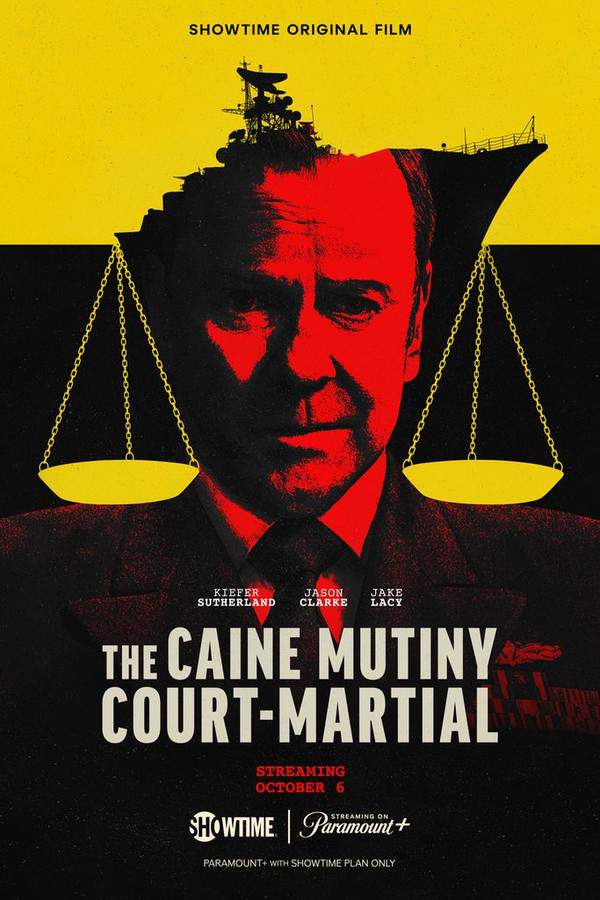
The Caine Mutiny Court-Martial (2023) Full Summary & Key Details
The Caine Mutiny Court-Martial (1988) Full Summary & Key Details
The War Lover (1962) Story Summary & Characters
Flight Command (1940) Complete Plot Breakdown
Captains of the Clouds (1942) Story Summary & Characters
Toward the Unknown (1956) Story Summary & Characters
Command Decision (1948) Ending Explained & Film Insights
The Dawn Patrol (1938) Full Movie Breakdown
Home of the Brave (1949) Complete Plot Breakdown
Man in the Middle (1964) Plot Summary & Ending Explained
The Dawn Patrol (1930) Story Summary & Characters
The Hunters (1958) Plot Summary & Ending Explained
King and Country (1964) Full Summary & Key Details