









Plot Explained Spoilers guaranteed!
Plot Explained

Browse by genre

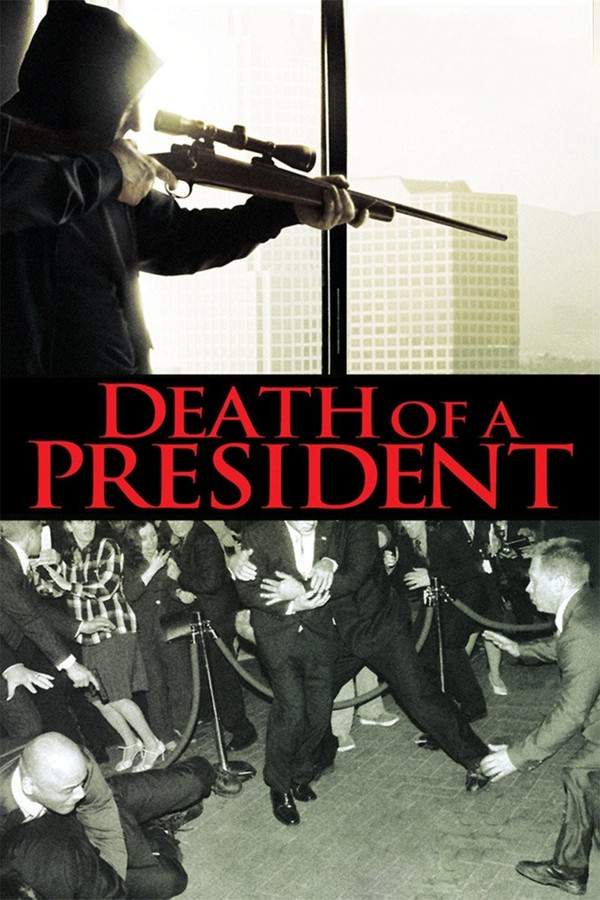
Death of a President (2006) movie poster

Timeline

Death of a President (2006) Timeline Explained – Every Event in Order

Release, runtime and language
2006 · 97 min · Arabic
JustWatch #22,846
Directed by
Gabriel Range
Starring
Becky Ann Baker, Hend Ayoub
Budget
$2M

Following the unexpected death of President George W. Bush in 2007, a tense investigation begins. Syrian national Jamal Abu Kikri is swiftly identified as the prime suspect, triggering a high-profile trial. However, as the legal proceedings progress, conflicting evidence surfaces, casting doubt on the initial accusations and suggesting a more intricate conspiracy. The case explores themes of political power, justice, and the potential for government manipulation.

On this page (6)
  1. 1 Where to watch
  2. 2 Events in order (12)
  3. 3 Timeline questions answered
  4. 4 Movie threads
  5. 5 Movies like Death of a President
  6. 6 Every angle

Where to watch

Where to Watch Death of a President (2006)

Where can you watch Death of a President? Stream, rent or buy it in the US, including on Hoopla, Kanopy and Tubi TV: current JustWatch availability with up-to-date prices.

Streaming availability powered by JustWatch

12 events in order · contains spoilers

Death of a President Timeline: Events in Chronological Order

Every key event of Death of a President (2006) in order, scene by scene, with when and where it takes place. Use it to untangle flashbacks, time jumps and parallel storylines, to refresh your memory before the sequel or to find the exact scene you are thinking of.

  1. Presidential assassination in Chicago

    President George W. Bush is fatally shot after addressing an economic forum at the Chicago Sheraton. The anti-war rally held earlier adds to the tense atmosphere. News crews immediately begin live coverage of the shooting and its political fallout.

    When
    19 October 2007
    Where
    Chicago, Illinois
  2. Immediate media coverage and political fallout

    News outlets report the assassination and debate its implications for U.S. policy and leadership. The incident triggers a flood of analysis about security, terrorism, and the administration's future direction. The TV documentary format emphasizes the rapid news cycle surrounding the event.

    When
    19 October 2007
  3. Investigation identifies Jamal Abu Zikri as a leading suspect

    Authorities arrest and interrogate war-protesting detainees as the case unfolds. Jamal Abu Zikri, described as an IT professional of Syrian origin, becomes the prime suspect tied to the shooting. Investigators scrutinize potential links to anti-war movements and foreign threats.

    When
    late October 2007
  4. Cheney, now president, leverages the case to push security laws

    Vice President Dick Cheney assumes the presidency and links the suspected killer to possible al-Qaeda ties to bolster a domestic security agenda. He advocates expanding investigative powers for federal and local agencies as part of a broader crackdown. The push sets the stage for PATRIOT Act III.

    When
    late 2007
    Where
    Washington, D.C.
  5. Conviction and death sentence for Zikri

    Zikri is convicted of killing the U.S. President and sentenced to death based on forensic evidence described as dubious. The verdict occurs amid intense courtroom emotion as the defendant's family witnesses the proceedings. The ruling solidifies Zikri’s role in the public narrative surrounding the assassination.

    When
    August 2008
    Where
    Illinois courtroom
  6. New report implicates Al Claybon as the likely killer

    A fresh investigation surfaces indicating that the perpetrator was most likely Al Claybon, husband of Marianne Claybon and father of David Claybon. The report ties his identity to a Rock Island, Illinois connection and notes his Gulf War veteran background. It reframes early assumptions about the shooter’s motives and background.

    When
    late 2008
    Where
    Rock Island, Illinois
  7. Claybon’s suicide after the assassination

    The person identified as the killer, Al Claybon, dies by suicide in the aftermath of Bush's assassination. His death closes a personal chapter that is later reexamined by new investigative reports. Casey Claybon’s discoveries begin to surface in this period.

    When
    October 2007
    Where
    Rock Island, Illinois
  8. Casey Claybon discovers his father’s planning in the Rock Island house

    In his dead father’s Rock Island house, Casey Claybon uncovers evidence suggesting his father’s involvement in planning the shooting. The finding includes references to a top-secret presidential itinerary outlining Bush’s Chicago movements on 19 October 2007. The discovery fuels further questions about the true perpetrator.

    When
    August 2008
    Where
    Rock Island, Illinois
  9. Top-secret itinerary revealed as key evidence

    A copy of a minute-by-minute presidential itinerary appears as the most incriminating piece of evidence. It documents Bush’s exact Chicago whereabouts on the day of the assassination, linking the crime to the case under investigation. Authorities continue probing how this highly sensitive document ended up in the suspect's circle.

    When
    August 2008
    Where
    Rock Island, Illinois
  10. Zikri’s legal appeal delays and ongoing investigation

    Even ten months after the assassination, government officials delay Zikri’s legal appeal to keep him on death row. The long wait underscores the film’s themes of political manipulation and the opaque nature of evidence. The government’s investigative effort expands as new theories emerge.

    When
    August 2008
    Where
    Stateville Correctional Center, Illinois
  11. Investigation into who obtained the top-secret document

    The closing sections of the film note ongoing investigations into how the top-secret itinerary found its way into a private residence. Officials pursue leads about who had access to sensitive information and how it reached Casey and his family. The pursuit highlights concerns about leaks and the abuse of security powers.

    When
    late 2008
  12. PATRIOT Act III becomes law

    The film ends by stating that PATRIOT Act III was signed into permanent law in the United States. It asserts that investigators gained unprecedented detention and surveillance powers, and that executive authority was expanded. The closing credits frame the act as a lasting and controversial outcome of the events depicted.

    When
    post-2008
    Where
    United States

Last updated: November 22, 2025 at 15:57

Was this helpful?

Timeline questions answered

Death of a President Timeline Explained: Your Questions Answered

When does it happen, and why in that order? The questions people ask about the chronology of Death of a President (2006): time jumps, flashbacks, cause and effect between scenes and the correct order of events, each answered with spoilers.

Q1

Why was Jamal Abu Zikri initially blamed for killing the president?

Jamal Abu Zikri, an IT professional of Syrian origin, became the prime suspect because authorities quickly identified him and wove his alleged ties into a broader security narrative. He was arrested along with other war-protesting detainees and convicted based on forensic evidence that the film presents as questionable. The rush to blame him appears driven by political agendas rather than solid evidence, as the narrative needed a clear suspect to justify the subsequent crackdown.

Foreshadowing: The investigation immediately focused on anti-war protesters and foreign nationals, setting up the later revelation about the real killer.

  • jamal abu zikri
  • syrian suspect
  • wrongful arrest
  • investigation
  • prime suspect
Q2

How did Dick Cheney use the presidential assassination to expand government powers?

As acting president following Bush's death, Dick Cheney leveraged the suspected al-Qaeda connection to push for PATRIOT Act III. He advocated for expanded investigative powers for the FBI, police, and other agencies over both citizens and foreign residents. The film portrays this as exploiting a national tragedy to permanently increase executive authority and surveillance capabilities, with the law ultimately being signed into permanent law.

Foreshadowing: Cheney's early political maneuvering sets up the bleak ending where these powers become permanent law.

  • dick cheney
  • patriot act
  • security laws
  • government power
  • executive branch
  • surveillance
Q3

What evidence pointed to Al Claybon as the actual assassin?

A new investigation report, supported by interviews with Marianne Claybon, identified Al Claybon as the likely killer. He was a Gulf War veteran from Rock Island, Illinois, and the father of David Claybon, a U.S. soldier killed in Iraq. After the assassination, Al Claybon committed suicide. His son Casey later discovered evidence in the family home suggesting his father planned the attack, including the highly sensitive presidential itinerary.

Foreshadowing: The anti-war rally held before Bush's speech hinted at deeper anti-government sentiment among veterans.

  • al claybon
  • gulf war veteran
  • real killer
  • evidence
  • rock island
  • suicide
Q4

Why did Al Claybon kill President Bush?

The film implies Al Claybon's motive stemmed from his son David's death in the Iraq War. As a Gulf War veteran himself, Claybon held Bush responsible for his son's death and blamed the president's policies for the conflict. This personal grief appears to have driven him to assassinate Bush at the economic forum in Chicago.

Foreshadowing: The film establishes early on that an anti-war rally took place before the shooting, hinting at the political tensions underlying the assassination.

  • al claybon motive
  • iraq war
  • son died
  • bush blame
  • veteran
  • revenge
Q5

What did Casey Claybon discover in his father's house?

In his dead father's Rock Island home, Casey Claybon uncovered evidence suggesting his father's involvement in planning the assassination. The most significant find was a top-secret presidential itinerary documenting Bush's exact Chicago movements on October 19, 2007. This raised urgent questions about how such highly classified information could have reached someone connected to the shooting.

Foreshadowing: The discovery directly connects to the earlier mystery of how the assassin knew Bush's precise location and timing.

  • casey claybon
  • evidence discovery
  • planning
  • top-secret itinerary
  • presidential schedule
Q6

Why was Jamal Abu Zikri's legal appeal delayed?

Even ten months after the assassination, government officials deliberately delayed Zikri's legal appeal to keep him on death row. The film presents this as political manipulation, suggesting authorities wanted to maintain the initial narrative of a convicted terrorist rather than face questions about a wrongful prosecution. The delay underscores the tension between due process and political pressure.

Foreshadowing: The government's reluctance to reconsider the case sets up the final revelation about the true killer.

  • zikri appeal
  • death row delay
  • legal process
  • political pressure
  • wrongful conviction
Q7

What was PATRIOT Act III and what powers did it grant?

PATRIOT Act III was presented as an expansion of the original PATRIOT Act, granting investigators unprecedented powers of detention and surveillance. The law further expanded the powers of the executive branch, allowing federal agencies to hold individuals without traditional due process. The film states it was signed into permanent law, framing this as a lasting and controversial outcome of the assassination.

Foreshadowing: Cheney's early push for expanded powers directly leads to this bleak conclusion.

  • patriot act
  • surveillance
  • detention
  • executive power
  • permanent law
  • civil liberties
Q8

How did the top-secret presidential itinerary end up in Al Claybon's house?

The film raises serious questions about information security but does not provide a definitive answer. The discovery of such a sensitive document in a private residence highlighted major vulnerabilities in how classified information is handled. The investigation continued into who had access to this top-secret document and how it reached Casey Claybon's family, suggesting potential leaks within government or military systems.

Foreshadowing: This mystery connects to broader themes of government secrecy and vulnerability.

  • classified leak
  • itinerary
  • information security
  • government leak
  • investigation
Q9

Was Jamal Abu Zikri actually innocent of killing the president?

The film strongly suggests Zikri was wrongfully convicted. The forensic evidence used to convict him is presented as dubious, and later evidence clearly points to Al Claybon as the real killer. Despite this revelation, Zikri remains on death row at the end of the film, symbolizing systemic injustice and the difficulty of overturning politically convenient convictions.

Foreshadowing: The question of Zikri's guilt runs throughout the film, with new evidence constantly challenging the official narrative.

  • innocent
  • wrongful conviction
  • forensic evidence
  • death sentence
  • exoneration
Q10

Why did Al Claybon commit suicide and what was in his note?

Al Claybon took his own life immediately after assassinating President Bush. The film reveals he left a suicide note addressed to his other son, Casey Claybon, who was himself an Iraq War veteran living in Chicago. The note further complicated the mystery and fueled suspicions about the true perpetrator, while also highlighting the personal tragedy underlying the political assassination.

Foreshadowing: This tragic end connects directly to the family's loss in the Iraq War.

  • suicide
  • note
  • casey claybon
  • grief
  • iraq war veteran
  • personal tragedy

Movie threads

More Movies Like Death of a President, by Mood & Story

Curated lists built around what makes Death of a President tick: the same mood, the same kind of story or the same emotional payoff. Each list explains why these movies belong together.

Bleak Political Conspiracy Thrillers like Death of a President

Stories where high-stakes political investigations uncover unsettling systemic corruption. If you liked the tense investigation and cynical political commentary of Death of a President, explore more movies like it. This list features similar political thrillers and crime dramas with bleak endings, complex conspiracies, and a heavy emotional weight that questions justice and government power.

  • tense
  • paranoid
  • sobering
  • unsettling
  • gritty
  • thought-provoking
  • Tone: tense, bleak, paranoid
  • Pacing: steady, procedural
Why these movies?

The story pattern: The narrative typically follows an investigation—be it journalistic, legal, or internal—into a significant political event, such as an assassination or a scandal. The initial, simple explanation is systematically dismantled, revealing a more intricate and disturbing web of lies and manipulation. The journey often ends not with victory for the truth-seekers, but with the reinforcement of the corrupt system, emphasizing themes of power's resilience and individual powerlessness.

Why they belong together: These films are grouped together due to their shared focus on political paranoia, complex narrative structures that piece together evidence, and a consistently tense, sobering tone. They deliver a specific kind of intellectual and emotional experience centered on the collision between truth and institutional power, resulting in a bleak worldview.
Tense Faux-Documentary Movies like Death of a President

Fictional stories presented as documentaries to create immediate, anxious suspense. For viewers who appreciated the realistic, news-report style of Death of a President, this list features similar movies that use a documentary format. Discover other tense dramas, thrillers, and speculative fiction films that feel like real events, creating an anxious and immersive viewing experience.

  • anxious
  • gripping
  • realistic
  • unsettling
  • immersive
  • speculative
  • Tone: tense, realistic, unsettling
  • Pacing: variable, immersive
Why these movies?

The story pattern: The narrative unfolds through the simulated lens of documentary filmmakers, news archives, or official investigations. This structure often incorporates interviews, shaky camera work, and archival footage to build a case or recount an event. The storytelling is non-linear, relying on the piecing together of evidence and testimonies, which directly involves the viewer in the process of uncovering the truth, or the lack thereof.

Why they belong together: These films are united by their distinctive formal approach. The documentary style is not just an aesthetic choice but a core narrative device that directly shapes the tone, pacing, and emotional impact. It generates a specific kind of suspense and credibility that separates these movies from more conventionally shot thrillers.

If you liked this

Movies Like Death of a President

Similar movies to Death of a President: the same genre, themes or kind of story. Each one comes with its own plot summary, timeline and ending explained.

Browse all movie summaries

Every angle

Death of a President (2006) Explained: Plot, Timeline & Characters

Everything about Death of a President in one place: what happens in the plot summary, the timeline in chronological order, the characters and meaning and a spoiler-free summary. What's After the Movie adds the cast, box office and post-credit scenes.

Coming soon on iOS and Android

The Plot Explained Movie Summary App

Plot summaries, endings explained and timelines on your phone. Catch up on any movie in minutes, save your favorites and never miss a twist again.

Be the first to know when we launch. Your email stays private, always.

Learn more about the app