Plot Explained Spoilers guaranteed!
Plot Explained

Browse by genre

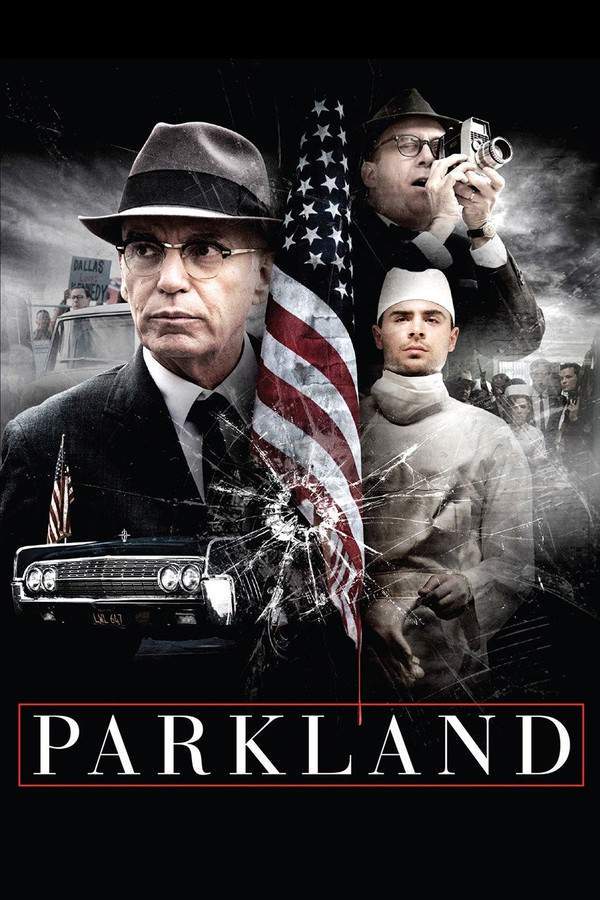
Parkland (2013) movie poster

Plot Summary

Parkland (2013) Plot Summary Explained

Release, runtime and language
2013 · 93 min · English
Loading streaming availability…
Directed by
Peter Landesman
Starring
Billy Bob Thornton, Paul Giamatti, Zac Efron, Tom Welling

Following the assassination of President John F. Kennedy, medical staff at Parkland Hospital in Dallas desperately work to save his life. As doctors and nurses fight to stabilize the President, chaos and confusion reign, and conflicting accounts begin to emerge. Amidst the urgent situation, a young nurse and a Secret Service agent become entangled in the unfolding events, uncovering unsettling secrets and raising questions about what really happened that day.

On this page (6)
  1. 1 Where to watch
  2. 2 What happens: full plot
  3. 3 Plot questions answered
  4. 4 Movie threads
  5. 5 Movies like Parkland
  6. 6 Every angle
Loading streaming availability…

Full plot summary · contains spoilers

What Happens in Parkland: Full Plot Summary

The whole story of Parkland (2013) explained, from the opening scene to the final frame: every key event, every twist and what it all adds up to. Read it as a quick recap before the sequel, to check a scene you missed, or to finally understand what really happened.

On November 22, 1963, United States president John F. Kennedy embarks on a political swing through Texas with his wife, Jackie, and Vice President Lyndon B. Johnson. After delivering a speech in Fort Worth, the group flies to Dallas for a high‑stakes motorcade that aims to project confidence and continuity in the nation’s capital. As the crowd gathers along the route, a routine day in Dallas begins to tilt toward tragedy, and the day’s events unfold with a heavy sense of fate.

In the busy morning that precedes the ride, Dr. Jim Carrico, the resident surgeon at Parkland Memorial Hospital, wakes to a call that foreshadows the hospital’s central role in what follows. Dressmaker Abraham Zapruder arrives at his offices, buzzing with the anticipation of filming the motorcade, while FBI agent James Hosty discusses ongoing concerns with his boss. Nearby, Robert Oswald enters his office, unaware that his world will quickly collide with national history. Kennedy lands at Dallas Love Field, greeted by Dallas Secret Service agent‑in‑charge Forrest Sorrels, and the motorcade moves toward downtown amid a mix of pride, caution, and tension.

In Dealey Plaza, Zapruder begins filming the presidential procession, capturing the moment the motorcade passes by. Then, the unthinkable happens: three gunshots ring out, and Kennedy is fatally struck. The scene erupts into chaos as the motorcade speeds away, leaving Zapruder stunned and the city in shock. Parkland Memorial Hospital receives the emergency call, and Carrie and colleagues rush to prepare for the unthinkable—an operation to save the nation’s leader. Jackie Kennedy, overwhelmed by shock, resists the doctors’ efforts to move her husband, a moment that underscores the human scale of the tragedy.

Inside Trauma Room One, Dr. Carrico and Chief Resident Dr. Malcolm Perry face the grim task of saving Kennedy. Perry performs a critical tracheotomy as the team fights to stabilize the president, while the hospital staff, clergy, and Secret Service stand by in a circle of anxious anticipation. As the life drain continues, a priest is called to administer last rites, a stark reminder of the vulnerability of the public figure under such intense scrutiny.

The pursuit of the truth behind the assassination quickly widens beyond the hospital doors. Zapruder, pressed by authorities for his footage, is urged by Secret Service to share the film for national security reasons. The process of handling and interpreting the evidence becomes a tense race against time; the film is eventually developed at a Kodak lab near Love Field, where copies are ordered and the gravity of what’s captured is realized in real time. Kennedy’s heart stops, the CPR continues in a valiant effort, and the room’s gravity breaks as the president is pronounced dead. Jackie’s grief is matched by the collective sorrow of the staff and security detail who have watched a nation lose its leader.

As the crisis unfolds, Johnson is alerted to Kennedy’s death and prepares for the tense transition of power aboard Air Force One. The plane, a symbol of continuity and control, carries the coffin as it departs Parkland, with seats removed and a wall reorganized to accommodate the ceremonial transfer of power. The oath is administered, and the jet climbs away toward Washington, taking with it a nation’s sense of normalcy suddenly shattered.

Back on the ground, Robert Oswald wrestles with the implications of the day’s events as he learns through the radio that his brother might be implicated in the assassination and remains a person of interest to authorities. The emotional fallout intensifies as the investigation expands beyond the Dallas area, and the reality of Lee Harvey Oswald’s possible complicity begins to take hold.

Months later, Zapruder’s footage surfaces in the public eye, and the authorities seek to manage the narrative surrounding one of history’s defining moments. The country watches and waits as the investigation and public response unfold, with the handling of the film becoming a focal point of debate and national introspection. In a chilling sequence broadcast to a wider audience, Lee Harvey Oswald is shot on live television by Jack Ruby and is rushed to Parkland, where medical teams work to save him but ultimately fail. The probe into the shooting of Oswald becomes another layer of the day’s unresolved questions, as the FBI and Secret Service contend with the shifting sands of information and accountability. Oswald’s death adds another layer of sorrow and confusion to a day already saturated with grief and political consequence.

Hosty is directed to discard the Oswald file as the case’s immediate relevance wanes, and the surrounding institutions begin to absorb the shock of what has transpired. Three days after Kennedy’s and Oswald’s funerals, the people who lived through the crisis return to their routines, carrying with them the weight of the events that forever altered their lives and the nation’s trajectory. The Parkland staff, Zapruder, and the federal agencies observe a solemn quiet after the storm, a silence that belies the continued questions and unresolved tensions that have become an integral part of the nation’s collective memory.

An epilogue provides a quiet, human look at the people touched by the day’s events. Robert Oswald remains in Dallas, resisting any attempt to erase the memory of what happened, choosing to face the truth rather than retreat. Zapruder continues to bear the trauma of that single, defining day, while Dr. Carrico forges a career marked by resilience, eventually rising to prominent leadership within the medical community as president of the American Association for the Surgery of Trauma. The film closes on a note that blends memory, consequence, and the enduring impact of a day that reshaped a nation.

> "you did this to all of us"
Last updated: October 09, 2025 at 16:17

Was this helpful?

Plot questions answered

Parkland Plot Explained: Your Questions Answered

The questions people ask most about Parkland (2013): what happens in the confusing scenes, why the characters do what they do, the twists, hidden details and what the ending means. Each answer contains spoilers.

Q1

Why did Jackie Kennedy resist leaving President Kennedy's side at Parkland Hospital?

Jackie Kennedy was in profound shock after witnessing her husband's assassination. Her refusal to leave his side reflected her inability to accept that he was gone, as well as her desire to protect his dignity in his final moments. The medical staff had to gently insist on moving him to continue life-saving efforts, but she remained close by throughout the resuscitation attempt.

Foreshadowing: Earlier in the motorcade scene, Jackie had been actively engaging with the crowds, contrasting sharply with her frozen grief at the hospital.

  • jackie kennedy
  • parkland hospital
  • shock
  • grief
  • presidential assassination
Q2

Why was Abraham Zapruder's footage so important to authorities after the assassination?

Zapruder's film captured the entire motorcade passage through Dealey Plaza, making it the only continuous visual record of the assassination. The Secret Service immediately recognized its evidentiary value for investigating what happened, while media organizations sought it for broadcast. Authorities pressured Zapruder to hand over the footage, citing national security concerns, and controlled its release to prevent showing the fatal moment to the public.

Foreshadowing: The film was shot on a rented camera by a dressmaker who happened to be in the right place at the right time.

  • abraham zapruder
  • zapruder film
  • dealey plaza
  • evidence
  • secret service
Q3

Why was Lee Harvey Oswald taken to Parkland Hospital after being shot?

Oswald was shot by Jack Ruby in the basement of Dallas Police Headquarters and rushed to the nearest trauma center, which was Parkland Memorial Hospital, the same hospital where President Kennedy had died two days earlier. Despite being the man accused of killing the President, Oswald received emergency medical treatment in a different operating room, where doctors performed surgery but could not save him.

Foreshadowing: The film deliberately parallels Oswald's arrival at Parkland with the earlier scene of Kennedy's death, emphasizing the tragic cycle of violence.

  • lee harvey oswald
  • parkland hospital
  • jack ruby
  • shooting
  • dallas police
Q4

What happened to Zapruder's film after it was developed at the Kodak lab?

After developing the film at a Kodak lab near Love Field, authorities seized the original footage and made copies. The U.S. government classified the film as evidence and restricted its public release. Life Magazine eventually obtained a copy, but the fatal moment was not shown to protect Kennedy's dignity. The original film later became a pivotal piece of evidence for investigators and historians.

Foreshadowing: The urgency to process the film was driven by the need for immediate evidence verification.

  • zapruder film
  • kodak lab
  • evidence
  • classified
  • life magazine
Q5

Why did Jack Ruby shoot Lee Harvey Oswald on live television?

Jack Ruby was a Dallas nightclub owner who was deeply affected by Kennedy's assassination. He managed to access the Dallas Police Headquarters basement during Oswald's transfer to the county jail and shot him on November 24, 1963, during a live broadcast. Ruby claimed he wanted to spare Jackie Kennedy the trauma of a trial, though his exact motivations remain debated. The shooting shocked the nation and added another layer of chaos to an already traumatic week.

Foreshadowing: Ruby's presence at the police station was facilitated by his connections to Dallas law enforcement.

  • jack ruby
  • lee harvey oswald
  • live television
  • dallas
  • assassination
Q6

Why did the Secret Service want to control the release of Zapruder's footage?

The Secret Service sought to control the film to protect national security and preserve President Kennedy's dignity. They were concerned that showing the actual moment of assassination to the public could cause additional trauma and potentially reveal sensitive information about security lapses. The government also wanted to verify the evidence before allowing public consumption, managing the narrative during an extremely volatile time.

Foreshadowing: This control marked the beginning of decades of debate over government transparency regarding the assassination.

  • secret service
  • zapruder film
  • national security
  • media control
  • jfk
Q7

How did Robert Oswald react when he learned his brother Lee was a suspect in Kennedy's assassination?

Robert Oswald was devastated and confused when he heard through radio reports that his brother Lee Harvey was being investigated. He went to the Dallas Police Department to confront Lee, who denied involvement. Robert immediately hired a lawyer for his brother and remained in Dallas throughout the investigation, eventually accepting that Lee was likely involved while refusing to abandon his brother.

Foreshadowing: Robert's office location in Dallas, coincidentally near the events, placed him at the center of the national tragedy.

  • robert oswald
  • lee harvey oswald
  • brother
  • dallas police
  • investigation
Q8

Why was Lyndon Johnson sworn in as President aboard Air Force One?

After Kennedy was pronounced dead at Parkland Hospital, Vice President Lyndon B. Johnson had to assume the presidency immediately to ensure continuity of government. Because Kennedy died in Dallas and Johnson was already on Air Force One preparing to return to Washington, the oath was administered aboard the plane by a federal judge. The ceremony was conducted with Kennedy's casket nearby, and Jackie Kennedy witnessed the swearing-in, still wearing her blood-stained pink suit.

Foreshadowing: The rapid transition was constitutionally required but emotionally jarring given the circumstances.

  • lyndon johnson
  • air force one
  • sworn in
  • presidency
  • transition
Q9

How did the medical staff at Parkland Hospital try to save President Kennedy?

Dr. Jim Carrico and Chief Resident Dr. Malcolm Perry led the emergency effort in Trauma Room One. They performed a tracheotomy to help Kennedy breathe and conducted continuous CPR as his heart had stopped. A priest was called to administer last rites. Despite their efforts, the injuries from the assassination were too severe, and Kennedy was ultimately pronounced dead. The medical team worked under intense pressure from Secret Service and the weight of history.

Foreshadowing: The morning trauma call Dr. Carrico received foreshadowed the hospital's central role in the day's events.

  • parkland hospital
  • jim carrico
  • malcolm perry
  • tracheotomy
  • cpr
  • medical team
Q10

Why wasn't Zapruder's film released to the public immediately after the assassination?

The film was withheld from immediate public release because authorities classified it as evidence and wanted to control its distribution. Additionally, government officials and media executives believed showing the fatal shot would be too disturbing for the American public. Life Magazine eventually published still frames, but the actual footage remained restricted for years, fueling conspiracy theories and debates about transparency.

Foreshadowing: This controlled release set the stage for decades of speculation about what the film truly showed.

  • zapruder film
  • release
  • public
  • evidence
  • conspiracy

Movie threads

More Movies Like Parkland, by Mood & Story

Curated lists built around what makes Parkland tick: the same mood, the same kind of story or the same emotional payoff. Each list explains why these movies belong together.

Movies with real-time crisis tension like Parkland

Tense, chaotic stories that unfold in real time during momentous historical tragedies. If you were captivated by the real-time chaos of Parkland, you'll find similar intensity in these movies. This list features films that thrust you into momentous historical events, focusing on the immediate, high-pressure responses of individuals on the ground, creating a tense and immersive viewing experience.

  • tense
  • chaotic
  • gripping
  • urgent
  • somber
  • immersive
  • Tone: tense, chaotic, somber
  • Pacing: fast, urgent
Why these movies?

The story pattern: Narratives in this thread follow a real-time or near-real-time structure, focusing on the immediate aftermath of a crisis. They often weave together multiple perspectives of professionals and bystanders, emphasizing the pressure, confusion, and desperate attempts to manage an unthinkable situation.

Why they belong together: These movies are grouped by their shared approach to historical storytelling: a fast-paced, tense, and immersive dive into a single catastrophic event, prioritizing the visceral experience of the crisis over a broad historical overview.

Movies with medical and political tension like Parkland

Gripping dramas where medical emergencies collide with high-stakes political consequences. For viewers who appreciated the medical urgency intertwined with political gravity in Parkland, this list highlights similar films. Discover movies where a high-stakes medical emergency acts as a catalyst, revealing deeper conspiracy, ethical quandaries, or national trauma, all under immense pressure.

  • somber
  • gripping
  • anxious
  • haunting
  • ethical
  • procedural
  • Tone: somber, tense, melancholic
  • Pacing: fast, driven
Why these movies?

The story pattern: Stories follow professionals—doctors, nurses, agents—as they confront a medical event with profound political ramifications. The narrative tension comes from the clash between the objective demands of medicine and the subjective, often secretive, nature of politics, leading to moral uncertainty and haunting conclusions.

Why they belong together: These films share a core conflict: the intersection of a life-or-death medical situation with a destabilizing political event. The grouping emphasizes a heavy, somber mood, a fast pace driven by emergency, and themes of grief, secrecy, and institutional pressure.

If you liked this

Movies Like Parkland

Similar movies to Parkland: the same genre, themes or kind of story. Each one comes with its own plot summary, timeline and ending explained.

Browse all movie summaries

Every angle

Parkland (2013) Explained: Plot, Timeline & Characters

Everything about Parkland in one place: what happens in the plot summary, the timeline in chronological order, the characters and meaning and a spoiler-free summary. What's After the Movie adds the cast, box office and post-credit scenes.

Coming soon on iOS and Android

The Plot Explained Movie Summary App

Plot summaries, endings explained and timelines on your phone. Catch up on any movie in minutes, save your favorites and never miss a twist again.

Be the first to know when we launch. Your email stays private, always.

Learn more about the app