Plot Explained Spoilers guaranteed!
Plot Explained

Browse by genre

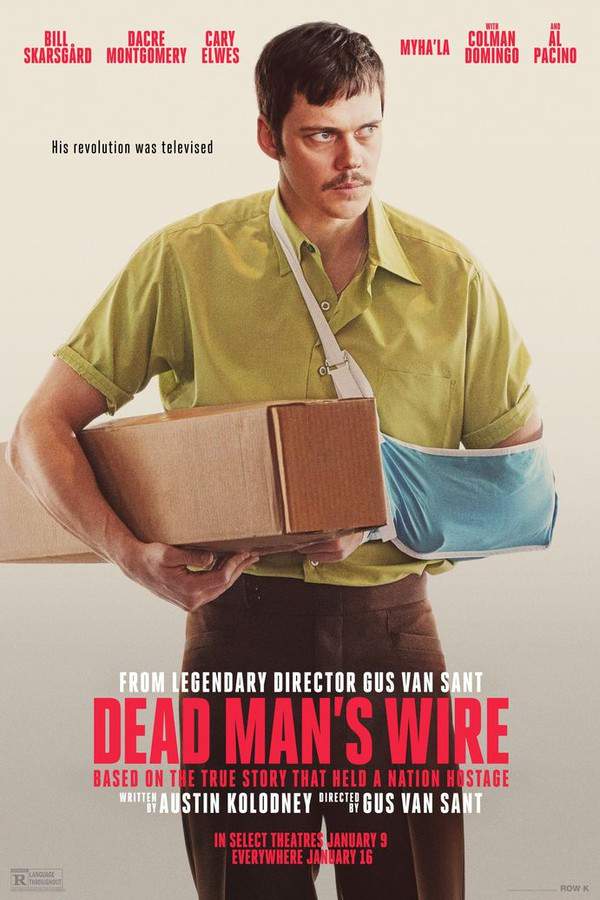
Dead Man's Wire (2026) movie poster

Plot Summary

Dead Man's Wire (2026) Plot Summary & Ending Explained

Release, runtime and language
2026 · 1 h 45 m · English
Echo score 81
JustWatch #693 6
Directed by
Gus Van Sant
Starring
Colman Domingo, Bill Skarsgård, Al Pacino, Myha'la Herrold, Daniel R. Hill, Cary Elwes
Budget
$15M

On the morning of February 8, 1977, 44‑year‑old Anthony G. “Tony” Kiritsis entered the office of Richard O. Hall, president of Meridian Mortgage Company, and took him hostage with a sawed‑off 12‑gauge shotgun fitted with a “dead‑man’s‑wire” that linked the trigger to Hall’s head. The standoff was broadcast nationwide, igniting a media frenzy and intense police negotiations, and it became a notorious episode in American true‑crime history.

On this page (7)
  1. 1 Where to watch
  2. 2 What happens: full plot
  3. 3 Plot questions answered
  4. 4 How it ends
  5. 5 Movie threads
  6. 6 Movies like Dead Man's Wire
  7. 7 Every angle

Where to watch

Where to Watch Dead Man's Wire (2026)

Where can you watch Dead Man's Wire? Stream, rent or buy it in the US, including on Netflix, Netflix Standard and Amazon Video: current JustWatch availability with up-to-date prices.

Streaming availability powered by JustWatch

Full plot summary · contains spoilers

What Happens in Dead Man's Wire: Full Plot Summary

The whole story of Dead Man's Wire (2026) explained, from the opening scene to the final frame: every key event, every twist and what it all adds up to. Read it as a quick recap before the sequel, to check a scene you missed, or to finally understand what really happened.

On Tuesday, February 8, 1977, in Indianapolis, Tony Kiritsis arrives for an appointment with wealthy mortgage broker M.L. Hall at the Meridian Mortgage company. Tony is instead confronted by M.L.’s son, Richard 'Dick' Hall, who reveals that M.L. has left on vacation. Tony seizes the moment, holding Richard at gunpoint and wiring a shotgun to his neck as a dead man’s switch, convinced the Halls cheated him out of potential profit after he bought land to develop and is determined to expose them. He notifies the local police that he has taken Richard prisoner and then commandeers a police car, forcing Richard to drive them toward Tony’s home as the police and reporters close in.

Inside his apartment, Tony booby-traps the doors and windows, and ties Richard and the shotgun to his kitchen table. The building is evacuated, and Tony makes a series of escalating demands, including an apology from M.L. As news of the standoff spreads, Tony lets Richard phone his wife, and then calls local radio DJ Fred Temple, who records him explaining how desperation drove him to take drastic action. The recording becomes a linchpin for Tony’s narrative as the authorities scramble to respond.

The situation draws in the FBI, while M.L. stubbornly refuses to acknowledge Tony’s grievances or offer an apology during a tense phone exchange with Richard and Tony. The police summon Tony’s brother, Jimmy Kiritsis, and the clock ticks toward a televised outlet for a resolution. On Thursday, the plan pivots toward a nationally televised press conference that would ostensibly grant Tony immunity and forgive his debt with millions in compensation, while the authorities prepare to kill him if necessary. With Jimmy’s assurance, Tony proceeds to reattach Richard to the shotgun and proceed with the broadcast.

During the live event, Tony proclaims himself a national hero, and forces Richard to read a statement from the company before taking over the moment himself. Tony then signs documents to guarantee his demands, convinced that he has brought the Halls to justice and secured the money he believes is owed. When Richard is released, Tony fires the shotgun into the air to prove it is loaded, and is promptly arrested. Richard is reunited with his wife, while a furious Tony is taken away.

Months later, Tony stands trial and is found not guilty by reason of insanity, a verdict that unsettles the Halls and the police but garners some public sympathy. Tony asserts his sanity as he leaves the courthouse. Years pass, and Tony and Richard cross paths again at a bakery, wordlessly parting ways. An epilogue reveals that Tony was sentenced to two years in a mental institution, but served an additional eight years for refusing psychiatric treatment. Richard struggles with alcoholism in the wake of his abduction, while the company soon goes bankrupt. The story ends on a note of unresolved tension between the two men and the fragile, oscillating line between justice and desperation.
Last updated: February 05, 2026 at 07:36

Was this helpful?

Plot questions answered

Dead Man's Wire Plot Explained: Your Questions Answered

The questions people ask most about Dead Man's Wire (2026): what happens in the confusing scenes, why the characters do what they do, the twists, hidden details and what the ending means. Each answer contains spoilers.

Q1

Why did Tony Kiritsis take Richard Hall hostage?

Tony Kiritsis took Richard Hall hostage because he believed the Halls had cheated him out of potential profit from land he had purchased for development. When Tony arrived for his appointment with M.L. Hall (the senior partner) and discovered M.L. was on vacation, he seized the opportunity to confront the family by taking M.L.'s son Richard prisoner, intending to expose what he perceived as their misconduct and force them to compensate him.

  • tony kiritsis
  • richard hall
  • hostage
  • mortgage
  • land development
  • cheated
Q2

What is a dead man's switch and how did Tony use it?

A dead man's switch is a device that triggers a mechanism if the operator becomes incapacitated or releases pressure on it. Tony fitted a sawed-off 12-gauge shotgun with a dead-man's wire connected to Richard Hall's neck - if Richard moved or if Tony released pressure on the trigger mechanism, the shotgun would fire directly into Richard's head, ensuring the hostage would be killed if Tony was neutralized.

  • dead man switch
  • shotgun
  • hostage
  • weapon
  • mechanism
Q3

Why did M.L. Hall refuse to apologize to Tony?

M.L. Hall stubbornly refused to acknowledge Tony's grievances or offer any apology during the tense phone exchange, even when Tony was holding his son Richard at gunpoint. This refusal escalated the standoff and hardened Tony's resolve to pursue justice through his extreme measures, as he felt completely dismissed by the very people he believed had wronged him.

  • m.l. hall
  • apology
  • refusal
  • negotiation
  • hostage
Q4

What happened during the televised press conference?

During the live broadcast, Tony proclaimed himself a national hero and forced Richard to read a statement from the company before taking over the microphone himself. Tony then signed documents guaranteeing his demands, believing he had secured justice and the money he was owed. After Richard was released, Tony fired the shotgun into the air to prove it was loaded and was promptly arrested.

  • televised press conference
  • live broadcast
  • arrest
  • confession
Q5

Why was Tony found not guilty by reason of insanity?

Months after the standoff, Tony was tried and found not guilty by reason of insanity - a verdict that shocked the Halls and police but garnered some public sympathy. The defense successfully argued that Tony's actions, while extreme, stemmed from psychological distress rather than criminal intent. Tony himself maintained his claimed sanity as he left the courthouse.

  • trial
  • insanity defense
  • verdict
  • not guilty
  • legal outcome
Q6

What happened to Richard Hall after the standoff?

After being released and reunited with his wife, Richard Hall struggled with alcoholism in the wake of his abduction. The psychological trauma from being held hostage with a shotgun wired to his neck left lasting scars that affected his personal life long after the event concluded.

  • richard hall
  • alcoholism
  • trauma
  • aftermath
  • victim
Q7

What was Tony Kiritsis's sentence after the trial?

Tony was sentenced to two years in a mental institution, but served an additional eight years for refusing psychiatric treatment. This extended incarceration reflected his ongoing resistance to the legal system's attempt to address what they deemed his mental state.

  • tony kiritsis
  • sentence
  • prison
  • mental institution
  • incarceration
Q8

What does the final bakery scene between Tony and Richard mean?

Many years later, Tony and Richard pass each other wordlessly at a bakery and continue on their separate lives. This silent encounter underscores the unresolved and damaging nature of their entire ordeal - neither man has found closure, and the uneasy history lingers beneath the surface of their everyday lives.

  • bakery
  • final encounter
  • closure
  • resolution
  • reunion
Q9

Why did Tony hijack a police car during the standoff?

After taking Richard hostage at Meridian Mortgage, Tony forced Richard to drive him in a commandeered police car toward Tony's home as authorities closed in. This gave Tony mobile leverage and kept Richard with him while he set up his apartment as a fortified position for the extended standoff.

  • police car
  • hijack
  • escape
  • vehicle
  • transportation
Q10

Why was the radio call to Fred Temple important?

Tony called local radio DJ Fred Temple, who recorded him explaining how desperation drove him to take drastic action. This recording became a linchpin for Tony's narrative, allowing him to broadcast his grievances directly to the public and shape how the media portrayed his motivations during the standoff.

  • fred temple
  • radio
  • broadcast
  • recording
  • media coverage

Ending explained

What Happens at the End of Dead Man's Wire?

How Dead Man's Wire (2026) ends, in short: the final scene, the last twist and what it means for the characters. The full ending explained, with every spoiler, lives on its own page.

Read the full ending explained

Tony Kiritsis turns the last stage of the hostage crisis into the public hearing he believes the Meridian Mortgage Company denied him. With Richard Hall still attached to the shotgun by the dead man’s wire, Tony faces the press, explains his grievance, and demands that the humiliation and financial pressure he experienced be recognized. The negotiated immunity agreement appears to give him a way out: he removes the wire from Hall’s neck, releases the hostage alive, and fires the shotgun into the ceiling rather than into another person. The authorities arrest him anyway, treating the promise as a device that ended the immediate threat rather than protection they intend to honor. His criminal trial does not produce an ordinary conviction. The jury finds him not guilty by reason of insanity, and he spends approximately eleven years in state psychiatric institutions. The postscript adds a strange final reversal. When officials later prepare to release him, Tony refuses to sign the required papers, resisting freedom when it is presented through another institution’s terms. He eventually returns to life outside confinement and dies in 2005, long after the broadcast siege that made his private dispute national spectacle.

The ending lets several incompatible facts remain true. Tony believes powerful lenders cornered and dismissed him, and the public performance finally forces people to hear that grievance. He also terrorizes Hall, turns the threat of an involuntary trigger into leverage, and makes another man’s body carry the risk of his demand for recognition. Releasing Hall is a meaningful choice, but it does not retroactively make the siege harmless. The broken immunity promise similarly prevents the state from occupying a simple position of moral reliability: officials save the hostage through an assurance they immediately discard, then the courts relocate the case from the language of grievance into the language of mental responsibility. Tony’s later refusal to sign release papers condenses the contradiction. Freedom is what he claimed to be fighting for, yet accepting it would require his signature beneath the authority of the same system that confined and classified him. The film therefore closes without making him either a folk hero vindicated by spectacle or a monster whose original anger can be ignored. He gets the audience he demanded, but never the uncontested meaning he wanted that audience to accept.

Dead Man's Wire ending explained in full

Movie threads

More Movies Like Dead Man's Wire, by Mood & Story

Curated lists built around what makes Dead Man's Wire tick: the same mood, the same kind of story or the same emotional payoff. Each list explains why these movies belong together.

High-Stakes Hostage Dramas like Dead Man's Wire

Intense, real-time portrayals of desperate negotiations under the public eye. If you were gripped by the tension of Dead Man's Wire, explore other movies like it. This section features intense true-crime and thriller stories about desperate hostage situations, media frenzies, and prolonged negotiations that create a palpable sense of urgency.

  • tense
  • claustrophobic
  • desperate
  • anxious
  • media frenzy
  • standoff
  • Tone: tense, desperate, anxious
  • Pacing: steady, real-time feel
Why these movies?

The story pattern: Films in this thread typically follow a linear, high-tension narrative focused on a desperate individual forcing a confrontation. The plot revolves around the delicate dance of negotiation, the psychological strain on all parties, and often culminates in a resolution that leaves deep scars.

Why they belong together: These movies are grouped together because they share a core experience of sustained, high-intensity suspense built around a confined, life-or-death situation. They frequently explore themes of media exploitation, systemic failures, and the heavy psychological toll of trauma.

Movies about Trauma and Reckoning like Dead Man's Wire

Stories where survival leaves characters with profound and unresolved scars. Fans of the bittersweet, heavy emotional conclusion of Dead Man's Wire will find similar films here. Discover stories that delve into the lasting impact of trauma, featuring character-driven dramas with somber tones and complex psychological aftermath.

  • somber
  • heavy
  • trauma
  • bittersweet
  • psychological
  • reckoning
  • Tone: somber, bittersweet, heavy
  • Pacing: steady, character-driven
Why these movies?

The story pattern: Narratives in this thread often follow a straightforward path from a catalytic, intense event to a quiet, reflective aftermath. The character journeys are defined by coping with psychological damage, with endings that are realistically bittersweet, acknowledging survival but emphasizing the profound cost.

Why they belong together: These films are united by their serious exploration of trauma's long-term effects. They share a heavy emotional weight, a methodical pacing that allows for deep character study, and a tone that balances the gravity of the subject with a nuanced, often somber resolution.
If you liked this

Movies Like Dead Man's Wire

Similar movies to Dead Man's Wire: the same genre, themes or kind of story. Each one comes with its own plot summary, timeline and ending explained.

Browse all movie summaries

Every angle

Dead Man's Wire (2026) Explained: Plot, Ending, Timeline & Characters

Everything about Dead Man's Wire in one place: what happens in the plot summary, the timeline in chronological order, the characters and meaning, the ending explained and a spoiler-free summary. What's After the Movie adds the cast, box office and post-credit scenes.

Coming soon on iOS and Android

The Plot Explained Movie Summary App

Plot summaries, endings explained and timelines on your phone. Catch up on any movie in minutes, save your favorites and never miss a twist again.

Be the first to know when we launch. Your email stays private, always.

Learn more about the app