Plot Explained Spoilers guaranteed!
Plot Explained

Browse by genre

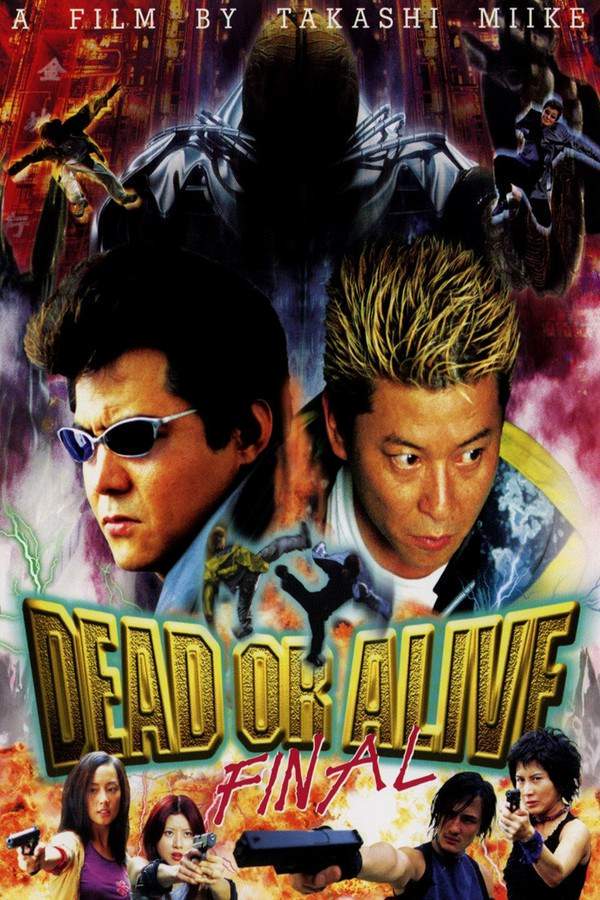
Dead or Alive: Final (2002) movie poster

Plot Summary

Dead or Alive: Final (2002) Plot Summary Explained

Release, runtime and language
2002 · 89 min · Chinese
JustWatch #27,594 3
Directed by
Takashi Miike

In a dystopian future consumed by crime and disorder, a powerful drug lord targets a defiant rebel. Following the rebel's death, her kin embarks on a relentless quest for retribution, confronting those responsible and unleashing a wave of escalating violence. This conflict pushes the boundaries of morality and tests the resilience of those caught in its destructive path.

On this page (6)
  1. 1 Where to watch
  2. 2 What happens: full plot
  3. 3 Plot questions answered
  4. 4 Movie threads
  5. 5 Movies like Dead or Alive: Final
  6. 6 Every angle

Where to watch

Where to Watch Dead or Alive: Final (2002)

Where can you watch Dead or Alive: Final? Stream, rent or buy it in the US, including on ARROW, Philo and Amazon Video: current JustWatch availability with up-to-date prices.

Streaming availability powered by JustWatch

Full plot summary · contains spoilers

What Happens in Dead or Alive: Final: Full Plot Summary

The whole story of Dead or Alive: Final (2002) explained, from the opening scene to the final frame: every key event, every twist and what it all adds up to. Read it as a quick recap before the sequel, to check a scene you missed, or to finally understand what really happened.

In the dystopian landscape of 24th century Yokohama, Mayor Woo has firmly seized control with an iron grip, enforcing harsh measures to regulate the populace. His authority is reinforced by Takeshi Honda, a fervent enforcer who will go to any lengths to maintain order. Amidst this turmoil, Ryo, a wandering drifter, becomes ensnared by government forces. During a violent altercation, Honda realizes that Ryo is an anomalous relic from a cataclysmic conflict that devastated the planet. In a daring escape from capture, Ryo follows a boy who had previously pleaded for his help, leading him to the hidden headquarters of a rebel faction intent on overthrowing Woo's oppressive regime.

The rebels, driven by an insatiable desire to rescue their captured allies, concoct a daring plan to kidnap Mayor Woo during a public event and hold him for ransom in exchange for their imprisoned comrades. As they attempt to execute their heist, tensions arise within the group as some members succumb to greed, pilfering from the unsuspecting attendees. Seizing the opportunity, Woo orders his bodyguards into action, igniting a fierce battle that ultimately sabotages the rebels' efforts.

Disheartened and depleted, the surviving members of the rebel faction retreat to their hideout. It is here that they realize one innocent soul remains with them – Honda's son, his presence evoking the stark cost of Woo's dictatorship. As Ryo forms an unlikely connection with the child who initially guided him to the rebels, internal conflicts escalate, ultimately culminating in a violent coup that leaves only a skeletal crew alive.

After a tenuous truce is established, where Honda's son is returned to him and Woo agrees to release the rebels' captive friends, the fragile calm is shattered by a shocking betrayal. A duplicitous couple, having secretly allied with Woo, opens fire on the unsuspecting group, resulting in chaos and devastation. In the midst of this carnage, Ryo and Honda's son, compelled to escape, witness their comrades falling around them. The remaining rebels scatter, leaving Ryo to traverse the ravaged streets alone.

In their plight for safety, Ryo and Honda's son find shelter in a movie theater, where they manage to keep the boy hidden from danger. However, Takeshi Honda is hot on their trail, fueled by an insatiable thirst for vengeance against those who have betrayed him. A thrilling showdown ensues as he confronts Ryo, only to be halted by his son’s cries, imploring him to abandon the pursuit of violence.

As the dust settles, Honda returns home to a shocking discovery: his wife is not what she appears, but is instead a replicant, crafted to mimic humanity. When confronted by Woo, Honda learns that he and his son are similarly artificial beings, limited in various respects. It becomes starkly apparent that Woo's malevolent scheme to eliminate humanity is fueled by a misguided view that the old world was obsolete.

In the midst of chaos, Honda and Ryo choose to unite against their shared nemesis, Mayor Woo. As they soar through the skies in an exhilarating blend of mecha and martial arts, clips from the preceding Dead or Alive films intersplice with their aerial combat, blurring reality and fantasy. Just as all hope seems lost, the film abruptly cuts to Woo, who stands frozen in disbelief at the unfolding compromising situation.
Last updated: November 22, 2024 at 15:33

Was this helpful?

Plot questions answered

Dead or Alive: Final Plot Explained: Your Questions Answered

The questions people ask most about Dead or Alive: Final (2002): what happens in the confusing scenes, why the characters do what they do, the twists, hidden details and what the ending means. Each answer contains spoilers.

Q1

Why is Ryo considered an anomalous relic from the cataclysmic conflict?

Ryo is revealed to be a survivor from a devastating apocalyptic war that nearly destroyed the planet. Honda recognizes him as unusual because people from that era are extremely rare in the 24th century, making Ryo a living artifact of the pre-catastrophe world. This history gives Ryo unique knowledge and perspective that the rebels find valuable.

Foreshadowing: Earlier scenes establish the devastation of the past conflict through the oppressive dystopia and references to the old world's destruction.

  • ryo
  • relic
  • apocalypse
  • war
  • honda
Q2

Why did the rebels' plan to kidnap Mayor Woo fail?

The kidnapping failed because internal greed undermined the operation. Some rebel members succumbed to temptation and began stealing from attendees at the public event, causing chaos and drawing attention to the plan. Woo's bodyguards quickly responded, leading to a fierce battle that completely derailed the heist.

Foreshadowing: Tensions within the group were visible during the planning phase, with members arguing over the strategy.

  • rebel kidnapping
  • mayor woo
  • heist
  • failure
  • betrayal
Q3

What triggered the violent coup within the rebel faction?

The coup was triggered by mounting frustration over the failed kidnapping mission and internal disagreements about leadership. After their defeat at the public event, the surviving rebels retreated to their hideout where tensions escalated into violent conflict. The internal strife resulted in a bloodbath that left only a skeletal crew alive.

Foreshadowing: The rebel group showed signs of disunity earlier when members prioritized personal gain over the mission.

  • rebel coup
  • internal conflict
  • violence
  • hideout
Q4

How does Honda discover he and his family are replicants?

After returning home following the chaos at the rebel hideout, Honda makes the shocking discovery that his wife is actually a replicant designed to appear human. When confronted by Mayor Woo, Honda learns that he himself and his son are also artificial beings with limited humanity, creating a devastating identity crisis.

Foreshadowing: Earlier scenes hint at the artificial nature of society through the oppressive, controlled environment of Yokohama.

  • honda
  • replicant
  • wife
  • revelation
  • artificial beings
Q5

Why do Honda and Ryo unite against Mayor Woo?

Honda and Ryo join forces after learning the disturbing truth about their artificial nature. Realizing that Mayor Woo has been manipulating them as part of a sinister plan to eliminate humanity, they have a shared motivation to stop him. The revelation that they are both controlled creates a common enemy.

Foreshadowing: The revelation about Honda's family directly follows his confrontation with Ryo at the movie theater.

  • honda
  • ryo
  • alliance
  • mayor woo
  • enemies
Q6

Why does the duplicitous couple betray the rebels?

The couple had secretly allied with Mayor Woo, acting as infiltrators within the rebel group. After the fragile truce was established and Honda's son was returned, they used the moment of supposed peace to attack the unsuspecting rebels, fulfilling their covert agreement with Woo and causing devastating chaos.

Foreshadowing: The couple's loyalty was never fully established, and they operated suspiciously during the heist planning.

  • couple
  • betrayal
  • double agents
  • woo
  • attack
Q7

What is the significance of the mecha and martial arts aerial battle?

The final battle combines mecha technology with martial arts as Honda and Ryo use advanced vehicles to fight through Yokohama's skies toward Mayor Woo. This sequence also features clips from previous Dead or Alive films, blurring the line between reality and fantasy. It represents the climax where human (or near-human) determination confronts the oppressive regime.

Foreshadowing: The genre blend has been established throughout the film with action sequences incorporating both martial arts and technological elements.

  • mecha
  • aerial battle
  • martial arts
  • final fight
  • genre blend
Q8

Why does the film end abruptly during the aerial battle?

The film cuts suddenly to Mayor Woo frozen in disbelief at a compromising situation, leaving the outcome of the battle unresolved. This ambiguous ending is intentional, reflecting the film's themes of identity crisis and the blurring of reality. The abrupt cut leaves viewers uncertain about whether good or evil prevails, matching the dystopian tone.

Foreshadowing: Throughout the film, moments of surrealism and genre-blending hint at this unconventional storytelling approach.

  • ambiguous ending
  • cliffhanger
  • resolution
  • surprise
Q9

Why does Honda pursue Ryo for vengeance after the betrayal?

Honda is consumed by rage after being betrayed by those he trusted within his own faction. Believing Ryo was involved in the betrayal that led to his son's endangerment, Honda relentlessly chases him through the movie theater. His thirst for vengeance blinds him until his son's emotional plea forces him to reconsider the cycle of violence.

Foreshadowing: Honda's violent tendencies and loyalty to Woo were established early as he enforced the mayor's harsh regime.

  • honda
  • vengeance
  • pursuit
  • son
  • movie theater
Q10

Why does Honda's son beg him to stop the violence?

Honda's son, despite being a replicant, demonstrates empathy and a desire to break the cycle of violence that has defined his father's life. His emotional plea during the showdown at the movie theater represents the human capacity for compassion, even in artificial beings. This moment triggers Honda's realization that revenge has destroyed everything.

Foreshadowing: The bond between Honda and his son was established when they were reunited after the failed truce.

  • honda son
  • peace plea
  • violence cycle
  • family
Q11

What is Mayor Woo's ultimate plan for humanity?

Mayor Woo believes humanity and the old world are obsolete. His plan involves eliminating humans entirely while using replicants like Honda and his family as controllable tools. This megalomaniacal scheme explains why he creates artificial beings while simultaneously working to eradicate their makers.

Foreshadowing: Woo's oppressive regime and harsh control over Yokohama suggest his contempt for natural human society.

  • mayor woo
  • humanity
  • elimination
  • replicants
  • plan

Movie threads

More Movies Like Dead or Alive: Final, by Mood & Story

Curated lists built around what makes Dead or Alive: Final tick: the same mood, the same kind of story or the same emotional payoff. Each list explains why these movies belong together.

Chaotic Dystopian Thrillers like Dead or Alive: Final

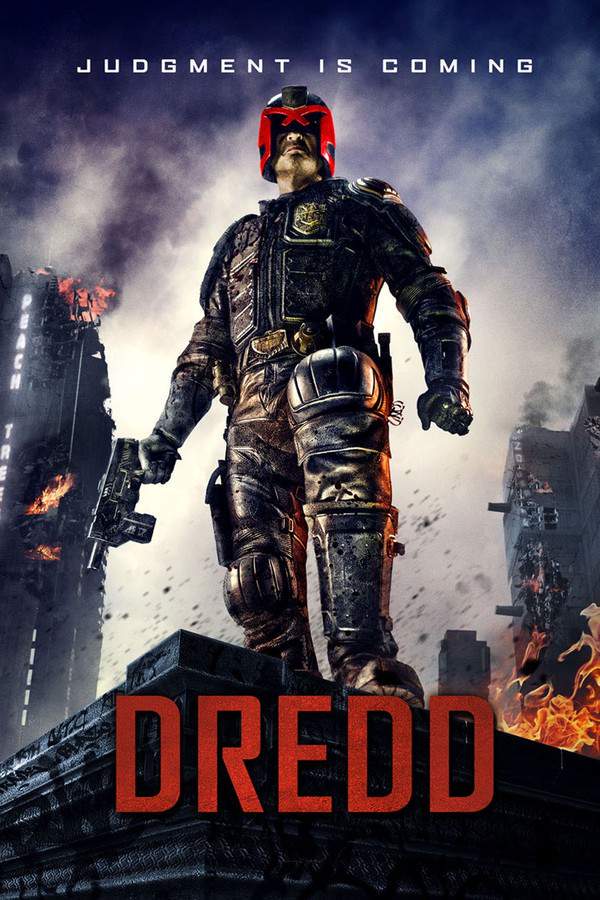
High-octane stories set in oppressive, surreal, and crumbling futures. If you liked the fast-paced, oppressive cyberpunk world of Dead or Alive: Final, explore these movies. This list features similar dystopian thrillers with high-intensity action, surreal settings, and themes of rebellion against totalitarian control, perfect for fans of movies like Akira or Dredd.

  • chaotic
  • oppressive
  • frenetic
  • surreal
  • brutal
  • anxious
  • Tone: dark, oppressive, bleak
  • Pacing: fast, frenetic
Why these movies?

The story pattern: Stories in this thread typically follow rebels or outcasts navigating a deeply flawed, often surreal society. The plot is propelled by a series of violent confrontations, betrayals, and desperate acts of defiance against a powerful, corrupt system. The journey is less about intricate plotting and more about surviving a relentless, chaotic environment.

Why they belong together: These movies are grouped by their shared high-intensity, fast-paced energy, dark and oppressive tone, and the specific setting of a dystopian future. They create a cohesive experience defined by a constant feeling of instability, visceral action, and a bleak examination of societal collapse.

Existential Cyberpunk Movies like Dead or Alive: Final

Dark sci-fi exploring identity, artificial life, and moral collapse. For viewers who appreciated the heavy themes of artificial life and identity in Dead or Alive: Final, this list features similar sci-fi movies. Discover stories with existential horror, dark tones, and ambiguous endings that explore what it means to be human in a technologically advanced but morally bankrupt future.

  • melancholic
  • surreal
  • brutal
  • anxious
  • existential
  • psychological
  • Tone: dark, melancholic, ambiguous
  • Pacing: variable, often fast with reflective pauses
Why these movies?

The story pattern: The narrative pattern involves a character's journey that is as much internal as external. A shocking revelation—often about their own manufactured identity—triggers a crisis. The ensuing conflict forces them to confront fundamental questions of consciousness, free will, and morality, typically against a backdrop of violence and societal decay, leading to an emotionally heavy and often ambiguous conclusion.

Why they belong together: Movies are grouped here primarily for their shared thematic depth, focusing on existential dread and identity within a sci-fi context. They share a dark tone, heavy emotional weight, and a tendency toward ambiguous endings, creating a cohesive vibe of psychological unease layered over action-driven plots.

If you liked this

Movies Like Dead or Alive: Final

Similar movies to Dead or Alive: Final: the same genre, themes or kind of story. Each one comes with its own plot summary, timeline and ending explained.

Browse all movie summaries

Every angle

Dead or Alive: Final (2002) Explained: Plot, Timeline & Characters

Everything about Dead or Alive: Final in one place: what happens in the plot summary, the timeline in chronological order, the characters and meaning and a spoiler-free summary. What's After the Movie adds the cast, box office and post-credit scenes.

Coming soon on iOS and Android

The Plot Explained Movie Summary App

Plot summaries, endings explained and timelines on your phone. Catch up on any movie in minutes, save your favorites and never miss a twist again.

Be the first to know when we launch. Your email stays private, always.

Learn more about the app