

Plot Explained Spoilers guaranteed!
Plot Explained

Browse by genre

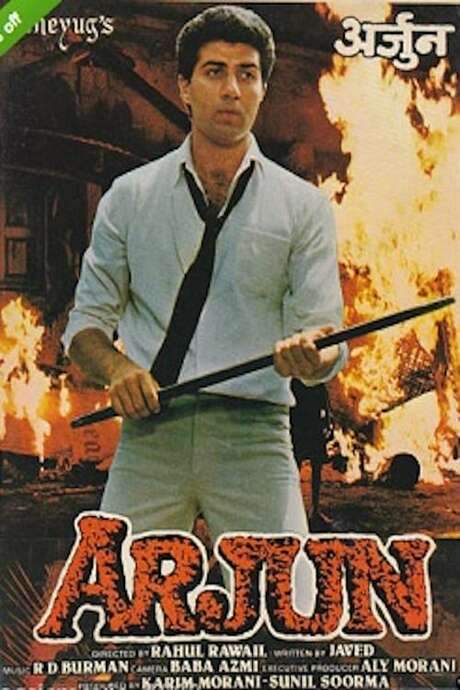
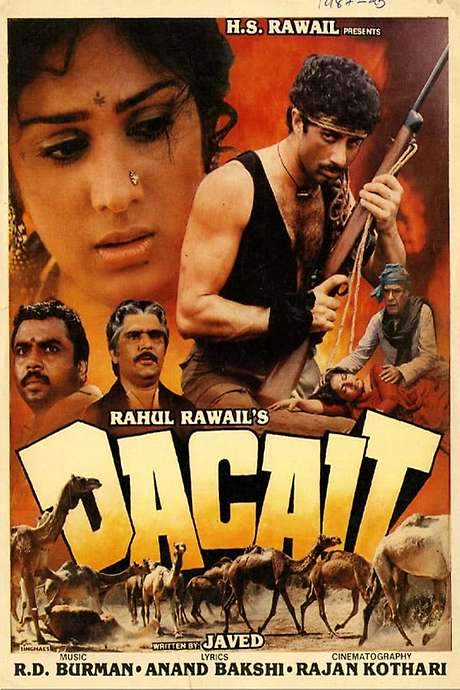
Dacait (1987) movie poster

Timeline

Dacait (1987) Timeline Explained – Every Event in Order

Release, runtime and language
1987 · 158 mins · Hindi
Directed by
Rahul Rawail
Starring
Raza Murad, Paresh Rawal, Sunny Deol, Suresh Oberoi, Harish Patel, A.K. Hangal

Arjun Yadav returns to his village after studying, joining his mother, brother Amrit and sister. He tries to ease the feud between Amrit and Thakur Bhanwar Singh, but Amrit is killed, his mother loses her mind, his sister is assaulted, and Arjun is beaten and bound. Rescued by villagers and his friend Makan Malla, he retreats to the ravines and becomes an outlaw seeking revenge.

On this page (6)
  1. 1 Where to watch
  2. 2 Events in order (12)
  3. 3 Timeline questions answered
  4. 4 Movie threads
  5. 5 Movies like Dacait
  6. 6 Every angle

Where to watch

Where to Watch Dacait (1987)

Where can you watch Dacait? Stream, rent or buy it in the US, including on Amazon Video: current JustWatch availability with up-to-date prices.

Streaming availability powered by JustWatch

12 events in order · contains spoilers

Dacait Timeline: Events in Chronological Order

Every key event of Dacait (1987) in order, scene by scene, with when and where it takes place. Use it to untangle flashbacks, time jumps and parallel storylines, to refresh your memory before the sequel or to find the exact scene you are thinking of.

  1. Arjun returns home after education

    Arjun Yadav returns to his village after completing his education in the city, bringing with him ideals of peace and justice. He reconnects with his community and with Chavli, a fisherwoman he loves. This homecoming sets the stage for the clash between his values and the village’s dark realities.

    When
    After completing his education in the city
    Where
    Village
  2. Arjun falls in love with Chavli

    He forms a loving bond with Chavli, a fisherwoman whose life on the shore complements his hopes for a just society. Their relationship represents a personal beacon of hope amid mounting oppression. The romance grounds his resolve to protect the vulnerable around him.

    Where
    Village
  3. Oppression by Thakur and the police

    The Thakur Bhanwar Singh and the corrupt Thanedar Vishnu Pandey tighten their grip on the village, seizing land and terrorizing families. The local farmers suffer under sporadic violence and intimidation that go unchecked by the authorities. Arjun watches the system that should protect them fail in brutal fashion.

    Where
    Village
  4. Arjun seeks a peaceful resolution

    Arjun attempts to resolve the conflict through dialogue and lawful means, hoping to restore peace without bloodshed. The Thakur pretends to agree, only to lull the villagers into a false sense of security. The surface peace quickly unravels as the oppressors reveal their true intentions.

    Where
    Village
  5. Festival attack and personal tragedy

    During a festival the Thakur launches a brutal attack on the village. Arjun witnesses the murder of his elder brother Amritlal and the brutal assault and death of his sister Shanta, while his mother Devi Chaudhrain loses her mind in shock. The violence shatters his faith in justice and safety.

    When
    During the festival
    Where
    Village during festival
  6. Arjun is beaten and left for dead; rescue

    Arjun is beaten and left for dead, his world collapsing around him. A group of wronged villagers rescue him and carry him away from the carnage, seeking a path to survival and retribution. The attack marks the end of his innocent pacifism.

    When
    Immediately after the festival attack
    Where
    Village outskirts
  7. Escape to the Chambal ravines

    The villagers take Arjun to the Chambal ravines, a harsh refuge where the oppressed gather. He reconnects with a childhood friend who has already become a dacoit due to similar circumstances. The ravines become the crucible for his transformation.

    When
    After the attack
    Where
    Chambal ravines
  8. Arjun embraces the Dacait identity

    In the ravines, Arjun realizes that peaceful methods have failed against organized oppression. He sheds his pacifist persona and adopts the identity of a dacoit, committing to fight back as a force of retribution. His initial compassion drives a more ruthless resolve.

    When
    Shortly after joining the dacoit group
    Where
    Chambal ravines
  9. Beginning of the revenge campaign

    Now known as the dreaded Dacait, Arjun begins his revenge against Thakur Bhanwar Singh and Thanedar Vishnu Pandey. He launches raids and confrontations that strike at the heart of the oppressive power structure. The village and its people become witnesses to a brutal cycle of retribution.

    When
    Early phase of the conflict
    Where
    Thakur estate and nearby areas
  10. The social critique of oppression

    The film uses Arjun's arc to highlight systemic corruption and oppression in rural India. It emphasizes that the path to violence is seeded in injustice and that dacoits are products of their circumstances rather than inherently criminal. The message is as much about society as about individual vengeance.

    Where
    Rural India setting
  11. Dacoit legend and impact on the village

    As Arjun's legend grows, the villagers react in different ways—some rally to his cause, others fear his notoriety, and many endure the ongoing violence. The narrative threads a tension between justice and cruelty, showing how fear translates into actions.

    When
    Throughout the uprising
    Where
    Chambal region
  12. Conclusion: tragedy, not triumph

    The story closes on a somber note that reinforces the idea: dacoits are born from circumstance, not birthright. Arjun's journey from peaceful reformer to avenger serves as a critique of the social order and a call to address the roots of oppression. The ending invites reflection on justice, revenge, and humanity.

    When
    End of the story
    Where
    Village/Chambal region

Last updated: October 09, 2025 at 14:26

Was this helpful?

Timeline questions answered

Dacait Timeline Explained: Your Questions Answered

When does it happen, and why in that order? The questions people ask about the chronology of Dacait (1987): time jumps, flashbacks, cause and effect between scenes and the correct order of events, each answered with spoilers.

Q1

Why does Arjun decide to become a dacoit after returning to his village?

Arjun becomes a dacoit after witnessing the brutal massacre during the festival attack, where his brother Amritlal is murdered and his sister Shanta is assaulted and killed. His mother Devi Chaudhrain descends into madness from the shock. Having tried peaceful dialogue and lawful channels repeatedly, only to be betrayed by Thakur Bhanwar Singh's false promises, Arjun realizes that the system cannot protect his family or deliver justice. The villagers who also suffered under the Thakur rescue him and take him to the Chambal ravines, where he transforms from a pacifist into a vengeful dacoit as the only remaining option for retribution.

Foreshadowing: Earlier in the film, the Thakur pretends to seek peace while secretly planning the festival attack, establishing that peaceful negotiation is impossible against such deceit.

  • arjun transformation
  • pacifist to dacoit
  • revenge
  • oppression
  • chamble ravines
Q2

What happens during the festival attack that triggers Arjun's transformation?

During a festival, Thakur Bhanwar Singh launches a coordinated brutal assault on the village. Arjun personally witnesses the murder of his elder brother Amritlal and the savage assault and death of his young sister Shanta. This violent night shatters Arjun's faith in justice, peace, and the system entirely. He is also beaten and left for dead, only to be rescued by fellow villagers who have suffered under the Thakur's reign of terror.

Foreshadowing: The Thakur had previously feigned willingness to resolve conflicts peacefully, lulling villagers into a false sense of security before striking.

  • festival attack
  • amritlal murder
  • shanta death
  • thakur violence
  • turning point
Q3

Why does Arjun's peaceful approach fail against the Thakur?

Arjun repeatedly attempts to resolve conflicts through dialogue and lawful means, believing in justice and peace. However, the Thakur Bhanwar Singh exploits this trust, he pretends to seek a peaceful solution to lull the villagers into security, then betrays that promise to launch the devastating festival attack. The corrupt police officer Thanedar Vishnu Pandey works alongside the Thakur, ensuring the legal system fails to protect the farmers. Arjun's idealism is systematically crushed by this coordinated oppression.

Foreshadowing: The Thakur's pattern of deceit is established early when he uses false negotiations to consolidate power while continuing his violent intimidation.

  • peaceful resolution failed
  • thakur deception
  • corrupt police
  • dialogue not working
Q4

What happens to Arjun's family during the Thakur's attack?

The festival attack destroys Arjun's entire family. His elder brother Amritlal Yadav is murdered. His young sister Shanta Yadav is brutally assaulted and dies from her injuries. Their mother Devi Chaudhrain witnesses this violence and is driven into deep, lifelong shock, her mind breaks from the trauma. Arjun himself is beaten and left for dead. This complete destruction of his family is the direct catalyst for his transformation into a vengeful dacoit.

Foreshadowing: The attack occurs during a festival when villagers are gathered and vulnerable, making the violence more devastating and widespread.

  • amritlal death
  • shanta assault
  • devi chaudhrain madness
  • family tragedy
  • thakur brutality
Q5

Who is Badri Singh and why is his meeting with Arjun important?

Badri Singh is Arjun's childhood friend who has already become a dacoit due to similar oppression. When villagers rescue Arjun after the festival attack, they take him to the Chambal ravines where he reconnects with Badri Singh. This meeting marks a pivotal turn, Arjun sees in Badri the violent path that awaits those with no other options. Badri's presence confirms that the cycle of violence is a direct consequence of systemic oppression, and motivates Arjun to adopt the dacoit identity himself.

Foreshadowing: The harsh Chambal ravines are introduced as a refuge for the oppressed, hinting at Arjun's eventual journey there.

  • badri singh
  • childhood friend
  • dacoit
  • chamble ravines
  • parallel paths
Q6

What motivates Thakur Bhanwar Singh's brutal oppression of the village?

Thakur Bhanwar Singh is a ruthless landlord who uses force, manipulation, and collaboration with corrupt police to seize land, intimidate families, and maintain control over the village's farmers. Working with Thanedar Vishnu Pandey, the corrupt police officer, he employs violence and the weight of the law as tools of oppression. The film presents him as representing the systemic corruption and exploitation in rural India, motivated by greed and power rather than any personal grievance.

Foreshadowing: The Thakur's grip on the village is established from the beginning, with land seizures and intimidation being ongoing throughout the first act.

  • thakur bhanwar singh
  • landlord oppression
  • land seizure
  • thanedar pandey
  • power abuse
Q7

How does the Chambal ravines setting influence Arjun's transformation?

The Chambal ravines serve as both a physical refuge and a crucible for Arjun's transformation. After being rescued from death, villagers bring Arjun to this harsh landscape where other victims of oppression have gathered. The ravines represent the lawless space outside the corrupt system, a place where those failed by justice can organize. In this environment, surrounded by others who chose violence as a last resort, Arjun sheds his pacifist identity and embraces the dacoit role, transforming his personal pain into calculated retribution.

Foreshadowing: The ravines are introduced as a place where the oppressed gather, making them a natural destination after the festival attack.

  • chambal ravines
  • transformation
  • exile
  • dacoit hideout
  • lawlessness
Q8

What does the film say about the cause of dacoitry in India?

The film delivers a clear social message: dacoits are not born, but made. It argues that dacoitry is a product of systemic oppression, poverty, and corrupted authority. The narrative shows Arjun, a compassionate, educated man with ideals of justice, being pushed to violence through relentless brutality and the complete failure of lawful systems. The film criticizes the social order that creates desperation and rage in ordinary people left with no other options, presenting violence as a tragic consequence of society's flaws rather than individual criminality.

Foreshadowing: The transformation of multiple characters (Arjun, Badri Singh) from ordinary villagers to dacoits demonstrates the pattern of circumstances creating outlaws.

  • social message
  • dacoits made not born
  • oppression
  • systemic corruption
  • poverty
  • society blame
Q9

Why does Arjun's mother Devi Chaudhrain lose her mind?

Devi Chaudhrain witnesses the brutal murder of her son Amritlal and the assault and death of her daughter Shanta during the Thakur's festival attack. The shock of witnessing this extreme family violence in a single night shatters her mentally, plunging her into a deep, lifelong shock. Her descent into madness represents the human cost of the Thakur's violence, not just physical death, but the destruction of entire families and minds.

Foreshadowing: The attack occurs during a festival when the family is presumably together, maximizing the trauma witnessed by Devi Chaudhrain.

  • devi chaudhrain
  • mother madness
  • shock
  • trauma
  • family destruction
Q10

What is the relationship between the police and the Thakur in the village?

Thanedar Vishnu Pandey is a corrupt police officer who works in tandem with Thakur Bhanwar Singh. Together, they form an oppressive alliance, the Thakur uses his economic and social power while the Thanedar uses legal authority to seize land, terrorize families, and keep farmers in fear. This collaboration ensures that the villagers cannot seek justice through official channels, as the law itself is compromised. The Thanedar's corruption is essential to the Thakur's ability to operate with impunity.

Foreshadowing: Arjun's attempts to use lawful channels fail because the very institutions meant to protect villagers are complicit in their oppression.

  • thanedar pandey
  • corrupt police
  • thakur police alliance
  • law enforcement corruption
  • oppression system
Q11

How does the film portray the cycle of violence and revenge?

The film presents a stark, unflinching portrait of escalating violence. Arjun's transformation from peaceful reformer to vengeful dacoit begins a campaign of raids and confrontations against the Thakur and his forces. As the body count rises, the line between protector and aggressor blurs. The film does not glamorize this transformation, it presents it as a tragic consequence of systemic oppression. The cycle continues as violence begets more violence, raising questions about whether revenge can ever deliver true justice.

Foreshadowing: Badri Singh's already-established dacoit path demonstrates that Arjun's transformation follows a predictable pattern of violence leading to more violence.

  • cycle of violence
  • revenge
  • retribution
  • escalating conflict
  • moral ambiguity
Q12

What is the ending of Dacait and what message does it convey?

The film ends on a somber, tragic note, the story does not conclude with triumph or justice served. Instead, it reinforces the idea that dacoits are born from circumstance, not birthright. Arjun's journey from peaceful reformer to avenger serves as a critique of the social order that creates such outcomes. The ending invites reflection on justice, revenge, and humanity, suggesting that the cycle of oppression and violence continues without a positive resolution. The tragedy lies not just in Arjun's personal fate, but in the systemic failures that made his transformation inevitable.

Foreshadowing: Throughout the film, the persistent oppression and failed peace attempts foreshadow that a happy ending is impossible within the corrupt system.

  • ending
  • tragedy
  • social critique
  • no happy ending
  • justice
  • systemic failure

Movie threads

More Movies Like Dacait, by Mood & Story

Curated lists built around what makes Dacait tick: the same mood, the same kind of story or the same emotional payoff. Each list explains why these movies belong together.

Gritty Revenge Dramas Set in Villages like Dacait

Stories of systemic oppression forcing an ordinary man into brutal vigilantism. If you were gripped by the intense, tragic story of Dacait, this collection features similar movies about systemic rural oppression and brutal revenge. These films share a high emotional weight, dark tone, and a steady pacing that builds towards a desperate and often tragic confrontation.

  • gritty
  • vengeful
  • oppressive
  • tragic
  • desperate
  • unflinching
  • Tone: dark, oppressive, tragic
  • Pacing: steady, relentless
Why these movies?

The story pattern: The narrative typically begins with a peaceful existence shattered by an act of extreme violence from an oppressive authority figure. The protagonist's attempts at reconciliation fail catastrophically, leading to profound personal loss. This trauma catalyzes a complete transformation, turning the protagonist into a feared outlaw who wages a one-man war against their oppressors, often at a great personal and moral cost.

Why they belong together: These films are grouped by their shared focus on a specific type of revenge story: one born from rural injustice and a complete collapse of faith in societal structures. They feature high-intensity emotional journeys, a consistently dark and oppressive atmosphere, and a straightforward, tragic descent into violence.
Movies About a Hero's Tragic Fall into Violence like Dacait

Character arcs where a good person is broken and remade into a violent instrument of revenge. For viewers who appreciated Arjun's tragic journey in Dacait from an educated returnee to a vengeful outlaw. This selection features films with similar heavy emotional weight and dark tones, showcasing characters who undergo a brutal moral collapse and are forced to seek justice outside the law.

  • tragic
  • vengeful
  • desperate
  • psychological
  • unflinching
  • gritty
  • Tone: dark, tragic, bleak
  • Pacing: steady, character-driven
Why these movies?

The story pattern: The core of these stories is the protagonist's internal and external journey. A catalyst event—often the murder or violation of family—shatters their world. Their subsequent quest is not a heroic adventure but a grim, steady march into darkness. The narrative explores the psychological toll of this choice, questioning the price of revenge and the loss of one's original self.

Why they belong together: These movies are united by a specific and powerful character arc: the moral descent. They share a heavy emotional weight driven by personal tragedy, a dark tone that reflects the grim nature of vigilantism, and a pacing that steadily builds tension towards an inevitable, often sorrowful, confrontation.

If you liked this

Movies Like Dacait

Similar movies to Dacait: the same genre, themes or kind of story. Each one comes with its own plot summary, timeline and ending explained.

Browse all movie summaries

Every angle

Dacait (1987) Explained: Plot, Timeline & Characters

Everything about Dacait in one place: what happens in the plot summary, the timeline in chronological order, the characters and meaning and a spoiler-free summary. What's After the Movie adds the cast, box office and post-credit scenes.

Coming soon on iOS and Android

The Plot Explained Movie Summary App

Plot summaries, endings explained and timelines on your phone. Catch up on any movie in minutes, save your favorites and never miss a twist again.

Be the first to know when we launch. Your email stays private, always.

Learn more about the app