Plot Explained Spoilers guaranteed!
Plot Explained

Browse by genre

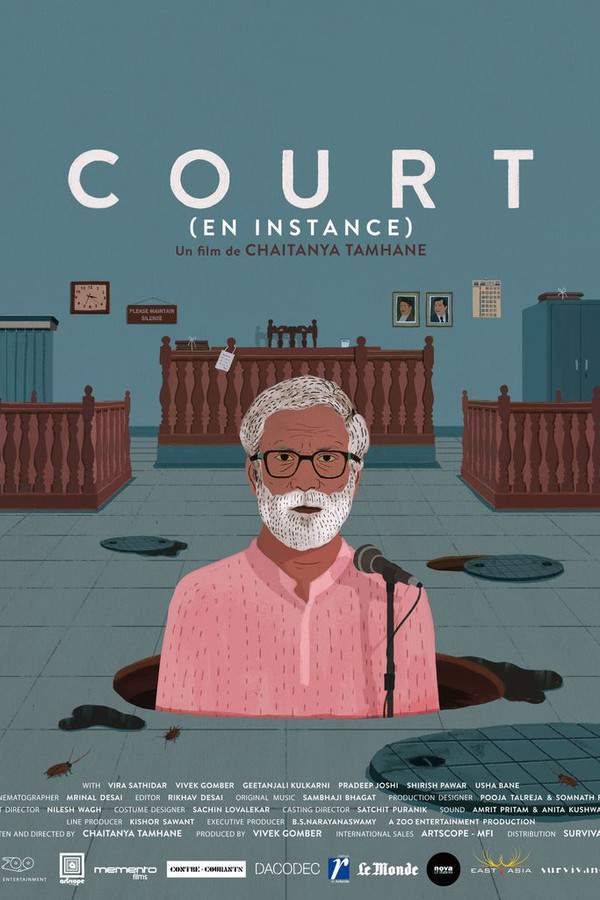
Court (2015) movie poster

Characters & Themes

Court (2015) Characters, Setting & Themes Explained

Release, runtime and language
2015 · 116 min · Marathi
Loading streaming availability…
Directed by
Chaitanya Tamhane

A celebrated folk singer and activist, known as the "people's poet," finds himself facing seemingly ridiculous charges following the death of a sewage worker. His trial becomes a chaotic and unsettling display of bureaucratic inefficiency, marked by questionable witnesses, frustrating legal delays, and a complex legal system that favors outdated colonial laws over human understanding and fairness. The proceedings highlight the struggles of navigating a rigid system seemingly indifferent to justice.

On this page (8)
  1. 1 Where to watch
  2. 2 Characters explained (4)
  3. 3 Where & when it takes place
  4. 4 Themes & meaning (4)
  5. 5 Character & meaning questions
  6. 6 Movie threads
  7. 7 Movies like Court
  8. 8 Every angle
Loading streaming availability…

4 main characters · contains spoilers

Court Characters Explained: Who Is Who

The main characters of Court (2015), heroes and villains: what drives them, how they change over the course of the story and what each of them reveals about the film's bigger ideas.

  • Narayan Kamble

    A teacher, social activist and protest singer who becomes the central figure of the trial. He acknowledges composing songs about suicide but maintains he did not intend to provoke anyone and cannot confirm he sang on the day of the incident. His health deteriorates through the proceedings, highlighting the personal toll of public dissent and legal battles. He remains steadfast in defending his artistic and political beliefs in court.

    • 🎭 Artist
    • 🗣️ Activist
  • Vinay Vora

    A defense lawyer who fights to prove Kamble’s innocence and to keep him from harsher charges. He negotiates bail, presents autopsy details, and challenges the idea of fabrications in the evidence. He confronts intimidation and advocates for Kamble’s health and due process, while seeking a reconsideration by the High Court. He embodies the defense's commitment to fair legal procedure against political manipulation.

    • ⚖️ Lawyer
    • 🗣️ Advocate
  • Nutan

    The public prosecutor driving the state's case against Kamble. She presents the narrative of Kamble’s alleged influence on a worker’s death and points to the possession of banned books as part of the case. She emphasizes witness credibility and the seriousness of the charges, shaping the court’s perception of the defendant. Her role highlights prosecutorial intensity within the legal process.

    • ⚖️ Prosecutor
    • 🗣️ Courtroom
  • Ashwin Bhagat

    An incarcerated man whose connection to Kamble is suggested by a letter used to accuse them of planning illegal activity. The case hints at conspiratorial links, raising questions about evidence and manipulation within the judiciary. His presence underscores how individuals inside and outside of jail can influence court narratives.

    • 🔒 Inmate
    • 🔗 Conspiracy

Last updated: October 03, 2025 at 19:41

Was this helpful?

Setting

Where and When Does Court Take Place?

The setting of Court (2015): the year and time period, the places and locations, and how they shape the characters, the mood and the tension of the story.

Time period

Location

Courtroom, Indian city streets, government offices

The core action unfolds in a bustling Indian courtroom, with the surrounding cityscape reflecting activism and social tension. Scenes shift from the courtroom to adjacent public spaces and offices, illustrating how law, politics, and everyday life intersect. The setting emphasizes a formal judicial process where evidence, witnesses, and rhetoric shape outcomes. It portrays the courtroom as a stage for dissent, authority, and the fatigue of long legal battles.

  • ⚖️ Courtroom
  • 🏙️ City streets
  • 📚 Legal procedure

Last updated: October 03, 2025 at 19:41

Was this helpful?

4 major themes

Court Meaning: Themes & Message Explained

What is Court (2015) really about? The emotional, social and philosophical themes the film keeps returning to, its symbolism and the message beneath the surface.

  • Justice

    The film questions what true justice means when health, evidence, and institutional power influence outcomes. Kamble’s frailty and disputed autopsy raise doubts about the fairness of the verdict. The reliability of witnesses and the weight of legal procedure challenge a straightforward sense of truth. Overall, justice is presented as a fragile, contested process within a complex legal system.

  • Freedom of Speech

    Protest songs become a focal point for debates over expression and potential incitement. The state grapples with the boundary between artistic protest and public safety, while Kamble defends his right to sing against social ills. The courtroom weaves competing narratives of voice versus control, highlighting how speech is scrutinized in a democracy. The film uses music and rhetoric to explore the costs of dissent.

  • Power & Corruption

    Power dynamics surface in how testimonies and accusations are shaped, including the use of a linked letter to implicate Kamble with an incarcerated man. The presence of a stock witness and the manipulation of narrative reveal vulnerabilities in the system. Bail decisions followed by a renewed arrest suggest that political pressures can steer legal outcomes. The story hints at broader mechanisms of influence within the justice process.

  • Accountability

    The case exposes gaps between legal duty and personal circumstance, such as the judge's offhand holiday that interrupts proceedings. Kamble’s health and the court’s handling of evidence illustrate the tenuous link between accountability and humane treatment. Prosecutors and defenders navigate a system where credibility and procedure can shift the balance. The ending underscores ambiguity in accountability, with the case lingering as the judge indulges in a private moment.

Last updated: October 03, 2025 at 19:41

Was this helpful?

Character & theme questions

Court Characters & Meaning: Your Questions Answered

The questions people ask about Court (2015): who the characters really are, their relationships, what the symbols mean, where it takes place and what the movie is really about. Each answer contains spoilers.

Q1

Where is the movie Court set?

The film takes place primarily in an Indian courtroom, with scenes extending to city streets and government offices. The bustling Indian city serves as more than a backdrop, it reflects the social tensions and activism that permeate the story. The courtroom itself is portrayed as a stage where dissent, authority, and the fatigue of long legal battles play out.

  • indian courtroom
  • setting
  • location
  • india
  • legal procedure
  • city streets
Q2

What is the movie Court about?

Court follows Narayan Kamble, a celebrated folk singer and activist known as the 'people's poet,' who faces seemingly ridiculous charges following the death of a sewage worker. His trial becomes a chaotic display of bureaucratic inefficiency, questionable witnesses, and a complex legal system that favors outdated colonial laws over fairness. The film explores how the justice system often fails those it claims to protect.

  • court movie
  • plot
  • folk singer
  • activist
  • trial
  • sewage worker
  • indian legal system
Q3

Who is Narayan Kamble in Court?

Narayan Kamble is a teacher, social activist, and protest singer who becomes the central figure of the trial. He acknowledges composing songs about suicide but maintains he did not intend to provoke anyone. His health deteriorates throughout the proceedings, highlighting the personal toll of public dissent and legal battles. He remains steadfast in defending his artistic and political beliefs in court.

  • narayan kamble
  • protagonist
  • folk singer
  • activist
  • protest singer
  • poet
Q4

What does Court say about freedom of speech?

The film uses protest songs as a focal point to explore debates over expression and potential incitement. The state grapples with the boundary between artistic protest and public safety, while Kamble defends his right to sing against social ills. The courtroom weaves competing narratives of voice versus control, highlighting how speech is scrutinized in a democracy and exploring the costs of dissent.

  • freedom of speech
  • protest songs
  • artistic expression
  • dissent
  • censorship
  • democracy
Q5

How does Court portray the Indian justice system?

Court presents the justice system as a fragile, contested process plagued by bureaucratic inefficiency and outdated colonial-era laws. The film questions what true justice means when health, evidence, and institutional power influence outcomes. The reliability of witnesses and the weight of legal procedure challenge any straightforward sense of truth, revealing a system seemingly indifferent to actual fairness.

  • justice system
  • indian legal system
  • colonial laws
  • bureaucracy
  • courtroom
  • legal procedure
  • fairness
Q6

What role does power and corruption play in Court?

Power dynamics surface throughout the film in how testimonies and accusations are shaped, including the use of a letter to implicate Kamble with an incarcerated man. The presence of a stock witness and manipulation of narrative reveal vulnerabilities in the system. Bail decisions followed by renewed arrests suggest political pressures can steer legal outcomes, highlighting broader mechanisms of influence within the justice process.

  • power
  • corruption
  • manipulation
  • political pressure
  • stock witness
  • incarcerated man
  • evidence
Q7

Who is Vinay Vora in the movie?

Vinay Vora is Kamble's defense lawyer who fights to prove his innocence and protect him from harsher charges. He negotiates bail, presents autopsy details, and challenges fabrications in the evidence. He confronts intimidation and advocates for Kamble's health and due process while seeking reconsideration by the High Court, embodying the defense's commitment to fair legal procedure against political manipulation.

  • vinay vora
  • defense lawyer
  • legal defense
  • attorney
  • court case
Q8

Who is Nutan in Court?

Nutan is the public prosecutor driving the state's case against Kamble. She presents the narrative of Kamble's alleged influence on a worker's death and points to the possession of banned books as part of the case. She emphasizes witness credibility and the seriousness of charges, shaping the court's perception of the defendant and highlighting prosecutorial intensity within the legal process.

  • nutan
  • public prosecutor
  • prosecutor
  • state case
  • charges
  • witness credibility
Q9

What does Court say about accountability?

The film exposes gaps between legal duty and personal circumstance, such as the judge's offhand holiday interrupting proceedings. Kamble's health and the court's handling of evidence illustrate the tenuous link between accountability and humane treatment. The ending underscores ambiguity in accountability, the case lingers unresolved while the judge indulges in a private, casual moment, reflecting systemic indifference.

  • accountability
  • judge
  • court
  • responsibility
  • humane treatment
  • systemic indifference
Q10

Does Court have a happy ending?

Court has a bleak ending that closes not with a resolution to the case but with a domestic scene showing the judge's casual cruelty. The case lingers unresolved, underscoring the themes of systemic indifference and bureaucratic oppression. There are no moments of levity, romance, or hope to counteract the dominant feelings of frustration and grim realism.

  • ending
  • conclusion
  • bleak
  • judge
  • unresolved case
  • no resolution
  • indifferent
Q11

Who is Ashwin Bhagat in Court?

Ashwin Bhagat is an incarcerated man whose connection to Kamble is suggested by a letter used to accuse them of planning illegal activity. The case hints at conspiratorial links, raising questions about evidence and manipulation within the judiciary. His presence underscores how individuals inside and outside of jail can influence court narratives.

  • ashwin bhagat
  • incarcerated
  • prisoner
  • letter
  • conspiracy
  • manipulation
Q12

What is the tone and pacing like in Court?

Court is overwhelmingly tense due to constant uncertainty and bureaucratic oppression. The pacing is deliberately slow, reflecting the grinding, inefficient nature of legal proceedings. The emotional weight is heavy, focusing on themes of injustice, a man's death, systemic failure, and the protagonist's deteriorating health. There are no moments of levity to counteract the frustration and grim realism.

  • tone
  • pacing
  • tense
  • slow
  • emotional weight
  • heavy
  • slow burn
  • legal drama

Movie threads

More Movies Like Court, by Mood & Story

Curated lists built around what makes Court tick: the same mood, the same kind of story or the same emotional payoff. Each list explains why these movies belong together.

Movies about bureaucratic injustice like Court

Stories where characters are crushed by the impersonal, illogical machinery of a system. If you were captivated by the absurd legal battle in Court, explore these other films where characters face the frustrating and illogical machinery of a system. These movies like Court delve into themes of social injustice and the draining experience of navigating a rigid and oppressive bureaucracy.

  • frustrating
  • bureaucratic
  • oppressive
  • absurd
  • grim
  • unsettling
  • Tone: tense, bleak, absurd
  • Pacing: slow, methodical
Why these movies?

The story pattern: Narratives in this thread typically follow a protagonist, often an ordinary person or an activist, as they confront a complex and indifferent system. The conflict arises from the disconnection between human need and bureaucratic rule, leading to a journey marked by procedural delays, nonsensical evidence, and a growing sense of powerlessness.

Why they belong together: These films are grouped together because they share a central theme of systemic failure and a specific tone of bleak absurdity. They create a similar viewing experience of mounting frustration and a palpable sense of injustice, often with a methodical pace that mirrors the grinding nature of bureaucracy.

Slow-burn tense dramas like Court

Films where tension builds methodically from the weight of an oppressive environment. Fans of the slow-building tension and oppressive atmosphere in Court will appreciate these similarly paced films. Discover more movies like Court that use a deliberate, methodical pace to create a heavy sense of dread and explore themes of systemic failure and moral collapse.

  • slow burn
  • unsettling
  • oppressive
  • grim
  • methodical
  • draining
  • Tone: tense, unsettling, grim
  • Pacing: slow, deliberate
Why these movies?

The story pattern: These stories unfold at a deliberate pace, focusing on the accumulation of small details and frustrations that collectively build an overwhelming sense of dread. The narrative structure often mirrors the inescapable nature of the central conflict, leading characters—and viewers—through a seemingly inevitable descent with a bleak or ambiguous resolution.

Why they belong together: This thread connects films based on a shared cinematic experience defined by their slow pacing, tense tone, and heavy emotional weight. The similarities lie in the mood they cultivate: one of pervasive unease, psychological pressure, and a grim realism that leaves a lasting impact.

If you liked this

Movies Like Court

Similar movies to Court: the same genre, themes or kind of story. Each one comes with its own plot summary, timeline and ending explained.

Browse all movie summaries

Every angle

Court (2015) Explained: Plot, Timeline & Characters

Everything about Court in one place: what happens in the plot summary, the timeline in chronological order, the characters and meaning and a spoiler-free summary. What's After the Movie adds the cast, box office and post-credit scenes.

Coming soon on iOS and Android

The Plot Explained Movie Summary App

Plot summaries, endings explained and timelines on your phone. Catch up on any movie in minutes, save your favorites and never miss a twist again.

Be the first to know when we launch. Your email stays private, always.

Learn more about the app