Plot Explained Spoilers guaranteed!
Plot Explained

Browse by genre

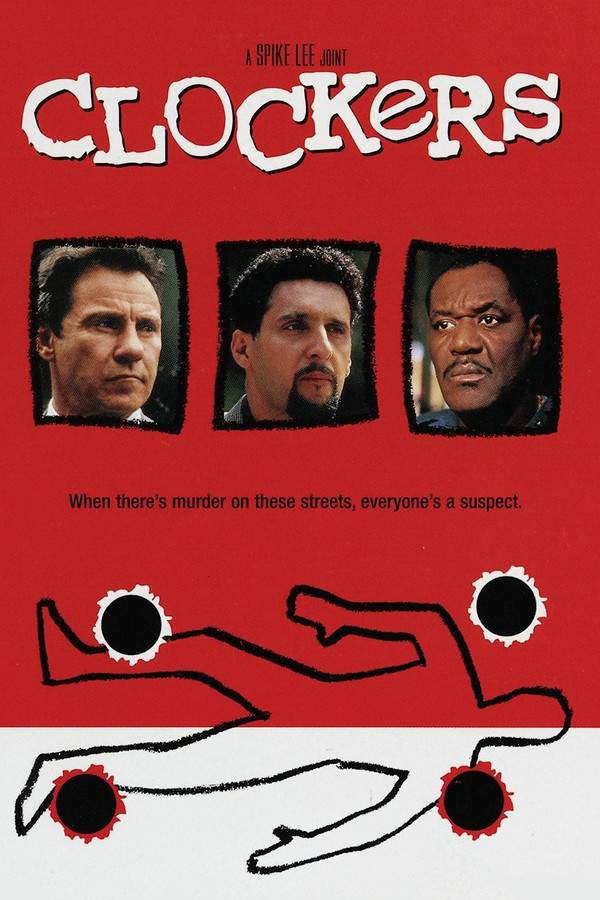
Clockers (1995) movie poster

Plot Summary

Clockers (1995) Plot Summary Explained

Release, runtime and language
1995 · 128 min · English
Loading streaming availability…
Directed by
Spike Lee
Starring
John Turturro, Harvey Keitel

In a harsh urban environment, "Clockers" centers on Strike, a young man making a living as a drug dealer. His carefully constructed world is thrown into chaos when a murder occurs and a crucial confession surfaces. Caught between two detectives—Mazilli, who seeks a quick resolution, and Rocco, who is determined to uncover the truth—Strike finds himself increasingly entangled in a dangerous web of lies and deceit. The film explores themes of loyalty, betrayal, and the harsh realities of life on the streets.

On this page (7)
  1. 1 Where to watch
  2. 2 What happens: full plot
  3. 3 Plot questions answered
  4. 4 The book behind the movie
  5. 5 Movie threads
  6. 6 Movies like Clockers
  7. 7 Every angle
Loading streaming availability…

Full plot summary · contains spoilers

What Happens in Clockers: Full Plot Summary

The whole story of Clockers (1995) explained, from the opening scene to the final frame: every key event, every twist and what it all adds up to. Read it as a quick recap before the sequel, to check a scene you missed, or to finally understand what really happened.

In a gritty Brooklyn housing project, a group of "clockers"—street-level drug dealers—work under the watchful eye of Rodney Little (Delroy Lindo), a feared local drug lord. Rodney informs Ronald "Strike" Dunham (Mekhi Phifer), one of his main operators, that competitor Darryl Adams (Steve White) is pilfering from their operation and must be eliminated. This sets off a chain of dark events as Strike confronts his brother, Victor Dunham (Isaiah Washington), urging him to commit the act against Darryl.

Meanwhile, seasoned homicide detectives Rocco Klein (Harvey Keitel) and Larry Mazilli (John Turturro) are called to the scene of Darryl's murder. Their investigation takes an unexpected turn when they receive a tip that a man has confessed at a local church to the shooting. The detectives find Victor at the church, where he claims he shot Darryl in self-defense. However, Rocco soon starts to unravel the truth behind Victor’s story, discovering his seemingly perfect life—two jobs, a loving wife, two kids, and no criminal past. It becomes clear to Rocco that Victor is lying to protect Strike.

As the pressure mounts, Rocco confronts Strike, but despite the mounting evidence, Victor remains steadfast in his defense of his brother. Using strategic manipulation, Rocco convinces Rodney that Strike has ratted him out, leading to Rodney's arrest. In a cruel twist, Rocco further humiliates Strike in front of his peers, pushing him towards a desperate escape. As Strike accumulates some money with plans to leave town, fate intervenes when a younger admirer, attempting to emulate him, shoots Errol, Rodney's enforcer, with Strike’s own gun.

In a surprising turn, Rocco allows Strike to flee, setting the stage for a volatile climax in a world where loyalty is scarce and betrayal is commonplace, underscoring the tragic choices that lead to inevitable consequences.

Last updated: November 08, 2024 at 00:31

Was this helpful?

Plot questions answered

Clockers Plot Explained: Your Questions Answered

The questions people ask most about Clockers (1995): what happens in the confusing scenes, why the characters do what they do, the twists, hidden details and what the ending means. Each answer contains spoilers.

Q1

Why did Victor confess to Darryl's murder?

Victor confessed to protect his brother Strike. When Rodney ordered Darryl's elimination, Strike convinced Victor to commit the act. When the police investigation began, Victor went to the church and claimed self-defense to shield Strike from consequences, maintaining his cover as a family man with no criminal history.

Foreshadowing: Earlier scenes show Strike pressuring Victor to "take care of" Darryl, establishing the brotherly dynamic that leads Victor to sacrifice himself.

  • victor confession
  • darryl adams
  • brotherly sacrifice
  • clockers plot
Q2

How did Rocco discover Victor was lying?

Rocco uncovered inconsistencies in Victor's story during his investigation. Despite Victor presenting himself as a perfect family man with two jobs, a loving wife, two kids, and no criminal past, Rocco suspected something was off. He noticed the discrepancies between Victor's claimed self-defense story and the actual circumstances of the murder.

Foreshadowing: The investigation scene shows Rocco meticulously examining the crime scene evidence, establishing his thorough detective approach.

  • rocco klein
  • investigation
  • victor lies
  • detective
  • police procedure
Q3

Why did Rodney order Darryl Adams' death?

Rodney, the local drug lord, ordered Darryl Adams eliminated because Darryl was stealing from their operation. As the leader of the clockers in the Brooklyn housing project, Rodney couldn't tolerate theft that threatened his drug empire, making Darryl's death a matter of maintaining control and profit.

Foreshadowing: The earlier scene establishes Rodney as a feared drug lord who closely monitors his operation, setting up why theft would provoke such a harsh response.

  • rodney little
  • darryl adams
  • drug operation
  • clockers murder
Q4

Why did Rocco manipulate Rodney into believing Strike had betrayed him?

Rocco used a strategic manipulation to break the case open. By convincing Rodney that Strike had ratted him out to police, Rocco triggered Rodney's arrest and destabilized the criminal operation. This psychological tactic was designed to expose the truth behind the murder and force confessions from the key players.

Foreshadowing: Rocco's earlier confrontations with Strike showed his willingness to use manipulation rather than direct evidence to solve cases.

  • rocco klein
  • rodney little
  • strike betrayal
  • police tactics
Q5

What happened to Strike at the end of the movie?

At the end, Rocco surprisingly allows Strike to flee rather than arrest him. After accumulating some money with plans to leave town, Strike escapes into an uncertain future. The ending emphasizes that escape is not redemption, Strike remains trapped in the deadly world of the drug trade despite briefly evading consequences.

Foreshadowing: Earlier scenes show Strike planning to escape and start fresh, but the movie suggests his environment won't allow genuine escape.

  • strike ending
  • rocco allows strike to flee
  • clockers finale
Q6

Why did the younger admirer shoot Errol with Strike's gun?

A younger admirer of Strike, attempting to emulate his lifestyle, accidentally shot Errol (Rodney's enforcer) using Strike's own gun. This tragic consequence illustrates how Strike's influence on young people in the neighborhood leads to violence beyond his direct actions, showing the ripple effects of his criminal example.

Foreshadowing: Earlier scenes establish Strike as a role model to younger kids in the housing project, setting up this dangerous imitation.

  • young admirer
  • errol shot
  • strike gun
  • youngsters
  • dangerous imitation
Q7

Why was Victor willing to take the blame for the murder?

Victor protected Strike out of brotherly loyalty despite the gravity of the crime. Even when Rocco confronted him with mounting evidence, Victor refused to abandon his brother. This sacrifice highlights the complex loyalty dynamics in the Dunham family, where familial bonds override even self-preservation in the face of serious criminal charges.

Foreshadowing: The confrontation scene where Strike first asks Victor to kill Darryl establishes the pressure Victor faces from his brother.

  • victor strike loyalty
  • brotherly bond
  • sacrifice
  • family loyalty
Q8

What police tactics did Rocco use to solve the case?

Rocco employed psychological manipulation rather than relying solely on physical evidence. He played detectives against criminals, using Strike's fear of Rodney to his advantage. By humiliating Strike in front of his peers and creating distrust between Rodney and Strike, Rocco forced confessions and confessions indirectly, demonstrating aggressive, morally ambiguous detective work.

Foreshadowing: The contrast between Rocco's methodical approach and Mazilli's desire for a quick resolution establishes Rocco's distinctive style.

  • rocco tactics
  • police manipulation
  • detective methods
  • interrogation
Q9

Why didn't Strike kill Darryl himself?

Strike attempted to convince his brother Victor to commit the murder rather than doing it himself. While the exact reason isn't explicitly stated, Strike likely wanted to keep his hands clean and maintain plausible deniability, or perhaps he couldn't bring himself to do it directly. This reluctance ultimately pulled Victor into the criminal web.

Foreshadowing: The scene where Strike confronts Victor shows his initial attempt to pressure his brother into the killing.

  • strike murder
  • darryl adams
  • victor responsibility
  • hitman
Q10

What does the ending signify about loyalty in the story?

The ending underscores that loyalty is scarce and betrayal commonplace in the criminal underworld. Victor's sacrifice for Strike demonstrates brotherly loyalty, but the world ultimately rewards betrayal, Strike's escape comes not from loyalty but from Rocco's manipulation. The ambiguous finale suggests loyalty often leads to tragedy while betrayal sometimes provides survival, reflecting the movie's dark thematic core.

Foreshadowing: The entire narrative arc builds toward showing how loyalty is constantly tested and corrupted in the drug trade.

  • loyalty theme
  • end meaning
  • betrayal
  • clockers themes
  • tragic choices

Movie threads

More Movies Like Clockers, by Mood & Story

Curated lists built around what makes Clockers tick: the same mood, the same kind of story or the same emotional payoff. Each list explains why these movies belong together.

Gritty Urban Crime Survival Stories like Clockers

Stories of survival and moral compromise in unforgiving city landscapes. If you liked the raw, street-level perspective of Clockers, explore more movies like it that delve into the unforgiving world of urban crime. These films capture the tense atmosphere of survival, moral ambiguity, and the high-stakes drama of life on the margins.

  • gritty
  • oppressive
  • anxious
  • morally ambiguous
  • claustrophobic
  • suspenseful
  • Tone: dark, tense, bleak
  • Pacing: steady, methodical
Why these movies?

The story pattern: Narratives in this thread often follow a character trapped in a dangerous ecosystem, forced to make difficult choices that test their morality and loyalty. The central conflict typically arises from an external threat—like a murder, a rival gang, or a dogged investigation—that destabilizes their precarious existence, leading to a tense spiral of events.

Why they belong together: Movies are grouped here for their shared focus on the brutal economics and social decay of inner-city life, their dark and morally complex tone, and their heavy emotional weight. They create a consistent feeling of being trapped in a claustrophobic, oppressive environment where violence is a constant threat.

Paranoid Crime Investigation Thrillers similar to Clockers

Where a single crime unravels a web of lies, deceit, and suspicion. For viewers who enjoyed the tense cat-and-mouse game and psychological pressure in Clockers, this list features similar crime thrillers and mystery movies. These stories focus on complex investigations, false confessions, and the paranoia that ensnares both the pursued and the pursuers.

  • suspenseful
  • paranoid
  • anxious
  • morally ambiguous
  • tense
  • psychological
  • Tone: dark, suspenseful, morally ambiguous
  • Pacing: steady, suspenseful
Why these movies?

The story pattern: The narrative pattern involves a detective or investigator applying pressure on a key suspect, using psychological tactics to unravel their story. The suspect's world becomes increasingly constrained and paranoid as the investigation closes in, creating a duel of wits where the line between truth and deception is constantly blurred.

Why they belong together: These films share a steady, suspenseful pacing, a dark and morally ambiguous tone, and a high level of psychological tension. They are united by the core dynamic of an investigation that fuels paranoia and forces characters into corners, leading to heavy moral choices and often ambiguous resolutions.

If you liked this

Movies Like Clockers

Similar movies to Clockers: the same genre, themes or kind of story. Each one comes with its own plot summary, timeline and ending explained.

Browse all movie summaries

Every angle

Clockers (1995) Explained: Plot, Timeline & Characters

Everything about Clockers in one place: what happens in the plot summary, the timeline in chronological order, the characters and meaning and a spoiler-free summary. What's After the Movie adds the cast, box office and post-credit scenes.

Coming soon on iOS and Android

The Plot Explained Movie Summary App

Plot summaries, endings explained and timelines on your phone. Catch up on any movie in minutes, save your favorites and never miss a twist again.

Be the first to know when we launch. Your email stays private, always.

Learn more about the app