Plot Explained Spoilers guaranteed!
Plot Explained

Browse by genre

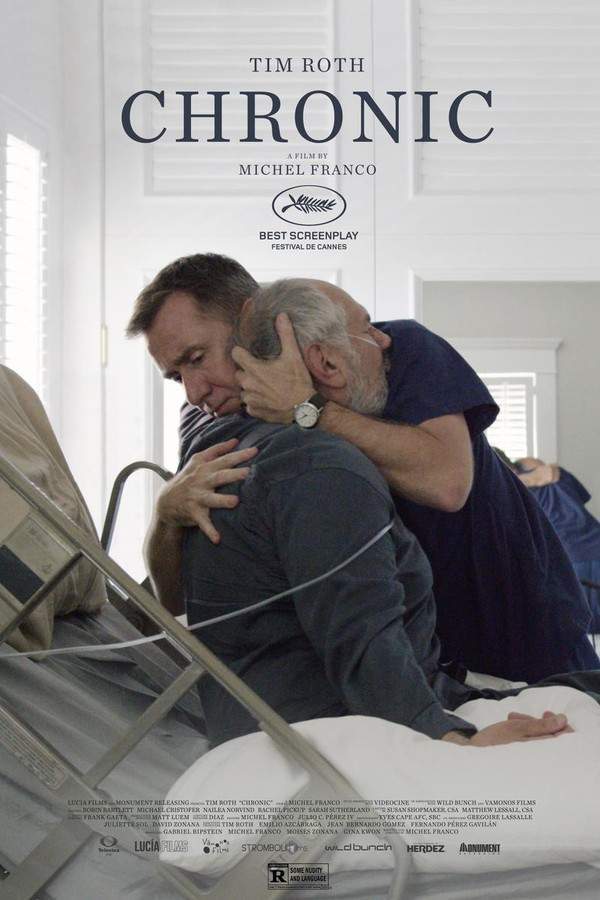
Chronic (2016) movie poster

Characters & Themes

Chronic (2016) Characters, Setting & Themes Explained

Release, runtime and language
2016 · 93 min · English
Loading streaming availability…
Directed by
Michel Franco

A compassionate nurse named David, portrayed by Tim Roth, finds purpose and connection while caring for terminally ill patients. However, he battles his own struggles with chronic depression and carries a heavy burden of guilt and remorse. Seeking solace in his work, David attempts to mask his inner turmoil, but must eventually confront his troubled past to find a path toward healing and redemption.

On this page (8)
  1. 1 Where to watch
  2. 2 Characters explained (8)
  3. 3 Where & when it takes place
  4. 4 Themes & meaning (4)
  5. 5 Character & meaning questions
  6. 6 Movie threads
  7. 7 Movies like Chronic
  8. 8 Every angle
Loading streaming availability…

8 main characters · contains spoilers

Chronic Characters Explained: Who Is Who

The main characters of Chronic (2016), heroes and villains: what drives them, how they change over the course of the story and what each of them reveals about the film's bigger ideas.

  • David

    David is a nurse whose deep empathy drives his caregiving, often blurring the line between professional duty and personal attachment. He tends dying patients with meticulous care and seeks to connect on a human level, even as his past grief shapes his decisions. The combination of devotion and boundary-testing leads to consequences that reveal the film’s moral ambiguity.

    • 🩺 Nurse
    • 💔 Grief
    • 🚫 Boundary issues
    • 🕵️‍♂️ Moral ambiguity
  • Sarah

    Sarah is the first patient, dying of AIDS, whom David tends with tenderness and dignity. He helps with daily care and attends her funeral, making her death a catalyst for his escalating personal and professional troubles. Her passing marks the beginning of a cascade of ethical complexities surrounding care.

    • 🫀 Dying patient
    • 🕊️ Farewell
    • 🧼 Caregiving
  • John

    John is an elderly stroke victim and an architect who forms a bond with David, allowing him to share personal moments. He becomes a catalyst for the harassment case against the agency when a porn incident occurs, illustrating how care relationships can become entangled with vulnerability and judgment. His family’s lawsuit pushes David out of his role, complicating his career and life.

    • 🏛️ Architect
    • 💬 Patient
    • 🪟 Boundaries
  • Nadia Wilson

    Nadia is a medical student who initially is the object of David’s stalking, but is revealed to be his daughter. This twist forces David to confront his past actions and the consequences of his grief. Her relationship with David complicates his caregiving and personal identity.

    • 👧 Daughter
    • 🧠 Medical student
    • 👨‍👧 Family ties
  • Isaac

    Isaac is David’s friend and former boss who helps him land work with other clients. He knows about the harassment suit but continues to advocate for David, illustrating the precarious nature of job support within a damaged system.

    • 🤝 Friend
    • 💼 Gatekeeper
    • 🕵️‍♂️ Connector
  • Martha

    Martha is a cancer patient who hires David to support her chemotherapy routine. As her cancer worsens, she lies about remission, asks David to help her die, and ultimately dies after he administers an injection, leaving a traceable trail back to him.

    • 🎗️ Cancer patient
    • 💔 Despair
    • 🧪 End-of-life decisions
  • Greg

    Greg is a 16-year-old boy confined to a wheelchair who David cares for for a week while his regular caregiver is away. Their brief interactions include friction, and Greg’s defiant moment in the park underscores the strain in caregiver–patient boundaries.

    • 🧑‍🦽 Wheelchair user
    • 😠 Defiant
    • 🗺️ Park
  • Robert

    Robert is David’s boss who fires him after the agency faces a sexual harassment lawsuit tied to John’s incident. He embodies the institutional consequences of blurred boundaries and the fragility of professional protection.

    • 💼 Boss
    • ⚖️ Accountability
    • 🧩 Management

Last updated: October 03, 2025 at 19:48

Was this helpful?

Setting

Where and When Does Chronic Take Place?

The setting of Chronic (2016): the year and time period, the places and locations, and how they shape the characters, the mood and the tension of the story.

Time period

Location

Last updated: October 03, 2025 at 19:48

Was this helpful?

4 major themes

Chronic Meaning: Themes & Message Explained

What is Chronic (2016) really about? The emotional, social and philosophical themes the film keeps returning to, its symbolism and the message beneath the surface.

  • Caregiving ethics

    David's caregiving is built on genuine empathy as he bathes, dresses, and manages daily routines for dying patients. His personal involvement with Sarah, and his willingness to go beyond the call of duty, blur professional boundaries. When John’s family sues over a boundary issue, David is fired, underscoring how care can slide into moral ambiguity. The film uses caregiving to question whether compassion can justify actions that risk harm.

  • Mortality

    Death is a constant presence, shaping David’s choices and the fates of his patients. From Sarah's AIDS-related death to John's vulnerable state, the story centers on how caregivers confront loss. The narrative treats mortality as intimate, prompting questions about what it means to ease someone’s final days. The ending, with David dying in a car accident, reinforces life’s fragility.

  • Family revelations

    A buried family connection comes to light when Nadia, the young woman David stalked, is revealed to be his daughter studying medicine. This twist forces David to confront his past actions and the consequences of his grief. His interactions with Nadia and his ex-wife reshape how we view trust, responsibility, and kinship. The revelation reframes his caregiving and his own personal redemption arc.

  • Boundaries and power

    The film foregrounds the fragile boundary between care and control, highlighting how personal desire can distort professional responsibility. David’s actions—from intimate care to eventual euthanasia of a patient—probe the ethics of mercy and coercion. The harassment suit against the agency and the circumstances around John’s porn viewing intensify the critique of workplace boundaries. Ultimately, the story asks whether mercy can justify actions that undermine patients’ autonomy.

Last updated: October 03, 2025 at 19:48

Was this helpful?

Character & theme questions

Chronic Characters & Meaning: Your Questions Answered

The questions people ask about Chronic (2016): who the characters really are, their relationships, what the symbols mean, where it takes place and what the movie is really about. Each answer contains spoilers.

Q1

What are the main themes in Chronic?

The film explores several interconnected themes including caregiving ethics and the moral ambiguity of compassion, mortality and how characters confront death, family revelations that reframe the protagonist's actions, and the fragile boundary between care and control. These themes weave together to examine what happens when personal desire distorts professional responsibility.

  • caregiving ethics
  • mortality
  • family
  • boundaries
  • compassion
  • redemption
Q2

Who is Nadia Wilson and what is her connection to David?

Nadia Wilson is revealed to be David's estranged daughter, a medical student who he had stalked in the past. This family revelation forces David to confront his past actions and the consequences of his grief. The twist reframes his entire caregiving journey and adds psychological depth to his personal redemption arc.

  • Nadia Wilson
  • daughter
  • family
  • David
  • stalking
  • revelation
Q3

How does the film question caregiving ethics?

Chronic uses David's caregiving to probe whether compassion can justify actions that risk harm. David bathes, dresses, and manages daily routines for dying patients with genuine empathy, but his personal involvement often blurs professional boundaries. When John's family sues over a boundary issue, David is fired, demonstrating how care can slide into moral ambiguity.

  • caregiving
  • ethics
  • professional boundaries
  • nurse
  • compassion
Q4

How does the film handle the theme of mortality?

Death is a constant presence throughout the film, shaping David's choices and his patients' fates. From Sarah's AIDS-related death to John's vulnerable state, the narrative treats mortality as intimate, exploring what it means to ease someone's final days. The bleak ending, where David dies in a car accident, reinforces life's fragility and the cyclical nature of loss he witnesses.

  • mortality
  • death
  • terminal illness
  • loss
  • fragility
Q5

Who is David and what drives him as a nurse?

David is a compassionate nurse portrayed by Tim Roth who cares for terminally ill patients. His deep empathy drives his caregiving, often blurring the line between professional duty and personal attachment. He seeks purpose and connection through his work while battling chronic depression and carrying guilt from his past, including his deceased son and estrangement from his daughter.

  • David
  • nurse
  • depression
  • guilt
  • caregiver
  • motivation
Q6

How does the film explore the line between care and control?

Chronic highlights how personal desire can distort professional responsibility. David's actions range from intimate care to euthanasia, probing the ethics of mercy and coercion. The harassment suit against the agency and the circumstances around John intensify the critique of workplace boundaries. The story ultimately asks whether mercy can justify actions that undermine patient autonomy.

  • boundaries
  • control
  • mercy
  • euthanasia
  • power
  • ethics
Q7

Why does David lose his job at the care agency?

David is fired after the agency faces a sexual harassment lawsuit tied to John's incident. John, an elderly stroke patient, becomes a catalyst when a porn incident occurs, and his family files a lawsuit. Robert, David's boss, fires him as a result, illustrating how care relationships can become entangled with vulnerability and judgment, ending David's career at the agency.

  • firing
  • lawsuit
  • John
  • harassment
  • agency
  • Robert
Q8

Who is Martha and what happens with her care?

Martha is a cancer patient who hires David to support her chemotherapy routine. As her cancer worsens, she lies about remission and eventually asks David to help her die. She ultimately dies after he administers an injection, leaving a traceable trail back to him. This arc represents one of the film's most direct explorations of mercy killing and its consequences.

  • Martha
  • cancer
  • euthanasia
  • death
  • injection
  • mercy
Q9

What is the tone and emotional approach of the film?

Chronic employs a restrained, low-key approach rather than high drama. The slow pacing is evidenced by emphasis on routine caregiving tasks and quiet character moments over a fast-moving plot. This contributes to a reflective, melancholic tone with HEAVY emotional weight, given themes of terminal illness, assisted death, and profound personal grief.

  • tone
  • pacing
  • melancholy
  • emotional
  • slow
  • reflective
Q10

Does David find redemption in the film?

While David attempts to find healing and redemption through his caregiving work, the ending is bleak. He dies suddenly in a car accident, mirroring the fates of his patients and offering no clear redemption. The family revelation with his daughter Nadia provides a moment of confrontation with his past, but the film leaves his ultimate fate ambiguous and tragic.

  • redemption
  • ending
  • death
  • David
  • tragedy
  • healing

Movie threads

More Movies Like Chronic, by Mood & Story

Curated lists built around what makes Chronic tick: the same mood, the same kind of story or the same emotional payoff. Each list explains why these movies belong together.

Movies about caregivers with heavy burdens like Chronic

Intimate stories of those who care for others while hiding their own pain. For viewers who appreciated the somber portrayal of caregiving in Chronic, this list features movies with similar character-driven stories. If you liked watching David navigate his professional duty and personal despair, you'll find these quiet, emotionally heavy dramas about nurses, family members, and other caretakers compelling.

  • somber
  • introspective
  • lonely
  • heavy
  • tragic
  • quiet
  • Tone: melancholic, somber
  • Pacing: slow, deliberate
Why these movies?

The story pattern: Narratives in this thread often follow a quiet, character-centered arc. The protagonist's routine of caring for others (often the ill or dying) serves as a backdrop for exploring their internal struggles. The plot is frequently less about external events and more about the slow, painful process of confronting past trauma and enduring grief.

Why they belong together: These films are grouped by their shared focus on the caregiver's perspective, a melancholic and introspective tone, and a heavy emotional weight derived from themes of loss and duty. They create a specific, reflective mood built on quiet moments and unspoken sorrow.


Bleak dramas about guilt and remorse like Chronic

Character-driven dramas where profound guilt leads to a bleak, ambiguous end. If the unresolved, heavy feeling of guilt and the bleak ending of Chronic resonated with you, explore these similarly themed movies. This collection features character-driven stories about individuals haunted by their past, leading to somber and emotionally complex conclusions that mirror the experience of the film.

  • bleak
  • tragic
  • heavy
  • guilt-ridden
  • somber
  • psychological
  • Tone: melancholic, bleak
  • Pacing: slow, psychological
Why these movies?

The story pattern: The pattern involves a protagonist marked by a specific, haunting regret (often involving family). Their current actions are a direct, sometimes subconscious, response to this guilt. The story unfolds slowly, revealing the past in fragments, and culminates in an ending that reflects the inescapable nature of their pain, rather than providing a tidy resolution.

Why they belong together: Movies in this thread share a strong connective tissue through their central theme of debilitating guilt, a melancholic to bleak tone, and conclusions that deny simple redemption. They deliver a powerful, heavy emotional experience focused on psychological realism and the lingering effects of trauma.

If you liked this

Movies Like Chronic

Similar movies to Chronic: the same genre, themes or kind of story. Each one comes with its own plot summary, timeline and ending explained.

Browse all movie summaries

Every angle

Chronic (2016) Explained: Plot, Timeline & Characters

Everything about Chronic in one place: what happens in the plot summary, the timeline in chronological order, the characters and meaning and a spoiler-free summary. What's After the Movie adds the cast, box office and post-credit scenes.

Coming soon on iOS and Android

The Plot Explained Movie Summary App

Plot summaries, endings explained and timelines on your phone. Catch up on any movie in minutes, save your favorites and never miss a twist again.

Be the first to know when we launch. Your email stays private, always.

Learn more about the app