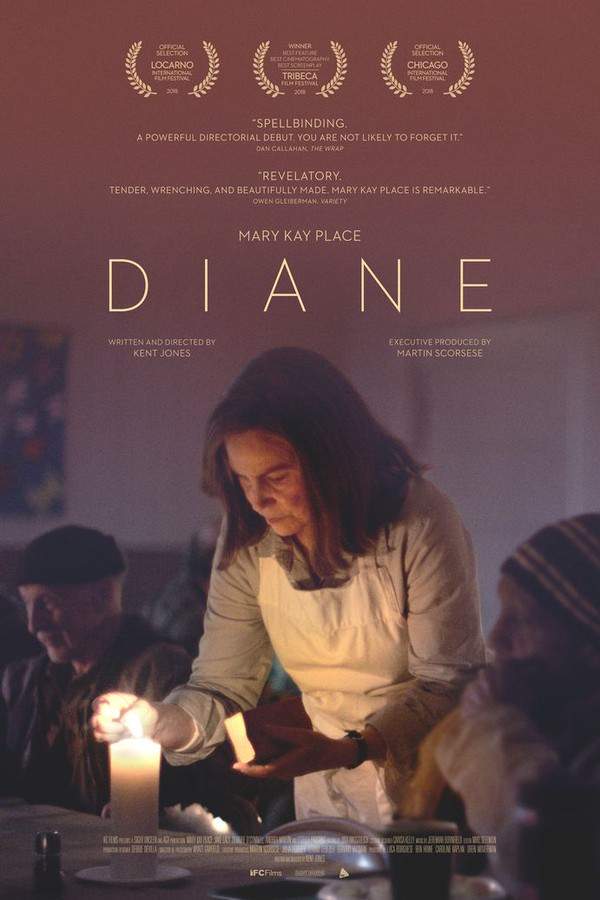
Diane Rhodes is a sixtysomething widow living in Pittsfield, Massachusetts, whose days are filled with small acts of service for others. Each morning she composes a detailed to-do list, then delivers a casserole to friends who are navigating tough times, and she even makes a quick stop to pick up a teacher friend from school before returning home to hand-clean clothes to her adult son Brian. Brian, a heroin addict and alcoholic, lives in clutter and squalor with his girlfriend Carla, herself entangled in addiction.
When Diane arrives at Brian’s apartment, which she sometimes has a key to, she finds him passed out on the couch. She wakes him and they spar over his sobriety; he claims bronchitis and resents Diane’s suggestion that he isn’t sober and needs to return to the hospital where he detoxed. After she leaves, Diane visits her cousin Donna, who is hospitalized with advanced cervical cancer. Donna is asleep when Diane arrives, and she spends time chatting with the nursing staff, a habit that underscores Diane’s habit of finding connection in ordinary moments.
The days roll by with Diane visiting Brian and Donna in succession. Brian pushes back against his mother’s visits, while Donna declines morphine from her nurses and instead enjoys a low-stakes game of gin rummy with Diane. As Donna’s pain rises, Diane calls her aunt Madge, who a neighbor drives to the hospital. Donna seems visibly soothed by her mother’s presence, and Diane later accompanies Madge to a family gathering with their aunts and uncles.
A tense exchange with her eldest aunt leads to a moment where Aunt Ina speaks, and then Aunt Mary shares a story about an encyclopedia salesman. Diane then goes to dinner at a buffet restaurant with her best friend Bobbie, and the two reflect on the many people their age who are dying, acknowledging the weight of time passing.
At the soup kitchen where Diane volunteers, she befriends a regular named Tom and demonstrates a confident, familiar grasp of the kitchen’s rhythm—how much food should be out, how to handle a blackout by lighting candles, and how to maintain dignity for those served. The power outage becomes a small luminous moment, showing how Diane keeps the flow of care going even in darkness.
As Donna’s condition worsens, Brian’s status grows more precarious. On one visit, Diane finds Brian missing from his apartment, prompting a search that stretches across several days. The arc of their relationship grows more fraught as Diane wrestles with the fragility of her son’s sobriety and the limits of her own influence.
A night at a bar, where Diane drinks margaritas and lets the jukebox do the talking, ends with her collapse and a circle of friends driving her home. Donna’s impending death then pulls her into the hospital again, where Brian’s call briefly interrupts the moment of mourning. Donna dies, and Madge reassures Diane that Donna loved her, a moment that finally breaks through the emotional armor Diane has worn.
Later, Diane meets Brian at a small restaurant where he speaks with new, clearer resolve about getting help. He reveals he has gone to a facility on Cape Cod to begin recovery. Diane contemplates telling him something important, but pauses as the waitress arrives with coffee. She postpones her revelation, a sign of the complexity of their relationship and the caution with which she navigates his faith and her own feelings.
Time passes in a liminal way. Diane attends a Pentecostal service, where Brian, now wearing a wedding ring, participates in a trust-fall exercise at the front of the church. In a quieter moment, Diane speaks with Ina about how she handles Brian’s fervent religiosity, while a manicurist named Jennifer notes Diane’s family history and mentions Diane’s daughter-in-law, Tally, drawing a contrast between Tally’s faith and Diane’s own more cautious approach. The conversation hints at a larger family tension around belief, belonging, and identity.
Diane later shares lunch with Brian and Tally, and they discuss whether she will join their church. The moment is tender but tense, as she navigates the push of others’ beliefs against her own sense of self. She leaves, but not without a lingering sense of responsibility and love for both her son and those around him.
As the days unfold, Diane channels her grief into confessional poetry, inspired in part by Emily Dickinson. A vivid dream summons Jess, Donna’s former boyfriend, who appears as a troubling figure of the past, though a later entry softens that memory by recasting him in a kinder light. Shopping for groceries, she notices a former co-worker at the soup kitchen and avoids the encounter, a quiet sign of the emotional boundaries she tries to maintain.
Diane returns to Ina’s world, but Ina’s presence remains a touchstone rather than a shield. She asks Ina about coping with Brian’s religiosity and is reminded that faith, like addiction, can be a demanding force. Ina offers reassurance that Brian will come around in his own time, suggesting that healing is a long process, not a single act.
Back at the soup kitchen, a moment of humility arises when Diane accidentally drops a pan. Tom helps, insisting she sit and rest while he cleans. He tells her that when she serves food, she feels a sense of salvation—all part of a quiet, human alchemy that sustains the community.
Late one night, Brian arrives again, intoxicated, and the conversations they share reveal a complicated, honest reconciliation. He admits his past cruelty and explains that his anger toward her was a learned performance, something he no longer wants to wear. They find a fragile peace, and he teases that he’s heading back to “Jesusland,” a bittersweet label that captures both their shared history and the uncertain road ahead.
In the final scene, an older Diane stands outside in the snow, filling bird feeders. She pauses, her thoughts flitting between tasks, and then collapses into the white, a poignant reminder that even the most organized lives can falter and that care, love, and memory persist beyond the moment. A voice calls her name from offscreen, and the film closes on her closed eyes, the to-do list still waiting to be completed.