







Plot Explained Spoilers guaranteed!
Plot Explained

Browse by genre

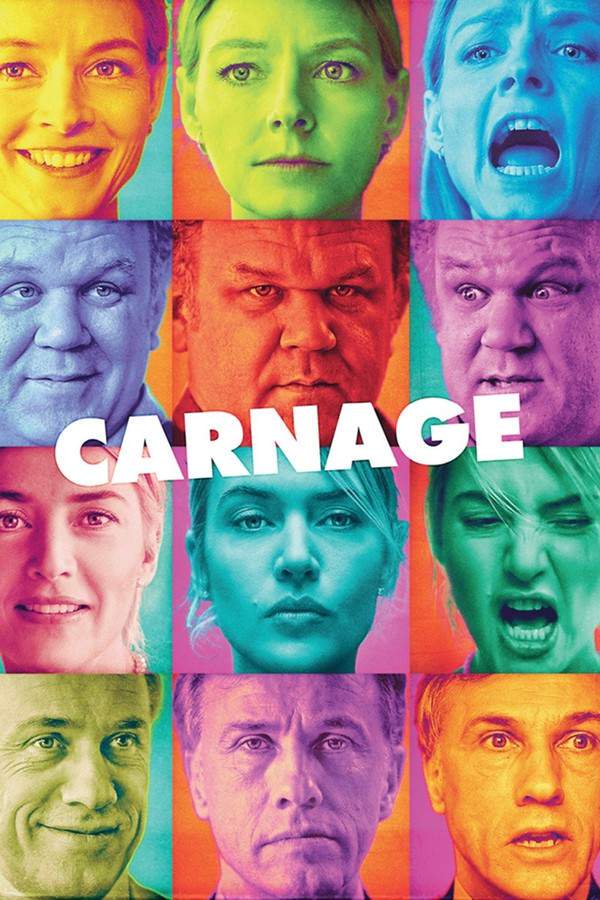
Carnage (2011) movie poster

Timeline

Carnage (2011) Timeline Explained – Every Event in Order

Release, runtime and language
2011 · 79 min · English
JustWatch #9,669 17
Directed by
Roman Polanski
Starring
Jodie Foster, Kate Winslet, Christoph Waltz

Following a playground altercation, two parents—a British journalist and his wife, and a liberal American couple—initially meet to mediate the situation. However, what begins as a polite discussion quickly devolves into a darkly comedic and increasingly volatile confrontation. As tensions escalate, long-simmering resentments and hidden truths surface, exposing the fragility of their carefully constructed facades and the chaotic underbelly of suburban life. The evening descends into a whirlwind of accusations and raw emotion, testing the limits of civility and revealing primal instincts.

On this page (7)
  1. 1 Where to watch
  2. 2 Events in order (10)
  3. 3 Timeline questions answered
  4. 4 The book behind the movie
  5. 5 Movie threads
  6. 6 Movies like Carnage
  7. 7 Every angle

Where to watch

Where to Watch Carnage (2011)

Where can you watch Carnage? Stream, rent or buy it in the US, including on Fawesome, Amazon Video and Apple TV Store: current JustWatch availability with up-to-date prices.

Streaming availability powered by JustWatch

10 events in order · contains spoilers

Carnage Timeline: Events in Chronological Order

Every key event of Carnage (2011) in order, scene by scene, with when and where it takes place. Use it to untangle flashbacks, time jumps and parallel storylines, to refresh your memory before the sequel or to find the exact scene you are thinking of.

  1. Altercation at Brooklyn Bridge Park

    The story begins with eleven-year-old Zachary Cowan attacking his classmate Ethan Longstreet with a stick during a heated argument in Brooklyn Bridge Park. This violent incident results in serious injuries for Ethan, including the loss of a tooth, prompting both families to become involved.

    Where
    Brooklyn Bridge Park
  2. Parents Decide to Convene

    After the incident, Ethan's parents, Penelope and Michael, take the initiative to invite Zach's parents, Nancy and Alan, to their Brooklyn apartment. The aim is to have a calm discussion to address the altercation and find a resolution to the conflict between the boys.

    Where
    Brooklyn apartment
  3. Tensions Begin to Rise

    As the meeting commences, the underlying tensions among the parents start to surface. Penelope emphasizes her desire for Zach to take responsibility for his actions, while Alan's focus on his job causes friction during the discussion, highlighting the conflicting priorities of the parents.

    Where
    Brooklyn apartment
  4. Clash of Values

    Penelope is driven by her values of justice and human rights, insisting on their son's accountability, while Alan's dismissive attitude toward the situation becomes increasingly apparent. He even suggests covering Ethan's dental expenses without comprehending the emotional weight of the incident.

    Where
    Brooklyn apartment
  5. Escalating Arguments

    What was intended to be a brief meeting transforms into a heated confrontation as various arguments erupt among the parents. Penelope's frustration grows, particularly at the Cowans' defensiveness regarding Zach’s behavior, creating a charged atmosphere filled with conflict.

    Where
    Brooklyn apartment
  6. Vomit Incident

    The situation spirals further when Nancy, outraged by Alan's persistent phone interruptions, unexpectedly vomits on Penelope's treasured art book. This shocking event highlights the ongoing chaos and leads to a deeper exploration of the parents' hidden grievances.

    Where
    Brooklyn apartment
  7. Revelations of Parenting Struggles

    In the fallout from the chaotic evening, personal flaws of the characters begin to emerge. Michael and Alan bond over their shared disdain for parenting challenges, while Penelope internally grapples with her issues of alcohol and her idealistic views of child-rearing.

    Where
    Brooklyn apartment
  8. Drunken Acknowledgment

    As the night draws to a close, the parents reach a drunken conclusion, acknowledging the tumultuous day they have experienced. Nancy expresses an unsettling sense of relief, claiming to be glad that her son had hurt another child, signaling a complex moral ambiguity among the adults.

    Where
    Brooklyn apartment
  9. Unexpected Twist the Next Day

    The day after the chaotic meeting, a surprising moment occurs when Ethan and Zach are seen in the park chatting amicably. This unexpected encounter suggests that despite the turmoil between the parents, the children have reached an unanticipated truce.

    Where
    Brooklyn Park
  10. Conclusion of the Dispute

    The parents, having engaged in a tense and revealing dialogue, ultimately come to terms with their differing perspectives. The meeting serves as a microcosm of parental responsibility and societal expectations, encapsulating the complexity of contemporary family dynamics.

    Where
    Brooklyn apartment

Last updated: November 03, 2024 at 22:46

Was this helpful?

Timeline questions answered

Carnage Timeline Explained: Your Questions Answered

When does it happen, and why in that order? The questions people ask about the chronology of Carnage (2011): time jumps, flashbacks, cause and effect between scenes and the correct order of events, each answered with spoilers.

Q1

Why does Nancy vomit on Penelope's art book?

Nancy vomits on Penelope's treasured art book as a reaction to Alan's relentless phone interruptions during the meeting. Throughout the evening, Alan repeatedly steps away to take work calls from his pharmaceutical clients, which Nancy interprets as a blatant disregard for their son's actions and the seriousness of the situation. Her physical reaction is triggered by a combination of outrage, stress, and probably alcohol, representing the breaking point of her suppressed frustration with both her husband's professional detachment and the escalating conflict.

Foreshadowing: Alan's earlier phone calls during the meeting establish his prioritization of work over family matters, building Nancy's resentment.

  • nancy
  • art book
  • vomit
  • alan phone calls
  • frustration
Q2

Why does the meeting between the parents escalate so dramatically?

The meeting escalates because both couples represent fundamentally different approaches to parenting and accountability. Penelope, a human rights lawyer, demands moral responsibility from Zach and feels the Cowans are being defensive. Alan, a PR consultant, views the situation as a business problem to be settled financially and efficiently. When Nancy calls her own son a "maniac" to provoke a reaction, it triggers Penelope's protective instinct. The clash reveals deeper resentments about class, privilege, and the failure of adult civility, causing every attempt at diplomacy to backfire.

Foreshadowing: The initial politeness at the door masks the underlying tension as both couples size each other up.

  • escalation
  • conflict
  • parenting values
  • class differences
  • communication breakdown
Q3

Why do Ethan and Zach reconcile in the park at the end?

The children reconcile because, unlike their parents, they lack the accumulated resentments and ideological baggage that fuel adult conflicts. Kids naturally move past grievances faster, especially when the original altercation was relatively minor. The film suggests that the parents' intense, self-righteous battle was ultimately irrelevant to the boys themselves. This ironic ending highlights how adults often project their own Issues onto children's conflicts, making the dispute about themselves rather than the children.

Foreshadowing: Early in the film, the boys' argument is shown as a typical childhood dispute over a game, not a deep-seated enmity.

  • children reconciliation
  • irony
  • parents vs children
  • park scene
  • resolution
Q4

Why is Alan so dismissive of the entire situation?

Alan treats the altercation as a trivial matter because he views it through a transactional, professional lens. As a PR consultant for a pharmaceutical company, his career revolves around managing perceptions and minimizing conflicts. He proposes paying for Ethan's dental work, treating the injury as a problem that can be solved with money rather than emotional accountability. His detachment also stems from seeing Zach's behavior as normal childhood aggression that doesn't warrant the intense moralizing Penelope brings to the discussion.

Foreshadowing: Alan's constant business phone calls throughout the meeting establish his priority is work, not family dynamics.

  • alan
  • cowans
  • dismissive
  • pharmaceutical pr
  • work priorities
Q5

Why does Nancy say she's glad her son hurt another child?

Nancy's statement that she's glad Zach hurt Ethan is a moment of dark, revelatory honesty about her true feelings. By the end of the chaotic evening, she's consumed alcohol and reached a breaking point where pretense dissolves. The comment reveals her deep-seated competitive nature and defensive loyalty to her son despite recognizing his flaws. It's also a deliberate provocation aimed at shocking Penelope, reflecting how the evening has stripped away all social civility. The line exposes the primal, tribal instincts that lurk beneath polite adult behavior.

Foreshadowing: Nancy's earlier anger at being judged as a bad mother and her provocative labeling of Zach as a "maniac" hint at her internal conflict.

  • nancy
  • gladness
  • villain reveal
  • motherhood
  • defensive loyalty
Q6

What does the title Carnage mean in relation to the story?

The title Carnage refers to the metaphorical destruction that erupts when civilized facades crumble. While no physical violence occurs between the adults, the evening results in the complete annihilation of the social contract they attempt to maintain. The word evokes war and battlefield aftermath, suggesting that verbal warfare and emotional devastation are forms of carnage. The irony is that a minor children's scuffle triggers full-scale adult warfare, making the title a commentary on how petty disputes can expose the worst in people.

Foreshadowing: The polite introduction between couples early on establishes the false civility that will be destroyed.

  • carnage
  • title meaning
  • irony
  • civilized behavior
  • war metaphor
Q7

Why do Michael and Alan bond during the evening?

Michael and Alan bond over their shared frustration with the demands of parenting and marriage. Both feel trapped in domestic roles they didn't anticipate. Michael resents his mundane life as a parent and salesman, while Alan sees family obligations as distractions from his career. Their bond represents a moment of male solidarity against the perceived absurdity of the situation and their wives' emotional expectations. This connection disturbs Penelope, who sees it as the men abandoning responsibility.

Foreshadowing: Michael's early sighing and visible boredom establish his dissatisfaction before the Cowans arrive.

  • michael
  • alan
  • male bonding
  • fatherhood frustration
  • alliance
Q8

What is Penelope's relationship with alcohol in the film?

Penelope's alcohol consumption increases as the evening progresses, paralleling her loss of control over the situation. While she begins as the most composed and morally righteous participant, drinking helps her tolerate the escalating conflict until her principles collapse into raw emotion. The film hints that her idealistic view of justice and proper behavior is partly a coping mechanism for deeper insecurities. Her drunken breakdown reveals a person struggling to maintain a facade of competence while internally unraveling.

Foreshadowing: Penelope's initial insistence on proper procedure and her judgment of others' behavior suggests she relies on external standards to define herself.

  • penelope
  • alcohol
  • drinking
  • ideals collapse
  • emotional breakdown
Q9

What does Carnage say about suburban parenting and social hypocrisy?

Carnage critiques how parents project their own failures and anxieties onto their children's disputes. Both couples claim to want resolution but actually use the meeting to airing grievances and prove moral superiority. The film shows that behind closed doors, the polite facade of suburban civility masks competitive parenting, marital resentments, and class-based judgments. The children's quick reconciliation exposes the absurdity of adults weaponizing minor incidents to wage ideological battles.

Foreshadowing: The formal setting of the Brooklyn apartment and the careful politeness at the start establish the false decorum that will collapse.

  • social hypocrisy
  • parenting criticism
  • suburban life
  • civility collapse
  • class tensions
Q10

What tensions exist in Penelope and Michael's marriage?

Penelope and Michael's marriage shows strain from her moral perfectionism and his feeling of inadequacy. Penelope is the dominant, idealistic force who judges others harshly, while Michael feels marginalized in his own home. His willingness to side with Alan against Penelope near the end reveals resentment that's been building. Michael's mundane career as a real estate salesman contrasts with Penelope's prestigious law career, creating tension around status and fulfillment. Their marriage mirrors the broader theme of failed adult communication.

Foreshadowing: Michael's initial willingness to defer to Penelope and his visible discomfort establish his secondary status in the relationship.

  • penelope
  • michael
  • marriage strain
  • power dynamic
  • communication failure
Q11

What tensions exist in Alan and Nancy's marriage?

Alan and Nancy's marriage is strained by his obsessive work focus and her resulting emotional neglect. Nancy clearly resents being secondary to Alan's career, demonstrated by her explosive reaction to his constant phone calls. She defends Zach aggressively partly to assert herself in a marriage where she feels unimportant. Their dynamic shows a transactional relationship where emotional connection has been replaced by provider-dependent roles. Nancy's final admission that she's glad Zach hurt someone reveals how disconnected she's become from her own values.

Foreshadowing: Alan's phone interrupting Nancy mid-sentence early in the meeting establishes the pattern of neglect.

  • alan
  • nancy
  • marriage
  • work-life balance
  • neglect
  • resentment

Movie threads

More Movies Like Carnage, by Mood & Story

Curated lists built around what makes Carnage tick: the same mood, the same kind of story or the same emotional payoff. Each list explains why these movies belong together.

Claustrophobic Pressure-Cooker Dramas like Carnage

Tense, single-location stories where escalating conflict traps the characters. This collection highlights movies like Carnage that rely on a single, confined setting to build unbearable tension. If you enjoyed the intense, real-time verbal sparring and societal breakdown in Carnage, you'll find similar stories here where characters are trapped and forced to confront their deepest conflicts in a pressure-cooker environment.

  • claustrophobic
  • tense
  • uncomfortable
  • confrontational
  • raw
  • volatile
  • Tone: tense, confrontational, volatile
  • Pacing: steady, escalating
Why these movies?

The story pattern: The narrative pattern unfolds in real-time or near real-time within a single, confined space. A seemingly civil situation deteriorates logically and relentlessly as polite dialogue gives way to personal attacks and emotional chaos, exposing the fragile foundations of relationships and social identities.

Why they belong together: Movies are grouped here for their shared high-intensity, claustrophobic atmosphere and their steady pacing that builds to an emotional crescendo. They share a tense, confrontational tone and focus on the dramatic unravelling of civility under pressure.


Darkly Comedic Social Satires like Carnage

Polite facades crumble into absurdity, exposing societal hypocrisy with bitter humor. Discover movies like Carnage that blend comedy and drama to satirize social norms. If you liked the darkly funny breakdown of polite conversation and the exposure of marital and class tensions in Carnage, this thread features similar films where humor is found in the uncomfortable truths of human interaction.

  • darkly comedic
  • satirical
  • uncomfortable
  • cringe comedy
  • social commentary
  • absurd
  • Tone: darkly comedic, tense, bittersweet
  • Pacing: steady
Why these movies?

The story pattern: The narrative follows characters whose carefully constructed social personas are systematically dismantled. The comedy is derived from the increasing absurdity of the situation and the characters' desperate attempts to maintain control, often resulting in a bittersweet or ironic conclusion that highlights the folly of their initial pretenses.

Why they belong together: These movies are united by their mix of tense drama and dark, situational comedy. They share a focus on communication breakdowns, social faux pas, and the thematic exploration of civility versus primal instincts, all presented with a steady pace and medium emotional weight.

If you liked this

Movies Like Carnage

Similar movies to Carnage: the same genre, themes or kind of story. Each one comes with its own plot summary, timeline and ending explained.

Browse all movie summaries

Every angle

Carnage (2011) Explained: Plot, Timeline & Characters

Everything about Carnage in one place: what happens in the plot summary, the timeline in chronological order, the characters and meaning and a spoiler-free summary. What's After the Movie adds the cast, box office and post-credit scenes.

Coming soon on iOS and Android

The Plot Explained Movie Summary App

Plot summaries, endings explained and timelines on your phone. Catch up on any movie in minutes, save your favorites and never miss a twist again.

Be the first to know when we launch. Your email stays private, always.

Learn more about the app