Plot Explained Spoilers guaranteed!
Plot Explained

Browse by genre

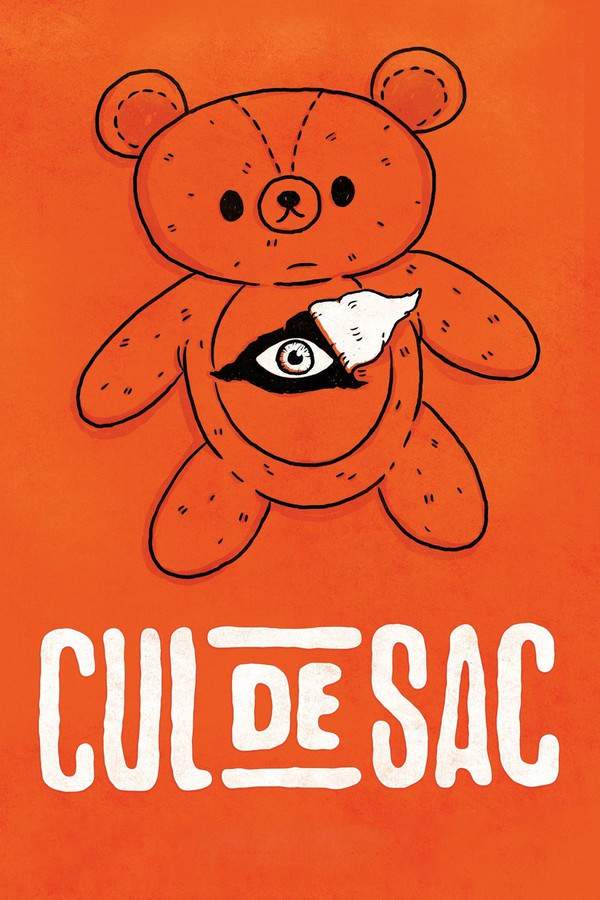
Cul-de-sac (1966) movie poster

Plot Summary

Cul-de-sac (1966) Plot Summary Explained

Release, runtime and language
1966 · 112 min · English
JustWatch #17,880 5
Directed by
Roman Polanski
Starring
Lionel Stander, Donald Pleasence, Françoise Dorléac, Geoffrey Sumner, Iain Quarrier, Jack MacGowran

A darkly comedic thriller centered around a family’s growing paranoia. When a hidden microphone is discovered inside their young son’s teddy bear, the parents become increasingly suspicious, questioning the safety of their home and the people around them. The seemingly harmless toy becomes a chilling symbol of invasion, blurring the lines between reality and unsettling surveillance as they struggle to uncover the truth.

On this page (6)
  1. 1 Where to watch
  2. 2 What happens: full plot
  3. 3 Plot questions answered
  4. 4 Movie threads
  5. 5 Movies like Cul-de-sac
  6. 6 Every angle

Where to watch

Where to Watch Cul-de-sac (1966)

Where can you watch Cul-de-sac? Stream, rent or buy it in the US, including on Amazon Prime Video, FlixFling and fuboTV: current JustWatch availability with up-to-date prices.

Streaming availability powered by JustWatch

Full plot summary · contains spoilers

What Happens in Cul-de-sac: Full Plot Summary

The whole story of Cul-de-sac (1966) explained, from the opening scene to the final frame: every key event, every twist and what it all adds up to. Read it as a quick recap before the sequel, to check a scene you missed, or to finally understand what really happened.

Dickey is a gruff American gangster who shoves his broken-down car along a causeway while a rising sea closes in around him and his oddball companion, Albie, who lies inside wounded from a botched robbery. Cut off by the encroaching waters, they make for the only path to the remote tidal island of Lindisfarne in Northumberland, where a dark castle sits atop a hill and an intensely nervous, effeminate Englishman named George lives with his French second wife, Teresa, a young and impulsive woman.

Inside the fortress, Donald Pleasence conveys George’s deep seethe of nerves and theatrical vanity, while Françoise Dorléac embodies Teresa—a lure of youth and heat who flirts with danger as easily as she moves through rooms full of ostentation. The moment Dickey breaks into the castle, he seizes control of the place, calls his underworld boss, Katelbach, to arrange a pickup, and cuts the phone lines, turning the home into a hostage arena as he waits for the next day’s arrival.

As Albie bleeds out, Dickey forces Teresa and George to dig a grave for him and then presides over a grim wake, the two adults sharing cheap liquor on the beach while Teresa swims nude, a provocative splash against the castle’s grim atmosphere. The following morning, a car pulls up to the castle—this time not Katelbach, but a group of George’s loud, intrusive friends who have arrived unannounced. Dickey pretends to be a servant, while Teresa casts longing glances at one guest, Cecil, and the dinner unfolds with uneasy social comedy punctuated by fear.

A startling disruption comes when the young son of another guest finds Cecil’s shotgun and starts waving it at the terrified crowd, firing and blasting a stained-glass window. The weapon is wrestled away and stored in a hallway, heightening the sense that anything can explode into violence at any moment. Tensions simmer as Dickey reconnects the phone and discovers that Katelbach will not be sending help. With the plan crushed, he attempts to claim George’s car and drive to the mainland, but George refuses to yield.

What follows is a violent struggle: Teresa discreetly hands Dickey’s pistol to George, who then shoots the gangster multiple times. Dickey, too weak to press his own Tommy gun, collapses and fires the weapon at George’s car, setting it ablaze in a fiery explosion. Fearing arrest and retribution from Katelbach’s network, Teresa begs to flee, while George stands in a state of shock, not fully able to move.

As the castle empties and dawn breaks, Teresa and Cecil drive off into the night, leaving George alone with the chaos he has created. He rages through his art studio, then races to the beach, collapsing on a rock in a fetal pose. The morning tide swallows the shore as he sobs, calling out the name of his first wife, his voice thinning against the insistence of the rising sea and the relentless morning light. The island’s isolation closes in, leaving a stark portrait of a man undone by fear, memory, and the sudden, violent intrusion of outside forces.
Last updated: October 10, 2025 at 16:05

Was this helpful?

Plot questions answered

Cul-de-sac Plot Explained: Your Questions Answered

The questions people ask most about Cul-de-sac (1966): what happens in the confusing scenes, why the characters do what they do, the twists, hidden details and what the ending means. Each answer contains spoilers.

Q1

Why does Dickey take over George and Teresa's castle?

Dickey and his partner Albie are trapped on the causeway when the tide rises, leaving them stranded on Lindisfarne island. With Albie bleeding from a gunshot wound and no other escape route, Dickey breaks into the only inhabited building on the island, the castle, seizing control and holding its inhabitants hostage while he waits for his boss Katelbach to arrange a pickup the next day.

Foreshadowing: The opening scene establishes the tidal isolation that will prevent any escape, trapping everyone on the island together.

  • dickey
  • hostage
  • lindisfarne castle
  • tide
  • escape
Q2

Why does Teresa give Dickey's pistol to George?

Teresa secretly takes Dickey's pistol and hands it to George during the confrontation when Dickey tries to force George to hand over his car keys. Her motivation stems from Dickey holding them hostage and threatening their lives throughout the night, she wants the situation to end and sees George killing Dickey as the only way out.

Foreshadowing: Teresa had been flickering between both men throughout the siege, showing her instability and willingness to act impulsively.

  • teresa
  • pistol
  • george
  • hostage
  • dickey
Q3

Why doesn't Katelbach send help for Dickey?

After reconnecting the phone, Dickey learns that his underworld boss Katelbach will not be sending anyone to collect him. The exact reason is not explicitly stated in the film, but it's clear that Katelbach has abandoned Dickey and Albie to their fate, leaving them stranded on the island with no way off.

Foreshadowing: Dickey's initial phone call to Katelbach already establishes a one-sided power dynamic where Dickey is begging for assistance.

  • katelbach
  • dickey
  • gangster
  • abandoned
  • help
Q4

Why does George shoot Dickey?

George shoots Dickey after Dickey demands George's car to escape to the mainland. George refuses to give up his car, and the confrontation escalates into violence. With Teresa having handed him the pistol, George fires multiple shots at Dickey, ending the hostage situation through lethal force.

Foreshadowing: Earlier tension between Dickey and George over the phone and car keys sets up this final confrontation.

  • george
  • dickey
  • shooting
  • car
  • confrontation
Q5

Why does Teresa leave with Cecil at the end?

Teresa leaves with Cecil because she is terrified of the consequences, she fears arrest for Dickey's murder and potential retaliation from Katelbach's criminal network. When Cecil returns to retrieve his shotgun and offers to take them to the police, Teresa chooses to flee with him rather than remain and face the fallout with George.

Foreshadowing: Teresa had been flirting with Cecil throughout the dinner, showing an existing attraction that culminates in her choice to escape with him.

  • teresa
  • cecil
  • escape
  • flee
  • police
Q6

Why does George refuse to leave the castle with Cecil?

George refuses to leave with Cecil despite the chaos because he is psychologically broken and emotionally unable to abandon his home. The castle represents his last anchor to stability, and after the traumatic night, having killed a man and watched his wife leave with another man, George collapses into despair, unable to face the outside world.

Foreshadowing: George's deep-seated nervousness and theatrical vanity, established early in the film, reveal his inability to cope with real crisis.

  • george
  • cecil
  • castle
  • leave
  • breakdown
Q7

Why does George call out his first wife's name at the end?

At the end, George collapses on a rock by the rising sea, sobbing and calling out the name of his first wife. This reveals the deep emotional wounds beneath his nervous exterior, his marriage to the younger Teresa has likely reopened grief and inadequacy related to his lost first wife, and the night's traumatic events have shattered his fragile psychological state.

Foreshadowing: The stark contrast between George's aged, nervous demeanor and Teresa's youthful vitality hints at unresolved past losses.

  • george
  • first wife
  • name
  • sob
  • emotional breakdown
Q8

Why does Dickey shoot George's car?

After being shot by George and too weak to effectively wield his Tommy gun, Dickey fires the weapon at George's parked car. The bullets hit the vehicle, causing it to explode in flames. This act represents Dickey's final act of vengeance, he cannot escape, so he destroys George's property before dying.

Foreshadowing: Earlier tension over the car keys establishes the vehicle as a symbol of escape and power that Dickey desperately wants.

  • dickey
  • car
  • explosion
  • shooting
  • revenge
Q9

Why does the child fire the shotgun during dinner?

During dinner with George's friends, the young son of one of the guests finds Cecil's shotgun that was stored in a hallway and begins waving it around. In the chaos, the weapon fires, blasting out a stained-glass window. This incident heightens the sense that violence could erupt at any moment and forces the guests to leave prematurely.

Foreshadowing: The storage of the weapon in a hallway places it within reach, and the tense atmosphere makes such an outburst inevitable.

  • child
  • shotgun
  • dinner
  • window
  • chaos
Q10

Why is the ending so bleak?

The ending is bleak because George is left completely destroyed, his wife has left with another man, he has killed someone, his home is in ruins, and he is utterly alone. Sitting on a rock as the rising tide surrounds him, sobbing for his first wife, the sea symbolically engulfs what remains of his shattered psyche, representing total existential defeat.

Foreshadowing: The constant imagery of the encroaching tide throughout the film builds toward this final drowning of George's spirit.

  • george
  • ending
  • tide
  • despair
  • isolation
Q11

How did Dickey and Albie end up on Lindisfarne island?

Dickey and Albie were attempting to flee after a botched robbery. Their car broke down on the causeway to Lindisfarne, and as they tried to push it, the tide rose and blocked their path back to the mainland. Stranded with a wounded Albie, they had no choice but to head toward the only structure on the island, the castle where George and Teresa live.

Foreshadowing: The opening scene's rising tide immediately establishes the trap that will confine all characters together.

  • dickey
  • albie
  • lindisfarne
  • causeway
  • tide
Q12

What happens to Albie during the siege?

Albie dies from his gunshot wound during the siege. He is brought into the castle bleeding and deteriorates throughout the night. Dickey forces Teresa and George to dig a grave, and they hold a grim wake on the beach where Albie's body is buried while Teresa swims nude in the ocean, a surreal, provocative moment against the dark castle backdrop.

Foreshadowing: Albie's initial injury from the botched robbery sets his fate in motion from the moment they enter the castle.

  • albie
  • death
  • burial
  • beach
  • night

Movie threads

More Movies Like Cul-de-sac, by Mood & Story

Curated lists built around what makes Cul-de-sac tick: the same mood, the same kind of story or the same emotional payoff. Each list explains why these movies belong together.

Movies with home invasion dread like Cul-de-sac

Stories where an external threat violently intrudes upon a fragile domestic world. If you liked the tense, claustrophobic feeling of 'Cul-de-sac', explore more movies like it where a home is violently invaded. These similar thrillers and dramas focus on the psychological unraveling that occurs when a safe space becomes a prison, echoing the bleak power struggles and marital strife found in this film.

  • claustrophobic
  • anxious
  • oppressive
  • violent
  • unsettling
  • tense
  • Tone: dark, tense, bleak
  • Pacing: variable, with bursts of tension
Why these movies?

The story pattern: The narrative typically begins with the establishment of a fragile domestic equilibrium, which is then shattered by an invasive element. The story focuses on the shifting power dynamics within the confined space, as characters are stripped of their security and forced to reveal their true natures—often cowardice, resilience, or hidden resentments—under duress.

Why they belong together: These movies share a core premise of violated safety, leading to intense psychological pressure and character study. They are grouped together by their oppressive, anxious mood, high-stakes tension within a confined setting, and exploration of how external chaos exposes internal weaknesses.

Darkly comedic thrillers with bleak endings like Cul-de-sac

Thrillers that blend genuine dread with moments of bizarre, uncomfortable comedy. For viewers who appreciated the unique blend of psychological dread and dark humor in 'Cul-de-sac', this list curates similar movies like it. These films share a tone where unsettling comedy underscores the tension, featuring flawed characters in absurdly violent situations that spiral into bleak and hopeless conclusions.

  • darkly comedic
  • unsettling
  • tense
  • absurd
  • violent
  • bleak
  • Tone: dark, tense, with dark comedy
  • Pacing: variable, mixing tension and chaos
Why these movies?

The story pattern: Stories in this thread often involve incompetent criminals, socially awkward confrontations, or logically absurd scenarios that nonetheless lead to grave consequences. The narrative unfolds in a way where the audience is simultaneously uneasy and amused, creating a uniquely dissonant viewing experience. The characters are frequently pathetic or morally ambiguous, making their tragic fates feel both deserved and strangely amusing.

Why they belong together: These films are united by their specific tonal blend. They share a dark, often bleak core but are distinguished by the presence of ironic, uncomfortable humor that arises from character flaws and situational absurdity. The pacing is often variable, mixing slow-burn tension with chaotic bursts, and the endings tend toward the hopeless.

If you liked this

Movies Like Cul-de-sac

Similar movies to Cul-de-sac: the same genre, themes or kind of story. Each one comes with its own plot summary, timeline and ending explained.

Browse all movie summaries

Every angle

Cul-de-sac (1966) Explained: Plot, Timeline & Characters

Everything about Cul-de-sac in one place: what happens in the plot summary, the timeline in chronological order, the characters and meaning and a spoiler-free summary. What's After the Movie adds the cast, box office and post-credit scenes.
Coming soon on iOS and Android

The Plot Explained Movie Summary App

Plot summaries, endings explained and timelines on your phone. Catch up on any movie in minutes, save your favorites and never miss a twist again.

Be the first to know when we launch. Your email stays private, always.

Learn more about the app