Plot Explained Spoilers guaranteed!
Plot Explained

Browse by genre

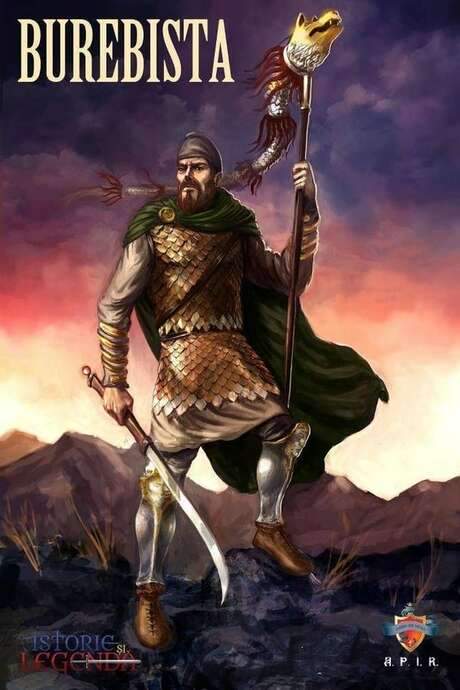
Burebista (1980) movie poster

Timeline

Burebista (1980) Timeline Explained – Every Event in Order

Release, runtime and language
1980 · 142 mins · Romanian
Directed by
Gheorghe Vitanidis
Starring
Vlad Rădescu, Constantin Dinulescu, Ion Dichiseanu, Alexandru Repan, Şerban Ionescu, Ernest Maftei

Chronicles the life of Dacian war‑leader Burebista, who reigned from 80 to 44 BC and forged a unified, powerful Dacian kingdom. Despite relentless pressure from neighboring Celtic warlords and the Greek city‑states along the Black Sea coast, he consolidated territories, reinforced defenses, and left a lasting legacy of strength and resistance.

On this page (5)
  1. 1 Events in order (15)
  2. 2 Timeline questions answered
  3. 3 Movie threads
  4. 4 Movies like Burebista
  5. 5 Every angle

15 events in order · contains spoilers

Burebista Timeline: Events in Chronological Order

Every key event of Burebista (1980) in order, scene by scene, with when and where it takes place. Use it to untangle flashbacks, time jumps and parallel storylines, to refresh your memory before the sequel or to find the exact scene you are thinking of.

  1. Burebista Consolidates Dacia

    The Dacian king Burebista unites the Dacian lords under a single banner, seeking to shield his realm from Rome. The high priest Deceneus persuades the nobles to swear allegiance and accept a centralized authority. This moment marks the birth of a structured, militarized Dacia.

    When
    Early expansion era (before Caesar)
    Where
    Dacia (Carpathian region)
  2. Military Reforms

    Burebista imposes a rigorous regime of military training to defend Dacia's borders. The new discipline strengthens the king's control over the armed forces. The move signals a professional, ready-to-fight state prepared for looming Roman pressure.

    When
    Shortly after consolidation
    Where
    Dacia
  3. Refugees from Rome

    Refugees arrive from Rome, including Calopor, a former gladiator who fought with Spartacus. He brings tales of slave uprisings and combat experience that inspire the Dacians. Burebista welcomes them, recognizing their military value.

    When
    Following consolidation
    Where
    Dacia
  4. Caesar and Pompey Rise

    Burebista learns of Julius Caesar's ambitions and the fierce rivalry with Pompey. He senses Rome's expanding reach could threaten Dacia's autonomy. The news shapes his cautious, future-facing strategy.

    When
    Caesar era pre-Gallic expansion
    Where
    Dacia / Roman world frontier
  5. Requests for Help

    Mithridates VI of Pontus and Greek states ask for Burebista's aid against Rome. He agrees to assist and dispatches Calopor to Greece to assess the situation. The alliance makes Dacia a rising player in Mediterranean power politics.

    When
    During Rome's expansion
    Where
    Greece and Pontus
  6. Calopor in Greece

    Calopor travels to Greece and encounters his former girlfriend Lydia, who has been forced to marry the Roman aristocrat Hybrida. Hybrida insists on games in his honor, pressuring Lydia and the city. Calopor prepares to act against Hybrida.

    When
    During Calopor's mission
    Where
    Greece
  7. The Trident and Lydia's Death

    In the arena, Calopor intends to strike at Hybrida. Hybrida pulls Lydia in front of the weapon, and she is killed by the trident. Horrified, Calopor seizes the moment and kills Hybrida, signaling the start of a broader uprising against Roman rule.

    When
    During the arena performance
    Where
    Greece (Gladiatorial arena)
  8. Uprising and Victory

    Calopor's act sparks a general uprising; Burebista's cavalry defeats the retreating Romans, turning the tide of battle. The Dacians celebrate a hard-won victory that solidifies Burebista's leadership. The Romans are pushed back, and Dacia gains breathing room.

    When
    Following the uprising
    Where
    Dacia / border regions
  9. Roman News and Dacia's Role

    A messenger reveals Mithridates has killed himself to avoid capture, but leaves a letter urging resistance. Pompey also writes requesting Burebista's help to curb Caesar. The dual news deepens Burebista's sense of Rome's unstoppable expansion.

    When
    After the victory
    Where
    Dacia
  10. Boii Raid and Retaliation

    The Celtic Boii raid Dacia, enslaving villagers with the help of a Dacian traitor. Burebista learns the raid's success hinged on guards being drunk, and orders the destruction of grapevines to deny the Celts prosperity. He seeks to negotiate, hoping to avoid a costly war.

    When
    Mid period before eclipse
    Where
    Dacia-Gallic frontier
  11. Standoff with Breza

    Breza the druid fans fanaticism and refuses to negotiate. The looming war threatens to weaken both sides and invite Caesar's invasion. Deceneus warns that a solar eclipse will compel the Celts to submit through fear of the gods.

    When
    Pre-eclipse
    Where
    Dacia and Celtic territories
  12. The Solar Eclipse

    During the eclipse, Burebista uses the prophecy to intimidate the Celts and force their surrender. The Celts capitulate and release their captives, while Breza flees. Calopor pursues Breza into a building, where Breza stabs him. In his dying moment, Calopor reveals that he is Burebista's illegitimate son, and Breza is captured and executed by being thrown into the altar pyre of Epona.

    When
    During the eclipse
    Where
    Dacia
  13. Consolidation and Outlook

    With the Celts subjugated, Burebista consolidates a strong, unified kingdom that stands against Rome. He weighs Rome's ambitions and the potential for further expansion, especially into Dacia. The realm's unity appears resilient, even as external threats loom.

    When
    Post-eclipse
    Where
    Dacia
  14. Caesar's Rise and the End of Threat

    In Gaul, Caesar proclaims conquest and expands Roman territory, signaling the growing pressure toward Dacia. After defeating Pompey, Caesar's campaign would soon reach Dacia, but the Roman general's assassination abruptly ends that trajectory. Burebista contemplates mortality and insists that the unity he forged can outlast even kings, gazing over the mountains as his head merges with the rock that opened the film.

    When
    Late 1st century BC
    Where
    Gaul / Roman world
  15. Final Vision

    The film closes with Burebista's vision of an immortal nation, as Deceneus notes the transience of life and the king's influence on the land. His form seems to merge with the rock from the opening shot, symbolizing a permanent bond between ruler and landscape. The legend of Dacia's unity endures beyond the man who forged it.

    When
    End of film
    Where
    Dacia, Carpathians

Last updated: October 09, 2025 at 14:51

Was this helpful?

Timeline questions answered

Burebista Timeline Explained: Your Questions Answered

When does it happen, and why in that order? The questions people ask about the chronology of Burebista (1980): time jumps, flashbacks, cause and effect between scenes and the correct order of events, each answered with spoilers.

Q1

Why did Burebista order the destruction of grapevines?

Burebista ordered the destruction of grapevines to deny the Celtic Boii their source of prosperity. After the Boii raid succeeded partly because Dacian guards were drunk, Burebista recognized that the Celts depended on grape cultivation for wealth and trade. By burning the vineyards, he aimed to weaken the Boii economically and make them more willing to negotiate peace rather than continue warfare.

  • grapevines
  • boii
  • celtic raid
  • negotiation
  • prosperity
Q2

How did the solar eclipse help Burebista defeat the Celts?

The high priest Deceneu predicted a solar eclipse as a celestial sign from the gods. Burebista used this natural phenomenon to terrify the Celtic druids and warriors, who interpreted the darkness as a divine judgment. Fearful of supernatural punishment, the Celts surrendered their captives and submitted to Burebista's rule rather than face what they believed was divine wrath.

Foreshadowing: Deceneu earlier warned that a celestial sign would compel the Celts to submit.

  • solar eclipse
  • celts
  • druids
  • deceneu
  • divine sign
  • surrender
Q3

Was Calopor really Burebista's illegitimate son?

Yes, Calopor was Burebista's illegitimate son. This revelation came during Breza's final moments after he stabbed Calopor in the back during their confrontation. In his dying breath, Calopor revealed his true parentage to Burebista, explaining why he had been so fiercely loyal and effective in battle.

  • calopor
  • burebista
  • illegitimate son
  • breza
  • parentage
Q4

Why did the Druid Breza refuse to negotiate with the Dacians?

Breza, the Celtic druid leader, was a fanatic who refused any accommodation with the Dacians. He believed strongly in maintaining Celtic independence and opposed any peace that would subordinate his people. His refusal to negotiate created the standoff that led to war, and his fanaticism ultimately led to his execution on the altar pyre of the goddess Epona after his defeat.

  • breza
  • druid
  • celtic leader
  • negotiation
  • fanaticism
Q5

How did Lydia die in the arena?

Lydia was killed tragically during Hybrida's gladiatorial games in Greece. When Calopor attempted to strike at Hybrida with his trident, the Roman aristocrat pulled Lydia in front of him as a human shield. The weapon struck Lydia, killing her in what became a brutal farce of Roman power and cruelty. Her death motivated Calopor to kill Hybrida in revenge and spark the uprising.

  • lydia
  • hybrida
  • arena
  • trident
  • calopor
  • death
Q6

Why did Mithridates commit suicide?

Mithridates VI of Pontus committed suicide to avoid capture by Pompey. The king had been a longtime opponent of Rome and led resistance movements against Roman expansion. Rather than be taken prisoner by his enemies, he chose to end his own life. Before dying, he sent a letter to Burebista urging continued resistance against Roman domination.

  • mithridates
  • suicide
  • pompey
  • roman conquest
  • resistance letter
Q7

What was Calopor's mission in Greece?

Burebista tasked Calopor with traveling to Greece to assess the threat posed by Roman expansion in the region. While there, Calopor also sought to reconnect with Lydia, his former lover who had been forced into an unhappy marriage with the Roman aristocrat Hybrida. The mission was meant to gather intelligence about Roman military strength and political dynamics.

  • calopor
  • greece
  • mission
  • hybrida
  • lydia
  • intelligence
Q8

Why did Burebista unite the Dacian tribes?

Burebista united the Dacian tribes to shield Dacia from the growing threat of Roman expansion. The high priest Deceneu convinced the Dacian lords that unity under a single king was necessary to resist Rome's military might. Without consolidation, the scattered tribes would be vulnerable to conquest by the Romans or other neighboring enemies.

  • burebista
  • unite
  • dacian tribes
  • deceneu
  • roman threat
  • king
Q9

What happened to Breza after the eclipse?

After the solar eclipse forced the Celts to surrender, Breza fled from the battlefield. Calopor pursued him into a building where Breza stabbed him in the back. Following this confrontation, Breza was captured and executed on the altar pyre of the goddess Epona, the Celtic deity whose sacred fire consumed him as punishment for his crimes.

  • breza
  • capture
  • execution
  • epona
  • altar
  • celtic druid
Q10

What happened after Calopor killed Hybrida in the arena?

After Calopor killed Hybrida in the arena, his act of vengeance sparked a broader uprising against Roman rule in the region. Burebista's cavalry forces rode out and defeated the retreating Romans, pushing them back and securing a significant victory. This triumph solidified Burebista's leadership and demonstrated that Dacia could successfully challenge Roman military power.

  • hybrida
  • calopor
  • uprising
  • roman defeat
  • victory
  • dacia
Q11

How did Rome threaten Dacia despite Burebista's victories?

Even after defeating the Celts and pushing back Roman forces, Dacia faced ongoing threats from Rome's expansion. Caesar conquered Gaul and grew increasingly powerful, while Pompey requested Burebista's help against Caesar's ambitions. The film concludes with Caesar's assassination, but the implication is that Rome's reach would continue to threaten Dacia's independence.

  • caesar
  • pompey
  • rome
  • dacia
  • expansion
  • conquest threat
Q12

How did the Boii manage to enslave Dacian villagers?

The Boii raid succeeded because a Dacian traitor betrayed his people by guiding the Celts through the defenses. Additionally, the Dacian guards responsible for watch duty were drunk, making them unprepared for the attack. This combination of内部 betrayal and negligence allowed the Celts to capture villagers and enslave them.

  • boii
  • dacian traitor
  • enslavement
  • drunk guards
  • raid

Movie threads

More Movies Like Burebista, by Mood & Story

Curated lists built around what makes Burebista tick: the same mood, the same kind of story or the same emotional payoff. Each list explains why these movies belong together.

Epics about the burden of leadership like Burebista

Historical epics about powerful rulers forging nations amid tragedy. Movies like Burebista that explore the heavy price of building a nation. If you were captivated by the grim determination of a leader unifying his people against overwhelming odds, you'll find similar historical epics here featuring powerful rulers, political intrigue, and bittersweet legacies.

  • epic
  • grim
  • somber
  • determined
  • fatalistic
  • operatic
  • Tone: dark, grim, somber
  • Pacing: steady, epic build
Why these movies?

The story pattern: These narratives follow a central, powerful figure on a methodical and often grim journey of political and military unification. The plot is driven by external threats, internal betrayals, and the constant pressure of leadership, culminating in an achievement that is undercut by personal tragedy or the looming threat of future collapse. The emotional journey is one of determined resolve shadowed by melancholy.

Why they belong together: Movies are grouped here for their shared focus on the epic scale of nation-building, the DARK and SOMBER tone that accompanies power, and the HEAVY emotional weight derived from the leader's personal sacrifices. They share a STEADY, procedural pacing that builds tension around political maneuverings and a BITTERSWEET ending that questions the true cost of greatness.


Movies about grim resistance against empire like Burebista

Stories of cultures defiantly resisting conquest, knowing the odds. If you liked the tense and determined mood of Burebista's struggle against Rome, this section features similar movies about cultures resisting annihilation. Discover stories filled with political tension, the somber reality of conquest, and the heavy emotional weight of fighting a seemingly inevitable fate.

  • grim
  • fatalistic
  • tense
  • somber
  • determined
  • historical
  • Tone: dark, tense, fatalistic
  • Pacing: steady, tense build
Why these movies?

The story pattern: The narrative pattern involves a society under existential threat, typically from a vast, encroaching empire. The plot unfolds with a STEADY buildup of tension through diplomatic crises, skirmishes, and internal political strife. The characters operate with a sense of grim determination, aware their defiance may be more about honor and legacy than ultimate victory. The ending often acknowledges the impermanence of their success, emphasizing the bittersweet nature of their resistance.

Why they belong together: These films are united by a specific emotional mix: a DARK and tense atmosphere, a SOMBER and fatalistic mood, and a HEAVY emotional weight. The experience is defined by HIGH intensity stakes and a STEADY pacing that methodically presents the challenges of resistance. The core drive is the theme of defiance against an overwhelming force, resulting in a BITTERSWEET conclusion.

If you liked this

Movies Like Burebista

Similar movies to Burebista: the same genre, themes or kind of story. Each one comes with its own plot summary, timeline and ending explained.

Browse all movie summaries

Every angle

Burebista (1980) Explained: Plot, Timeline & Characters

Everything about Burebista in one place: what happens in the plot summary, the timeline in chronological order, the characters and meaning and a spoiler-free summary. What's After the Movie adds the cast, box office and post-credit scenes.

Coming soon on iOS and Android

The Plot Explained Movie Summary App

Plot summaries, endings explained and timelines on your phone. Catch up on any movie in minutes, save your favorites and never miss a twist again.

Be the first to know when we launch. Your email stays private, always.

Learn more about the app