Burebista

Burebista

Year: 1980

Runtime: 142 mins

Language: Romanian

Director: Gheorghe Vitanidis

History

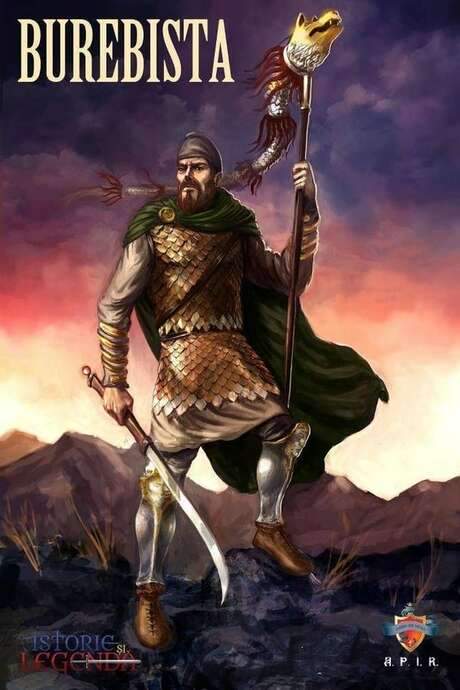
Chronicles the life of Dacian war‑leader Burebista, who reigned from 80 to 44 BC and forged a unified, powerful Dacian kingdom. Despite relentless pressure from neighboring Celtic warlords and the Greek city‑states along the Black Sea coast, he consolidated territories, reinforced defenses, and left a lasting legacy of strength and resistance.

Warning: spoilers below!

Haven’t seen Burebista yet? This summary contains major spoilers. Bookmark the page, watch the movie, and come back for the full breakdown. If you're ready, scroll on and relive the story!

Timeline & Setting – Burebista (1980)

Explore the full timeline and setting of Burebista (1980). Follow every major event in chronological order and see how the environment shapes the story, characters, and dramatic tension.

Time period

circa 70–44 BCE

The narrative unfolds in the late Roman Republic era, a time of political upheaval as Caesar, Pompey, and Mithridates vie for control. Dacia's emergence under Burebista occurs amid Rome's campaigns and shifting alliances. The period is defined by martial conflict, imperial ambition, and the struggle to preserve an autonomous Dacian identity against encroaching Rome.

Location

Dacia, Gaul, Rome

The film is anchored in ancient Dacia along the Carpathian range, a rugged homeland where a unified Dacian kingdom fights to withstand Rome's rising power. The story also traverses into Gaul and Roman centers, highlighting the empire’s expanding reach and the threat it poses to Dacian independence. The setting uses fortress towns and wild landscapes to frame a saga of nation-building, loyalty, and conflict with Rome.

🏔 Mountainous 🗺 Ancient kingdoms 🛡 War-torn regions

Last Updated: October 04, 2025 at 12:55

Main Characters – Burebista (1980)

Meet the key characters of Burebista (1980), with detailed profiles, motivations, and roles in the plot. Understand their emotional journeys and what they reveal about the film’s deeper themes.

Burebista (George Constantin)

Dacian king who unites the Dacian tribes into a formidable kingdom and defies Rome’s expansion through a mix of military discipline and diplomacy. He weighs alliances with Celts and Druids against Rome’s growing power, seeking a durable independence for his people. His vision of a lasting Dacian nation drives his strategic decisions, even as he confronts the mortality of rulers. The climax hints that his legacy should endure beyond his life, as the rock-framed closing image suggests a mythic continuity.

👑 King 🗺 Strategist 🛡 Warrior

Deceneus (Emanoil Petruț)

Dacian high priest who coordinates religious and political strategy to keep Dacia united against Rome. He counsels Burebista, uses ritual authority to shape public will, and foresees celestial signs that influence decisions. His influence helps synchronize war effort and diplomacy, binding priesthood and state. He embodies the fusion of faith and politics in sustaining independence.

🧙 Priest 🗺 Diplomat 🛡 Protector

Calopor

Former gladiator who allies with Burebista and acts as a catalyst for revolt by revealing his lineage and steering action in Greece. He participates in the uprising against Hybrida and demonstrates personal courage, ultimately paying with his life. His loyalty to Burebista deepens the bonds within the Dacian leadership and stirs resistance against Rome.

⚔️ Gladiator 🧭 Rebel

Lydia (Anca Szonyi)

Calopor’s former lover who is forced to marry the arrogant Roman aristocrat Hybrida. Her tragic death at Hybrida’s hands becomes a spark for uprising and a blunt symbol of Roman oppression. Her fate underscores the human cost of imperial politics and personal manipulation in conquered lands.

💔 Tragedy 👸 Woman

Gaius Antonius Hybrida

Arrogant Roman aristocrat who demands games and asserts dominance over Lydia, embodying Roman arrogance and cruelty. His murder at Calopor’s hands marks a turning point that fuels resistance against Roman authority. He represents the oppressive force of Roman aristocracy in the eyes of the Dacians.

⚔️ Oppressor 🏛 Aristocrat

Breza the Druid (Constantin Dinulescu)

Fanatical Druid who inspires the Celts to resist Dacia and refuses to negotiate with Burebista’s coalition. His actions drive the Celtic threat and escalate conflict, until he is captured and executed. He embodies the mystical political influence that Druids wield in the era’s power struggles.

🧙 Druid 🔥 Fanatic

Dacian Prince Castaboca (Ernest Maftei)

A Dacian prince who supports the unification effort and participates in the broader political-military strategy. Though not the central protagonist, his presence signals the aristocratic backing necessary for a durable Dacian state. He represents the nobility that aligns with Burebista’s vision of a strong, self-reliant Dacia.

👑 Prince 🗺 Leader

Julius Caesar (Nicolae Iliescu)

Ambitious Roman general whose expansionist agenda threatens Dacia and whose rise shapes the era’s broader conflicts. Caesar’s campaigns in Gaul and his rivalry with Pompey provide a looming backdrop to Burebista’s efforts to secure independence. The interactions reflect the clash between Rome’s imperial ambitions and Dacia’s drive for sovereignty.

⚔️ Leader 🏛 Politician

Mithridates VI of Pontus

Envoys from Mithridates ask for Dacia’s help resisting Rome, illustrating the wider anti-Roman coalition in the eastern Mediterranean. His death to avoid capture and the accompanying letters to Pompey and Caesar underscore the era’s web of diplomatic entanglements and shifting loyalties.

🗺 Rebel 👑 King

Last Updated: October 04, 2025 at 12:55

Major Themes – Burebista (1980)

Explore the central themes of Burebista (1980), from psychological, social, and emotional dimensions to philosophical messages. Understand what the film is really saying beneath the surface.

🗺️ National Unity

Unity emerges as the essential foundation for a durable Dacian state. Burebista consolidates rival lords and tribes, turning scattered groups into a cohesive kingdom capable of resisting Rome. The leadership relies on trusted advisers like Deceneus to sustain cohesion, even as external threats loom large. The film frames the nation as more than a ruler's figurehead, envisioning a lasting identity.

⚔️ Power and Destiny

Power is portrayed as a double-edged force that can secure independence or corrupt, depending on how leaders wield it. Burebista balances military might with political shrewdness to keep Rome at bay while expanding Dacia’s influence. The pursuit of glory is tempered by the awareness of mortality and the fragility of dynastic legacies. The narrative uses dramatic turns to question whether a ruler’s will can outlast history.

🌒 Cosmic Omens

Eclipses and omens frame strategic choices, as Deceneus and the Dacian rulers interpret celestial signs to frighten enemies or justify actions. The solar eclipse becomes a symbolic weapon to secure surrender from the Celts, intertwining religion, myth, and statecraft. These cosmic signals highlight a culture where religion and politics are deeply interwoven. Fate and astronomy converge to shape political outcomes.

Last Updated: October 04, 2025 at 12:55

Mobile App Preview

Coming soon on iOS and Android

The Plot Explained Mobile App

From blockbusters to hidden gems — dive into movie stories anytime, anywhere. Save your favorites, discover plots faster, and never miss a twist again.

Sign up to be the first to know when we launch. Your email stays private — always.

Explore Movie Threads

Discover curated groups of movies connected by mood, themes, and story style. Browse collections built around emotion, atmosphere, and narrative focus to easily find films that match what you feel like watching right now.

Epics about the burden of leadership like Burebista

Historical epics about powerful rulers forging nations amid tragedy.Movies like Burebista that explore the heavy price of building a nation. If you were captivated by the grim determination of a leader unifying his people against overwhelming odds, you'll find similar historical epics here featuring powerful rulers, political intrigue, and bittersweet legacies.

epicgrimsomberdeterminedfatalisticoperatictensehistorical

Narrative Summary

These narratives follow a central, powerful figure on a methodical and often grim journey of political and military unification. The plot is driven by external threats, internal betrayals, and the constant pressure of leadership, culminating in an achievement that is undercut by personal tragedy or the looming threat of future collapse. The emotional journey is one of determined resolve shadowed by melancholy.

Why These Movies?

Movies are grouped here for their shared focus on the epic scale of nation-building, the DARK and SOMBER tone that accompanies power, and the HEAVY emotional weight derived from the leader's personal sacrifices. They share a STEADY, procedural pacing that builds tension around political maneuverings and a BITTERSWEET ending that questions the true cost of greatness.

Movies about grim resistance against empire like Burebista

Stories of cultures defiantly resisting conquest, knowing the odds.If you liked the tense and determined mood of Burebista's struggle against Rome, this section features similar movies about cultures resisting annihilation. Discover stories filled with political tension, the somber reality of conquest, and the heavy emotional weight of fighting a seemingly inevitable fate.

grimfatalistictensesomberdeterminedhistoricaloperaticdefiant

Narrative Summary

The narrative pattern involves a society under existential threat, typically from a vast, encroaching empire. The plot unfolds with a STEADY buildup of tension through diplomatic crises, skirmishes, and internal political strife. The characters operate with a sense of grim determination, aware their defiance may be more about honor and legacy than ultimate victory. The ending often acknowledges the impermanence of their success, emphasizing the bittersweet nature of their resistance.

Why These Movies?

These films are united by a specific emotional mix: a DARK and tense atmosphere, a SOMBER and fatalistic mood, and a HEAVY emotional weight. The experience is defined by HIGH intensity stakes and a STEADY pacing that methodically presents the challenges of resistance. The core drive is the theme of defiance against an overwhelming force, resulting in a BITTERSWEET conclusion.

Unlock the Full Story of Burebista

Don't stop at just watching — explore Burebista in full detail. From the complete plot summary and scene-by-scene timeline to character breakdowns, thematic analysis, and a deep dive into the ending — every page helps you truly understand what Burebista is all about. Plus, discover what's next after the movie.

Burebista Summary

Read a complete plot summary of Burebista, including all key story points, character arcs, and turning points. This in-depth recap is ideal for understanding the narrative structure or reviewing what happened in the movie.

Burebista Summary

Burebista Timeline

Track the full timeline of Burebista with every major event arranged chronologically. Perfect for decoding non-linear storytelling, flashbacks, or parallel narratives with a clear scene-by-scene breakdown.

Burebista Timeline

Burebista Spoiler-Free Summary

Get a quick, spoiler-free overview of Burebista that covers the main plot points and key details without revealing any major twists or spoilers. Perfect for those who want to know what to expect before diving in.

Burebista Spoiler-Free Summary

More About Burebista

Visit What's After the Movie to explore more about Burebista: box office results, cast and crew info, production details, post-credit scenes, and external links — all in one place for movie fans and researchers.

More About Burebista

Similar Movies to Burebista

Discover movies like Burebista that share similar genres, themes, and storytelling elements. Whether you’re drawn to the atmosphere, character arcs, or plot structure, these curated recommendations will help you explore more films you’ll love.