Plot Explained Spoilers guaranteed!
Plot Explained

Browse by genre

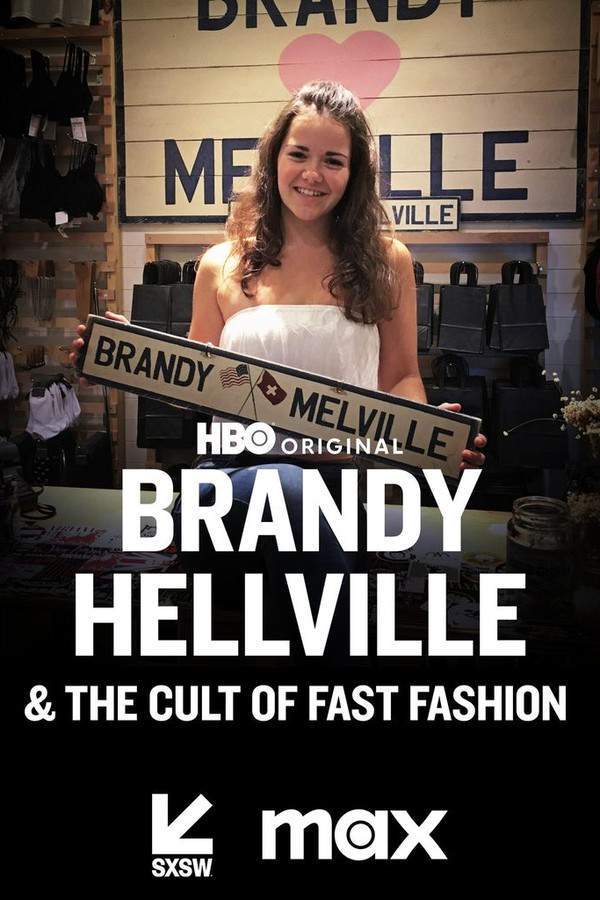
Brandy Hellville & the Cult of Fast Fashion (2024) movie poster

Plot Summary

Brandy Hellville & the Cult of Fast Fashion (2024) Plot Summary Explained

Release, runtime and language
2024 · 1 h 31 m · English
Echo score 52
Loading streaming availability…
Directed by
Eva Orner
Starring
Kate Taylor

This documentary explores the world of Brandy Melville, revealing a culture of consumption and conformity hidden beneath its carefully curated image. It examines the fast fashion industry's impact, highlighting the perpetuation of unrealistic beauty standards and the environmental consequences of its practices.

On this page (5)
  1. 1 Where to watch
  2. 2 What happens: full plot
  3. 3 Plot questions answered
  4. 4 Movie threads
  5. 5 Every angle
Loading streaming availability…

Full plot summary · contains spoilers

What Happens in Brandy Hellville & the Cult of Fast Fashion: Full Plot Summary

The whole story of Brandy Hellville & the Cult of Fast Fashion (2024) explained, from the opening scene to the final frame: every key event, every twist and what it all adds up to. Read it as a quick recap before the sequel, to check a scene you missed, or to finally understand what really happened.

Brandy Hellville & the Cult of Fast Fashion is a revealing documentary that examines the controversial business practices of the clothing brand Brandy Melville. The film centers on serious allegations against the company's founder and CEO, Stephan Marsan, including racism, antisemitism, and sexual assault. Through interviews with former employees and reporting by journalist Kate Taylor, the film exposes a toxic corporate culture.

The documentary details claims of systemic discrimination, where employees of color were allegedly relegated to back-of-house tasks while white employees held public-facing roles. Furthermore, the brand's "one size fits most" policy is framed as a tool for exclusivity and body-shaming. Former staff report being forced to send full-body photos to Marsan daily, with some alleging that requests for "chest and feet" photos were made. The environment was reportedly so severe that multiple employees developed eating disorders.

The film also delves into a company group chat titled "Brandy Melville Gags," which allegedly contained misogynistic and antisemitic jokes, including images of Marsan mocking Black people and dressing as Adolf Hitler. Regarding the internal atmosphere, the film notes:

> They’re not hypocrites because they’re exactly who they say they are. They’re just racist sexist pigs.

Beyond workplace culture, Kate Taylor reports on a harrowing allegation of sexual assault involving a 21-year-old employee at a company-provided apartment in SoHo, where the victim feared reporting the crime due to her visa status.

Additionally, the film critiques the brand's fast fashion model. While marketing clothes as "Made in Italy," the documentary suggests they are produced in unethical facilities in Prato. It further alleges that the company steals designs by purchasing clothes directly off employees' backs to copy them. The film concludes by highlighting a "chaotic" corporate structure designed to avoid traceability and issues a call for a boycott of Brandy Melville.

Last updated: October 20, 2026 at 01:18

Was this helpful?

Plot questions answered

Brandy Hellville & the Cult of Fast Fashion Plot Explained: Your Questions Answered

The questions people ask most about Brandy Hellville & the Cult of Fast Fashion (2024): what happens in the confusing scenes, why the characters do what they do, the twists, hidden details and what the ending means. Each answer contains spoilers.

Q1

Why does Brandy Melville only make "one size fits most" clothing?

Multiple former executives allege that founder Stephan Marsan used the brand's "one size fits most" sizing policy as a deliberate tool to maintain Brandy Melville's exclusivity, rather than as a practical production choice. The documentary reveals that Marsan was reportedly pleased, not embarrassed, when the policy was criticized, because the exclusivity it created was the point. As one interviewee frames it, the brand wasn't being hypocritical about its image; it was being exactly who it claimed to be.

Foreshadowing: Early interviews with former executives establish that sizing complaints were brushed off internally, hinting that the policy was strategic rather than accidental.

  • one size fits most
  • sizing policy
  • brandy melville exclusivity
  • stephan marsan
Q2

What were the "Brandy Melville Gags" and why do they matter?

The "Brandy Melville Gags" were a large internal company group chat that two former associates say was filled with antisemitic, misogynistic, and racist jokes shared between executives, store owners, and members of the Italian manufacturing division. The documentary displays an image of Marsan dressed as Adolf Hitler, photos mocking Black people, and a screenshot of an emaciated woman wearing a "Miss Auschwitz, 1943" sash. The chat matters because it establishes that the brand's bigotry was not just the behavior of one person, but a tolerated culture inside the company.

Foreshadowing: Earlier employee testimonies about racial discrimination in stores gain weight once the group chat is revealed, showing the attitudes came from the top.

  • brandy melville gags
  • group chat
  • antisemitism
  • marsan hitler
  • internal culture
Q3

What happened at the Brandy apartment in SoHo?

The Brandy apartment in SoHo, Manhattan was a residence offered to Brandy Melville employees where, according to former staff, men would unexpectedly enter and sometimes stay overnight. Journalist Kate Taylor reports on an alleged sexual assault involving a 21-year-old employee who was in the United States on a visa and was offered the apartment as a place to stay. After drinking with an older Italian man who was unexpectedly also staying there, she reported that her memory lapsed and she woke up naked; a hospital report stated she had been "raped by her boss and didn't want to report it" out of fear she would lose her visa if she lost her job.

Foreshadowing: Earlier discussion of young, vulnerable employees on visas sets up why the victim was afraid to come forward at the hospital.

  • brandy apartment
  • soho
  • sexual assault
  • visa worker
  • kate taylor
Q4

Why were Brandy Melville employees required to send full-body photos each shift?

Former employees allege they were required to take full-body photos of themselves at the start of each shift and send them to Marsan and an assistant who ran the brand's Instagram page. One employee says Marsan saved some of these photos in a personal file, and another reported receiving requests that employees' "chest and feet" be included. A former vice president confirms that Marsan fired employees whose photos he didn't like, revealing the practice as a form of body-based control rather than any legitimate business need.

Foreshadowing: Earlier testimony about hiring and firing decisions based on body shape only makes sense once the daily photo requirement is revealed.

  • full body photos
  • body shaming
  • mandatory photos
  • instagram assistant
  • fired for body
Q5

How did Brandy Melville allegedly copy clothing designs from its own employees?

The documentary describes a business model in which Brandy Melville executives sometimes offered to purchase the outfits employees were wearing so the brand could copy and manufacture near-exact versions of them. Former employees say the practice was so routine that individual clothing items were sometimes named after the staff member whose outfit inspired them. The film cites the "Jocelyn shirt" as one example, noting it was reportedly purchased straight off an employee named Jocelyn's back.

Foreshadowing: Earlier discussions of the brand's tight-knit, young, fashion-forward workforce set up why employees' personal wardrobes became design references.

  • design copying
  • jocelyn shirt
  • knockoff designs
  • employee outfits
  • brandy melville business model
Q6

Why does the documentary describe Brandy Melville's corporate structure as "chaotic"?

Taylor describes Brandy Melville's corporate structure as unusually "chaotic" because a different shell corporation owns each of the brand's stores, and the trademark itself is held by a company in Switzerland. Director Orner characterizes this arrangement as "not meant to be traceable," suggesting the design makes accountability difficult. Taylor also notes that Marsan himself has virtually no presence on the internet, reinforcing how little public-facing information exists about who actually runs the company.

Foreshadowing: The difficulty journalists and former employees describe in figuring out who owns what sets up the shell corporation explanation.

  • corporate structure
  • shell corporations
  • switzerland trademark
  • untraceable
  • stephan marsan internet presence
Q7

Where does discarded Brandy Melville clothing actually end up?

The documentary traces the life cycle of fast fashion garments by following where unsold and discarded clothing is shipped, showing that large quantities end up in Accra, Ghana. There, the garments are either resold in local markets or dumped, with unsold pieces eventually ending up in the ocean and washing up on beaches. This segment is used to illustrate the environmental cost of the fast fashion business model that Brandy Melville helps fuel.

Foreshadowing: Earlier discussion of Brandy Melville's high-volume, copy-driven production makes the Accra waste segment feel like an inevitable destination rather than a surprise.

  • fast fashion waste
  • accra ghana
  • discarded clothing
  • ocean pollution
  • environmental impact
Q8

What is the "John Galt" private label inside Brandy Melville?

John Galt is a private label used within Brandy Melville, named after the central character in Ayn Rand's novel "Atlas Shrugged," which promotes capitalism and libertarian ideals. Former employees allege that Marsan, a self-described libertarian, discussed politics with his young female staff and routinely became upset when many of them supported Bernie Sanders. He also reportedly distributed copies of "Atlas Shrugged" to employees, making the John Galt label a reflection of his personal ideology baked into the company's product line.

Foreshadowing: Marsan's political discussions with employees make the existence of the John Galt label feel less like a coincidence and more like ideology branded into merchandise.

  • john galt label
  • atlas shrugged
  • ayn rand
  • libertarian
  • marsan politics
Q9

Why is Prato, Italy so important to the documentary's fast fashion investigation?

Prato is presented as the likely manufacturing hub for Brandy Melville's clothing despite the brand's "Made in Italy" image, which is often read as a mark of luxury in the United States. Matteo Biffoni, the mayor of Prato, confirms in an interview that several fast fashion factories operate in the city, and that some of them use unethical labor practices. The Prato segment reframes "Made in Italy" not as a quality guarantee but as a label that can hide mass-production realities.

Foreshadowing: Earlier descriptions of Brandy Melville's rapid product turnover set up why a high-volume, low-cost manufacturing region like Prato would be the actual source.

  • prato italy
  • made in italy
  • fast fashion manufacturing
  • unethical labor
  • matteo biffoni
Q10

How were Brandy Melville employees allegedly discriminated against based on race?

Former employees describe a system in which White employees were typically placed in public-facing roles at the front of stores, while employees of color were assigned to tasks in the back. Asian employees in particular were reportedly assigned specifically to work the register. Journalist Kate Taylor states that two racism-related lawsuits have been filed against the brand, putting documented legal weight behind the pattern of in-store segregation described in the testimonies.

Foreshadowing: Anonymous tips about unfair assignments only become legible as racial segregation once multiple former employees describe the same pattern.

  • racial discrimination
  • store roles
  • racism lawsuits
  • asian employees register
  • segregated workplace
Q11

Why was Stephan Marsan reportedly happy about criticism of Brandy Melville's sizing?

Multiple executives allege that Marsan saw the "one size fits most" policy as a feature, not a flaw, because the backlash reinforced the exclusivity the brand was built on. Being criticized for not making larger sizes actually signaled to the brand's core audience that the clothes were selective and aspirational. The documentary uses this to argue that Brandy Melville's image problem and its business model were the same thing.

Foreshadowing: Earlier mentions of body-based hiring and firing decisions make Marsan's comfort with sizing criticism feel consistent rather than contradictory.

  • sizing criticism
  • exclusivity strategy
  • brand image
  • one size policy
  • brandy melville marketing
Q12

What eating disorders did former Brandy Melville employees report?

Multiple former employees say they developed or struggled with eating disorders while working at Brandy Melville, tying the harm directly to the brand's body-focused culture. They describe being made to feel bad about their bodies, being hired or fired based on body shape, and being subjected to mandatory full-body photos that were judged by Marsan. The documentary uses these accounts to show that the brand's image standards produced real, lasting psychological harm for its young workforce.

Foreshadowing: The mandatory photo requirement only becomes fully legible as abuse once employees connect it to the eating disorders that emerged during their employment.

  • eating disorders
  • body image
  • mental health
  • young employees
  • body shaming workplace
Q13

What role does journalist Kate Taylor play in the documentary?

Kate Taylor functions as the documentary's primary investigative journalist, reporting on allegations against Marsan and surfacing many of the brand's practices that former employees corroborate on camera. She breaks stories about the segregated in-store roles, the racial discrimination lawsuits, the alleged sexual assault at the Brandy apartment, and the brand's deliberately opaque corporate structure. Her reporting provides the through-line that connects individual testimonies into a broader pattern of company behavior.

Foreshadowing: Early interviews framing Taylor's reporting as the film's backbone set up why so many later revelations are credited directly to her.

  • kate taylor
  • journalist
  • investigative reporting
  • brandy melville investigation
  • documentary narrator
Q14

Why does the documentary end with a call to boycott Brandy Melville?

The film concludes with a direct appeal for viewers to boycott Brandy Melville because no legal resolution or corporate accountability is shown for any of the allegations raised throughout. Instead of presenting a courtroom outcome or a corporate response, the documentary hands the consequence to its audience, asking consumers to withdraw their spending as the available form of accountability. The ending ties together the threads of discrimination, exploitation, and environmental harm into a single action the viewer can take.

Foreshadowing: The documentary's repeated emphasis that Marsan avoids public presence and that the corporate structure is "not meant to be traceable" foreshadows why legal accountability is unlikely.

  • boycott
  • call to action
  • consumer accountability
  • documentary ending
  • brandy melville
Q15

Why did Marsan allegedly pressure young employees about their political views?

Former employees say Marsan, a self-described libertarian, regularly discussed politics with his young female staff and became upset when many of them supported Bernie Sanders, with whom he disagreed. He reportedly distributed copies of "Atlas Shrugged" to employees and embedded his ideology into the brand itself through the John Galt private label. The pattern shows a workplace culture where personal political loyalty to Marsan's views was treated as part of the job.

Foreshadowing: The John Galt private label only reads as deliberate once employees describe how aggressively Marsan pushed his political views on them.

  • marsan libertarian
  • bernie sanders
  • political pressure
  • atlas shrugged
  • workplace politics

Movie threads

More Movies Like Brandy Hellville & the Cult of Fast Fashion, by Mood & Story

Curated lists built around what makes Brandy Hellville & the Cult of Fast Fashion tick: the same mood, the same kind of story or the same emotional payoff. Each list explains why these movies belong together.

Investigative corporate exposés like Brandy Hellville & the Cult of Fast Fashion

Investigations that methodically expose the rot hiding behind a glossy brand. If you liked Brandy Hellville & the Cult of Fast Fashion, these similar films deliver the same unflinching, evidence-driven approach to corporate malfeasance. Each one methodically peels back a glossy brand image to reveal the human cost hidden underneath, leaving viewers disturbed and informed. Movies like Brandy Hellville & the Cult of Fast Fashion share a commitment to journalistic rigor, heavy testimony, and unresolved calls for accountability.

  • investigative
  • exposé
  • disturbing
  • unflinching
  • accusatory
  • heavy
  • Tone: dark, accusatory, somber
  • Pacing: steady, investigative, interview-driven
Why these movies?

The story pattern: These stories typically follow a journalist, whistleblower, or investigator piecing together testimony and documentation to expose a powerful institution. The narrative escalates as more victims come forward, building an overwhelming case against a familiar name. Climaxes rarely offer cathartic legal resolution, so the viewer is left holding unresolved anger, a changed worldview, and a deeper understanding of how systemic abuse is allowed to flourish behind curated branding.

Why they belong together: They share an investigative, interview-driven structure, a dark and accusatory tone, steady pacing that lets testimony breathe, and high emotional intensity. They prioritize moral clarity over entertainment and frequently end on calls to action rather than satisfying closure, which is exactly what makes them feel like kin to Brandy Hellville.
Toxic brand and workplace exposés like Brandy Hellville & the Cult of Fast Fashion

Glamorous facades that hide predatory work cultures and exploited youth. Movies like Brandy Hellville & the Cult of Fast Fashion that pull back the curtain on predatory fashion, beauty, and entertainment industries. If you liked this documentary's unflinching look at body discrimination, sexual misconduct, and exploited young workers in trendy workplaces, these similar stories will hit the same nerve. Each one reveals how a curated image can hide systemic abuse and worker suffering.

  • workplace exploitation
  • body shaming
  • predatory culture
  • disturbing
  • somber
  • unflinching
  • Tone: dark, unsettling, oppressive
  • Pacing: steady, methodical, testimony-led
Why these movies?

The story pattern: These stories center young workers or aspiring talents who enter a glamorous-seeming industry only to discover a culture of body policing, sexual predation, racial hostility, and labor exploitation. Through survivor testimony, the narrative reveals how the industry's obsession with image creates the perfect environment for abuse, and how the most vulnerable employees, often on visas, very young, or marginalized, bear the heaviest cost when there is no HR safety net.

Why they belong together: They focus on the gap between a brand's curated public identity and its internal culture, share a heavy emotional weight driven by real testimony, and treat harm as systemic rather than the fault of one bad actor. The slow, steady pacing and dark tone give space for the human stakes to land, making them feel like a coherent companion set to Brandy Hellville.

Every angle

Brandy Hellville & the Cult of Fast Fashion (2024) Explained: Plot, Timeline & Characters

Everything about Brandy Hellville & the Cult of Fast Fashion in one place: what happens in the plot summary, the timeline in chronological order, the characters and meaning and a spoiler-free summary. What's After the Movie adds the cast, box office and post-credit scenes.

Coming soon on iOS and Android

The Plot Explained Movie Summary App

Plot summaries, endings explained and timelines on your phone. Catch up on any movie in minutes, save your favorites and never miss a twist again.

Be the first to know when we launch. Your email stays private, always.

Learn more about the app