Plot Explained Spoilers guaranteed!
Plot Explained

Browse by genre

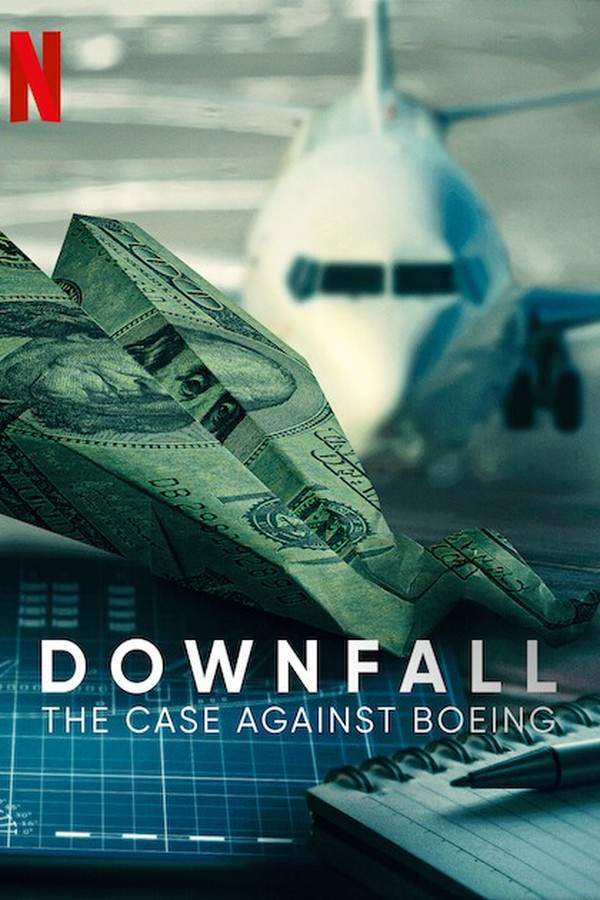
Downfall: The Case Against Boeing (2022) movie poster

Plot Summary

Downfall: The Case Against Boeing (2022) Plot Summary Explained

Release, runtime and language
2022 · 89 min · English
Echo score 73
JustWatch #18,299 17
Directed by
Rory Kennedy

This documentary examines the events surrounding two tragic accidents involving Boeing 737 MAX airplanes, exploring the factors that led to the disasters and the aftermath for the victims’ families. It investigates the design flaws, corporate decisions, and regulatory oversight that contributed to the crashes, raising critical questions about accountability and the safety of modern aviation.

On this page (6)
  1. 1 Where to watch
  2. 2 What happens: full plot
  3. 3 Plot questions answered
  4. 4 Movie threads
  5. 5 Movies like Downfall: The Case Against Boeing
  6. 6 Every angle

Where to watch

Where to Watch Downfall: The Case Against Boeing (2022)

Where can you watch Downfall: The Case Against Boeing? Stream, rent or buy it in the US, including on Netflix and Netflix Standard: current JustWatch availability with up-to-date prices.

Streaming availability powered by JustWatch

Full plot summary · contains spoilers

What Happens in Downfall: The Case Against Boeing: Full Plot Summary

The whole story of Downfall: The Case Against Boeing (2022) explained, from the opening scene to the final frame: every key event, every twist and what it all adds up to. Read it as a quick recap before the sequel, to check a scene you missed, or to finally understand what really happened.

The film delves into the devastating incidents involving the Boeing 737 MAX in 2019, which led to the tragic crashes of two airliners and the loss of 346 lives. At the core of the narrative is a critical examination of whether Boeing prioritized financial profits over the safety of its passengers and the company’s longstanding reputation for quality and safety.

As Kennedy articulated about Boeing's journey into the 21st century, > "There were many decades when Boeing did extraordinary things by focusing on excellence and safety and ingenuity. Those three virtues were seen as the key to profit." However, this focus began to shift when the company was taken over by leaders who viewed Wall Street as the ultimate objective, rather than balancing profit with public welfare.

The story follows the events from October 19, 2018, when LionAir Flight 610 tragically plummeted shortly after takeoff in Jakarta, Indonesia. The Boeing 737 MAX, newly introduced yet untested, was thought to be in normal ascent; however, faulty sensor readings caused the aircraft to lose control, crashing and claiming 189 lives. Initially, Boeing deflected blame onto the Indonesian air safety standards, LionAir, and pilot errors, never acknowledging the possibility of a flaw in their aircraft design.

As recovery efforts continued, black box findings revealed that a defective angle of attack sensor had triggered erroneous readings, leading to repeated nose-down commands from the plane’s Maneuver Characteristics Augmentation System (MCAS). Despite the mounting evidence, Dennis Muilenburg, then Chairman of Boeing, maintained a public facade of safety, downplaying the system’s role.

In November, Boeing released a statement about the erroneous MCAS activation, a term that had been previously unknown to many, including the pilots of Lion Air. Critics, including journalist Andy Pasztor from the Wall Street Journal, contended that Boeing withheld vital information regarding the MCAS from pilot unions, igniting a firestorm within the aviation community. Following the LionAir crash, Boeing began to brief pilot unions about the system's implications, while simultaneously reassuring the public of the 737 MAX's safety.

Then, on March 10, 2019, tragedy struck again as Ethiopian Airlines Flight 302 met a similar fate, killing 157 individuals. This time, investigators discovered almost identical patterns to the LionAir incident. The swift grounding of the aircraft by Trump and subsequent congressional investigations highlighted the growing concern regarding pilot training and design flaws within Boeing's operations.

For years, Boeing had been celebrated as a titan in the aviation industry, known for its innovations such as the Boeing 707 and 747; however, a shift toward prioritizing profit led to diminished safety protocols. The pivotal merger with McDonnell Douglas in 1996 under Harry Stonecipher brought about a culture where cutting costs took precedence over engineering excellence.

As production pressures intensified, a reduction in quality staff and resources became apparent. By the time the 737 MAX was introduced, the plants were primarily focused on rapid output, hampering Boeing's commitment to safety and quality. With Airbus gaining ground in the market and the A320 NEO launching successfully, Boeing sought to modify the aging 737 design by adding new fuel-efficient engines without inciting the need for retraining pilots. However, this plan led to a reliance on a single sensor for critical flight operations—an oversight that would later prove catastrophic.

In a series of congressional hearings, it became evident that Boeing was aware of the potential risks yet chose to pursue profit over rigorous safety protocols. The fallout from the investigations resulted in Boeing facing severe financial penalties, leading to a corporate re-evaluation. Ultimately, the MCAS system was redesigned, and the grounded fleet recommenced operations in November 2020.

Boeing's journey through these crises shines a light on the critical importance of safety in aviation, the devastating outcomes of neglecting this principle, and raises questions about corporate responsibility and ethics in high-stakes industries.
Last updated: November 15, 2024 at 18:40

Was this helpful?

Plot questions answered

Downfall: The Case Against Boeing Plot Explained: Your Questions Answered

The questions people ask most about Downfall: The Case Against Boeing (2022): what happens in the confusing scenes, why the characters do what they do, the twists, hidden details and what the ending means. Each answer contains spoilers.

Q1

What is MCAS and why did it cause the 737 MAX crashes?

MCAS (Maneuver Characteristics Augmentation System) is an automated flight control system designed to push the nose down when the plane senses it might be flying at too steep an angle. The system relied on a single angle of attack sensor, which malfunctioned on both crashes, sending repeated nose-down commands that the pilots could not override. This caused both LionAir Flight 610 and Ethiopian Airlines Flight 302 to dive into the ground shortly after takeoff.

Foreshadowing: The documentary reveals that Boeing initially withheld information about MCAS from pilots, leaving them unaware of the system's existence or how to disable it.

  • mcas
  • 737 max
  • flight control system
  • angle of attack sensor
Q2

Why did Boeing blame pilots instead of the plane after the LionAir crash?

Following the LionAir Flight 610 crash in October 2018, Boeing's leadership deflected blame onto Indonesian air safety standards and pilot errors, refusing to acknowledge possible design flaws in the 737 MAX. Chairman Dennis Muilenburg publicly downplayed the role of MCAS despite mounting evidence from the black boxes. This deflection was later revealed as an attempt to protect Boeing's reputation and avoid financial liability.

Foreshadowing: The film shows how Boeing's initial refusal to accept responsibility would be contradicted by later evidence from the second crash.

  • boeing
  • lionair
  • pilot error
  • dennis muilenburg
  • blame
Q3

How are the LionAir and Ethiopian Airlines crashes connected?

Both crashes occurred shortly after takeoff and followed nearly identical patterns. In each case, a faulty angle of attack sensor triggered the MCAS system to repeatedly push the nose down. Investigators found that Ethiopian Airlines Flight 302 in March 2019 showed almost the same flight profile as LionAir Flight 610, leading to the swift grounding of the entire 737 MAX fleet worldwide.

Foreshadowing: The documentary notes that Boeing had begun briefing pilot unions about MCAS after the first crash but had not yet implemented fixes when the second crash occurred.

  • lionair
  • ethiopian airlines
  • crash comparison
  • 737 max grounding
Q4

Why did Boeing rely on only one sensor for the MCAS system?

Boeing designed MCAS to rely on a single angle of attack sensor to minimize costs and avoid requiring pilot retraining. The company wanted the 737 MAX to need minimal changes from previous 737 models so airlines wouldn't have to invest in additional pilot training. This cost-saving decision proved catastrophic when that single sensor failed on both flights.

Foreshadowing: The film explains that after the merger with McDonnell Douglas, cutting costs became a priority over engineering excellence.

  • single sensor
  • cost cutting
  • angle of attack
  • mc design flaw
Q5

What changed at Boeing after the McDonnell Douglas merger?

The 1996 merger with McDonnell Douglas brought Harry Stonecipher to lead Boeing, shifting the company's culture from focusing on engineering excellence and safety to prioritizing Wall Street demands and cost reduction. Quality staff and safety resources were reduced, production pressures increased, and profit became the primary objective over passenger safety.

Foreshadowing: The documentary traces how this cultural shift directly contributed to the decisions that led to the 737 MAX disasters.

  • mcdonnell douglas merger
  • harry stonecipher
  • corporate culture
  • cost cutting
Q6

When was the 737 MAX cleared to fly again?

The Boeing 737 MAX was cleared to return to service in November 2020, nearly 20 months after the global grounding following the Ethiopian Airlines crash. The return came after Boeing redesigned the MCAS system, implemented new pilot training requirements, and faced significant financial penalties and congressional scrutiny.

Foreshadowing: The documentary shows how the grounding affected Boeing financially and forced a complete re-evaluation of their safety protocols.

  • 737 max return
  • grounding lifted
  • november 2020
  • flight resume
Q7

Who was Dennis Muilenburg and what was his role in the crisis?

Dennis Muilenburg was Boeing's Chairman and CEO during the 737 MAX crashes. He publicly maintained that the plane was safe while simultaneously downplaying the role of MCAS in the LionAir crash. Under his leadership, Boeing deflected blame and delayed acknowledging design flaws. He was later fired by Boeing's board as the company faced mounting criticism and financial consequences.

Foreshadowing: Congressional hearings revealed that Muilenburg and other executives were aware of the MCAS risks before the crashes occurred.

  • dennis muilenburg
  • ceo
  • boeing chairman
  • accountability
Q8

How many people died in the 737 MAX crashes?

The two 737 MAX crashes combined claimed 346 lives. LionAir Flight 610 crashed on October 19, 2018, killing 189 people. Ethiopian Airlines Flight 302 crashed on March 10, 2019, killing all 157 people on board.

Foreshadowing: The documentary heavily features the victims' families and their pursuit of accountability throughout the investigation.

  • death toll
  • 346 lives
  • lionair
  • ethiopian airlinesvictims
Q9

Why did Boeing prioritize profit over safety with the 737 MAX?

Boeing faced pressure from Airbus's successful A320 NEO and needed to compete quickly without requiring airlines to retrain pilots on a new aircraft type. Instead of designing a new plane, they modified the aging 737 by adding fuel-efficient engines, which required MCAS to compensate for handling changes. Company leadership, shaped by post-merger culture, viewed meeting production targets and pleasing Wall Street as more important than investing in robust safety systems.

Foreshadowing: The film quotes former Boeing executives describing how the focus on profit gradually eroded the company's historic commitment to excellence.

  • profit over safety
  • airbus competition
  • cost pressures
  • corporate negligence
Q10

What is an angle of attack sensor and how did it cause the crashes?

The angle of attack sensor measures the angle between the wing and the oncoming airflow, critical for preventing stalls. On both crashes, the sensor malfunctioned and gave false readings that the plane was climbing too steeply. This triggered MCAS to automatically push the nose down repeatedly, forcing both aircraft into uncontrollable dives despite pilots' attempts to regain control.

Foreshadowing: Investigators found that the sensor had been damaged on the LionAir flight the day before, yet the plane was still cleared to fly.

  • angle of attack sensor
  • aoa sensor
  • flight mechanics
  • stall prevention
Q11

What did the congressional investigations reveal about Boeing?

Congressional hearings uncovered that Boeing was aware of the MCAS risks before the crashes but chose not to address them. Testimonies revealed a culture where employees raised safety concerns but were ignored or overruled. Executives had known about the single-sensor design flaw and the lack of pilot training on MCAS, yet continued to assure the public of the plane's safety.

Foreshadowing: Internal Boeing emails shown in hearings revealed staff debating whether to disclose MCAS to pilots, with management opting against it.

  • congressional hearings
  • investigation
  • boeing negligence
  • corporate accountability

Movie threads

More Movies Like Downfall: The Case Against Boeing, by Mood & Story

Curated lists built around what makes Downfall: The Case Against Boeing tick: the same mood, the same kind of story or the same emotional payoff. Each list explains why these movies belong together.

Documentaries like Downfall: The Case Against Boeing that expose corporate greed

Forensic investigations into systems that prioritize profit over people. If you were gripped by the forensic detail and moral outrage of Downfall: The Case Against Boeing, explore these similar documentary films. This thread features movies that investigate corporate malfeasance, systemic failure, and the fight for public accountability, offering a tense and eye-opening viewing experience.

  • investigative
  • infuriating
  • tense
  • critical
  • grieving
  • methodical
  • Tone: critical, dark, infuriating
  • Pacing: steady, methodical
Why these movies?

The story pattern: These films typically follow a journalistic or legalistic narrative structure, starting with a preventable tragedy or systemic flaw and then methodically tracing the chain of responsibility back to corporate decisions. They often feature expert testimony, internal documents, and emotional testimonies from victims to build an irrefutable case.

Why they belong together: Movies in this thread are united by their investigative nature, dark tone, and focus on real-world power structures. They share a steady, methodical pacing that builds tension not through suspenseful editing but through the relentless accumulation of damning facts, creating a profoundly infuriating and critical mood.

Movies about system failure with the tense vibe of Downfall: The Case Against Boeing

Stories where a complex, man-made system breaks down with deadly consequences. For viewers who appreciated the tense, methodical unraveling of a technological disaster in Downfall: The Case Against Boeing, this thread highlights similar movies. These stories delve into engineering failures, institutional blind spots, and the chain of events leading to tragedy, creating a gripping and anxious atmosphere.

  • tense
  • anxious
  • disturbing
  • procedural
  • gripping
  • critical
  • Tone: tense, dark, anxious
  • Pacing: steady, procedural
Why these movies?

The story pattern: Narratives in this thread often deconstruct a disaster piece by piece, showing how small oversights, design flaws, and corporate pressures combine to create a perfect storm. The journey is one of increasing dread as the inevitability of the failure becomes clear, focusing on the human cost and the search for truth.

Why they belong together: These films are grouped by their shared high intensity, dark tone, and heavy emotional weight rooted in real-world anxieties. They create a specific kind of procedural tension, whether documentary or drama, by showing a complex system's vulnerability and the dire consequences when it fails.

If you liked this

Movies Like Downfall: The Case Against Boeing

Similar movies to Downfall: The Case Against Boeing: the same genre, themes or kind of story. Each one comes with its own plot summary, timeline and ending explained.

Browse all movie summaries

Every angle

Downfall: The Case Against Boeing (2022) Explained: Plot, Timeline & Characters

Everything about Downfall: The Case Against Boeing in one place: what happens in the plot summary, the timeline in chronological order, the characters and meaning and a spoiler-free summary. What's After the Movie adds the cast, box office and post-credit scenes.

Coming soon on iOS and Android

The Plot Explained Movie Summary App

Plot summaries, endings explained and timelines on your phone. Catch up on any movie in minutes, save your favorites and never miss a twist again.

Be the first to know when we launch. Your email stays private, always.

Learn more about the app