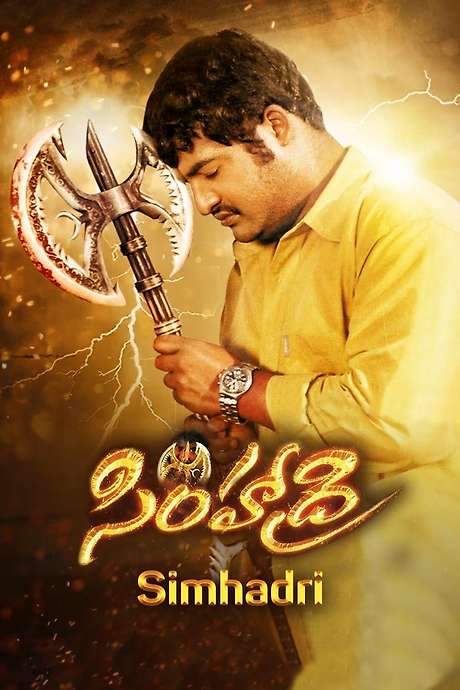
In Bobbili, Vijaya Raghava Bhupathi is the heir to the royal family, and his childhood is shaped by the quiet sacrifices of his maternal uncle Rayudu to safeguard their lineage. As time passes, and twenty-five years drift by, he becomes a just and principled man who establishes a system of impartial justice at Dharma Pettam, resolving disputes and earning the trust of the people. Yet his authority is tested by Pasupathi, a ruthless tyrant who refuses to bow to the new order, and Vijaya Raghava ultimately overpowers him, reaffirming the strength of his rule.
At a village fair, a young woman named Venkata Lakshmi is drawn to Vijaya Raghava, a feeling that is encouraged by his grandmother, the formidable Bhuvaneswari Devi. She pursues her attraction with determination, and when villains try to exploit her under the cover of religion, Vijaya Raghava marries her to protect her honor. Soon, Venkata Lakshmi learns that Vijaya Raghava is already married to his cross-cousin, Sravani, which sparks anger and confusion. Bhuvaneswari Devi steps in to recount the chain of events that led to this arrangement, revealing a family history steeped in obligation and duty.
The backstory unfolds: Vijaya Raghava and Sravani were childhood sweethearts, their union arranged by their families. In the same period, Pasupathi conspires with Minister Basavayya to seize land belonging to the endowment department. Vijaya Raghava fights to restore the land to its rightful owners and defeats Pasupathi. Enraged by these losses, Pasupathi frames Rayudu, an Ayurvedic doctor, for murder. Vijaya Raghava answers with justice, but Pasupathi doubles down by arranging Sravani’s marriage to his elder son, Gajendra. Undeterred, Vijaya Raghava steps forward and marries Sravani himself, sealing their bond in the face of scheming enemies.
On their wedding night, Sravani reveals that her marriage to Vijaya Raghava is part of a larger vendetta against his family for her father’s death, and she vows never to consummate their marriage. Overhearing this, Bhuvaneswari Devi challenges Sravani to secure an heir for the family by any means, testing her resolve. In the meantime, Vijaya Raghava discovers his half-sister Ganga, the daughter of his father’s second wife Saraswathi, who is in love with Pasupathi’s younger son Sivaji. Pasupathi pretends to approve their union but orchestrates an attack on their wedding night. Minister Basavayya tries to assault Ganga, and Vijaya Raghava intervenes, captures the minister, and wins the Chief Minister’s support, which leads to Basavayya’s dismissal.
Years roll on, and Venkata Lakshmi conceives a child, while Sravani, strangely, welcomes the development with joy. The truth finally surfaces: Sravani is terminally ill with cancer, and her earlier actions were driven by a desire to keep the family united and preserve their legacy. Vijaya Raghava stands by her side as she confronts her illness, and the family comes to revere Sravani for the sacrifices she has made in the name of family unity and continuity.
In the climactic sequence, Sravani protects Venkata Lakshmi during an attack led by Gajendra and orchestrated by Pasupathi and Basavayya. Vijaya Raghava eliminates the villains and safeguards the Chief Minister, completing a cherished family project honoring their ancestors. The film closes with Sravani passing away peacefully in Vijaya Raghava’s arms, blessing the newborn heir and securing the family’s future for generations to come.