












Plot Explained Spoilers guaranteed!
Plot Explained

Browse by genre

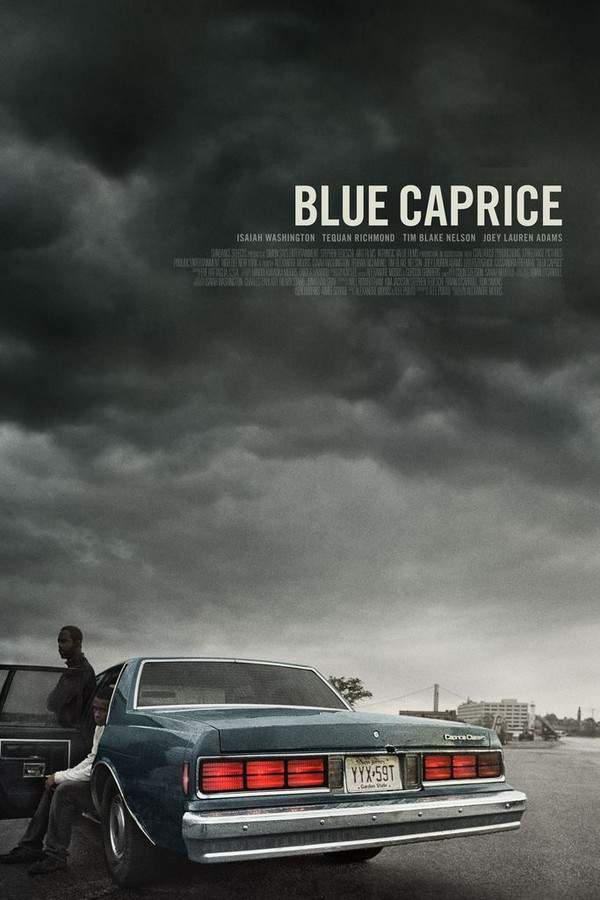
Blue Caprice (2013) movie poster

Timeline

Blue Caprice (2013) Timeline Explained – Every Event in Order

Release, runtime and language
2013 · 93 min · English
JustWatch #33,142
Directed by
Alexandre Moors
Starring
Tim Blake Nelson, Isaiah Washington, Joey Lauren Adams, Tequan Richmond

A troubled mentor manipulates and exploits a vulnerable teenager, training him to become a ruthless assassin. Their actions escalate into a violent killing spree that spans the country, leaving a devastating impact on those they encounter and raising questions about the nature of influence and responsibility.

On this page (6)
  1. 1 Where to watch
  2. 2 Events in order (13)
  3. 3 Timeline questions answered
  4. 4 Movie threads
  5. 5 Movies like Blue Caprice
  6. 6 Every angle

Where to watch

Where to Watch Blue Caprice (2013)

Where can you watch Blue Caprice? Stream, rent or buy it in the US, including on AMC+, Philo and Sundance Now: current JustWatch availability with up-to-date prices.

Streaming availability powered by JustWatch

13 events in order · contains spoilers

Blue Caprice Timeline: Events in Chronological Order

Every key event of Blue Caprice (2013) in order, scene by scene, with when and where it takes place. Use it to untangle flashbacks, time jumps and parallel storylines, to refresh your memory before the sequel or to find the exact scene you are thinking of.

  1. Lee relocates to the U.S.

    Lee, a teenager from Antigua, moves to the United States by himself due to his mother's work commitments. This major change marks the beginning of his journey into a new and challenging environment.

    Where
    Tacoma, Washington
  2. Meets John and Angela

    Upon arriving in Tacoma, Lee meets John, who becomes a father figure to him, and his girlfriend Angela. This new living arrangement introduces Lee to a family dynamic he has not experienced before.

    Where
    Tacoma, Washington
  3. Introduced to firearms

    During a jogging session with John, Lee is introduced to John's friend Ray, who subsequently teaches him about firearms. This moment sets the stage for Lee's unsettling involvement with guns.

  4. Lee’s marksmanship talent revealed

    As John encourages Lee to explore shooting, it quickly becomes clear that Lee has an exceptional talent as a marksman. This newfound skill takes a dark turn as it appears to foster a dangerous bond between Lee and John.

  5. John’s turmoil and Angela’s rejection

    John faces difficulties due to a restraining order that separates him from his children, which leads to increased tension with Angela. This situation escalates, resulting in Angela throwing both John and Lee out of her home.

    Where
    Angela's home, Tacoma
  6. Finding refuge with Ray

    After being kicked out, John and Lee find refuge with Ray and his family. Lee's life takes a more dangerous turn when he discovers a hidden stockpile of firearms in Ray's basement.

    Where
    Ray’s home
  7. Lee's first murder

    Under John's manipulative influence, Lee commits his first murder by shooting a neighbor at point-blank range. This horrifying act marks Lee’s descent into a life of crime and violence.

  8. Escalation of violence

    Encouraged by John, Lee continues down a dark path, committing more murders, including that of a pub owner. Each act of violence is twisted into a rite of passage as he feels pressured to repay John's debts.

  9. Campaign of terror begins

    John and Lee embark on a month-long campaign of terror in Washington, D.C. Their spree involves Lee shooting randomly at victims from the trunk of a stolen car, contributing to an atmosphere of fear in the city.

    Where
    Washington, D.C.
  10. Investigation intensifies

    As the brutal crimes unfold, the Montgomery County Police and the FBI initiate a serious investigation. The public is gripped by panic, highlighting the urgent need for law enforcement to intervene.

    Where
    Washington, D.C.
  11. Cornered by law enforcement

    After ten months, John and Lee are finally cornered by law enforcement while parked illegally. This moment signifies the end of their crime spree that resulted in 17 fatalities and numerous injuries.

    Where
    Washington, D.C.
  12. Lee’s imprisonment

    Five months after their apprehension, Lee finds himself in prison. He is approached by a lawyer who seeks to understand the motivations behind the killings, which adds to the complexity of his situation.

    Where
    Prison
  13. Lee's haunting question

    When questioned by the lawyer about the killings, Lee remains unyielding and instead queries, 'Where is my father?' This reflects his emotional turmoil and desperate need for paternal connection.

    Where
    Prison

Last updated: November 15, 2024 at 19:50

Was this helpful?

Timeline questions answered

Blue Caprice Timeline Explained: Your Questions Answered

When does it happen, and why in that order? The questions people ask about the chronology of Blue Caprice (2013): time jumps, flashbacks, cause and effect between scenes and the correct order of events, each answered with spoilers.

Q1

Why does John manipulate Lee into becoming a killer

John manipulates Lee because he is a predatory figure who exploits vulnerable young men. After losing access to his own children due to a restraining order and being kicked out by his girlfriend Angela, John channels his anger and isolation into molding Lee into a weapon. He sees Lee's exceptional marksmanship talent as an opportunity to fulfill his own violent desires through a proxy, essentially using Lee as an extension of himself to carry out the killings he cannot or will not do directly.

Foreshadowing: John's increasing frustration with his estrangement from his children and his tension with Angela foreshadow his willingness to direct his rage outward.

  • john manipulation
  • lee assassin
  • mentor exploit
  • psychological grooming
Q2

How does John manipulate Lee into killing

John exploits Lee's vulnerability as a teenager far from family in a new country. He positions himself as a father figure after Lee arrives in Tacoma without his mother. John gradually introduces Lee to firearms through his friend Ray, then pushes him toward violence by framing murders as rites of passage and ways to repay debts. Each killing is presented as a twisted bonding experience, with John present and encouraging, effectively normalizing the violence while reinforcing Lee's dependency on him.

Foreshadowing: John's quick integration of Lee into his family life and his enthusiasm about Lee's shooting talent hint at his intent to mold Lee into something dangerous.

  • manipulation tactics
  • grooming lee
  • john influence
  • lee vulnerability
Q3

What triggers Lee's first murder

Lee's first murder occurs after John and Lee are kicked out of Angela's home and take refuge with Ray. When Lee discovers firearms in Ray's basement, John uses this moment to push Lee toward violence. The first killing is of a neighbor, shot at point-blank range under John's direct encouragement. John frames this as a twisted rite of passage, establishing the pattern where Lee commits violence to please John and repay perceived debts.

Foreshadowing: John's rapid decline after losing access to his children and being thrown out creates the desperate environment where he feels emboldened to escalate Lee's involvement.

  • first murder
  • neighbor killed
  • lee kills
  • john encouragement
Q4

Why does Lee continue committing murders after the first one

Lee continues killing because John has deliberately cultivated a dynamic where violence becomes tied to their relationship and to Lee's sense of worth. Each murder is framed as repayment for John's kindness in taking Lee in. Additionally, Lee appears emotionally dependent on John as the father figure he lacks, making it difficult to refuse. The killings also escalate quickly into the D.C. spree, where the momentum and John's direction prevent Lee from stopping.

Foreshadowing: John's pattern of rewarding Lee's violence with praise and companionship reinforces this destructive cycle from the very first killing.

  • killing spree
  • lee murders
  • john lee violence
  • continued killings
Q5

What is the significance of the blue Caprice in the killings

The blue Caprice Classic serves as the mobile vantage point for the D.C. killing spree. Lee fires the Bushmaster XM-15 rifle from the trunk of the dark blue Chevrolet while John drives, allowing them to shoot randomly at victims and escape quickly. The car becomes both their weapon and their mobility, enabling the month-long campaign of terror across Washington, D.C. It represents the methodical and mechanical nature of their attacks.

Foreshadowing: The film title itself points to the car's central role in the violence, though viewers only understand its full significance during the D.C. sequence.

  • blue caprice
  • chevrolet caprice
  • sniper car
  • dc shooting
Q6

Why does Lee ask 'Where is my father?' at the end

Lee's question 'Where is my father?' reveals the core of his psychological entrapment. Despite committing horrific acts, he remains emotionally fixated on the father figure John presented himself to be. This demonstrates how thoroughly John exploited Lee's desperate need for paternal connection. Lee cannot separate his identity from his relationship with John, even after being apprehended and facing consequences. The question shows he has not developed independent moral reasoning, his sense of self remains contingent on John.

Foreshadowing: John's role as the father figure who 'guides' Lee through each murder reinforces this psychological bond throughout the film.

  • lee father
  • ending question
  • lee imprisonment
  • psychological trauma
Q7

Why is John estranged from his children

John is estranged from his children due to a restraining order that legally prohibits him from contacting them. This order originates from Maryland, where his children live with their mother. The restraining order is a critical source of John's emotional instability, fueling his growing resentment and alienation. When his girlfriend Angela throws him out, his isolation deepens, making him more susceptible to channeling his anger into manipulating Lee.

Foreshadowing: John's anger about the restraining order is visible early in the film, and his subsequent actions suggest he channels this frustration into directing Lee's violence.

  • restraining order
  • john children
  • family estrangement
  • maryland
Q8

What role does Ray play in the story

Ray is John's friend who introduces Lee to firearms during a jogging session. After John and Lee are kicked out of Angela's home, Ray offers them shelter. It is in Ray's house that Lee discovers the hidden stockpile of firearms in the basement, which becomes the catalyst for the escalation into murder. Ray's role is primarily facilitative, he provides access to weapons and shelter without directly participating in or stopping the violence.

Foreshadowing: Ray's casual introduction of guns to Lee and his hidden basement stockpile establish the ever-present availability of weapons in Lee's environment.

  • ray character
  • firearms
  • basement weapons
  • ray home
Q9

How many people did John and Lee kill

John and Lee's crime spree resulted in 17 fatalities over approximately ten months, with numerous additional injuries. The killing spree primarily occurred during their month-long campaign of terror in Washington, D.C., where Lee shot randomly at victims from the car trunk. This number represents the devastating human toll of their actions and ranks among the deadliest sprees in modern American crime history.

Foreshadowing: The film builds gradually from Lee's first murder to the mass shootings, making the final death count feel like a natural consequence of the escalating violence.

  • 17 victims
  • fatalities
  • death toll
  • dc sniper
Q10

Why is the movie called Blue Caprice

The movie is titled Blue Caprice after the dark blue Chevrolet Caprice Classic that John and Lee use during their Washington, D.C. killing spree. The car is central to their method, Lee fires from the trunk while John drives, allowing them to commit random shootings and escape. The title evokes the impulsive and random nature of the killings, as well as the vehicle that enabled their month-long terror campaign across the city.

Foreshadowing: Though the title references the car, its full significance only becomes clear during the D.C. sequence when the blue Caprice becomes the instrument of mass violence.

  • blue caprice title
  • movie name
  • chevrolet
  • car significance

Movie threads

More Movies Like Blue Caprice, by Mood & Story

Curated lists built around what makes Blue Caprice tick: the same mood, the same kind of story or the same emotional payoff. Each list explains why these movies belong together.

Movies about toxic mentorship like Blue Caprice

Stories of vulnerable souls twisted by the influence of a destructive guide. If you were captivated by the disturbing relationship in Blue Caprice, explore more movies like it that delve into the theme of toxic mentorship. These films feature similar stories of vulnerable individuals being manipulated and corrupted by a powerful, destructive father figure or guide, resulting in bleak and heavy drama.

  • unsettling
  • tragic
  • psychological
  • oppressive
  • harrowing
  • cold
  • Tone: dark, tragic, unsettling
  • Pacing: steady, methodical
Why these movies?

The story pattern: These narratives typically center on a power imbalance, where a mentor figure, often filling a paternal void, exploits the trust and vulnerability of a younger person. The story arc follows a gradual but inevitable descent, as the protégé is systematically stripped of their morals and humanity, culminating in tragic consequences.

Why they belong together: Movies are grouped here for their shared, intense focus on the psychology of manipulation and the devastating impact of a corrosive relationship. They create a harrowing mood by presenting a believable, step-by-step corruption that feels both inevitable and heartbreaking.
Bleak crime dramas with a descent into violence like Blue Caprice

Methodical, character-driven stories of an inevitable spiral into brutality. For viewers who appreciated the methodical and harrowing descent into violence in Blue Caprice, this section collects similar crime dramas and psychological thrillers. These movies share a steady pacing, dark tone, and heavy emotional weight, focusing on the chilling transformation of characters as they spiral into brutality.

  • harrowing
  • ominous
  • oppressive
  • tragic
  • unsettling
  • cold
  • Tone: dark, bleak, harrowing
  • Pacing: steady, deliberate
Why these movies?

The story pattern: The narrative pattern is a linear, downward trajectory. Starting from a point of vulnerability or instability, a character is pushed by circumstances or manipulation toward violence. The pacing is often steady, building dread as each step makes the final, brutal outcome feel inescapable, leaving no room for redemption.

Why they belong together: These films are united by their uncompromisingly bleak tone and their focus on the process of becoming violent. They prioritize psychological realism over sensationalism, creating a harrowing and immersive experience that is more about the 'why' and 'how' than the 'what' of the crimes.

If you liked this

Movies Like Blue Caprice

Similar movies to Blue Caprice: the same genre, themes or kind of story. Each one comes with its own plot summary, timeline and ending explained.

Browse all movie summaries

Every angle

Blue Caprice (2013) Explained: Plot, Timeline & Characters

Everything about Blue Caprice in one place: what happens in the plot summary, the timeline in chronological order, the characters and meaning and a spoiler-free summary. What's After the Movie adds the cast, box office and post-credit scenes.

Coming soon on iOS and Android

The Plot Explained Movie Summary App

Plot summaries, endings explained and timelines on your phone. Catch up on any movie in minutes, save your favorites and never miss a twist again.

Be the first to know when we launch. Your email stays private, always.

Learn more about the app