Plot Explained Spoilers guaranteed!
Plot Explained

Browse by genre

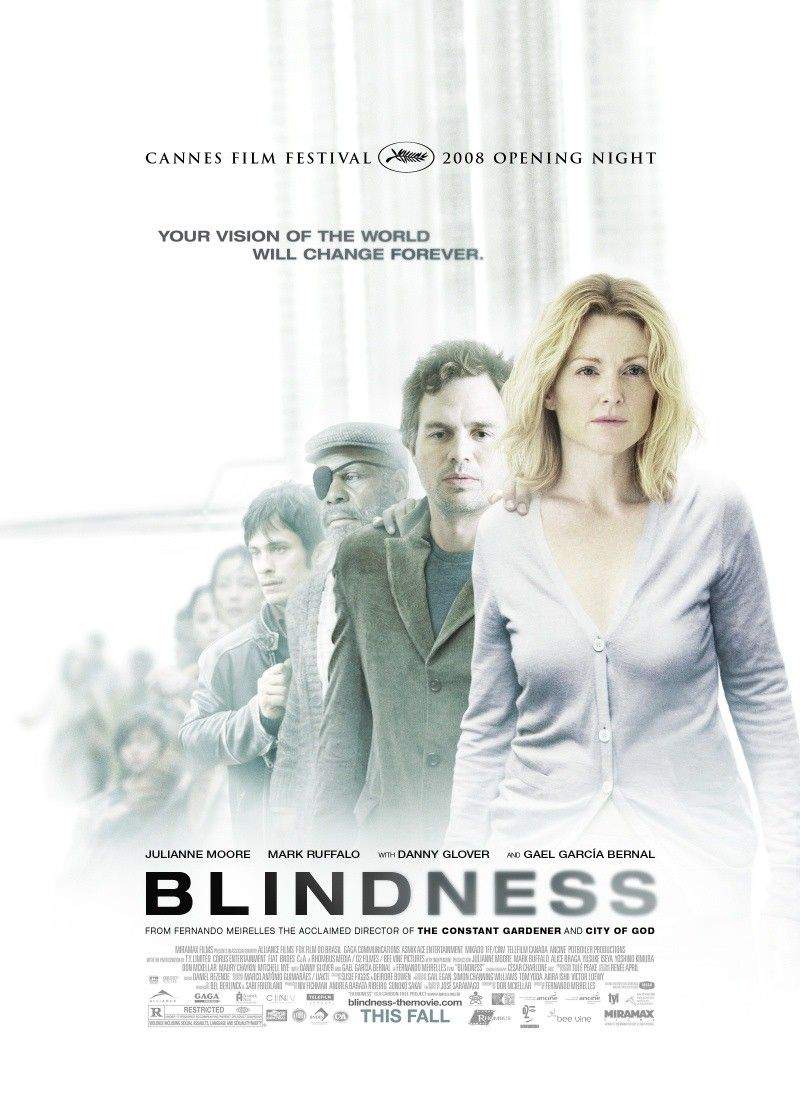
Blindness (2008) movie poster

Plot Summary

Blindness (2008) Plot Summary Explained

Release, runtime and language
2008 · 121 min · Polish
Loading streaming availability…
Directed by
Fernando Meirelles
Budget
$25M

A sudden epidemic of blindness sweeps through an unnamed city, quickly overwhelming the population. As the mysterious "White Sickness" spreads, those afflicted find themselves disoriented and isolated, losing their sight in an instant. Society descends into chaos, and the newly blind are rounded up and quarantined in a dilapidated mental hospital. Inside, tensions rise among the patients and their caretakers, blurring the lines between order and anarchy as they struggle to survive.

On this page (7)
  1. 1 Where to watch
  2. 2 What happens: full plot
  3. 3 Plot questions answered
  4. 4 The book behind the movie
  5. 5 Movie threads
  6. 6 Movies like Blindness
  7. 7 Every angle
Loading streaming availability…

Full plot summary · contains spoilers

What Happens in Blindness: Full Plot Summary

The whole story of Blindness (2008) explained, from the opening scene to the final frame: every key event, every twist and what it all adds up to. Read it as a quick recap before the sequel, to check a scene you missed, or to finally understand what really happened.

The narrative of Blindness unfolds one fateful morning in an unnamed city, during the busy rush-hour traffic. Amid the chaos of honking cars and frustrated drivers, a young Japanese professional, Yusuke Iseya, suddenly loses his sight for no discernible reason, bringing all surrounding activity to a standstill. While his baffled fellow commuters gather to help, one good Samaritan, Don McKellar, steps up to drive him home. As they navigate through the city, the blinded man describes his bewildering experience, likening his vision to "swimming in milk." Upon arriving at his upscale apartment, the Japanese man assures his rescuer that all will be well while he waits for his wife, unaware that this so-called helper has ulterior motives—departing with the car keys and stealing the vehicle.

Later that evening, when his wife, Yoshino Kimura, returns and discovers her husband's unexpected blindness, she quickly takes him to see an ophthalmologist, played by Mark Ruffalo. After an extensive examination, the doctor finds no medical reason for the affliction and suggests further tests at a hospital. Among the patients at the clinic are various individuals including an old man with a black eye-patch, portrayed by Danny Glover, and a mysterious woman, Alice Braga, wearing dark glasses. That same night, the car thief also succumbs to the inexplicable blindness and abandons the stolen vehicle as he wanders away in confusion.

Over a cozy dinner with his loving wife, Julianne Moore, the doctor shares the peculiar case of the blinded Japanese man. Meanwhile, the call-girl, revealed to be the woman in dark glasses, falls prey to the mysterious affliction after an encounter with a client. The next morning, panic grips the doctor when he discovers he too has lost his sight. Fearful of infecting his wife, he tries to maintain distance, but she insists on staying by his side, confident in her ability to remain safe. As the phenomenon spreads across the city, panic escalates, prompting the government to quarantine the growing number of blind citizens in a dilapidated asylum.

Upon arrival at the asylum, the doctor and his wife are the first to check in, determined to keep her sight a secret. Soon, more individuals arrive, including the call-girl, the Japanese couple, the car thief, and the young boy, Mitchell Nye. Tensions rise when the car thief confronts the Japanese man, triggering a scuffle that the doctor intervenes to resolve. As the proceedings unfold, the doctor assumes a reluctant leadership role while the Japanese man's wife becomes increasingly unresponsive due to the shock of her husband's condition. The old man with the eye-patch sheds light on the grim developments outside—the "White Sickness" has become a global crisis, with cases multiplying daily and the government enacting increasingly oppressive tactics to control the outbreak.

Conditions within the asylum deteriorate rapidly, plagued by overcrowding and a complete lack of support. Hygiene becomes a dire concern as filth and despair fester among the incarcerated. Starvation looms as irregular food deliveries send morale plummeting; guards become hostile, and medical supplies are withheld. The plight escalates to fatal encounters, with soldiers executing a man who strayed too far from the group. The inmates cope amidst gruesome realities, yet the bleakness turns darker when an armed faction led by an ex-barman, Gael García Bernal, seizes control, bartering food rations for valuables and resorting to dehumanizing tactics.

In a moment of vulnerability brought on by despair, the doctor succumbs to temptation and engages in a fleeting encounter with the woman in dark glasses. The weight of their actions hangs heavily, especially when they realize the doctor's wife has been a witness to their indiscretion. Though trust falters, she chooses to stay and support him, ultimately forgiving both parties involved. As the days drag on, the King of Ward 3 intensifies his demands, demanding women as payment for sustenance. One by one, desperate women accept the dreadful prospect of becoming sex slaves, leading to tragic consequences as one of them is ruthlessly killed by her captor.

Driven by vengeance and the instinct for survival, the doctor's wife ultimately snaps, taking justice into her own hands and murdering the King of Ward 3 with a pair of scissors. This act ignites a violent revolt among the wards, culminating in flames engulfing the asylum and claiming the lives of many prisoners. In the aftermath, the remaining few discover they are abandoned by the military, granted freedom only to find a desolate cityscape filled with chaos and debris—everyone now blind and society itself in ruin.

Determined to find a semblance of hope, the doctor's wife leads her husband, the Japanese couple, the old man, the woman in dark glasses, and the young boy through the shattered remnants of the city. Their journey unfolds amidst grim realities of survivors squatting in crumbling buildings. When she and her husband venture to scavenge for food, they navigate through a supermarket teeming with disoriented blind citizens. Their efforts lead to a tense encounter with starving individuals who catch the scent of the food she carries, but united, they manage to survive and return to their group intact.

Eventually, the doctor and his wife return to reclaim their home, working to make it a place of refuge for their new-found family. In a moment of reconciliation, the doctor’s wife expresses her forgiveness for his prior infidelity, deepening their bond. Together they share an intimate moment where he confesses that in their union, he can truly "see" her. Just as this makeshift family begins to find comfort in their new life, unexpected news breaks—the Japanese man regains his sight. This miraculous turn of events ignites a flicker of hope among the group, suggesting that perhaps the same healing could come to others. While they celebrate this moment of joy, the doctor’s wife gazes out onto the white, overcast sky, wrestling with the unsettling thought, > "I’m going blind," as the camera pans down, revealing the desolation of their surroundings.
Last updated: November 03, 2024 at 22:50

Was this helpful?

Plot questions answered

Blindness Plot Explained: Your Questions Answered

The questions people ask most about Blindness (2008): what happens in the confusing scenes, why the characters do what they do, the twists, hidden details and what the ending means. Each answer contains spoilers.

Q1

Why does the doctor's wife keep her sight secret at the asylum?

The doctor's wife maintains secrecy about her sight because she fears being separated from her husband. If the authorities discovered she could see, they would likely relocate her to a different ward or use her as a forced laborer, effectively ripping her away from the only person she has left in the quarantine. Her sight becomes her greatest asset and her means of protecting her husband and guiding their small group through the asylum's darkness.

Foreshadowing: Early in the film, the doctor warns his wife that being the only sighted person would make her a target for exploitation by both guards and other inmates.

  • doctor's wife
  • sight
  • secret
  • quarantine
  • asylum
Q2

Why does the King of Ward 3 demand women in exchange for food?

The King of Ward 3, an ex-barman who seized control of the asylum's food supplies, weaponizes his power to satisfy his sexual desires. With the guards deliberately neglecting the inmates and allowing starvation to fester, the King exploits the desperate situation. He forces women to become sex slaves in exchange for survival rations, using their desperation against them.

Foreshadowing: The asylum's rapid descent into lawlessness, combined with the guards' withdrawal of basic necessities, establishes the power vacuum that allows the King to consolidate control.

  • king of ward 3
  • food
  • women
  • sex slavery
  • power
Q3

What triggers the doctor's wife to kill the King of Ward 3?

The doctor's wife kills the King after he rapes yet another woman from their ward and threatens to continue his cycle of exploitation. Driven to breaking point by witnessing the systematic degradation and murder of vulnerable women, she seizes a pair of scissors and fatally stabs him. This act of vengeance sparks a violent uprising among the inmates, leading to the asylum being set on fire.

Foreshadowing: The gradual escalation of the King's demands, from demanding valuables to demanding women, creates mounting tension that foreshadows a violent confrontation.

  • king of ward 3
  • doctor's wife
  • killing
  • scissors
  • revenge
Q4

Why does the Japanese man regain his sight at the end?

The Japanese man (Yusuke) is the first to recover his vision, though the movie never explains why. His sight returns spontaneously, just as the blindness struck, without explanation or medical intervention. This miraculous recovery offers the survivors their first tangible hope that the epidemic might eventually lift, though it remains unclear if others will follow the same pattern.

Foreshadowing: The film's circular structure echoes the beginning, the first person to go blind becomes the first to see again, suggesting a potential cycle or resolution.

  • Japanese man
  • sight recovery
  • hope
  • blindness cure
Q5

Why does the doctor's wife remain the only person who can see?

The doctor's wife remains sighted throughout the quarantine for narrative purposes rather than explicit in-story explanation. While the film never confirms why she alone retains her vision, it likely relates to her deliberate isolation practices, she maintains strict physical distance from her husband and other blind individuals, potentially limiting her exposure to whatever causes the White Sickness.

Foreshadowing: Early in the film, when her husband loses his sight, she instinctively maintains distance, washing her hands frequently and avoiding direct contact.

  • doctor's wife
  • sighted
  • immunity
  • isolation
Q6

Why does the doctor have an affair with the woman in dark glasses?

The doctor succumbs to temptation during a moment of profound despair and vulnerability inside the bleak asylum. With his wife sleeping nearby, the doctor is overcome by loneliness, fear, and the oppressive atmosphere of starvation and dehumanization. The brief encounter represents how extreme conditions erode moral principles, even for otherwise virtuous people.

Foreshadowing: The escalating darkness of the asylum, particularly the King's exploitation and the constant threat of violence, creates an environment where rational judgment breaks down.

  • doctor
  • affair
  • woman in dark glasses
  • despair
  • weakness
Q7

What happens to the asylum after the fire?

After the violent uprising leads to the asylum burning down, the military abandons the surviving inmates. The guards simply disappear, leaving the handful of remaining prisoners自由 (free) to wander out into a devastated city. The asylum is destroyed, and the survivors must navigate the ruins of society on their own, discovering that the entire outside world has also succumbed to blindness.

Foreshadowing: The increasing brutality of the soldiers, executing anyone who strays too far, hints at the government's complete withdrawal from the quarantine scenario.

  • asylum
  • fire
  • abandonment
  • military
  • survivors
Q8

How does the White Sickness spread so rapidly?

The White Sickness spreads through unknown means, likely airborne or contagious contact, since even those caring for the blind begin succumbing to it. The doctor himself catches it despite his precautions. The film never explains the exact mechanism, but the rapid global spread suggests high contagion combined with the initial lack of understanding or quarantine protocols.

Foreshadowing: The doctor notes early on that no medical explanation exists for the blindness, suggesting a mysterious and novel pathogen.

  • white sickness
  • spread
  • contagion
  • epidemic
  • blindness
Q9

Why does the Japanese man's wife become increasingly unresponsive?

The Japanese man's wife descends into a catatonic-like state due to the traumatic shock of witnessing her husband's sudden blindness. Unlike other characters who adapt to their circumstances, she becomes paralyzed by the psychological weight of the situation, unable to process the sudden transformation of her life and her husband's condition.

Foreshadowing: Her silence is established early when she fails to respond after arriving at the asylum, signaling her inability to cope with the crisis.

  • Japanese wife
  • shock
  • catatonia
  • psychological breakdown
Q10

Why does the doctor become the leader of the asylum inmates?

The doctor assumes leadership because he is the only medical professional present and possesses the credibility to organize the confused group of newly blind arrivals. Though reluctant, his background compels him to take responsibility for organizing the ward and mediating conflicts, particularly when disputes arise between the Japanese man and the car thief.

Foreshadowing: His role as ophthalmologist positions him as the natural authority figure when the group arrives at the asylum and faces immediate challenges.

  • doctor
  • leadership
  • authority
  • asylum
  • inmates
Q11

Why does the car thief go blind after stealing the car?

The car thief succumbs to the White Sickness just like every other person touched by the epidemic, he is simply the next victim. His act of theft does not cause his blindness; it merely coincides with the random nature of the affliction. He abandons the stolen vehicle in confusion as his sight vanishes, illustrating that the sickness strikes indiscriminately regardless of moral character.

Foreshadowing: The earlier scene showing the ophthalmologist's waiting room, where multiple unrelated people are already experiencing the affliction, demonstrates the randomness of who gets struck.

  • car thief
  • blindness
  • punishment
  • randomness
Q12

Why do the soldiers execute prisoners at the asylum?

The soldiers execute prisoners as a brutal enforcement mechanism to maintain order and prevent escape. Anyone who ventures too close to the fence or attempts to leave is shot, serving as a terrifying example to other inmates. This extreme measure reflects the government's desperate attempt to contain the epidemic, treating the blind captives as disposable rather than attempting to help them.

Foreshadowing: The old man with the eye-patch foreshadows this brutality when he reports that the government is using increasingly oppressive tactics outside the asylum.

  • soldiers
  • execution
  • prisoners
  • control
  • asylum
Q13

Why does the doctor's wife think she's going blind at the end?

The doctor's wife's final realization that she is going blind represents the cyclical nature of the epidemic returning to its protagonist. After briefly experiencing hope when the Japanese man regains his sight, she faces the terrifying possibility that the sickness will claimed her too. Her ominous statement creates a bittersweet ending, hope exists, but she may not live to see the world recover.

Foreshadowing: The film's structure mirrors its beginning: starting with one person's blindness and potentially ending with another.

  • doctor's wife
  • going blind
  • ending
  • hope
  • fear

Movie threads

More Movies Like Blindness, by Mood & Story

Curated lists built around what makes Blindness tick: the same mood, the same kind of story or the same emotional payoff. Each list explains why these movies belong together.

Movies like Blindness about claustrophobic societal collapse

Stories where society crumbles within the confines of a single, oppressive location. If you liked the intense, confined chaos of Blindness, explore these movies that trap characters during a societal breakdown. These similar dystopian and survival thrillers often unfold in quarantined zones, bunkers, or asylums, creating a feeling of desperate claustrophobia and moral decay.

  • claustrophobic
  • oppressive
  • desperate
  • gritty
  • anxious
  • bleak
  • Tone: dark, oppressive
  • Pacing: steady, tense
Why these movies?

The story pattern: The narrative typically begins with a catastrophic event that disrupts society, quickly funneling a group of survivors into a confined, inhospitable location. The story then focuses on the micro-society that forms, exploring power struggles, the breakdown of morality, and the raw fight for survival as external threats are matched by internal ones.

Why they belong together: These films are grouped by their shared premise of societal collapse experienced in a microcosm. They share a high-intensity, dark tone, and a heavy emotional weight driven by themes of human nature under extreme duress, betrayal, and the loss of civilization's comforts.

Survival dramas with bittersweet endings like Blindness

Journeys through profound suffering that end not with victory, but with fragile hope. Fans of Blindness's emotionally heavy journey and its fragile, hopeful ending will appreciate these movies. These similar survival dramas and intense thrillers follow characters through extreme hardship, culminating in a realistic, bittersweet resolution that acknowledges the trauma endured.

  • somber
  • desperate
  • heavy
  • gritty
  • hopeful
  • bittersweet
  • Tone: dark, bittersweet
  • Pacing: steady, relentless
Why these movies?

The story pattern: The narrative follows a grueling, linear descent into suffering, testing the limits of human endurance. The climax often involves escaping the immediate threat, but the resolution focuses on the aftermath. The ending feels bittersweet; survival is achieved, but at a great cost, leaving the characters and their world irrevocably changed, with hope being a cautious, tentative emotion.

Why they belong together: These films are connected by their heavy emotional journeys and their specific type of conclusion. They share a high intensity, a dark tone throughout most of the runtime, and a pacing that builds steadily towards a climax that offers relief but not complete catharsis, resulting in a bittersweet or bleak ending feel.

If you liked this

Movies Like Blindness

Similar movies to Blindness: the same genre, themes or kind of story. Each one comes with its own plot summary, timeline and ending explained.

Browse all movie summaries

Every angle

Blindness (2008) Explained: Plot, Timeline & Characters

Everything about Blindness in one place: what happens in the plot summary, the timeline in chronological order, the characters and meaning and a spoiler-free summary. What's After the Movie adds the cast, box office and post-credit scenes.

Coming soon on iOS and Android

The Plot Explained Movie Summary App

Plot summaries, endings explained and timelines on your phone. Catch up on any movie in minutes, save your favorites and never miss a twist again.

Be the first to know when we launch. Your email stays private, always.

Learn more about the app