Plot Explained Spoilers guaranteed!
Plot Explained

Browse by genre

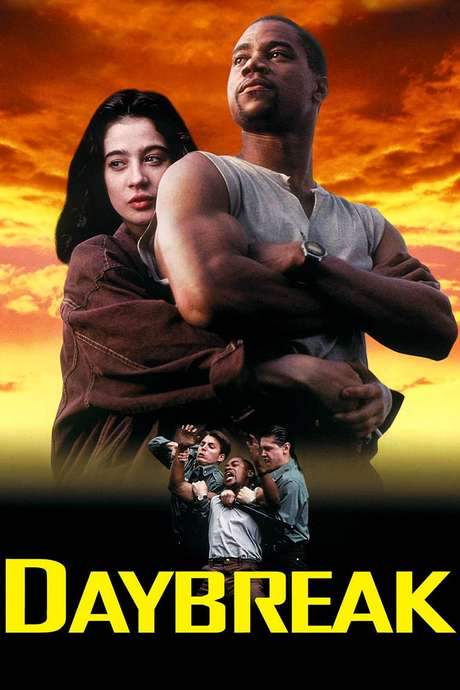
Daybreak (1993) movie poster

Plot Summary

Daybreak (1993) Plot Summary Explained

Release, runtime and language
1993 · 91 mins · English
JustWatch #33,253 2
Directed by
Stephen Tolkin
Starring
John Savage, Martha Plimpton, Omar Epps, Phil Hartman, Mark Boone Junior, Cuba Gooding Jr.

A deadly plague ravages the nation, and the authoritarian regime seals off the infected in brutal quarantine camps where death is the only option. Amid the darkness, a daring rebel known as Torch organizes a covert resistance, smuggling victims out of the camps to safe havens and fighting for a hopeful new dawn.

On this page (6)
  1. 1 Where to watch
  2. 2 What happens: full plot
  3. 3 Plot questions answered
  4. 4 Movie threads
  5. 5 Movies like Daybreak
  6. 6 Every angle

Where to watch

Where to Watch Daybreak (1993)

Where can you watch Daybreak? Stream, rent or buy it in the US, including on HBO Max, Amazon Video and Apple TV Store: current JustWatch availability with up-to-date prices.

Streaming availability powered by JustWatch

Full plot summary · contains spoilers

What Happens in Daybreak: Full Plot Summary

The whole story of Daybreak (1993) explained, from the opening scene to the final frame: every key event, every twist and what it all adds up to. Read it as a quick recap before the sequel, to check a scene you missed, or to finally understand what really happened.

Blue, Moira Kelly is a young woman who earns a living by scavenging metal in a crowded, oppressive city. In this near-future United States, the social order grows more authoritarian as a sexually transmitted infection—reminiscent of HIV—becomes a crime to possess. Those who test positive are forcibly placed into quarantine camps, tattooed with a P to mark their status, and shot if they try to escape. The camps are dilapidated and survivors are left with little care or contact with the outside world, a stark contrast to the world beyond the fences.

One day, Blue heads to a Helping Hand clinic with a friend who wants to get tested. The clinic operates under a chilling slogan, "Making your hard choices easier." Outside, a warning card challenges anyone who dares to test:

> Why is sickness a crime? Why is hospital a prison? Why does the helping hand hold a gun?

Blue is unsettled by what she sees and soon crosses paths with Torch, Cuba Gooding Jr., an activist in the resistance. The resistance movement works to shield people from being quarantined by arranging testing outside the official system, rescuing those detained by the clinic, and providing medicine, care, and understanding. They distribute condoms and clean needles to curb the spread of the disease, presenting a stark counterpoint to the government’s gleaming, fear-driven advertisements that insist, “The only way is not to play.”

As the relationship between Blue and Torch deepens, it becomes clear that Torch is positive, and his activism leads to his arrest. Once the authorities learn of his status, he is sent to the quarantine camps. Desperate to be with him, Blue secretly slips into the camp to visit Torch, hoping to join him inside the restricted world. She even contemplates infection herself so they can live together in captivity, but Torch resists, preferring to fight for a life beyond the walls rather than surrender to the system’s forced separation.

In the end, Blue leaves the camp behind, choosing to escape with Torch’s encouragement and to continue the broader fight from the outside. The story centers on a tense struggle between state power and intimate acts of resistance, highlighting how stigma, solidarity, and courage can challenge a society built on fear. Through Blue’s stubborn resolve and Torch’s steadfast activism, the film paints a portrait of resilience in a world where human connection still seeks to outshine oppression.
Last updated: October 09, 2025 at 10:48

Was this helpful?

Plot questions answered

Daybreak Plot Explained: Your Questions Answered

The questions people ask most about Daybreak (1993): what happens in the confusing scenes, why the characters do what they do, the twists, hidden details and what the ending means. Each answer contains spoilers.

Q1

Why does Blue consider infecting herself to join Torch in the quarantine camp?

Blue considers infecting herself because she wants to be with Torch and not live in a world separated from him. When she infiltrates the quarantine camp to visit Torch, she sees the brutal conditions but also realizes that being inside means they would never be apart. Her love for Torch is so strong that she views infection as the only way to stay together, since the regime's walls keep the infected completely isolated from the uninfected world.

Foreshadowing: Earlier, the film establishes that the quarantine camps completely sever all contact between those inside and outside, making normal life impossible for the infected.

  • blue
  • torch
  • quarantine
  • infection
  • love
  • sacrifice
Q2

How does the resistance movement help people avoid quarantine?

The resistance, led by Torch, operates by arranging testing outside the official government system so people can get checked without being flagged. They also rescue people who have already been detained by the clinics, provide medicine and care to those who are positive, and distribute condoms and clean needles to reduce the spread of the disease. Their mission is to protect people from being forcibly taken to the camps and to offer support that the state refuses to provide.

Foreshadowing: The warning card outside the Helping Hand clinic hints at the regime's cruelty, which the resistance actively works to counter.

  • resistance
  • torch
  • quarantine
  • helping hand
  • underground
  • rescue
Q3

Why does Torch refuse to let Blue infect herself so they can be together?

Torch refuses because he believes fighting for freedom is more important than surrendering to the system's forced separation. Even though he loves Blue, he does not want her to sacrifice her health and freedom just to be with him inside a prison camp. He wants to live with her in the real world, not accept captivity as the only option. His refusal shows his commitment to resistance over defeatism.

Foreshadowing: Torch's activism and refusal to accept the regime's rules have been consistent throughout the film, showing his character would never encourage surrender.

  • torch
  • blue
  • infection
  • freedom
  • resistance
  • captivity
Q4

What causes Torch to get arrested and sent to the quarantine camp?

Torch gets arrested because his activism is discovered by the authorities. As a leader in the resistance, he works to smuggle people out of the camps and challenges the government's control. Once the police learn about his positive status and his role in the resistance, they send him to the quarantine camp where all infected people are detained.

Foreshadowing: The earlier scenes show Torch openly defying the regime by distributing harm-reduction supplies and rescuing prisoners, which inevitably draws attention from authorities.

  • torch
  • arrest
  • quarantine
  • police
  • resistance
  • infection
Q5

How does the government identify and capture infected people?

The government uses the Helping Hand clinics as the main tool for identification. People who want to know their status must go through these official testing centers, which are run by the state. Once someone tests positive, they are forcibly taken to the quarantine camps. The clinics also tattoo a "P" on anyone who tests positive to mark their status, making them easily identifiable if they try to escape.

Foreshadowing: The opening scene establishes the Helping Hand clinic as the primary gatekeeper between freedom and captivity.

  • helping hand
  • clinic
  • government
  • quarantine
  • test
  • positive
  • P tattoo
Q6

Why does Blue decide to escape the quarantine camp instead of staying with Torch?

Blue decides to escape because Torch convinces her that continuing the fight from the outside is more valuable than staying locked away together. While she initially wanted to sacrifice her freedom for love, Torch pushes her to leave so she can keep working with the resistance and help free others. Her escape represents choosing the broader cause over personal desire, though it means being separated from the man she loves.

Foreshadowing: This decision mirrors Torch's earlier philosophy that living freely and fighting back matters more than accepting the regime's constraints.

  • blue
  • escape
  • quarantine
  • torch
  • freedom
  • resistance
  • fight
Q7

What happens to Torch at the end of the movie?

Torch remains in the quarantine camp at the end of the movie. While Blue escapes and returns to the outside world to continue fighting with the resistance, Torch is left behind inside the prison system. His continued imprisonment creates the bittersweet ending - Blue wins her freedom but loses being with the person she loves, though their connection remains strong.

Foreshadowing: The film's darker tone and the regime's pervasive power suggest escape will not be easy for everyone, setting up the realistic outcome that not all characters make it out.

  • torch
  • quarantine
  • camp
  • ending
  • imprisoned
  • left behind
Q8

Why does the government treat the disease as a criminal act rather than a health issue?

The government treats the disease as a crime because it has been politicized as a way to control the population. The regime uses fear and stigma to justify authoritarian measures, turning a sexually transmitted infection into something that warrants imprisonment and execution. By criminalizing being positive, the government can justify sealing people away in camps, maintaining social control, and promoting compliance through propaganda that frames abstinence as the only solution.

Foreshadowing: The warning card outside the clinic directly questions this logic: 'Why is sickness a crime?' and 'Why does the helping hand hold a gun?'

  • government
  • disease
  • crime
  • plague
  • quarantine
  • authoritarian
  • control
  • stigma
Q9

What are the conditions like inside the quarantine camps?

The quarantine camps are described as dilapidated and brutal, with survivors left with little care or contact from the outside world. People who test positive are tattooed with a "P" to mark their status and are shot if they try to escape. The camps function as prisons where death is the only outcome, offering no real medical treatment or hope of release. This stark contrast to the world beyond the fences highlights the regime's cruelty.

Foreshadowing: The film's early warning card foreshadows the camps as prisons: 'Why is hospital a prison?'

  • quarantine
  • camp
  • conditions
  • P tattoo
  • death
  • imprisonment
  • brutal
Q10

How does the resistance continue its work after Blue escapes?

After Blue escapes, she returns to the resistance and continues fighting the system from the outside. The resistance persists in its mission to rescue people from the Helping Hand system, provide care and medicine to those in need, and distribute condoms and clean needles. Blue's choice to escape represents not giving up the fight but rather choosing to continue it through organized resistance rather than personal sacrifice.

Foreshadowing: The resistance's earlier activities of rescuing people and providing supplies established their ongoing commitment to the cause.

  • resistance
  • blue
  • continue
  • fight
  • rescue
  • outside
  • freedom

Movie threads

More Movies Like Daybreak, by Mood & Story

Curated lists built around what makes Daybreak tick: the same mood, the same kind of story or the same emotional payoff. Each list explains why these movies belong together.

Dystopian rebellion movies like Daybreak

Hopeful resistance movements fighting overwhelming oppression in a broken world. If you enjoyed the defiant spirit of Daybreak, explore more movies about resistance movements in oppressive futures. These films feature desperate heroes, high-stakes covert operations, and a bittersweet but hopeful fight for a new dawn, perfect for fans of intense dystopian dramas.

  • oppressive
  • tense
  • hopeful
  • desperate
  • resilient
  • defiant
  • Tone: dark, hopeful
  • Pacing: steady, escalating
Why these movies?

The story pattern: Stories in this thread typically follow a linear path of escalating conflict between a small, determined resistance and a monolithic authoritarian state. The protagonist's journey is one of radicalization, moving from personal survival to becoming a symbol for a larger cause, often at great personal cost.

Why they belong together: These movies are grouped by their shared core of a desperate, human-scale rebellion set against a backdrop of systemic cruelty. They balance a dark, oppressive tone with a persistent undercurrent of hope, creating a compelling and emotionally heavy viewing experience centered on the cost of freedom.

Movies with a defiant romance like in Daybreak

A desperate love story flourishing amidst societal collapse and extreme adversity. For viewers who were captivated by the romance in Daybreak, this collection features love stories that are acts of defiance. These films show relationships that blossom in brutal settings, where choosing to love is itself a revolutionary act against darkness and despair.

  • desperate
  • hopeful
  • tense
  • somber
  • passionate
  • tragic
  • Tone: bittersweet, tense
  • Pacing: steady, character-driven
Why these movies?

The story pattern: The narrative pattern follows two characters coming together in a world designed to keep people isolated and afraid. Their relationship develops quickly under intense pressure, serving as an emotional anchor and a personal reason to fight against the overwhelming darkness. The ending is often bittersweet, valuing the love's symbolic power over a conventionally happy conclusion.

Why they belong together: These films are connected by the specific emotional mix of a heavy, tense plot intertwined with a passionate, high-stakes romance. The love story is integral to the main conflict, providing the emotional fuel for the characters' resilience and making the political struggle deeply personal.

If you liked this

Movies Like Daybreak

Similar movies to Daybreak: the same genre, themes or kind of story. Each one comes with its own plot summary, timeline and ending explained.

Browse all movie summaries

Every angle

Daybreak (1993) Explained: Plot, Timeline & Characters

Everything about Daybreak in one place: what happens in the plot summary, the timeline in chronological order, the characters and meaning and a spoiler-free summary. What's After the Movie adds the cast, box office and post-credit scenes.

Coming soon on iOS and Android

The Plot Explained Movie Summary App

Plot summaries, endings explained and timelines on your phone. Catch up on any movie in minutes, save your favorites and never miss a twist again.

Be the first to know when we launch. Your email stays private, always.

Learn more about the app