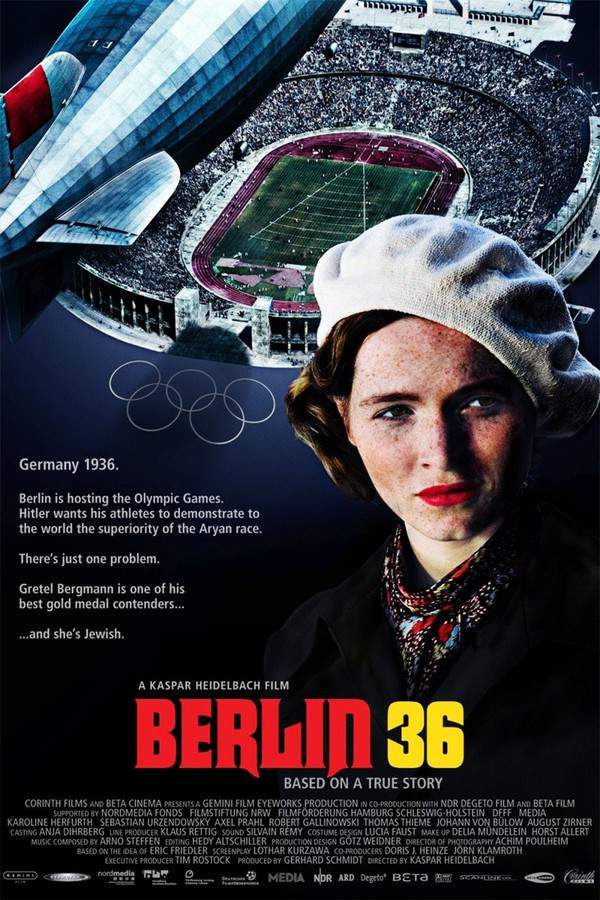
Berlin ’36

Berlin ’36

Year: 2009

Runtime: 100 mins

Language: German

Director: Kaspar Heidelbach

HistoryDrama

Set in Nazi Germany in 1936, the film follows Jewish high‑jumper Gretel Bergmann, a leading Berlin Olympic hopeful. The regime replaces her with Dora Ratjen, later revealed to be male. Based on true events, the story sparked debate after Der Spiegel cited records that officials learned Ratjen’s sex only in 1938. It premiered in Germany on 10 September 2009.

Warning: spoilers below!

Haven’t seen Berlin ’36 yet? This summary contains major spoilers. Bookmark the page, watch the movie, and come back for the full breakdown. If you're ready, scroll on and relive the story!

Timeline & Setting – Berlin ’36 (2009)

Explore the full timeline and setting of Berlin ’36 (2009). Follow every major event in chronological order and see how the environment shapes the story, characters, and dramatic tension.

Time period

1936

Set in the mid-1930s, the story unfolds during the Berlin Olympics era. It portrays the Nazi regime’s racial laws and the political pressure athletes faced to conform or be excluded. The period is defined by state-sponsored athletics, international scrutiny, and the clash between sport and ideology.

Location

United Kingdom, Berlin, Germany

The film traverses the United Kingdom, where Gretel Bergmann achieves a high jump victory, and Berlin, Germany, where the Nazi-influenced Olympic world and team training camps unfold. The Berlin 1936 Games are central, with political pressure and state control over sport shaping the competition. The setting spans German training facilities and the Olympic venue, highlighting exile, return, and propaganda.

🏟️ Olympics 🧭 Historical Setting 🗺️ International Context

Last Updated: October 04, 2025 at 16:42

Main Characters – Berlin ’36 (2009)

Meet the key characters of Berlin ’36 (2009), with detailed profiles, motivations, and roles in the plot. Understand their emotional journeys and what they reveal about the film’s deeper themes.

Gretel Bergmann (Karoline Herfurth)

A German Jew and elite high jumper who leaves Germany for safety in the United Kingdom, then returns to compete in the Berlin Games under intense political pressure. Her talent and discipline are matched by her moral integrity; she seeks fair treatment in a hostile environment. Gretel’s journey embodies resilience, courage, and the cost of standing against oppression.

🏃‍♀️ Athlete ✊ Jewish identity 🕊️ Courage

Marie Ketteler (Sebastian Urzendowsky)

A roommate and rival who is revealed to be a man, used by the Nazis to manipulate the gold medal outcome. Marie’s enigmatic behavior—sparing self-control and a strategic mindset—drives the plot’s moral complexities. Despite intimidation, Marie forms a complicated friendship with Gretel and ultimately subverts Nazi plans by choosing to lose tactically.

🎭 Identity 🏃‍♀️ Rivalry 🧭 Deception

Hans Waldmann (Axel Prahl)

The initially fair-minded coach who believes in unbiased sportsmanship and equal treatment. His dismissal and replacement by a party loyalist illustrate the regime’s control over athletics. Waldmann’s approach highlights the internal conflict between integrity and political obedience.

🏅 Coach 🕊️ Integrity

Sigfrid Kulmbach (Robert Gallinowski)

A coach loyal to the Nazi party who undermines Gretel and obstructs merit-based selection. He embodies political manipulation within sport and the weaponization of athletic achievement for propaganda. Kulmbach’s actions intensify the tension and reveal the corrupting reach of authority.

🏟️ Power 🗡️ Manipulation

Avery Brundage (John Keogh)

Representative of the International Olympic Committee who pressures for inclusion of Jewish athletes and opposes discrimination. His stance frames international sport as a counterweight to extremist policies and amplifies the ethical stakes of the Games.

🌐 IOC 🛡️ Ethics

Last Updated: October 04, 2025 at 16:42

Major Themes – Berlin ’36 (2009)

Explore the central themes of Berlin ’36 (2009), from psychological, social, and emotional dimensions to philosophical messages. Understand what the film is really saying beneath the surface.

🏟️ Sports vs Politics

Athletic competition is inseparable from political power. The IOC and Nazi officials exert pressure that tests fairness and integrity. The plot tracks how sport can be manipulated for propaganda, and how individuals respond when institutions abuse authority.

🧭 Identity & Friendship

Marie’s secret identity and Gretel’s Jewish background create a tension between personal truth and political manipulation. The two athletes form a fraught friendship that challenges Nazi ideology and shows courage in dangerous times. Their bond becomes a quiet form of resistance.

🛡️ Oppression & Resilience

Discrimination and surveillance test the athletes’ resolve. Gretel confronts exclusion and manipulation, while Marie’s actions reveal moral ambiguity. The narrative celebrates resilience and integrity in the face of systemic oppression.

Last Updated: October 04, 2025 at 16:42

Mobile App Preview

Coming soon on iOS and Android

The Plot Explained Mobile App

From blockbusters to hidden gems — dive into movie stories anytime, anywhere. Save your favorites, discover plots faster, and never miss a twist again.

Sign up to be the first to know when we launch. Your email stays private — always.

Explore Movie Threads

Discover curated groups of movies connected by mood, themes, and story style. Browse collections built around emotion, atmosphere, and narrative focus to easily find films that match what you feel like watching right now.

Movies about quiet defiance like Berlin ’36

Personal acts of courage challenge systems of power, where victory is measured in integrity.Discover movies like Berlin ’36 that explore themes of personal resistance under oppressive political systems. If you enjoyed the story of moral courage and subtle defiance against the Nazi regime, you'll find similar narratives in these films that focus on quiet acts of integrity.

defiantsombertensefraughtpoliticalmoralcourageousoppressive

Narrative Summary

Stories in this thread typically follow a principled individual navigating a corrupt or authoritarian system. The central conflict is between personal integrity and systemic pressure, often resolved not by overthrowing the system, but by making a stand that preserves the protagonist's soul. The journey is internal as much as external, focusing on the cost and reward of staying true to one's values.

Why These Movies?

These films are grouped together because they share a core theme of non-violent, personal resistance. They create a similar mood of tense, somber defiance, where the pacing is steady and the emotional weight is heavy. Viewers are drawn to the profound moral choices faced by characters in impossible situations.

Political sports dramas similar to Berlin ’36

Where the playing field becomes a stage for larger societal conflicts and moral struggles.If you liked the tense political backdrop of Berlin ’36 and its focus on athletic integrity, explore these similar movies. Find other sports dramas where the game is intertwined with heavy historical or social conflict, creating a somber and thought-provoking viewing experience.

tensesomberfraughtpoliticalanxiousdefiantresignedhistorical

Narrative Summary

The narrative pattern involves athletes who are thrust into political arenas, their personal struggles and achievements magnified by the societal forces at play. The plot often follows their training and competition, but the real drama unfolds in the clash between pure sportsmanship and external ideological pressures. The endings are frequently bittersweet, balancing personal achievement with the unresolved weight of the larger conflict.

Why These Movies?

Movies in this thread are connected by their unique blend of sports narrative and serious political or historical drama. They share a specific mood—oppressive, tense, and somber—with a steady pacing that builds psychological pressure. The experience is defined by watching human spirit and athletic endeavor collide with uncompromising systems.

Unlock the Full Story of Berlin ’36

Don't stop at just watching — explore Berlin ’36 in full detail. From the complete plot summary and scene-by-scene timeline to character breakdowns, thematic analysis, and a deep dive into the ending — every page helps you truly understand what Berlin ’36 is all about. Plus, discover what's next after the movie.

Berlin ’36 Summary

Read a complete plot summary of Berlin ’36, including all key story points, character arcs, and turning points. This in-depth recap is ideal for understanding the narrative structure or reviewing what happened in the movie.

Berlin ’36 Summary

Berlin ’36 Timeline

Track the full timeline of Berlin ’36 with every major event arranged chronologically. Perfect for decoding non-linear storytelling, flashbacks, or parallel narratives with a clear scene-by-scene breakdown.

Berlin ’36 Timeline

Berlin ’36 Spoiler-Free Summary

Get a quick, spoiler-free overview of Berlin ’36 that covers the main plot points and key details without revealing any major twists or spoilers. Perfect for those who want to know what to expect before diving in.

Berlin ’36 Spoiler-Free Summary

More About Berlin ’36

Visit What's After the Movie to explore more about Berlin ’36: box office results, cast and crew info, production details, post-credit scenes, and external links — all in one place for movie fans and researchers.

More About Berlin ’36