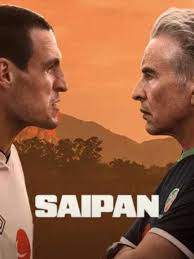
In 1980, a young Roy Keane plays football in a field in Cork, and the film traces how his early talent foreshadows a journey from local fields to international fame, all while the shadows of injury and doubt linger over his rise. Years later, he has become a standout figure, but a period away from the game arrives after rumors of an injury begin to blur the line between reality and narrative.
In December 2001, in Barnsley, an interviewer discusses the upcoming sporting event with Mick McCarthy, who decides he should travel to Tehran to oversee the Irish team. The scene sets up a clash of personalities: a seasoned coach navigating national expectations while preparing for a demanding assignment, and a star player whose ego and frustrations are reaching a tipping point.
In April 2002, Roy Keane travels to Dublin with the Irish squad to Saipan. On the flight, he voices his unease about the team’s preparation, sharing his grievances with McCarthy and signaling a growing fracture in the harmony of the squad. Upon arrival, the conditions on the ground confirm his worst fears—the hotel is subpar, the food is lacking, and his mood quickly darkens, fueling a pattern of sharp, anti-social behavior that unsettles teammates and staff alike.
A morning meeting reveals further stress: there has been an error in supply delivery, compounding the already poor training pitch conditions. This combination sparks a confrontation between Roy Keane and Mick McCarthy in a sauna, a tense moment that becomes a turning point in how the coach’s decisions are perceived. As questions about McCarthy’s leadership surface—some influenced by his English origins—he defends his method by drawing a lines between “men from Ireland” and “Irish men,” underscoring a divide that runs through the team.
Eleven days before the match, Roy Keane plays a practice game and fires off sharp insults at some of the managers present, signaling the depth of his discontent. The following day, he complains about players taking time off after only an hour, then storms off. That night, he asks McCarthy to send him home for “personal problems,” though he wavers and reconsiders the next day.
Yet the pressure intensifies when, eight days before the match, it emerges that Roy Keane has leaked his candid thoughts to a reporter who sold the story to the press. When McCarthy calls a team meeting to address the matter, Keane insists he did nothing wrong. McCarthy accuses him of faking an injury, and Keane concedes that he believes the Irish team has become a joke under the current leadership and that he does not “rate him as a person.” The confrontation and subsequent insults culminate in McCarthy’s decision to part ways with Keane.
On May 23, Keane returns home to mixed reactions, and in Tokyo the team watches an interview in which he openly says he does not regret leaving. A few days later, McCarthy reaches out, asking if he wants to return, but Roy Keane declines.
In a closing title sequence, the film reveals that Ireland exits the 2002 World Cup on penalties to Spain after making it to the last 16. Back in Manchester, Keane plays alone, the memory of his childhood field in Cork echoing as a quiet reminder of the years that shaped him, closing a chapter that began in 1980 and ended with a controversial, unresolved chapter in 2002.