Plot Explained Spoilers guaranteed!
Plot Explained

Browse by genre

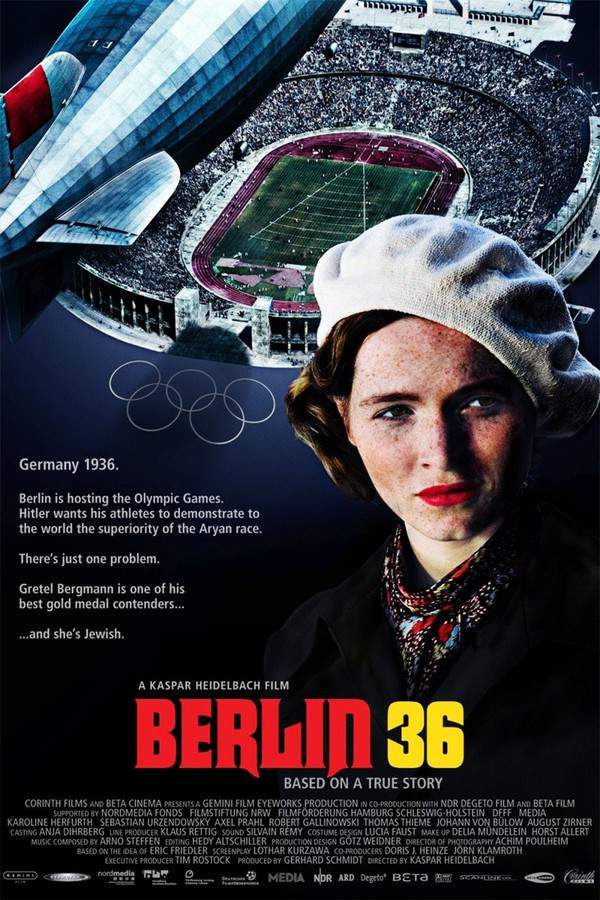
Berlin ’36 (2009) movie poster

Timeline

Berlin ’36 (2009) Timeline Explained – Every Event in Order

Release, runtime and language
2009 · 100 mins · German
Loading streaming availability…
Directed by
Kaspar Heidelbach
Starring
Harvey Friedman, Tomas Spencer, Sebastian Urzendowsky, Karoline Herfurth, Johann von Bülow, August Zirner

Set in Nazi Germany in 1936, the film follows Jewish high‑jumper Gretel Bergmann, a leading Berlin Olympic hopeful. The regime replaces her with Dora Ratjen, later revealed to be male. Based on true events, the story sparked debate after Der Spiegel cited records that officials learned Ratjen’s sex only in 1938. It premiered in Germany on 10 September 2009.

On this page (6)
  1. 1 Where to watch
  2. 2 Events in order (12)
  3. 3 Timeline questions answered
  4. 4 Movie threads
  5. 5 Movies like Berlin ’36
  6. 6 Every angle
Loading streaming availability…

12 events in order · contains spoilers

Berlin ’36 Timeline: Events in Chronological Order

Every key event of Berlin ’36 (2009) in order, scene by scene, with when and where it takes place. Use it to untangle flashbacks, time jumps and parallel storylines, to refresh your memory before the sequel or to find the exact scene you are thinking of.

  1. Gretel Bergmann wins in the United Kingdom

    Gretel travels to the United Kingdom to continue her high jump career after Nazi racial laws prevent her training in Germany. She wins the high jump championships there, establishing her international reputation. The victory demonstrates her ability to compete at the highest level even while exiled from her homeland.

    When
    1930s
    Where
    United Kingdom
  2. Nazi laws force her to train abroad

    Because she is Jewish, Nazi racial laws bar Gretel from training in Germany. Her father arranges for her to live and train in England to stay safe and maintain her athletic momentum. The move shows how politics intrudes on sport and personal safety.

    When
    1930s
    Where
    Germany and England
  3. Berlin 1936: IOC pressure on Jewish athletes

    At the 1936 Berlin Olympics, American officials and the IOC pressure the Nazis to guarantee that Jewish athletes are not excluded from competition. A Jewish champion would be a humiliation to the regime, placing the Nazi organizers in a difficult position. The episode heightens Gretel's precarious status within the German team.

    When
    1936
    Where
    Berlin
  4. Threats force Gretel back to Germany

    Threats against her family in Germany prompt Gretel to return home and join the German Olympic squad. She appears to have equal rights in the training camp, but political pressure fuses with personal risk. The line between safety and coercion becomes increasingly blurred.

    When
    1936
    Where
    Germany
  5. Hans Waldmann champions fair coaching

    Hans Waldmann, the team coach, is impressed by Gretel's skill and discipline and adopts a policy of fair, sportsmanlike training. He treats her as an equal and judges performance by merit rather than politics. His integrity stands in quiet contrast to the regime's meddling.

    When
    Pre-Olympics 1936
    Where
    Training camp
  6. Waldmann is dismissed for political reasons

    Nazi officials dismiss Waldmann and replace him with Sigfrid Kulmbach, a coach loyal to the party. Kulmbach begins an aggressive effort to discourage Gretel and undermine her confidence. The power shift shows sport becoming a ground for political control.

    When
    Pre-Olympics 1936
    Where
    Training camp
  7. Marie Ketteler revealed as Gretel's rival—and a man

    Gretel's roommate and only serious rival, Marie Ketteler, is revealed to be a man. The Nazis intend to use Marie to seize the gold medal in high jump. Gretel senses manipulation and navigates a dangerous, manufactured rivalry.

    When
    Pre-Olympics 1936
    Where
    Training camp
  8. Friendship forms amid oppression

    Despite outside pressure and the threat from authorities, Gretel and Marie form a bond based on mutual resistance to the Nazi regime. Their unlikely friendship becomes a quiet beacon of solidarity in a hostile setting. They share moments of trust even as the political climate tightens.

    When
    Pre-Olympics 1936
    Where
    Training camp
  9. Gretel is excluded from competition

    Gretel is excluded from the competition on false pretenses, replaced by Marie just days before the Games. The move shows the regime's direct interference in Olympic selection. Gretel watches in disbelief as the system consolidates control.

    When
    Days before 1936 Olympics
    Where
    Berlin (Olympic training site)
  10. Marie's identity and motives exposed

    Marie displays odd behaviors—rarely bathing with teammates, shaving her legs repeatedly, and a deep voice that hints at his hidden identity. Gretel realizes Marie's true gender and the ulterior motive behind the selection. The rivalry takes on a new, sharpened edge.

    When
    Pre-Games 1936
    Where
    Olympic training camp
  11. Marie sacrifices the final leap

    Facing a tainted field, Marie decides to deliberately miss the final leap, denying Gretel a chance at a fair victory. The act undercuts the Nazi plan to showcase German athletic supremacy. It becomes a quiet stand against oppression through sport.

    When
    Finals day 1936
    Where
    Olympic Stadium, Berlin
  12. Final result: a surprise ending and mutual relief

    Marie finishes in fourth place as Gretel watches from the stands, exchanging a secret, hopeful smile with her rival. The outcome undermines the Nazis' propaganda and signals a subtle victory of integrity over coercion. Their shared opposition underscores the power of individual choices in the face of tyranny.

    When
    Finals day 1936
    Where
    Olympic Stadium, Berlin

Last updated: October 09, 2025 at 11:02

Was this helpful?

Timeline questions answered

Berlin ’36 Timeline Explained: Your Questions Answered

When does it happen, and why in that order? The questions people ask about the chronology of Berlin ’36 (2009): time jumps, flashbacks, cause and effect between scenes and the correct order of events, each answered with spoilers.

Q1

Why was Gretel Bergmann removed from the Olympic high jump team?

Gretel was removed from the competition just days before the Games not because of her athletic performance, but because the Nazi regime needed to control the narrative. Officials replaced her with Marie Ketteler to ensure a German athlete would win the gold medal, rather than risk a Jewish athlete victory that would undermine their propaganda. The exclusion was politically motivated, not based on skill.

  • Gretel Bergmann
  • Olympic team
  • Nazi removal
  • high jump
  • 1936
Q2

Who is Marie Ketteler and why is her identity significant?

Marie Ketteler, Gretel's roommate and rival, was later revealed to be a man named Dora Ratjen. The Nazis had secretly substituted a male athlete disguised as a woman to guarantee a German victory in the women's high jump event. Marie's odd behavior, avoiding baths with teammates, shaving her legs obsessively, and speaking in a deep voice, hints at this deception throughout the film.

Foreshadowing: Earlier scenes show Marie avoiding physical intimacy and exhibiting behaviors that contrast with the other female athletes.

  • Marie Ketteler
  • Dora Ratjen
  • gender deception
  • Nazi athlete
  • identity reveal
Q3

Why did Marie deliberately miss the final jump at the Olympics?

Marie discovered that Gretel was excluded purely for political reasons, not performance issues. Confronted with the moral weight of the situation, Marie chose to deliberately dislodge the bar during her final leap, finishing in fourth place. This act was a quiet protest against the Nazi manipulation of sport, denying them the propaganda victory they sought while honoring her genuine connection with Gretel.

  • Marie
  • final jump
  • deliberate loss
  • protest
  • fourth place
  • Olympics
Q4

Why did Gretel return to Germany despite the danger?

Gretel returned to Germany after receiving threats against her family. The Nazis used her family's safety as leverage, forcing her to come back despite knowing she would face persecution. She was subsequently included in the German team, but this inclusion was a political maneuver to satisfy international pressure from the IOC and American officials.

  • Gretel return
  • family threats
  • Nazi pressure
  • danger
  • 1936 Berlin
Q5

What happened to coach Hans Waldmann?

Hans Waldmann, the original team coach, was dismissed by Nazi officials because he refused to compromise his principles. He treated Gretel fairly, judging her purely on athletic merit rather than ideology, and believed in sportsmanship above politics. He was replaced by Sigfrid Kulmbach, a coach loyal to the Nazi party who actively worked to undermine Gretel's confidence and progress.

  • Hans Waldmann
  • coach
  • dismissal
  • Nazi
  • Sigfrid Kulmbach
  • replacement
Q6

What was the Nazi motive for using Marie in the competition?

The Nazis intended to use Marie (Dora Ratjen) to win the gold medal in women's high jump, thereby showcasing German athletic superiority for propaganda purposes. By replacing the Jewish athlete Gretel with a male competitor disguised as a woman, they sought to control both the outcome and the narrative of the Berlin Olympics, demonstrating the supposed superiority of the Aryan race.

  • Nazi motive
  • propaganda
  • gold medal
  • German victory
  • Aryan superiority
  • 1936 Olympics
Q7

What did the final smile between Gretel and Marie signify?

The knowing smile they exchanged at the end represented a shared victory of integrity over oppression. Though Gretel was officially wronged and Marie had been used as a tool of deception, Marie's deliberate failure undermined the Nazi propaganda machine. Their moment of connection symbolized solidarity against the regime's cruelty and manipulation, a quiet but profound triumph of human decency.

  • final moment
  • smile
  • solidarity
  • victory
  • Gretel Marie
  • connection
Q8

Why did the IOC and Americans pressure Nazi Germany about Jewish athletes?

The International Olympic Committee and American officials demanded that Jewish athletes not be excluded from the 1936 Games. The concern was that a Jewish champion could win on the Olympic stage, which would be a significant humiliation for the Nazi regime and expose their anti-Semitic policies to global scrutiny. This international pressure temporarily forced the Nazis to include Gretel.

  • IOC pressure
  • American officials
  • Jewish athletes
  • Nazi exclusion
  • international pressure
  • 1936 Olympics
Q9

How did the Nazi regime manipulate the Olympic high jump competition?

The regime manipulated the competition by first including Gretel to satisfy international pressure, then secretly replacing her with a male athlete. When it became politically advantageous to remove her, they used false pretenses to exclude her days before the event. This ensured a German victory while preventing a Jewish athlete from winning on the world stage, all under the guise of athletic competition.

  • Nazi manipulation
  • Olympic control
  • high jump
  • competition
  • political narrative
  • exclusion
Q10

What happened to Gretel Bergmann after the 1936 Olympics?

After being wrongfully excluded from competition, Gretel Bergmann continued her athletic career. She emigrated to the United States after the war, where she remained involved in athletics. The film depicts the injustice she suffered, but her real-life story shows she ultimately escaped Nazi persecution and built a life beyond the Olympic controversy that defined that moment.

  • Gretel after Olympics
  • emigration
  • USA
  • post-war
  • athletics career
Q11

What did the ending say about defeating Nazi propaganda?

The ending demonstrates that Nazi propaganda could be undermined from within. Even though Gretel was officially denied victory, Marie's deliberate fourth-place finish robbed the regime of their intended spectacle. The film suggests that integrity and moral courage, represented by the athletes' quiet resistance, can outlast political oppression, even when external victory is stolen.

  • ending
  • Nazi propaganda
  • defeat
  • resistance
  • integrity
  • moral victory

Movie threads

More Movies Like Berlin ’36, by Mood & Story

Curated lists built around what makes Berlin ’36 tick: the same mood, the same kind of story or the same emotional payoff. Each list explains why these movies belong together.

Movies about quiet defiance like Berlin ’36

Personal acts of courage challenge systems of power, where victory is measured in integrity. Discover movies like Berlin ’36 that explore themes of personal resistance under oppressive political systems. If you enjoyed the story of moral courage and subtle defiance against the Nazi regime, you'll find similar narratives in these films that focus on quiet acts of integrity.

  • defiant
  • somber
  • tense
  • fraught
  • political
  • moral
  • Tone: tense, somber, defiant
  • Pacing: steady, methodical
Why these movies?

The story pattern: Stories in this thread typically follow a principled individual navigating a corrupt or authoritarian system. The central conflict is between personal integrity and systemic pressure, often resolved not by overthrowing the system, but by making a stand that preserves the protagonist's soul. The journey is internal as much as external, focusing on the cost and reward of staying true to one's values.

Why they belong together: These films are grouped together because they share a core theme of non-violent, personal resistance. They create a similar mood of tense, somber defiance, where the pacing is steady and the emotional weight is heavy. Viewers are drawn to the profound moral choices faced by characters in impossible situations.

Political sports dramas similar to Berlin ’36

Where the playing field becomes a stage for larger societal conflicts and moral struggles. If you liked the tense political backdrop of Berlin ’36 and its focus on athletic integrity, explore these similar movies. Find other sports dramas where the game is intertwined with heavy historical or social conflict, creating a somber and thought-provoking viewing experience.

  • tense
  • somber
  • fraught
  • political
  • anxious
  • defiant
  • Tone: tense, somber, fraught
  • Pacing: steady, building pressure
Why these movies?

The story pattern: The narrative pattern involves athletes who are thrust into political arenas, their personal struggles and achievements magnified by the societal forces at play. The plot often follows their training and competition, but the real drama unfolds in the clash between pure sportsmanship and external ideological pressures. The endings are frequently bittersweet, balancing personal achievement with the unresolved weight of the larger conflict.

Why they belong together: Movies in this thread are connected by their unique blend of sports narrative and serious political or historical drama. They share a specific mood—oppressive, tense, and somber—with a steady pacing that builds psychological pressure. The experience is defined by watching human spirit and athletic endeavor collide with uncompromising systems.

If you liked this

Movies Like Berlin ’36

Similar movies to Berlin ’36: the same genre, themes or kind of story. Each one comes with its own plot summary, timeline and ending explained.

Browse all movie summaries

Every angle

Berlin ’36 (2009) Explained: Plot, Timeline & Characters

Everything about Berlin ’36 in one place: what happens in the plot summary, the timeline in chronological order, the characters and meaning and a spoiler-free summary. What's After the Movie adds the cast, box office and post-credit scenes.

Coming soon on iOS and Android

The Plot Explained Movie Summary App

Plot summaries, endings explained and timelines on your phone. Catch up on any movie in minutes, save your favorites and never miss a twist again.

Be the first to know when we launch. Your email stays private, always.

Learn more about the app