









Plot Explained Spoilers guaranteed!
Plot Explained

Browse by genre

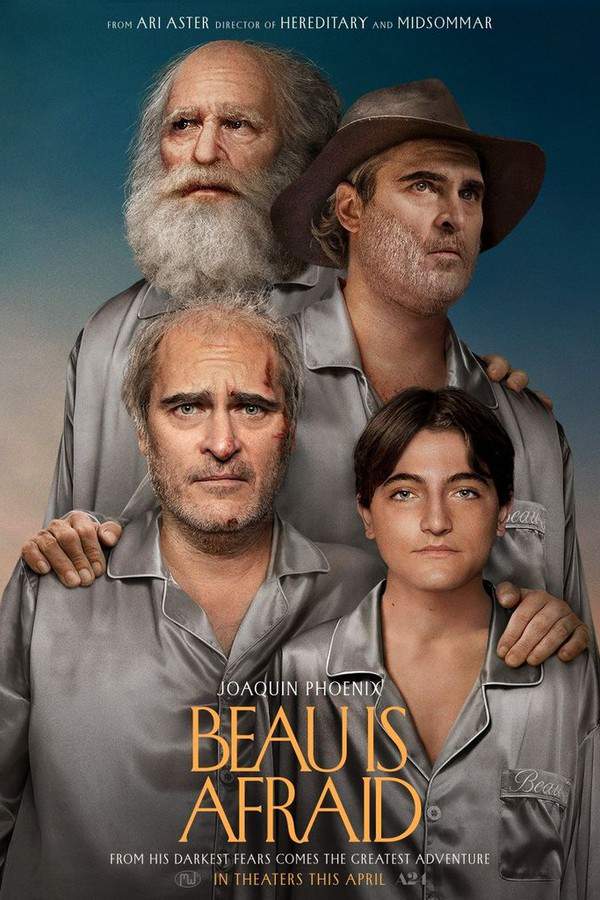
Beau Is Afraid (2023) movie poster

Ending Explained

Beau Is Afraid (2023) Ending Explained – Final Scene & Meaning

Release, runtime and language
2023 · 179 min · English
Echo score 72
Directed by
Ari Aster
Starring
Joaquin Phoenix, Amy Ryan, Kylie Rogers, Michael Gandolfini, Nathan Lane, Parker Posey
Budget
$35M

A deeply anxious man embarks on a fraught and surreal journey to visit his mother, encountering a series of increasingly bizarre and unsettling events. His quest becomes a perilous odyssey through a nightmarish world filled with paranoia, dark humor, and unexpected dangers, blurring the lines between reality and delusion as he desperately seeks the solace of his childhood home.

On this page (7)
  1. 1 Where to watch
  2. 2 What happens at the end
  3. 3 Final events in order
  4. 4 Ending questions answered
  5. 5 Movie threads
  6. 6 Movies like Beau Is Afraid
  7. 7 Every angle

Where to watch

Where to Watch Beau Is Afraid (2023)

Where can you watch Beau Is Afraid? Stream, rent or buy it in the US, including on Fandango at Home Free, Plex and Xumo Play: current JustWatch availability with up-to-date prices.

Streaming availability powered by JustWatch

Ending explained · contains spoilers

What Happens at the End of Beau Is Afraid?

How Beau Is Afraid (2023) ends, what the final scene means, which earlier moments set it up and how to read the ending if the film leaves it open. The full ending explained, with every spoiler.

Beau’s journey in Beau Is Afraid is a surreal exploration of his deepest fears, insecurities, and unresolved trauma rooted in his relationship with his mother. Throughout the film, Beau encounters an array of bizarre and terrifying situations that symbolize his anxieties—from violent neighborhoods and poisonous spiders to being accused of killing his sister and running from his past. These sequences illustrate how Beau’s internal fears shape his perception of reality, leading him to avoid confrontation and flee from responsibility. His escapades finally culminate in reaching his childhood home, where he uncovers the truth about his origins. Inside the attic, he finds not only the man he believed was his father—an enormous, phallic figure— but also a reflection of his own fears about his relationship with his father, which was never fully understood or expressed.

As the story unfolds, Beau’s relationship with his mother—Mona—is revealed to be the core of his fears. Mona, a controlling and overprotective woman, had kept him emotionally hostage, feeding his insecurities and fearing abandonment or failure. When Beau confronts her at the end, she reveals her true manipulative nature, pretending to be dead in order to draw him home and punish him for his perceived failures. Their confrontation becomes a raw and intense clash, where Mona accuses Beau of trying to push her away, reinforcing her dominance and control. In a moment of rage, Beau nearly kills her but quickly regains himself, leaving the house in shame.

Afterward, Beau’s fears take a literal form as he finds himself on a stage, judged by society—an ultimate anxiety about being seen as a failure and publicly shamed. Here, Mona’s lawyer and the court of public opinion criticize him, and Beau’s confidence crumbles. His boat, which symbolizes his fragile sense of control, tips over, and he falls into the water, drowning—an allegory for succumbing to his overwhelming fears and insecurities. Overall, the ending signifies that Beau’s internal struggles and fears have ultimately consumed him, leaving him defeated by the weight of his unresolved trauma and the impossibility of finding peace within himself.

Last updated: June 25, 2025 at 08:57

Was this helpful?

The last 4 events

How Beau Is Afraid Ends: The Final Events in Order

The last events of Beau Is Afraid (2023) in chronological order, the run-up to the ending explained above. The complete timeline has all 15 events, scene by scene.

Open the full timeline
  1. Chaotic Reunion

    Just as Beau begins to find peace within the troupe's creativity, chaos ensues when Jeeves, the unstable veteran, tracks him down. This forces Beau to escape deeper into the wilderness, compounding his challenges.

    When
    Shortly after discovering the troupe
    Where
    Woods
  2. Return to the Estate

    Beau arrives at his mother's estate only to find he has missed her funeral. He reunites with Elaine, and their connection is reignited, but it quickly turns tragic when Elaine dies unexpectedly during an intimate moment.

    When
    After fleeing
    Where
    Mother's estate
  3. Revelations and Manipulation

    In a shocking twist, Beau discovers that his mother has been manipulating him all along. She reveals her monitoring of his therapy sessions and introduces the existence of a hidden twin brother, unraveling Beau's understanding of his life.

    When
    After Elaine's death
  4. A Climactic Judgment

    Beau's journey culminates in a dramatic confrontation with his mother, leading to him taking to the sea in a motorboat. However, as events spiral out of control, Beau faces judgment for his past, with tragic outcomes marking the end of his tumultuous story.

    When
    Final events
    Where
    Arena

Ending questions answered

Beau Is Afraid Ending: Your Questions Answered

The questions people ask most about the ending of Beau Is Afraid (2023): what the final scene means, how the twist works, what happens to each character and how to read the ending. Each answer contains spoilers.

Q1

What happens to Beau at the end of the movie?

After confronting his mother Mona and leaving her house in shame, Beau finds himself on a stage surrounded by a courtroom-like audience who judges him. His boat, a symbol of his fragile control, tips over and he drowns in the water below. This represents Beau succumbing completely to his overwhelming fears and insecurities, unable to keep afloat. The ending is bleak: Beau is destroyed while his antagonists celebrate his downfall.

Foreshadowing: Earlier scenes establish Beau's pattern of fleeing from confrontation, foreshadowing his ultimate inability to face his fears head-on.

  • beau drowning
  • final scene
  • boat sinking
  • ending fate
Q2

What does Beau find in the attic at the end?

In the attic of his childhood home, Beau discovers an enormous phallic figure that he believed to be his father. This surreal image represents his warped understanding of masculinity and his unresolved feelings about his father, who was never a present or understood figure in his life. The discovery adds to the psychological horror of his revelations about his family.

Foreshadowing: Beau's throughout the film show his confusion about masculinity and paternal relationships, with the phallic figure serving as a literal manifestation of these unresolved issues.

  • attic scene
  • father figure
  • phallic object
  • childhood home
Q3

Was Beau's mother actually dead?

No, Mona was not dead. She deliberately faked her death to manipulate Beau into returning home, using his guilt and fear of abandonment against him. When Beau finally arrives, she reveals her true manipulative nature, accusing him of trying to push her away and reinforcing her psychological control over him. This final act of manipulation completes the portrait of a mother who has kept her son emotionally hostage throughout his life.

Foreshadowing: Mona's控制和overprotective nature throughout the film hints at her capacity for emotional manipulation, and her initial "death" conveniently serves her ultimate goal of drawing Beau home.

  • mona fake death
  • mother manipulation
  • Beau's mother
  • psychological control
Q4

What does Beau's drowning symbolize?

Beau's drowning represents his complete surrender to the overwhelming anxiety, guilt, and trauma that have plagued him throughout the film. The boat he was sailing, symbolizing his fragile sense of control and direction in life, tips over, sending him into the water. This allegorical ending shows that Beau's internal struggles have finally consumed him entirely, leaving him defeated by the weight of his unresolved issues.

Foreshadowing: The film's constant imagery of Beau being overwhelmed, pursued, and unable to escape foreshadows his ultimate inability to stay afloat.

  • symbolism
  • drowning
  • boat allegory
  • anxiety metaphor
Q5

What is the courtroom judgment scene at the end about?

After leaving his mother's house, Beau suddenly appears on a stage where he is judged by a assembly of people including Mona's lawyer and a broader "court of public opinion." This surreal sequence represents Beau's deepest fear of being seen as a failure and publicly shamed. His confidence crumbles under their criticism, embodying the internalized judgment he has always feared from society and ultimately from himself.

Foreshadowing: Beau's pervasive guilt and fear of failure have been building throughout the narrative, and this scene represents the culmination of those anxieties made manifest.

  • judgment scene
  • public shame
  • trial
  • societal judgment
Q6

Why does Beau almost kill his mother?

During their intense confrontation, Mona reveals her manipulative nature and accuses Beau of trying to abandon her, reinforcing her psychological dominance. Overwhelmed by rage, frustration, and years of emotional abuse, Beau nearly kills her in a moment of爆发. However, he quickly regains composure and leaves the house in shame, unable to follow through, representing both his inability to fully confront his trauma and a remnant of his moral restraint.

Foreshadowing: Beau's pattern of flight rather than fight throughout the film, combined with his deep-seated guilt about disappointing his mother, creates the tension that nearly erupts into violence.

  • confrontation
  • violence
  • rage
  • mother-son conflict
Q7

Is the ending real or all in Beau's mind?

The ending deliberately blurs the line between reality and delusion, which is consistent with the film's entire structure. Given Beau's severe anxiety, paranoid perceptions, and the surreal nature of his journey, it's ambiguous whether the courtroom and drowning scenes literally occur or represent his psychological state as he succumbs to his fears. The ambiguity reinforces the film's themes of mental illness and the impossibility of separating Beau's internal fears from his external reality.

Foreshadowing: The entire film uses a play-within-a-play structure and constant surrealism to question what is real, making the ambiguous ending consistent with this narrative approach.

  • surrealism
  • reality vs fantasy
  • psychological
  • ambiguous ending
Q8

What does the ending mean thematically?

The ending signifies that Beau's unresolved trauma, particularly surrounding his relationship with his manipulative mother, has ultimately destroyed him. Despite his desperate journey to find home and reconciliation, he cannot escape the psychological prison she built around him. The film presents a bleak commentary on how severe anxiety, emotional manipulation, and unresolved childhood trauma can consume a person entirely, leaving no path to peace or redemption.

Foreshadowing: From the opening scenes, Beau's journey is framed as one of escalating paranoia and tragedy, with the narrative consistently suggesting that his fears will lead to his ultimate downfall.

  • thematic meaning
  • trauma
  • anxiety
  • psychological destruction
Q9

What happens between Beau and his mother at the end?

Beau finally confronts Mona in her home, where she reveals she faked her death to manipulate him into returning. Their confrontation is raw and intense, Mona accuses Beau of abandoning her and reinforces her psychological control. Beau nearly kills her in a fit of rage but leaves in shame instead. This final encounter exposes the toxic nature of their relationship: Mona as a controlling, emotionally abusive figure, and Beau as a guilt-ridden, traumatized son unable to break free.

Foreshadowing: Mona's overprotective and emotionally manipulative behavior throughout establishes the dysfunctional dynamic that culminates in this confrontation.

  • confrontation
  • mona
  • mother son relationship
  • emotional abuse

Movie threads

More Movies Like Beau Is Afraid, by Mood & Story

Curated lists built around what makes Beau Is Afraid tick: the same mood, the same kind of story or the same emotional payoff. Each list explains why these movies belong together.

Surreal psychological journeys like Beau Is Afraid

Stories where a protagonist's journey blurs the line between reality and delusion. Find movies like Beau Is Afraid that feature surreal, anxiety-fueled odysseys. If you enjoyed the film's nightmarish descent into a protagonist's mind, you'll appreciate these other stories where reality unravels and the journey itself becomes a metaphor for psychological trauma.

  • surreal
  • kafkaesque
  • dreamlike
  • disorienting
  • unsettling
  • psychological
  • Tone: dark, unsettling, kafkaesque
  • Pacing: variable, dreamlike
Why these movies?

The story pattern: These narratives typically follow a central character propelled into a quest, but the external world becomes a distorted reflection of their internal state. The journey is marked by a series of increasingly strange and symbolic encounters, challenging both the character's and the viewer's grasp on reality, often leading to an ambiguous or tragic conclusion.

Why they belong together: Movies are grouped here for their shared commitment to surrealism as a tool for psychological exploration. They create a specific, unsettling vibe by merging a tangible goal with an intangible, shifting world, resulting in a viewing experience dominated by paranoia, confusion, and a deep sense of unease.
Dark comedies about existential dread like Beau Is Afraid

Films that find bleak humor in the absurdity of human suffering and anxiety. Discover movies similar to Beau Is Afraid that masterfully mix dark comedy with heavy existential themes. If you liked the film's use of absurd humor to underscore deep anxiety and guilt, these recommendations feature a similar tone of tragicomic exploration of the human condition.

  • dark humor
  • absurd
  • existential
  • anxious
  • tragicomic
  • unsettling
  • Tone: dark, bleak, absurd
  • Pacing: variable, episodic
Why these movies?

The story pattern: The narrative pattern involves a character grappling with overwhelming internal or external forces—be it mental illness, societal pressure, or cosmic indifference—where the situations they face are so extreme or grotesque that they loop back into a kind of horrible comedy. The story structure often feels episodic, a series of tragicomic misadventures leading to a bleak realization.

Why they belong together: These films are connected by their distinct tonal blend. The humor is derived from the absurdity and darkness of the situations, not as a relief from them. This creates a cohesive viewing experience for audiences who appreciate comedies that are intellectually challenging and emotionally heavy, rather than lighthearted.

If you liked this

Movies Like Beau Is Afraid

Similar movies to Beau Is Afraid: the same genre, themes or kind of story. Each one comes with its own plot summary, timeline and ending explained.

Browse all movie summaries

Every angle

Beau Is Afraid (2023) Explained: Plot, Ending, Timeline & Characters

Everything about Beau Is Afraid in one place: what happens in the plot summary, the timeline in chronological order, the characters and meaning, the ending explained and a spoiler-free summary. What's After the Movie adds the cast, box office and post-credit scenes.

Coming soon on iOS and Android

The Plot Explained Movie Summary App

Plot summaries, endings explained and timelines on your phone. Catch up on any movie in minutes, save your favorites and never miss a twist again.

Be the first to know when we launch. Your email stays private, always.

Learn more about the app