Plot Explained Spoilers guaranteed!
Plot Explained

Browse by genre

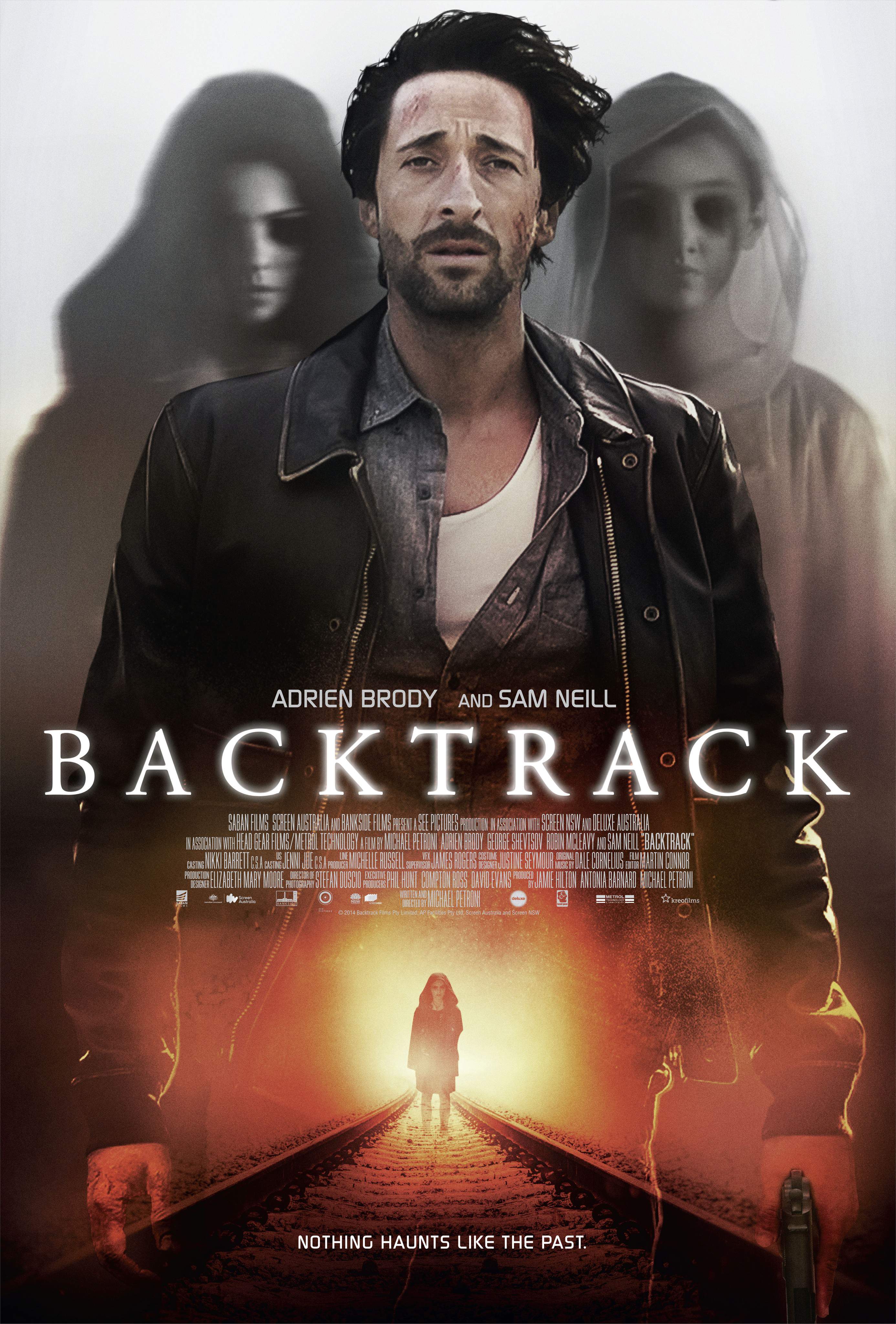
Backtrack (2016) movie poster

Plot Summary

Backtrack (2016) Plot Summary Explained

Release, runtime and language
2016 · 90 min
Directed by
Michael Petroni

Four friends embark on a camping trip to the South Downs, hoping to reconnect. However, their past traumas and secrets resurface, creating a tense and terrifying atmosphere. As their bonds are tested, they must confront the events that fractured their friendship years ago, facing unrelenting psychological pressure and escalating danger.

On this page (6)
  1. 1 Where to watch
  2. 2 What happens: full plot
  3. 3 Plot questions answered
  4. 4 Movie threads
  5. 5 Movies like Backtrack
  6. 6 Every angle

Where to watch

Where to Watch Backtrack (2016)

Where can you watch Backtrack? Stream, rent or buy it in the US, including on Fandango At Home, Google Play Movies and YouTube: current JustWatch availability with up-to-date prices.

Streaming availability powered by JustWatch

Full plot summary · contains spoilers

What Happens in Backtrack: Full Plot Summary

The whole story of Backtrack (2016) explained, from the opening scene to the final frame: every key event, every twist and what it all adds up to. Read it as a quick recap before the sequel, to check a scene you missed, or to finally understand what really happened.

Peter Bower, a troubled psychotherapist, is haunted by nightmares and eerie visions tied to the death of his daughter Evie in a street accident a year earlier, a tragedy for which he blames himself. His wife Carol is overwhelmed by depression and rarely gets out of bed, leaving Peter to bear the weight of grief and guilt.

In his practice, Peter treats several clients referred by his mentor Duncan. One evening a mute girl named Elizabeth Valentine appears in the waiting room, offering a name on a card and then writing the numbers 12787 on Peter’s notepad before fleeing as a train rumbles by. The next day she returns; as another train passes, she begins choking, which Peter records before she vanishes again. When he shows the recording to Duncan, Duncan insists he hears nothing and suggests Peter is hallucinating Elizabeth out of guilt over Evie. Duncan even notes that Elizabeth’s initials echo Evie’s name, deepening Peter’s unease.

Driven to understand Elizabeth, Peter learns she died on 12-7-87, and he discovers a disturbing pattern: all of his patients died on or near that same date. He calls Duncan for guidance, only to encounter the unsettling truth that Duncan has no reflection and is, in fact, a ghost. Disturbed, Peter follows a map that points toward a train line leading to his hometown, False Creek, and travels there alone, staying with his father William, a retired cop. In a local bar, he reconnects with a childhood friend, Barry, and tries to broach a horrifying incident they both kept secret. Barry recoils from the conversation and urges Peter to keep quiet about any confession.

As their youths, Barry had led Peter to a hidden spot where couples would meet in cars. While they watched, a train approached, and in their haste to move their bikes away, neither got there in time. The derailment killed forty-seven people, and Peter would eventually realize many of the victims were the people who would become his patients. From that moment, Peter is haunted by the spirits of Evie, Felix (a patient), and Elizabeth.

The next morning, Peter goes to the police and confesses to Officer Barbara Henning. She explains that charges are unlikely due to the statute of limitations, and reveals that she herself is the daughter of one of the crash victims. Barbara tells Peter that her mother was the only local killed in the accident and that William’s kindness at her funeral inspired her to become a police officer.

Duncan appears again, pressing Peter to remember what distracted him on the day Evie died and urging him to search his memories. Peter recalls looking into a toy shop window that showed a railroad switch tower, a detail that will soon prove crucial. The following morning, he investigates the switch tower by the tracks and finds Barry, dead by suicide, hanging inside.

A rusty pin found at the switchhouse leads Barbara to a new clue: it bears Elizabeth’s high school insignia. Barbara visits William and learns that Elizabeth’s death was never clearly explained and that her presence on the night of the crash may be part of a larger truth William has tried to hide. As Barbara pushes to uncover the truth, Peter revisits the memory of the switch tower and remembers the night Earl of events in full: he had witnessed his father strangling Elizabeth, and in the struggle, Elizabeth pulled the lever, changing the tracks and causing the derailment. William then concealed Elizabeth’s body at the crash site.

Barbara presses William to reveal what really happened, but William knocks her unconscious and stuffs her into the trunk of her police car. Peter returns, confronts William, and learns that Elizabeth may not be his only victim. He presses William for the full truth, and William responds with a gun, knocking Peter unconscious as the tension reaches a fever pitch.

The next morning, William drives off with Peter and Barbara restrained in the car, a gun within reach on the passenger seat. But Elizabeth’s ghost appears in the road and in the car, startling William and causing him to lose control. Peter is catapulted from the back and lands at a safe distance with the gun. The car stalls on the train tracks as a train approaches. Barbara escapes the vehicle, and Peter helps by shooting out a window to free William. Yet William is overwhelmed by Elizabeth’s ghost and crushed by the oncoming train. On the track’s edge, Peter and Barbara watch as the victims’ spirits appear on the train, while the tranquil figure of Elizabeth departs with the others.

In the final moments, Peter stands on the beach with Evie’s ghost, who rises and walks into the ocean, finally moving on. Carol joins him, and they share a quiet, hopeful moment as he confesses that his thoughts now turn to children. The haunting chapter closes with a delicate sense of peace returning to a man who has faced the echoes of the past and learned to look toward a gentler future.

Last updated: October 09, 2025 at 16:19

Was this helpful?

Plot questions answered

Backtrack Plot Explained: Your Questions Answered

The questions people ask most about Backtrack (2016): what happens in the confusing scenes, why the characters do what they do, the twists, hidden details and what the ending means. Each answer contains spoilers.

Q1

Why does Peter blame himself for Evie's death?

Peter blames himself because he was distracted on the day Evie died. While walking with her, he looked into a toy shop window and saw a railroad switch tower model, which distracted him momentarily. In that instant, Evie ran into the street and was killed by a car. The guilt from this moment of inattention haunts him throughout the film.

Foreshadowing: The toy shop window with the railroad model appears as a vision multiple times before Peter understands its significance.

  • peter
  • evie
  • daughter
  • death
  • guilt
  • blame
Q2

Who is Elizabeth Valentine and why does she appear to Peter?

Elizabeth Valentine is a mute girl who died on December 7, 1987. She appears to Peter as a ghost because she was killed by his father William Bower on the night of the train derailment. When Peter was a teenager, he witnessed his father strangling Elizabeth near the tracks, and in the struggle she pulled a lever that switched the tracks and caused the derailment.

Foreshadowing: Her initials EV echo Evie's name, which Duncan points out early in the film.

  • elizabeth valentine
  • ghost
  • death
  • 1987
  • mute girl
Q3

How are Peter's patients connected to the train derailment?

Peter's patients are all people who died in the train derailment on December 7, 1987. When he researches the date, he discovers that all his deceased patients died on or near that same date. The 47 victims of the crash become the ghosts that haunt him throughout the film.

Foreshadowing: Peter sees a vision of his deceased patients gathered on a train outside his window.

  • patients
  • derailment
  • death
  • 1987
  • ghost
  • 47 victims
Q4

What really caused the train derailment?

The train derailment was caused when Elizabeth Valentine pulled a railroad switch lever during a struggle with William Bower. William had gone to the tracks to confront Elizabeth, who had been spying on couples with Barry. During the confrontation, William strangled her, but in the struggle Elizabeth reached the lever and switched the tracks, causing the train to derail and kill 47 people.

Foreshadowing: Peter initially believes he and Barry caused the derailment by not moving their bikes in time.

  • train
  • derailment
  • elizabeth
  • switch lever
  • william
  • death
Q5

Why does Peter see Duncan as a ghost?

Peter discovers Duncan has no reflection, confirming he is a ghost. Duncan appears to guide Peter toward remembering the truth about the past. Duncan was Peter's mentor who referred patients to him, but he died sometime before the events of the film and now serves as a spiritual guide helping Peter uncover the suppressed memories.

Foreshadowing: Duncan consistently urges Peter to remember what distracted him on the day Evie died.

  • duncan
  • ghost
  • reflection
  • mentor
  • guide
Q6

What secret did Peter and Barry hide about the teenage night at the tracks?

As teenagers, Peter and Barry went to a hidden spot by the train tracks to spy on couples in cars. When a train approached, they panicked trying to move their bikes out of the way. Both boys fled but the train derailed, killing 47 people. Peter always believed their distraction caused the accident, not knowing Elizabeth's role or his father's presence.

Foreshadowing: Barry warns Peter to keep quiet about any confession when they reunite in False Creek.

  • barry
  • peter
  • teenagers
  • tracks
  • bikes
  • derailment
Q7

Who actually killed Elizabeth Valentine?

William Bower, Peter's father and a retired cop, killed Elizabeth Valentine. He went to the tracks that night to find her and Barry together. During an altercation, William strangled Elizabeth. In the struggle, Elizabeth pulled the lever that switched the tracks and caused the derailment. William then concealed her body at the crash site to cover up his crime.

Foreshadowing: Barbara finds a rusty pin with Elizabeth's high school insignia, hinting at her presence at the crash site.

  • william
  • elizabeth
  • murder
  • father
  • strangled
  • cover up
Q8

What happens to William at the end of the film?

William drives away with Peter and Barbara restrained in the police car, planning to kill Peter to keep his crime hidden. Elizabeth's ghost appears in the road and inside the car, startling William and causing him to crash on the train tracks. As the train approaches, William is unable to escape and is crushed by the oncoming train while the ghosts of the 47 victims look on.

Foreshadowing: Peter finds Barry dead by suicide in the same switch tower, hinting at the truth William has buried.

  • william
  • death
  • train
  • crash
  • elizabeth ghost
Q9

What does the ending mean when Evie's ghost walks into the ocean?

Evie walking into the ocean represents her finally finding peace and moving on from the earthly realm. Throughout the film, her ghost appears static and unresponsive, but in the final moments she rises and walks into the ocean, signifying that Peter's guilt has been resolved enough to release her. This closure allows Peter to begin healing and look toward a future with his wife Carol.

Foreshadowing: Evie's ghost appears multiple times throughout the film, never moving or responding until the climax.

  • evie
  • ghost
  • ocean
  • peace
  • moving on
  • closure
Q10

Why does Barry commit suicide in the switch tower?

Barry hangs himself in the switch tower after Peter confronts him about the teenage night. Barry knew the truth about what really caused the derailment, Elizabeth's action and William's presence, but had kept silent for decades. The weight of this secret, combined with Peter pushing to uncover the truth, leads Barry to take his own life rather than face the revelation.

Foreshadowing: Barry warns Peter to keep quiet about any confession when they first reunite, indicating his fragile state.

  • barry
  • suicide
  • switch tower
  • secret
  • death
Q11

What does the number 12787 mean that Elizabeth writes?

Elizabeth writes 12787 on Peter's notepad, which decodes as December 7, 1987, the date of the train derailment. This is the date that connects all of Peter's deceased patients, the date Elizabeth herself died, and the date of the traumatic event that shaped the entire mystery.

Foreshadowing: Peter researches the date and discovers the pattern linking his patients to the derailment.

  • 12787
  • december 7 1987
  • date
  • derailment
  • patients
Q12

Why does Officer Barbara Henning help Peter after his confession?

Barbara helps Peter despite his confession because she understands the weight of the past. She is the daughter of one of the crash victims, her mother was the only local killed in the derailment. She reveals that William's kindness at her mother's funeral inspired her to become a police officer. This connection drives her to help Peter uncover the truth, even when evidence points to his father.

Foreshadowing: Barbara reveals her mother's death at the police station, explaining her personal stake in the case.

  • barbara henning
  • police
  • daughter
  • victim
  • mother
  • help

Movie threads

More Movies Like Backtrack, by Mood & Story

Curated lists built around what makes Backtrack tick: the same mood, the same kind of story or the same emotional payoff. Each list explains why these movies belong together.

Movies about confronting past trauma like Backtrack

Characters are forced to face their buried sins by spectral forces seeking closure. If you liked Backtrack's theme of supernatural justice forcing a reckoning with guilt, you'll appreciate these movies. They feature characters confronting repressed memories and past sins, often guided or haunted by forces beyond their control. This selection focuses on emotionally heavy thrillers and dramas where the past literally comes back to haunt the present.

  • haunting
  • guilt-ridden
  • suspenseful
  • somber
  • psychological
  • oppressive
  • Tone: dark, melancholic, suspenseful
  • Pacing: steady, unraveling mystery
Why these movies?

The story pattern: Stories in this thread typically follow a character living with a secret trauma or guilt. A supernatural intrusion—ghosts, visions, or unexplainable events—disrupts their life, gradually revealing a hidden truth they must acknowledge. The narrative arc is one of painful discovery, moving from denial to acceptance, often culminating in a bittersweet resolution where the truth brings a form of peace at a great personal cost.

Why they belong together: These movies are grouped by their shared core conflict: a character's internal guilt made manifest through external supernatural pressure. They combine a dark, suspenseful tone with a heavy emotional weight, creating a cohesive experience for viewers interested in psychological hauntings and moral reckoning.

Slow burn psychological thrillers with high tension like Backtrack

A steady escalation of unease traps characters in a web of their own fears. For viewers who appreciated the steadily mounting tension and oppressive atmosphere of Backtrack, this list features movies with a similar slow burn feel. These films prioritize psychological unease and a claustrophobic mood over fast-paced action, creating a deeply immersive and suspenseful experience that gets under your skin.

  • slow burn
  • claustrophobic
  • suspenseful
  • oppressive
  • uneasy
  • psychological
  • Tone: dark, tense, oppressive
  • Pacing: steady, slow burn
Why these movies?

The story pattern: The narrative pattern involves a gradual but steady accumulation of small details, doubts, and fears. The initial sense of normalcy erodes bit by bit, replaced by an overwhelming feeling of dread and paranoia. Conflicts are often internal or interpersonal, with the environment or situation enhancing a feeling of being trapped, leading to an intense climax born from sustained psychological pressure.

Why they belong together: Movies in this thread share a specific pacing and mood profile. They are united by a steady, deliberate pace that builds tension methodically, a dark and somber tone, and a palpable atmosphere of claustrophobia and psychological oppression. This creates a very distinct viewing vibe focused on sustained suspense.

If you liked this

Movies Like Backtrack

Similar movies to Backtrack: the same genre, themes or kind of story. Each one comes with its own plot summary, timeline and ending explained.

Browse all movie summaries

Every angle

Backtrack (2016) Explained: Plot, Timeline & Characters

Everything about Backtrack in one place: what happens in the plot summary, the timeline in chronological order, the characters and meaning and a spoiler-free summary. What's After the Movie adds the cast, box office and post-credit scenes.

Coming soon on iOS and Android

The Plot Explained Movie Summary App

Plot summaries, endings explained and timelines on your phone. Catch up on any movie in minutes, save your favorites and never miss a twist again.

Be the first to know when we launch. Your email stays private, always.

Learn more about the app