Plot Explained Spoilers guaranteed!
Plot Explained

Browse by genre

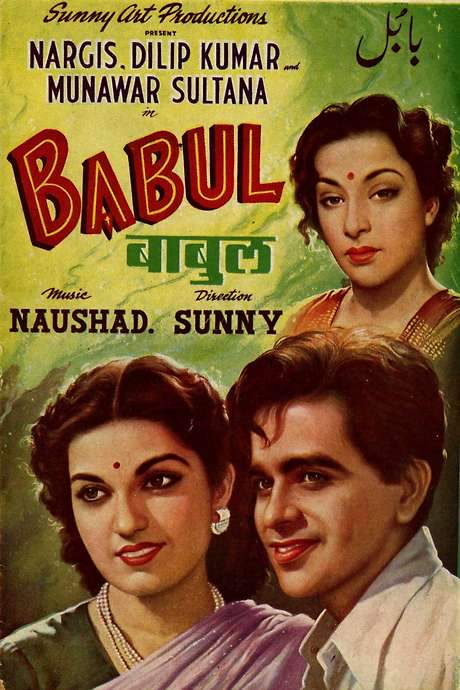
Babul (1950) movie poster

Plot Summary

Babul (1950) Plot Summary Explained

Release, runtime and language
1950 · 142 mins · Hindi
Loading streaming availability…
Directed by
S.U. Sunny
Starring
Seema, Ismail, Dilip Kumar, Tun Tun, Jankidas Mehra, Nargis

Two fathers, one poor and the other rich, hope that a wealthy postmaster will wed one of their daughters.

On this page (6)
  1. 1 Where to watch
  2. 2 What happens: full plot
  3. 3 Plot questions answered
  4. 4 Movie threads
  5. 5 Movies like Babul
  6. 6 Every angle
Loading streaming availability…

Full plot summary · contains spoilers

What Happens in Babul: Full Plot Summary

The whole story of Babul (1950) explained, from the opening scene to the final frame: every key event, every twist and what it all adds up to. Read it as a quick recap before the sequel, to check a scene you missed, or to finally understand what really happened.

Ashok, Dilip Kumar hails from a wealthy family and works as a postmaster, a position that looks easy but comes with almost no real labor beyond the occasional telegram. His world is cushioned by privilege, leaving him ample time for small pleasures like cigarettes, painting, and the gentle art of song writing. In this calm, Ashok moves through life with a measured ease, surrounded by comfort and the quiet routines of a man who isn’t pressed by hardship.

Bela, Nargis, the poor and very simple daughter of the former postmaster, finds herself drawn to Ashok’s attention. She prepares his meals, teases him, and amuses him, and in her heart she begins to imagine a future where marriage could bring happiness. She longs for his affection and believes a life with him could be secure, even though Ashok himself likes her only in a fleeting, noncommittal way. Her dreams are tempered by the stark contrast between their worlds, yet she holds on to hope.

Usha, Munawar Sultana, Jamnadas’s daughter, represents a different kind of attraction for Ashok. She lives in a hilltop mansion, enjoys the luxury of a foreign car, and projects an image of a perfect match for the young postmaster. The rivalry between Bela and Usha intensifies as Bela’s prospects feel increasingly uncertain, and Bela’s heart grows heavier with each passing day.

In a moment of jealousy, Bela tells a lie to Usha, claiming that Ashok has confessed his love for her and is playing a double game. The accusation is born from hurt and fear, and it sets off a chain of emotional misjudgments that shroud the situation in doubt. Ashok’s true feelings remain unclear to Bela, who is swept up in the belief that she has lost him to a rival.

Bela’s heartbreak comes to a head when she sees Usha’s wedding from a tree, swaying with the precariousness of her own hopes. She hopes that, soon after, she too will be married to Ashok, but tragedy strikes when the tree branch breaks. She is severely injured and carried back to her father’s home as Ashok arrives, promising Bela’s family that he would marry her. The moment is heavy with sorrow, and it marks a turning point in their lives.

Back at Bela’s bedside, Ashok offers quiet comfort as Bela’s fragile tale nears its end. In the depths of her last moments, Bela dreams of a black-veiled rider coming to claim her, and the dream becomes her final moment as she dies. The story closes on a note of quiet resignation, leaving Ashok and Bela’s father to face the consequences of a love shaped by class, circumstance, and unspoken truths.

Last updated: February 24, 2026 at 09:58

Was this helpful?

Plot questions answered

Babul Plot Explained: Your Questions Answered

The questions people ask most about Babul (1950): what happens in the confusing scenes, why the characters do what they do, the twists, hidden details and what the ending means. Each answer contains spoilers.

Q1

Why does Bela lie to Usha about Ashok's feelings?

Bela tells Usha that Ashok has confessed his love for her and is playing a double game because she is consumed by jealousy and fear. Seeing Usha's wealthy lifestyle and realizing she is a more suitable match for Ashok, Bela acts out of desperation to sabotage the potential relationship. This lie creates misunderstanding and emotional conflict between the two women.

Foreshadowing: Earlier, Bela watches Ashok with longing and imagines a future together, but notices his emotional distance when he receives attention from Usha.

  • bela
  • usha
  • jealousy
  • lie
  • love triangle
  • deception
Q2

Why does Ashok promise to marry Bela after her accident?

Ashok promises Bela's father that he will marry her as a sense of duty and compassion after witnessing her severe injury and realizing she has died longing for him. This promise represents both his guilt for not reciprocating her feelings and his attempt to provide some form of redemption for her unrequited love. The pledge also gives Bela's father comfort in his daughter's final moments.

Foreshadowing: Throughout the story, Ashok accepts Bela's attention and care without committing, leaving her hopes dangling.

  • ashok
  • bela
  • marriage promise
  • accident
  • duty
  • compassion
Q3

What causes Bela to fall from the tree at Usha's wedding?

Bela climbs a tree to watch Usha's wedding while still hoping Ashok will marry her. The branch beneath her breaks, causing her to fall and suffer severe injuries. The accident happens during the wedding celebration, symbolizing how Bela's hopes are crushed as she witnesses the rival she fears secure the future Bela desired.

Foreshadowing: Bela sits in the tree clinging to hope despite knowing Usha's wedding represents her own dreams collapsing.

  • bela
  • accident
  • tree
  • wedding
  • fall
  • injury
Q4

What does the black-veiled rider in Bela's dream symbolize?

The black-veiled rider represents death and fate coming to claim Bela. In her final moments, drifting between consciousness and sleep, she dreams of this ominous figure arriving to take her away. The vision serves as a premonition of her imminent death, blending her longing for a future with Ashok with the reality that her life is ending.

Foreshadowing: Ashok sits by her bedside offering comfort as her condition deteriorates, creating a somber atmosphere preceding the dream.

  • bela
  • dream
  • black veiled rider
  • death
  • symbolism
  • fate
Q5

Why doesn't Ashok clearly reject Bela's advances?

Ashok enjoys Bela's attention, cooking, and company but maintains emotional distance because he is content in his privileged, idle lifestyle and sees no reason to commit. His noncommittal nature stems from the comfort of his wealth and his passive approach to life. He accepts Bela's affection without offering reciprocation or clarity, leaving her trapped in hopeful uncertainty.

Foreshadowing: Ashok spends his time on cigarettes, painting, and songwriting, pleasures that require no emotional investment.

  • ashok
  • Bela
  • feelings
  • rejection
  • emotional distance
  • commitment
Q6

What triggers the rivalry between Bela and Usha?

The rivalry begins when Usha, the wealthy daughter of landowner Jamnadas, appears as a potential romantic rival for Ashok. Usha lives in a hilltop mansion with a foreign car, representing everything Bela cannot offer. This stark class difference intensifies Bela's insecurity, as she recognizes that Usha is a more suitable match for Ashok in terms of wealth and social standing.

Foreshadowing: Bela prepares meals for Ashok and dreams of marriage, but Usha's entrance raises the stakes dramatically.

  • bela
  • usha
  • rivalry
  • love triangle
  • class difference
  • competition
Q7

Why does Bela's father support her hopes for marriage to Ashok?

Bela's father, the former postmaster, supports her hope for marriage because he desires a dignified future for his daughter. As a poor man, he sees Ashok's position as a postmaster from a wealthy family as a secure opportunity for Bela. His support reflects the social mobility that marriage could provide in their circumstances, even though Ashok's feelings remain uncertain.

Foreshadowing: The narrative establishes Bela as the poor daughter of the former postmaster with limited prospects.

  • bela father
  • marriage
  • hope
  • social mobility
  • future
  • security
Q8

How does class difference affect the story's outcome?

Class difference drives the entire tragedy, as Bela's poverty makes her an unsuitable match despite her genuine feelings. Usha's wealth and lifestyle make her the obvious choice for someone of Ashok's status, leaving Bela's hopes unrealistic from the start. The class divide creates the emotional tension, fuels Bela's jealousy, and ultimately makes her tragic death more poignant as she dies having never secured the security she sought.

Foreshadowing: Ashok comes from a wealthy family while Bela is described as poor, establishing the fundamental imbalance.

  • class difference
  • poverty
  • wealth
  • social class
  • marriage
  • tragedy
Q9

Why does Bela die at the end of the story?

Bela dies from the severe injuries sustained when she falls from the tree during Usha's wedding. The physical trauma, combined with the emotional devastation of watching her rival marry the man she loves, proves fatal. She dies with Ashok by her bedside, still dreaming of a future that will never materialize.

Foreshadowing: The branch breaks while she watches the wedding, signaling the collapse of her hopes.

  • bela
  • death
  • accident
  • injuries
  • wedding
  • tragic ending
Q10

Why is Ashok's job as postmaster significant to the story?

Ashok's position as postmaster represents his privileged status despite requiring minimal labor. The job provides him leisure time for painting, songwriting, and cigarettes, highlighting his comfortable life. This relative ease allows him to float through relationships without urgency, contrasting sharply with Bela's desperate need for security. The postmaster role symbolizes his detachment from real struggle and emotional investment.

Foreshadowing: The opening establishes Ashok's cushioned life with time for idle pleasures.

  • ashok
  • postmaster
  • job
  • privilege
  • wealth
  • leisure

Movie threads

More Movies Like Babul, by Mood & Story

Curated lists built around what makes Babul tick: the same mood, the same kind of story or the same emotional payoff. Each list explains why these movies belong together.

Tragic romances across class divides like Babul

Stories where love is thwarted by social status, ending in sorrow. If you enjoyed the melancholic story of unrequited love and societal barriers in Babul, you'll find similar emotional journeys in these movies. This collection features dramas where romantic longing clashes with class disparity, often leading to heartbreaking conclusions.

  • melancholic
  • tragic
  • romantic
  • longing
  • social drama
  • yearning
  • Tone: melancholic, tragic
  • Pacing: slow, deliberate
Why these movies?

The story pattern: The narrative typically follows a central romance between individuals from different social strata. Initial hope and infatuation are met with external pressures, jealousy, and the immovable weight of tradition, leading to a climax of sacrifice or tragic loss that serves as a commentary on societal constraints.

Why they belong together: These films are grouped together because they share a core focus on the conflict between personal desire and social obligation. They maintain a melancholic tone, a slow, character-driven pace, and deliver a deeply sad emotional payoff centered on the price of love in an unequal world.

Melancholic dramas of unfulfilled longing like Babul

Character-driven tales where yearning and quiet sadness define the emotional core. Viewers searching for movies like Babul, with its slow pace and focus on romantic yearning, will appreciate this selection. These films capture a similar vibe of wistful sadness and characters grappling with deep, often unrealized, emotional desires.

  • melancholic
  • longing
  • yearning
  • sentimental
  • hopeful
  • tragic
  • Tone: melancholic, yearning
  • Pacing: slow, introspective
Why these movies?

The story pattern: The plot is secondary to the exploration of a character's inner emotional state, particularly their persistent yearning. The story unfolds slowly, focusing on moments of hope, jealousy, and resignation, building towards an ending that resonates with a feeling of loss or bittersweet acceptance of what could not be.

Why they belong together: These movies are connected by their dominant melancholic tone, slow pacing, and primary focus on the emotional weight of longing. They prioritize mood and character introspection over complex plotting, creating a consistent experience of sentimental sorrow and romantic despair.

If you liked this

Movies Like Babul

Similar movies to Babul: the same genre, themes or kind of story. Each one comes with its own plot summary, timeline and ending explained.

Browse all movie summaries

Every angle

Babul (1950) Explained: Plot, Timeline & Characters

Everything about Babul in one place: what happens in the plot summary, the timeline in chronological order, the characters and meaning and a spoiler-free summary. What's After the Movie adds the cast, box office and post-credit scenes.

Coming soon on iOS and Android

The Plot Explained Movie Summary App

Plot summaries, endings explained and timelines on your phone. Catch up on any movie in minutes, save your favorites and never miss a twist again.

Be the first to know when we launch. Your email stays private, always.

Learn more about the app