

Plot Explained Spoilers guaranteed!
Plot Explained

Browse by genre

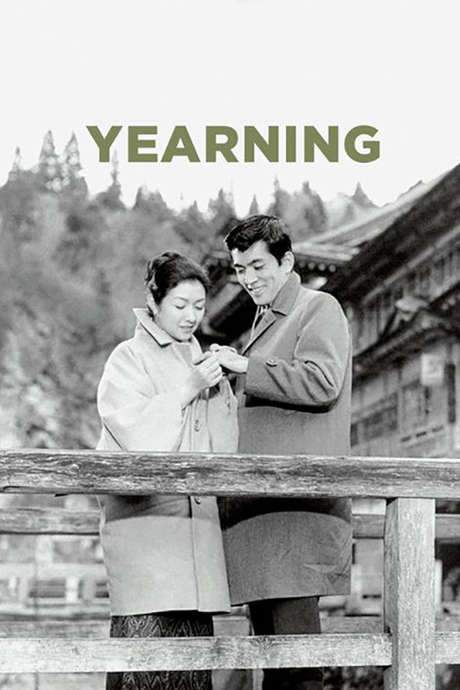
Yearning (1964) movie poster

Plot Summary

Yearning (1964) Plot Summary Explained

Release, runtime and language
1964 · 98 mins · Japanese
JustWatch #33,210 2
Directed by
Mikio Naruse
Starring
Yûzô Kayama, Kumeko Urabe, Mie Hama, Yû Fujiki, Mitsuko Kusabue, Yumi Shirakawa

After her husband dies in the war, Reiko takes over the family’s modest grocery shop, restoring it and running it from their home. Decades later, a new supermarket opens nearby, jeopardizing the shop’s clientele, and her in‑laws plot to replace the small store with a modern supermarket, threatening Reiko’s livelihood.

On this page (6)
  1. 1 Where to watch
  2. 2 What happens: full plot
  3. 3 Plot questions answered
  4. 4 Movie threads
  5. 5 Movies like Yearning
  6. 6 Every angle

Where to watch

Where to Watch Yearning (1964)

Where can you watch Yearning? Stream, rent or buy it in the US: current JustWatch availability with up-to-date prices.

Streaming availability powered by JustWatch

Full plot summary · contains spoilers

What Happens in Yearning: Full Plot Summary

The whole story of Yearning (1964) explained, from the opening scene to the final frame: every key event, every twist and what it all adds up to. Read it as a quick recap before the sequel, to check a scene you missed, or to finally understand what really happened.

For 18 years, war widow Reiko Morita Hideko Takamine has run a grocery shop within the house of her late husband’s family. A new supermarket threatens to push the little store out of business, and Reiko’s sisters-in-law quietly conspire to transform the family’s shop into a supermarket of its own, hoping to push her aside. Among the family, the only one who stands with Reiko is her brother-in-law, the 25-year-old Kōji Morita Yūzō Kayama. He is often drawn into drunken brawls, yet his loyalty to Reiko remains clear, and he eventually confesses that he has always loved her. She responds that her feelings for him are those of a family bond, not a romantic one.

After weighing her position, Reiko chooses not to block her sisters’ plans any longer and decides to return to her own family. Kōji Morita accompanies her on the long train ride, and during the journey she finds herself softening toward him. They get off at a country inn to talk, hoping to resolve things in a quieter setting. He resumes his advances, but at the last moment she cannot face intimacy. He storms off in anger and later phones to say he is going back home.

The morning after, Reiko sees him being carried into the village on a stretcher, and learns that he has died from a fall off a cliff. She runs after the carriers, but then she reaches a point of quiet shock, her face a blank slate as the news settles in.

Last updated: March 05, 2026 at 18:41

Was this helpful?

Plot questions answered

Yearning Plot Explained: Your Questions Answered

The questions people ask most about Yearning (1964): what happens in the confusing scenes, why the characters do what they do, the twists, hidden details and what the ending means. Each answer contains spoilers.

Q1

Why did Reiko decide to leave the family home?

Reiko decided to leave because she was exhausted from years of fighting to preserve the family shop while her sisters-in-law openly plotted to push her out and replace the small store with a modern supermarket. When the economic threat became overwhelming, she chose not to resist their plans any longer and resolved to return to her own family instead of continuing a losing battle.

  • reiko leaves
  • family home
  • sisters-in-law
  • supermarket threat
  • grocery shop
Q2

Why did Kōji follow Reiko onto the train?

Kōji followed Reiko because his feelings for her were deeply unresolved. Even after she rejected his confession of love, he couldn't accept her departure. He likely hoped the journey would give them another chance to connect, or at minimum, to ensure she reached her destination safely, though his pursuit also reflects his inability to let go.

Foreshadowing: Earlier, Kōji confessed his love to Reiko, declaring he had always loved her despite their family bond.

  • koji follows reiko
  • train journey
  • love confession
  • pursuit
Q3

Why couldn't Reiko be intimate with Kōji at the inn?

Reiko could not face intimacy because her feelings for Kōji remained rooted in family affection, not romantic love. Though she softened toward him during the train ride, she still could not reciprocate his physical desires. Her years of duty and repression, combined with the guilt of their familial relationship, made intimacy impossible for her despite his advances.

  • reiko rejects intimacy
  • country inn
  • koji advances
  • emotional barrier
Q4

How did Kōji die?

Kōji died from a fall off a cliff. After storming out of the inn in anger following Reiko's refusal, he went drinking and later apparently wandered to the cliff edge, where he fell to his death. Whether it was an accident caused by his intoxicated state or intentional is left ambiguous, but his death occurs suddenly and tragically.

Foreshadowing: Kōji was known for getting into drunken brawls, and his emotional volatility throughout the story hints at his self-destructive tendencies.

  • koji death
  • cliff fall
  • accident
  • drunk
Q5

Why do Reiko's sisters-in-law want to remove her from the shop?

The sisters-in-law view Reiko as an obstacle to their modernization plans. They see the new supermarket opening nearby as an opportunity to transform the family shop into a profitable venture, but they want Reiko gone because she represents the old way of doing business. By pushing her out, they can control the new supermarket venture themselves without sharing profits or authority with a widow they consider an outsider.

  • sisters-in-law plot
  • remove reiko
  • supermarket
  • family business
Q6

Why did Reiko soften toward Kōji during the train ride?

Reiko softened because the train journey forced her to reflect on her isolated life. After 18 years of dedication to the family shop and living under her in-laws' roof, she was leaving with nothing. Kōji was the only person who had truly supported her, and his persistent loyalty may have stirred buried emotions or at least gratitude that manifested as temporary warmth toward him.

  • reiko feelings
  • train journey
  • soften toward koji
  • emotional change
Q7

What does Reiko's blank reaction to Kōji's death mean?

Reiko's blank, numb reaction represents the overwhelming weight of loss and guilt settling upon her. She runs after the carriers but then stops, her face expressionless, as the reality of Kōji's death combines with her own uncertain future. The moment signifies her emotional breaking point, having lost the only person who stood by her, leaving a family that never fully accepted her, and confronting a life now utterly empty.

  • reiko reaction
  • shock
  • grief
  • ending explained
  • emotional breakdown
Q8

Why did Kōji confess his love to Reiko after all these years?

Kōji confessed because the threat of losing Reiko made his feelings undeniable. With the sisters-in-law pushing for change and Reiko planning to leave, he likely feared this was his final opportunity to express what he had kept hidden for years. The combination of alcohol and the pressure of the situation emboldened him to speak the truth he had suppressed throughout their years living together.

  • koji confession
  • love declaration
  • timing
  • years of silence
Q9

Why did Kōji storm out of the inn?

Kōji stormed out because Reiko rejected his romantic advances at the climactic moment. After following her on the journey and hoping their private setting might change things, her final refusal shattered his expectations. His drunken state amplified his emotional reaction, causing him to leave in a fit of anger and frustration, which ultimately led to his fatal walk toward the cliff.

Foreshadowing: Kōji's pattern of drunken brawls throughout the story shows his inability to handle emotional rejection calmly.

  • koji storms out
  • inn rejection
  • anger
  • drunken state
Q10

What threat does the new supermarket pose to Reiko's shop?

The new supermarket threatens to draw away all of Reiko's customers by offering modern convenience, better prices, and a wider selection, advantages her small, outdated family shop cannot match. This economic pressure gives her sisters-in-law the justification they needed to push for transforming the store into a supermarket, which would effectively end Reiko's role in the business she has maintained for 18 years.

  • supermarket threat
  • small business
  • competition
  • livelihood

Movie threads

More Movies Like Yearning, by Mood & Story

Curated lists built around what makes Yearning tick: the same mood, the same kind of story or the same emotional payoff. Each list explains why these movies belong together.

Movies about repressed love and melancholy like Yearning

Stories where quiet grief and unspoken love simmer under the surface of daily life. If the quiet sorrow and unspoken passion in 'Yearning' resonated with you, explore these films. This list features similar melancholic dramas and romantic stories where characters grapple with grief, duty, and love that cannot be.

  • melancholy
  • longing
  • grief
  • repressed emotions
  • quiet
  • tragic
  • Tone: melancholic, reflective, tragic
  • Pacing: slow, deliberate
Why these movies?

The story pattern: Narratives in this thread often follow characters bound by societal or familial duty, struggling with a deep, internal emotional conflict—such as unrequited love or unresolved grief. The plot is typically straightforward, prioritizing emotional realism over complex twists, and often culminates in a bittersweet or tragic resolution that underscores the pain of repression.

Why they belong together: These films are grouped together because they share a specific, subdued emotional tone. They prioritize a slow, reflective pace, low-key intensity, and a consistent melancholic mood, exploring themes of longing, loss, and the emotional weight of things left unsaid.

Movies about family conflict and duty like Yearning

Characters caught between familial obligation and the fight for their own future. For viewers who appreciated the familial tension in 'Yearning,' this list highlights similar dramas about in-law relationships and generational conflict. Discover other stories where characters must defend their way of life against pressure from their own family.

  • family conflict
  • duty
  • survival
  • generational clash
  • melancholy
  • resilience
  • Tone: melancholic, dramatic
  • Pacing: slow, steady
Why these movies?

The story pattern: The narrative pattern involves a protagonist firmly entrenched in a family structure, often through marriage, whose role or contribution is suddenly devalued. The conflict is driven by a generational or ideological clash, forcing the character to choose between sacrificing their autonomy for family harmony or fighting for their own survival, leading to an emotionally complex conclusion.

Why they belong together: These films are united by their focus on the tension between individual identity and family expectations. They explore similar themes of widowhood, in-law dynamics, and small-business struggles, often with a straightforward narrative and a medium emotional weight that balances serious themes with restrained execution.

If you liked this

Movies Like Yearning

Similar movies to Yearning: the same genre, themes or kind of story. Each one comes with its own plot summary, timeline and ending explained.

Browse all movie summaries

Every angle

Yearning (1964) Explained: Plot, Timeline & Characters

Everything about Yearning in one place: what happens in the plot summary, the timeline in chronological order, the characters and meaning and a spoiler-free summary. What's After the Movie adds the cast, box office and post-credit scenes.

Coming soon on iOS and Android

The Plot Explained Movie Summary App

Plot summaries, endings explained and timelines on your phone. Catch up on any movie in minutes, save your favorites and never miss a twist again.

Be the first to know when we launch. Your email stays private, always.

Learn more about the app