Plot Explained Spoilers guaranteed!
Plot Explained

Browse by genre

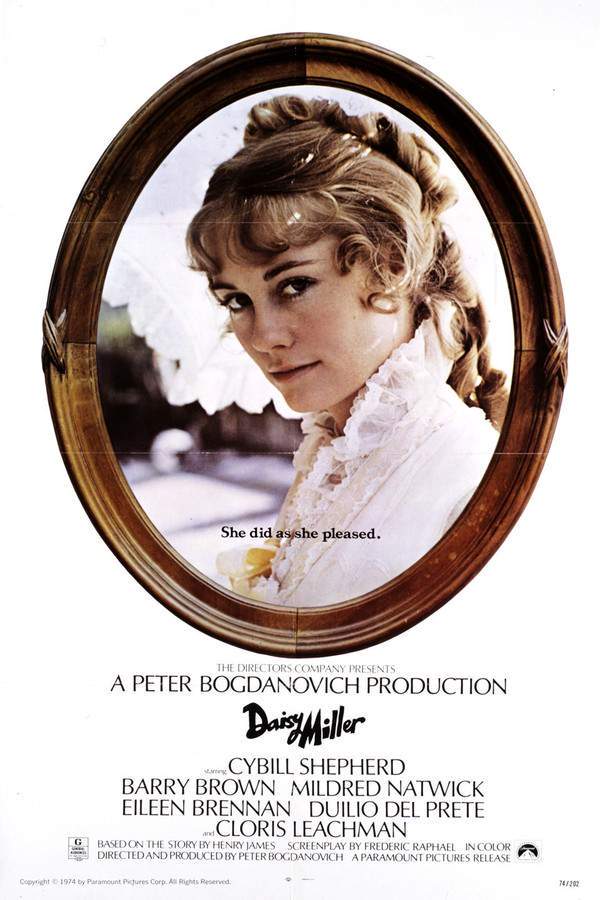
Daisy Miller (1974) movie poster

Plot Summary

Daisy Miller (1974) Plot Summary Explained

Release, runtime and language
1974 · 91 min · English
Directed by
Peter Bogdanovich
Starring
Cloris Leachman, Cybill Shepherd, Eileen Brennan, Mildred Natwick, Nicholas Jones, Barry Brown

A young American woman traveling through Europe with her mother finds herself drawn to the allure of a different lifestyle, challenging the rigid social customs of the European elite. Her unconventional behavior and spirited nature captivate a young American expatriate, but also draw criticism and scandal within the traditional circles she encounters, leading to complex relationships and unforeseen consequences.

On this page (7)
  1. 1 Where to watch
  2. 2 What happens: full plot
  3. 3 Plot questions answered
  4. 4 The book behind the movie
  5. 5 Movie threads
  6. 6 Movies like Daisy Miller
  7. 7 Every angle

Where to watch

Where to Watch Daisy Miller (1974)

Where can you watch Daisy Miller? Stream, rent or buy it in the US, including on Kanopy, Amazon Video and Apple TV Store: current JustWatch availability with up-to-date prices.

Streaming availability powered by JustWatch

Full plot summary · contains spoilers

What Happens in Daisy Miller: Full Plot Summary

The whole story of Daisy Miller (1974) explained, from the opening scene to the final frame: every key event, every twist and what it all adds up to. Read it as a quick recap before the sequel, to check a scene you missed, or to finally understand what really happened.

In the picturesque town of Vevey, Switzerland, young Randolph C. Miller—a lively American boy—explores a hotel on his own. He approaches another American, Frederick Winterbourn, on the outdoor patio, promptly asking for a lump of sugar. The scene takes a turn when Annie P. Miller, affectionately known as Daisy, strolls in carrying a parasol, and Randolph enthusiastically introduces her as his older sister. Frederick quickly engages with Daisy, unearthing their shared origins from upstate New York and their anticipation of visiting Italy after their Swiss stay. Daisy, with her effervescent personality, overwhelms Frederick with her chatter, making plans to visit Chillon, a historic castle nearby.

Later, during a meal, Frederick's aunt, Mrs. Costello, warns him about the Millers, implying that Daisy and her mother exhibit bad manners through their familiarity with their European courier, Eugenio. She expresses concern that they may be socializing too freely, even dining with him. When Frederick shares his plans to visit Chillon with Daisy, Mrs. Costello scolds him for associating with what she deems an unrefined family. After dinner on the patio, Frederick finds Daisy there, and although she senses that Mrs. Costello disapproves of her, she reassures Frederick not to lose sleep over it.

As their connection deepens, Daisy pleads with Frederick to take her out on a boat. However, Mrs. Miller's disapproval prevails, and with Eugenio's intervention, Daisy is forbidden from going. As Daisy departs, she expresses a hope that her disappointment won't keep Frederick awake. The following morning, both Frederick and Daisy run to catch the ferry to Chillon, where Frederick reveals his past of schooling in Geneva and living in Europe. He recites a poem, stirring Daisy's desire for him to teach Randolph, but Frederick must decline the invitation to Italy, promising only to return to Geneva.

Frustrated by his rejection, Daisy confronts him outside, probing whether he has a romantic interest elsewhere; he adamantly denies it. Once their tension fades, she suggests he meet her when her family is in Rome, to which he eagerly agrees. Soon after, Frederick visits his aunt in Rome, whose gossip about Daisy reflects poorly—she has been seen mingling with an Italian gentleman. At a tea gathering hosted by Mrs. Walker, Frederick and Daisy's flirtation surfaces, leading Daisy to insist on escorting Frederick to her next outing.

However, complications arise when Mrs. Walker observes Daisy in the park with Mr. Giovanelli and feels compelled to intervene due to Daisy's perceived reckless association with two men. Despite Daisy’s pleas for Frederick's opinion on the matter, he aligns with Mrs. Walker's concerns. Frustrated, Daisy departs with Giovanelli while Mrs. Walker harshly insists Frederick join her. Fredericks waits for a moment but ultimately redirects his attention back to Daisy.

One evening, Mrs. Miller interrupts a party at Mrs. Walker's, explaining her daughter's lateness due to singing and playing piano with Giovanelli. As Daisy insists Giovanelli perform for the guests, Frederick warns her about the impropriety of her actions, stemming from different cultural expectations regarding flirtation. Daisy dismisses his advice and returns to Giovanelli after his performance. Mrs. Walker's disapproval reaches its peak when she announces that Daisy will never be welcome at her home again.

Frederick finds himself caught in the middle of a social quagmire as he repeatedly encounters Daisy and Giovanelli. At one point, Frederick witnesses Daisy flouting convention and behaving in ways that he believes are unbecoming. The tension escalates when Mrs. Miller expresses romantic expectations not entertained by Frederick, leading him to confront Daisy about her flirtations with Giovanelli, viewing her behavior as dangerously careless.

As the story unfolds, misfortunes befall Daisy when it's revealed she has contracted the Roman flu, compelling Frederick to visit the Millers' hotel suite. Mrs. Miller reveals that Giovanelli has mysteriously vanished from Daisy's side, and Daisy insists that Frederick know she is not engaged.

In an evocative turn of events, Frederick attends Daisy's funeral alongside Giovanelli and the Miller family. Reflecting on Daisy's innocence, Giovanelli explains that while she was like no other, their engagement was never a possibility. Ultimately, Frederick confides to his aunt his profound regret for the treatment of Daisy throughout their turbulent interaction, echoing a bittersweet awareness of his lost opportunity.

Last updated: October 25, 2024 at 10:37

Was this helpful?

Plot questions answered

Daisy Miller Plot Explained: Your Questions Answered

The questions people ask most about Daisy Miller (1974): what happens in the confusing scenes, why the characters do what they do, the twists, hidden details and what the ending means. Each answer contains spoilers.

Q1

Why does Mrs. Costello disapprove of Daisy and her family?

Mrs. Costello disapproves because the Miller family is too familiar with their European courier, Eugenio. She considers their behavior, in particular, dining with him and being socially free with him, as reflecting bad manners. This disapproval sets the tone for the European elite's reception of Daisy throughout the story.

Foreshadowing: Earlier, Randolph casually asks Frederick for a lump of sugar, establishing the Miller family's informal American mannerisms that contrast with European expectations.

  • mrs costello
  • eugenio
  • miller family
  • social customs
  • disapproval
Q2

Why does Mrs. Walker intervene when she sees Daisy with Giovanelli in the park?

Mrs. Walker believes Daisy's association with two men, Frederick and Giovanelli, is reckless and improper. She feels compelled to protect Daisy's reputation by warning her against such behavior, which she considers scandalous by European social standards.

Foreshadowing: Mrs. Costello earlier warned Frederick about the Millers' improper behavior, establishing the pattern of the expatriate community policing Daisy's conduct.

  • mrs walker
  • giovanelli
  • park
  • intervention
  • social expectations
Q3

What is the Roman flu that kills Daisy?

The Roman flu refers to a serious illness, likely malaria or typhoid, that was common in Rome during that era. Daisy contracts this disease, which ultimately leads to her death. The illness strikes suddenly and devastates her rapidly.

  • roman flu
  • illness
  • death
  • daisy
  • malaria
Q4

Was Daisy actually engaged to Giovanelli?

No, Daisy was never engaged to Giovanelli. At her funeral, Giovanelli explains to Frederick that while Daisy was like no other woman, marriage between them was never a possibility. The relationship was apparently one-sided in terms of commitment.

Foreshadowing: Giovanelli's mysterious disappearance when Daisy falls ill hints that his intentions were not serious.

  • giovanelli
  • engagement
  • marriage
  • daisy
  • relationship
Q5

Why does Frederick side with Mrs. Walker against Daisy?

Frederick aligns with Mrs. Walker because he shares her concerns about proper conduct and fears damaging his own reputation within the European expatriate community. His warning to Daisy about her flirtations stems from wanting to protect both her and his own social standing, though his hesitation ultimately contributes to the tragedy.

Foreshadowing: Frederick's earlier refusal to visit Italy with Daisy and his acceptance of Mrs. Costello's views show his tendency to prioritize social expectations over his feelings.

  • frederick
  • mrs walker
  • loyalty
  • social standing
  • reputation
Q6

What does Giovanelli mean when he says he never planned to marry Daisy?

Giovanelli's statement reveals that his relationship with Daisy was casual rather than serious. Despite spending time with her and enjoying her company, he never intended to marry her, likely due to class and social differences. He acknowledges her uniqueness but clarifies the engagement was never real.

Foreshadowing: Giovanelli vanishes when Daisy becomes ill, which foreshadows his lack of genuine commitment.

  • giovanelli
  • marriage
  • intentions
  • social class
  • daisy
Q7

Why is Daisy's behavior considered scandalous by European standards?

Daisy's behavior, walking in public with multiple male acquaintances, inviting them to her rooms, and being freely familiar with men she isn't engaged to, violates the strict social codes of European upper-class society. The rules around proper conduct between unmarried men and women were rigid, and Daisy's natural, unguarded manner is perceived as improper and immoral.

Foreshadowing: Mrs. Costello's warning about the Millers' familiarity with Eugenio establishes early that their American informality clashes with European expectations.

  • daisy
  • social customs
  • europe
  • scandal
  • behavior
  • propriety
Q8

Why does Frederick regret how he treated Daisy?

Frederick regrets his treatment because he realizes he failed Daisy when she needed support. He prioritized social expectations over his feelings for her, sided with Mrs. Walker instead of defending her, and allowed societal pressures to influence his decisions. After her death, he understands he missed an opportunity to love her authentically and laments his cowardice.

Foreshadowing: Frederick's earlier hesitation to visit Italy with Daisy and his warning about her behavior with Giovanelli show his failure to embrace her fully.

  • frederick
  • regret
  • daisy
  • lost opportunity
  • love
  • 后悔
Q9

Why is the boat trip rejection significant to the story?

When Frederick refuses Daisy's invitation to Italy, it represents his first major failure to commit to her. This rejection hurts Daisy and sets the pattern of his hesitancy throughout their relationship. It also disappoints her enough that she tells him not to lose sleep over it, though her words carry deeper emotional weight.

Foreshadowing: This rejection establishes the power dynamic where Frederick holds back while Daisy pursues connection, leading to the later tragic consequences.

  • boat
  • italy
  • rejection
  • daisy
  • frederick
  • trip
Q10

Why does Daisy continue seeing Giovanelli despite warnings?

Daisy is either unaware of or unbothered by the social rules that govern European society. Her American upbringing taught different standards of conduct between men and women. She genuinely enjoys Giovanelli's company and doesn't see anything improper in their interactions. Her innocence about the severity of the social consequences is part of what makes her vulnerable.

Foreshadowing: Daisy's cheerful introduction of herself and her free-spirited conversation with Frederick establish her unconventional, unaffected manner.

  • daisy
  • giovanelli
  • warnings
  • behavior
  • american
  • european

Movie threads

More Movies Like Daisy Miller, by Mood & Story

Curated lists built around what makes Daisy Miller tick: the same mood, the same kind of story or the same emotional payoff. Each list explains why these movies belong together.

Movies about tragic social outcasts like Daisy Miller

Spirited individuals whose defiance of rigid social codes leads to ruin. If you liked Daisy Miller's story of a free spirit clashing with tradition, explore these movies about unconventional characters challenging high society. These similar dramas and tragic romances feature culture clashes, rigid social conventions, and stories of individuals undone by the very world they sought to join.

  • tragic
  • constrained
  • socially anxious
  • regretful
  • unconventional
  • culture clash
  • Tone: melancholic, tragic
  • Pacing: slow, deliberate
Why these movies?

The story pattern: The narrative follows a character, often an outsider, who brings a disruptive energy into a highly structured social environment. Their charm and nonconformity initially attract attention but slowly breed resentment and scandal. The conflict is primarily social and conversational, escalating not through action but through gossip and judgment, culminating in a tragic or deeply saddening outcome that underscores the cost of nonconformity.

Why they belong together: Movies in this thread share a focus on the tension between individual spirit and collective social pressure. They feature melancholic tones, slow-burn pacing, and a sense of inevitable tragedy stemming from character-driven conflicts rather than external events. The emotional core is one of regret and the poignant loss of youthful potential.

Melancholic movies about regret like Daisy Miller

Stories where inaction and social pressure lead to profound sorrow. For viewers who appreciated the melancholic regret in Daisy Miller, this collection features similar movies with a sad ending and a tone of quiet sorrow. Discover slow-paced dramas and tragic romances centered on lost chances, social constraints, and the heavy emotional weight of what might have been.

  • melancholic
  • regretful
  • nostalgic
  • sad
  • contemplative
  • bittersweet
  • Tone: melancholic, nostalgic, sad
  • Pacing: slow, contemplative
Why these movies?

The story pattern: The narrative unfolds around a central relationship or opportunity that is hampered by external pressures or internal doubts. The story builds slowly, focusing on subtle moments of connection and disconnection. The climax is often not a dramatic event but a realization of loss, leading to an ending steeped in sadness and the contemplation of alternative paths that were never taken.

Why they belong together: These films are united by their melancholic atmosphere and exploration of regret. They prioritize emotional resonance over complex plotting, using a slow pace to amplify feelings of nostalgia and sorrow. The experience is contemplative and emotionally medium to heavy, leaving the viewer with a sense of poignant reflection.

If you liked this

Movies Like Daisy Miller

Similar movies to Daisy Miller: the same genre, themes or kind of story. Each one comes with its own plot summary, timeline and ending explained.

Browse all movie summaries

Every angle

Daisy Miller (1974) Explained: Plot, Timeline & Characters

Everything about Daisy Miller in one place: what happens in the plot summary, the timeline in chronological order, the characters and meaning and a spoiler-free summary. What's After the Movie adds the cast, box office and post-credit scenes.

Coming soon on iOS and Android

The Plot Explained Movie Summary App

Plot summaries, endings explained and timelines on your phone. Catch up on any movie in minutes, save your favorites and never miss a twist again.

Be the first to know when we launch. Your email stays private, always.

Learn more about the app