Plot Explained Spoilers guaranteed!
Plot Explained

Browse by genre

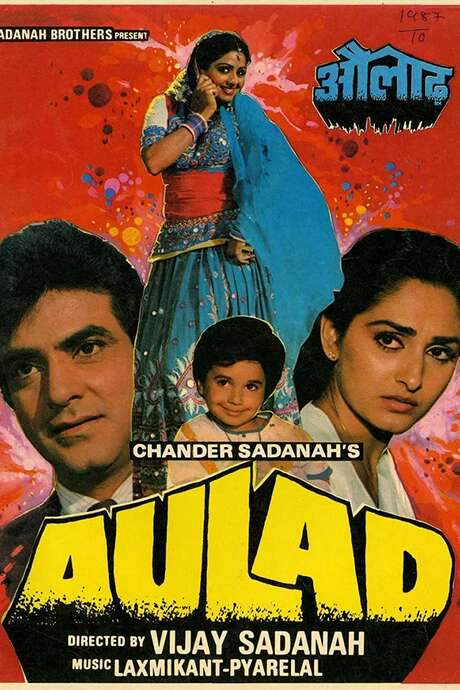
Aulad (1987) movie poster

Plot Summary

Aulad (1987) Plot Summary Explained

Release, runtime and language
1987 · 180 mins · Hindi
Directed by
Vijay Sadanah
Starring
Saeed Jaffrey, Dina Pathak, Jaya Prada, Govardhan Asrani, Sridevi, Jeetendra

Convinced his wife perished, he entrusts his newborn to a grieving mother who has recently lost her own child, hoping she will give him the love and care he cannot provide. When the presumed‑dead wife returns, she is determined to reclaim the baby, sparking a desperate struggle for the child's future.

On this page (6)
  1. 1 Where to watch
  2. 2 What happens: full plot
  3. 3 Plot questions answered
  4. 4 Movie threads
  5. 5 Movies like Aulad
  6. 6 Every angle

Where to watch

Where to Watch Aulad (1987)

Where can you watch Aulad? Stream, rent or buy it in the US, including on Fawesome, Plex and Tubi TV: current JustWatch availability with up-to-date prices.

Streaming availability powered by JustWatch

Full plot summary · contains spoilers

What Happens in Aulad: Full Plot Summary

The whole story of Aulad (1987) explained, from the opening scene to the final frame: every key event, every twist and what it all adds up to. Read it as a quick recap before the sequel, to check a scene you missed, or to finally understand what really happened.

Anand is a sharp, ambitious businessman who keeps crossing paths with the street dancer Devki. When his abroad-based uncle, Anand’s chacha, sees a chance to arrange a marriage, he is warned to prepare for a wife soon. To buy time, Anand fabricates that he is already married. The ruse forces his chacha to travel to India and insist on meeting a wife, so Anand stages a temporary arrangement by taking Devki as his wife. Devki serves as a fatherly figure to Anand’s chacha, earning his respect and affection, and when he returns abroad, the elder man is satisfied and leaves.

As events unfold, [Anand] and [Devki] grow closer and eventually wed in truth. Their life intersects with another newly married couple, Yashoda and Vicky, who enter their orbit with hopes and dreams of their own. Devki gives birth to a son named Kishan, while Yashoda awaits the arrival of her child. A tragedy unfolds on a train—the ill-fated journey brings chaos, and Devki vanishes, leaving Anand convinced she is dead. In the same accident, [Vicky] loses his life, and Yashoda is left overwhelmed with grief.

To ease the pain, Anand arranges for a doctor to switch the newborns, asking the doctor to swap his own baby with the dead child, a decision that sets off a chain of consequences. When the truth comes to light, Yashoda returns home with Anand’s child, while Anand chooses to relocate abroad. Four years pass, and Anand finds it impossible to stay away from Yashoda and the child; his frequent visits begin to feel like a burden and a source of embarrassment.

Then a turning point arrives: Devki is revealed to be alive. She asks about their child, and Anand reveals the truth, triggering a bitter struggle between the two mothers. Devki’s heartbreak deepens when she learns she may never bear another child. The returning uncle witnesses Devki’s suffering and decides to pursue the matter legally. The court ultimately orders that the child be handed over to Devki, yet the bond between the child and Yashoda remains strong, making the situation increasingly complex and painful for all involved.

Faced with a painful dilemma, Anand and Devki choose to return the child to Yashoda, hoping to restore happiness to the family. Just as relief seems possible, Devki collapses from a severe headache; the doctor delivers surprising news: she is unexpectedly pregnant again, suggesting that life can still bring new beginnings even amid sorrow.

The story weaves together themes of love, duty, and the heavy burdens of family obligation. It examines how a single choice can ripple through lives—testing loyalties, challenging moral lines, and forcing each character to confront vulnerability, sacrifice, and the enduring hope that life can surprise us with a second chance.

Last updated: October 09, 2025 at 14:21

Was this helpful?

Plot questions answered

Aulad Plot Explained: Your Questions Answered

The questions people ask most about Aulad (1987): what happens in the confusing scenes, why the characters do what they do, the twists, hidden details and what the ending means. Each answer contains spoilers.

Q1

Why did Anand tell his uncle he was already married?

Anand lied to buy time and avoid an arranged marriage his uncle was pressuring him into. Since his uncle kept insisting he prepare for a wedding, Anand fabricated a story about being already married to escape the obligation. When the uncle insisted on meeting his wife, Anand had to improvise further by asking Devki to pose as his temporary wife.

Foreshadowing: Earlier scenes show Anand frustrated by his uncle's persistent pressure about marriage.

  • anand
  • uncle
  • marriage
  • deception
  • devki
Q2

Why did Anand arrange for the doctor to swap the babies?

After the train accident, Anand believed Devki was dead and was devastated. To help Yashoda, who had also lost her newborn baby, Anand asked the doctor to swap his living son Kishan with Yashoda's dead infant. This gave both families a child to love and eased their grief, though it was a morally complex decision that would cause later complications.

Foreshadowing: The train accident brings both couples together in tragedy, setting the stage for this difficult choice.

  • baby swap
  • doctor
  • yashoda
  • vicky
  • kishan
  • train accident
Q3

What happened to Devki during the train accident?

During the catastrophic train accident, Devki disappeared and was presumed dead. While the exact details of her disappearance aren't fully explained in the summary, she somehow survived but was separated from Anand. She remained missing for years while Anand believed she had perished in the wreckage.

Foreshadowing: The train journey brings two newlywed couples together, hinting at the intertwined fates that will connect them.

  • devki
  • train accident
  • disappearance
  • death
Q4

Why did Anand keep visiting Yashoda and Kishan for four years?

Anand couldn't stay away from the child he had essentially given away and from Yashoda, who was raising his biological son Kishan. Despite having left India to move abroad with Devki, Anand returned repeatedly, unable to sever the emotional connection to his child and the guilt he felt about the baby swap arrangement.

Foreshadowing: The baby swap creates an invisible thread connecting Anand to Yashoda and Kishan.

  • anand
  • yashoda
  • kishan
  • visits
  • four years
Q5

Why was Devki told she could never have another child?

When Devki learned the truth about Kishan not being her biological child, she was devastated to discover she may never bear another child. This made the loss of her son even more painful, as she faced the possibility of being permanently childless.

Foreshadowing: Devki's inability to have more children adds tragic weight to her fight for Kishan.

  • devki
  • children
  • infertility
  • kishan
  • motherhood
Q6

Why did the court rule in favor of Devki for custody?

Anand's uncle, who had returned to India, witnessed Devki's suffering over losing her child and decided to pursue the matter legally. The court ultimately awarded custody of Kishan to Devki, likely based on biological parentage and the legal arguments presented by the family.

Foreshadowing: The uncle's earlier approval of Devki as a wife creates a bond that motivates his later legal involvement.

  • court
  • custody
  • devki
  • kishan
  • uncle
  • legal battle
Q7

Why did Anand and Devki decide to return Kishan to Yashoda?

Facing a painful dilemma and recognizing the deep bond between Kishan and Yashoda, who had raised him as her own for years, Anand and Devki chose to return the child to Yashoda. They prioritized the child's happiness and stability over their own desire to keep him, making a selfless decision that restored happiness to Yashoda.

Foreshadowing: The emotional bond between Kishan and Yashoda had been developing throughout the four years Anand visited.

  • kishan
  • yashoda
  • return
  • sacrifice
  • custody
  • family
Q8

How did Devki end up being pregnant again at the end?

After Devki collapsed from a severe headache while making the difficult decision to return Kishan, the doctor delivered surprising news that she was unexpectedly pregnant again. This twist offered hope after her earlier devastating discovery that she might never have children, suggesting life can bring new beginnings even amid sorrow.

Foreshadowing: The story's themes of renewal and second chances foreshadow this hopeful turn.

  • devki
  • pregnancy
  • surprise
  • ending
  • renewal
Q9

What happened to Vicky during the train accident?

Vicky, Yashoda's husband, died in the same train accident that separated Devki from Anand. This tragedy left Yashoda devastated and expecting a child at the time, creating the circumstances that led to the baby swap arrangement with Anand.

Foreshadowing: The train brings both couples together, and the accident becomes the pivotal tragedy that defines the story.

  • vicky
  • death
  • train accident
  • yashoda
Q11

How did the baby swap affect both families long-term?

The baby swap created years of mistaken parentage, with Yashoda raising Kishan as her own son while Anand and Devki believed their child was dead. This deception eventually led to a bitter custody battle when the truth emerged, forcing both mothers to fight for the child and testing the moral lines of everyone involved.

Foreshadowing: The swap happens quietly in the hospital, but its consequences ripple through the entire narrative.

  • baby swap
  • families
  • consequences
  • years
  • deception

Movie threads

More Movies Like Aulad, by Mood & Story

Curated lists built around what makes Aulad tick: the same mood, the same kind of story or the same emotional payoff. Each list explains why these movies belong together.

Movies with devastating custody battles like Aulad

Stories where desperate acts create fierce legal and emotional fights for a child. This collection features movies like Aulad, where a secret or a tragic mistake spirals into a painful courtroom drama and emotional conflict over a child's future. If you were captivated by the desperate struggle between two mothers, you'll find similar stories of love, sacrifice, and moral complexity here.

  • desperate
  • painful
  • compassionate
  • moral dilemma
  • courtroom drama
  • tragic
  • Tone: bittersweet, tragic
  • Pacing: steady, dramatic
Why these movies?

The story pattern: This thread follows narratives that begin with a pivotal deception or tragic accident, often involving a child swap or a hidden parentage. The story then builds towards an inevitable, emotionally charged legal conflict that forces characters to confront their past choices and redefines the meaning of family through sacrifice.

Why they belong together: These movies are grouped together because they share a core narrative of a child being fought over by multiple parties, creating a high-intensity, emotionally heavy experience centered on moral dilemmas, profound love, and the painful cost of second chances.

Emotional family sagas with heavy themes like Aulad

Epic stories where families endure profound loss to find a fragile new beginning. Discover movies similar to Aulad that deliver a powerful, heartfelt journey through family trauma and recovery. These films explore deep themes of grief, loss, and sacrifice over a steady, multi-year narrative, perfect for viewers who appreciate heavy, character-driven stories with a bittersweet resolution.

  • tragic
  • melancholic
  • hopeful
  • grief and loss
  • compassionate
  • family obligation
  • Tone: bittersweet, melancholic
  • Pacing: steady, character-driven
Why these movies?

The story pattern: Stories in this thread often span years, beginning with a catastrophic event like a death or separation that redefines the family unit. The plot follows characters as they grapple with obligation, love, and sacrifice, weaving together their individual arcs into a central moral conflict that ultimately leads to a fragile but meaningful resolution.

Why they belong together: These films are united by their heavy emotional weight, focus on grief and familial duty, and a bittersweet tone that balances tragic events with compassionate acts. They provide a steady, intense viewing experience centered on the resilience of the human spirit in the face of overwhelming loss.

If you liked this

Movies Like Aulad

Similar movies to Aulad: the same genre, themes or kind of story. Each one comes with its own plot summary, timeline and ending explained.

Browse all movie summaries

Every angle

Aulad (1987) Explained: Plot, Timeline & Characters

Everything about Aulad in one place: what happens in the plot summary, the timeline in chronological order, the characters and meaning and a spoiler-free summary. What's After the Movie adds the cast, box office and post-credit scenes.

Coming soon on iOS and Android

The Plot Explained Movie Summary App

Plot summaries, endings explained and timelines on your phone. Catch up on any movie in minutes, save your favorites and never miss a twist again.

Be the first to know when we launch. Your email stays private, always.

Learn more about the app