Plot Explained Spoilers guaranteed!
Plot Explained

Browse by genre

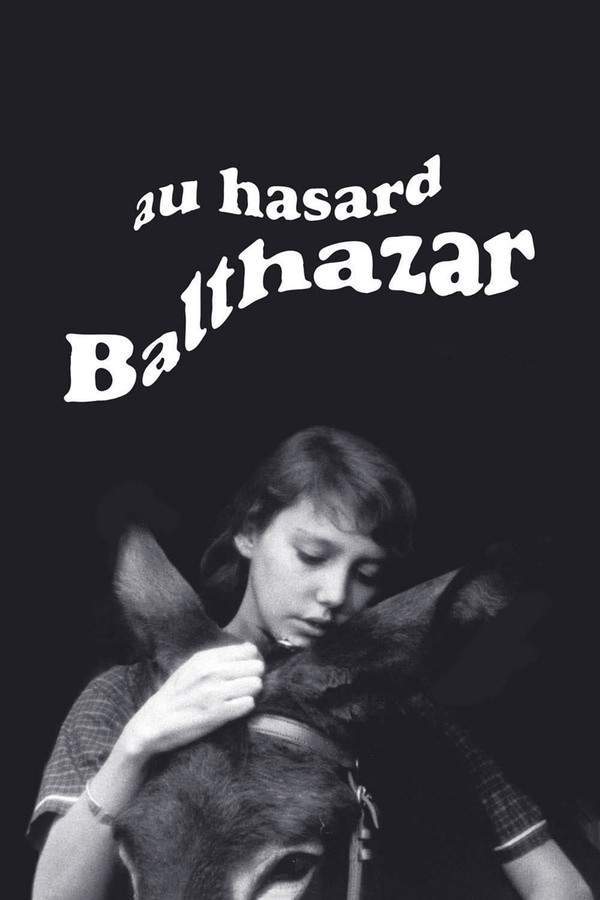
Au hasard Balthazar (1966) movie poster

Characters & Themes

Au hasard Balthazar (1966) Characters, Setting & Themes Explained

Release, runtime and language
1966 · 95 min · French
Loading streaming availability…
Directed by
Robert Bresson
Starring
Anne Wiazemsky, François Lafarge, Guy Renault, Jean-Claude Guilbert, Jean-Joël Barbier, Marie-Claire Fremont

A tender relationship develops between Marie, a young woman from a rural family, and Balthazar, a kind-hearted donkey. Their lives intertwine as they experience the hardships and joys of the French countryside. Through various owners and circumstances, Balthazar remains a constant presence, witnessing both the beauty and the cruelty of the world around him, while Marie grapples with her own personal struggles and the complexities of human relationships.

On this page (9)
  1. 1 Where to watch
  2. 2 Characters explained (4)
  3. 3 Where & when it takes place
  4. 4 Themes & meaning (3)
  5. 5 Character & meaning questions
  6. 6 The book behind the movie
  7. 7 Movie threads
  8. 8 Movies like Au hasard Balthazar
  9. 9 Every angle
Loading streaming availability…

4 main characters · contains spoilers

Au hasard Balthazar Characters Explained: Who Is Who

The main characters of Au hasard Balthazar (1966), heroes and villains: what drives them, how they change over the course of the story and what each of them reveals about the film's bigger ideas.

  • Marie (Anne Wiazemsky)

    Marie is a complex character who experiences profound growth and heartache throughout the film. Her deep bond with Balthazar showcases her empathy and innocence, yet she becomes a victim of Gérard's abuse, reflecting her vulnerability. The emotional weight of her relationships leads her to a path of tumult and conflict, ultimately highlighting her resilience.

    • 👧 Young Woman
    • 💔 Survivor
  • Balthazar

    Balthazar represents the quiet strength and suffering of innocence in a cruel world. As a donkey, he becomes a witness to human actions and their consequences, embodying unconditional loyalty and love. His journey illustrates the pain of exploitation and the longing for connection, reminding viewers of the purity that can exist amidst chaos.

    • 🐴 Donkey
    • 🐾 Innocence
  • Gérard

    Gérard is portrayed as a troubled antagonist whose jealousy and aggression drive him to commit heinous acts. He embodies the darker side of human nature, often exerting power over others to mask his insecurities. Gérard's complex character illustrates the repercussions of unchecked emotions and the cycle of abuse that can arise from them.

    • 👨‍⚖️ Antagonist
    • 😠 Jealousy
  • Arnold

    Arnold appears as a sympathetic character who, despite his flaws, shows kindness toward Balthazar. His involvement in the donkey's life reflects a longing for redemption and belonging. As someone tangled in tragic circumstances, Arnold's actions evoke empathy as he navigates his struggles amidst the chaos of others' lives.

    • 👨‍🦰 Local
    • 🍷 Alcoholic

Last updated: October 22, 2024 at 21:26

Was this helpful?

Setting

Where and When Does Au hasard Balthazar Take Place?

The setting of Au hasard Balthazar (1966): the year and time period, the places and locations, and how they shape the characters, the mood and the tension of the story.

Time period

Location

French countryside, Pyrenees

The French countryside, characterized by its rolling hills and picturesque landscapes, serves as a serene backdrop for the film. The majestic Pyrenees mountains are known for their breathtaking views and wildlife, embodying the beauty and harshness of nature. This setting emphasizes the contrast between the simplicity of rural life and the complexities of human emotions and societal issues.

  • 🏞️ Countryside
  • 🏔️ Mountains

Last updated: October 22, 2024 at 21:26

Was this helpful?

3 major themes

Au hasard Balthazar Meaning: Themes & Message Explained

What is Au hasard Balthazar (1966) really about? The emotional, social and philosophical themes the film keeps returning to, its symbolism and the message beneath the surface.

  • Loyalty

    Loyalty is a central theme in 'Au hasard Balthazar,' embodied by the titular donkey who remains faithful to Marie despite his harsh treatment. Balthazar's unwavering bond with Marie contrasts sharply with the betrayal and cruelty exhibited by the humans around him. This theme highlights the divergence between human behavior and animal instinct, showing that love can transcend suffering.

  • Tragedy

    The film is imbued with a sense of tragedy, as it follows Balthazar through various hardships and the emotional turmoil of the characters. Throughout the narrative, the intertwined fates of Marie and Balthazar echo the struggles of innocence against the darker aspects of human nature. This theme reinforces the notion that love often comes with pain and sacrifice.

  • Cycle of Abuse

    The cycle of abuse manifests prominently in Marie's relationship with Gérard, showcasing how trauma affects individuals and their connections. As Gérard's jealous and possessive nature leads to violence and domination, Marie's struggle to escape her circumstances reflects broader societal issues regarding power dynamics and personal agency. This theme serves as a powerful commentary on the consequences of unchecked aggression.

Last updated: October 22, 2024 at 21:26

Was this helpful?

Character & theme questions

Au hasard Balthazar Characters & Meaning: Your Questions Answered

The questions people ask about Au hasard Balthazar (1966): who the characters really are, their relationships, what the symbols mean, where it takes place and what the movie is really about. Each answer contains spoilers.

Q1

Where is Au hasard Balthazar set?

The film takes place in the French countryside, with the Pyrenees mountains serving as a dramatic backdrop. The setting emphasizes the contrast between the simplicity of rural life and the complexities of human emotions, using the serene landscape to highlight both the beauty and harshness of the world the characters inhabit.

  • french countryside
  • pyrenees
  • rural setting
  • landscape
Q2

What does Balthazar represent in the film?

Balthazar represents the quiet strength and suffering of innocence in a cruel world. As a donkey, he becomes a witness to human actions and their consequences, embodying unconditional loyalty and love. His journey illustrates the pain of exploitation and the longing for connection, serving as a symbol of purity amidst the chaos of human behavior.

  • innocence
  • symbolism
  • loyalty
  • animal metaphor
Q3

Who is Marie in the story?

Marie is a young woman from a rural family who develops a tender relationship with Balthazar. She embodies empathy and innocence through her deep bond with the donkey, but also experiences profound growth and heartache. Her vulnerability as a victim of Gérard's abuse highlights her resilience and the film's exploration of suffering and personal struggle.

  • marie
  • protagonist
  • victim
  • resilience
Q4

What role does Gérard play in the film?

Gérard serves as the film's primary antagonist, embodying the darker side of human nature through his jealousy and aggression. His possessive and violent nature creates the cycle of abuse that defines much of Marie's suffering. He illustrates how unchecked emotions and insecurity can lead to domination and harm, representing the cruelty that contrasts with Balthazar's loyalty.

  • antagonist
  • abuse
  • villain
  • jealousy
Q5

What is the theme of loyalty in the film?

Loyalty is a central theme embodied by Balthazar, who remains faithful to Marie despite harsh treatment. This unwavering bond contrasts sharply with the betrayal and cruelty exhibited by the humans around him. The theme highlights the divergence between human behavior and animal instinct, suggesting that love can transcend suffering.

  • loyalty
  • faithfulness
  • animal instinct
  • bond
Q6

How does the film portray tragedy?

The film is imbued with a sense of tragedy as it follows Balthazar through various hardships and the emotional turmoil of the characters. The intertwined fates of Marie and Balthazar echo the struggles of innocence against the darker aspects of human nature, reinforcing that love often comes with pain and sacrifice.

  • tragedy
  • sorrow
  • suffering
  • innocence
Q7

What does the cycle of abuse theme represent?

The cycle of abuse manifests prominently in Marie's relationship with Gérard, showing how trauma affects individuals and their connections. Gérard's jealous and possessive nature leads to violence and domination, reflecting broader societal issues regarding power dynamics and personal agency. This theme serves as a commentary on the consequences of unchecked aggression.

  • abuse
  • trauma
  • power dynamics
  • violence
Q8

Who is Arnold in the film?

Arnold appears as a sympathetic character who, despite his flaws, shows kindness toward Balthazar. His involvement reflects a longing for redemption and belonging. As someone tangled in tragic circumstances, Arnold evokes empathy as he navigates his struggles amidst the chaos of others' lives.

  • arnold
  • kindness
  • redemption
  • secondary character
Q9

What is the emotional tone of the film?

The dominant tone is melancholic, defined by a pervasive sense of quiet sadness and reflection rather than overt suspense or anger. Despite the slow, meditative pacing that emphasizes atmosphere over plot, the emotional weight is heavy, anchored by themes of abuse, injustice, and loss. The bleak ending, featuring Balthazar's death alone in a field, solidifies the film's tragic inevitability.

  • melancholy
  • sadness
  • atmosphere
  • tone
Q10

What is Au hasard Balthazar trying to say?

The film presents a parable about innocence versus cruelty, using Balthazar's journey to comment on human nature. Through the donkey's unwavering loyalty and the suffering he witnesses, the film explores how love can transcend suffering while also highlighting the tragedy that befalls the innocent. It serves as a meditation on loyalty, sacrifice, and the darker aspects of humanity.

  • meaning
  • message
  • parable
  • human nature

Movie threads

More Movies Like Au hasard Balthazar, by Mood & Story

Curated lists built around what makes Au hasard Balthazar tick: the same mood, the same kind of story or the same emotional payoff. Each list explains why these movies belong together.

Movies with a Silent Witness like in Au hasard Balthazar

Tales of passive observers who bear witness to human suffering and cruelty. If you were moved by the perspective of Balthazar the donkey in Au hasard Balthazar, explore more films that use a silent observer to frame the narrative. These movies share a similar melancholic tone and heavy emotional weight, focusing on characters who watch and endure, offering a unique lens on human nature and suffering.

  • observational
  • tragic
  • somber
  • meditative
  • poetic
  • devastating
  • Tone: melancholic, observant
  • Pacing: slow, deliberate
Why these movies?

The story pattern: Stories in this thread often unfold from a detached viewpoint, where the central character is more of an observer than an active participant. The plot is driven by the events that happen around them, with the emotional journey stemming from their endurance and the cumulative impact of what they witness. The climax typically reinforces the observer's helplessness in the face of inevitable tragedy.

Why they belong together: These films are grouped together because they share a specific narrative device: the use of a silent or passive witness. This creates a distinct melancholic and observational mood, a slow, deliberate pacing that allows for reflection, and a consistently heavy emotional weight as the audience experiences the story through this unique, often heartbreaking, lens.

Bleak Stories of Cyclical Suffering like Au hasard Balthazar

Stories where characters are trapped in an inescapable loop of hardship and despair. For viewers affected by the tragic cycle of suffering in Au hasard Balthazar, this collection features similar movies with bleak endings and heavy themes. These films often unfold in rural or harsh settings, depicting characters grappling with fate, injustice, and the heartbreaking repetition of pain, much like the journey of Marie and Balthazar.

  • bleak
  • tragic
  • fatalistic
  • grim
  • heavy
  • devastating
  • Tone: bleak, tragic
  • Pacing: slow, cumulative
Why these movies?

The story pattern: Narratives in this thread typically follow a downward spiral or a repetitive cycle of negative events. Characters attempt to break free but are ultimately pulled back by circumstance, systemic forces, or their own trapped destinies. The story structure reinforces the theme of inevitability, leading to conclusions that are bleak and cathartic in their tragic finality.

Why they belong together: These movies are connected by their central theme of inescapable fate and cyclical suffering. They share a bleak tone, a slow but intense pacing that allows the weight of repetition to be felt, and a profound emotional heaviness. The viewing experience is defined by a sense of tragic inevitability and a meditation on human endurance against overwhelming odds.

If you liked this

Movies Like Au hasard Balthazar

Similar movies to Au hasard Balthazar: the same genre, themes or kind of story. Each one comes with its own plot summary, timeline and ending explained.

Browse all movie summaries

Every angle

Au hasard Balthazar (1966) Explained: Plot, Timeline & Characters

Everything about Au hasard Balthazar in one place: what happens in the plot summary, the timeline in chronological order, the characters and meaning and a spoiler-free summary. What's After the Movie adds the cast, box office and post-credit scenes.

Coming soon on iOS and Android

The Plot Explained Movie Summary App

Plot summaries, endings explained and timelines on your phone. Catch up on any movie in minutes, save your favorites and never miss a twist again.

Be the first to know when we launch. Your email stays private, always.

Learn more about the app