Plot Explained Spoilers guaranteed!
Plot Explained

Browse by genre

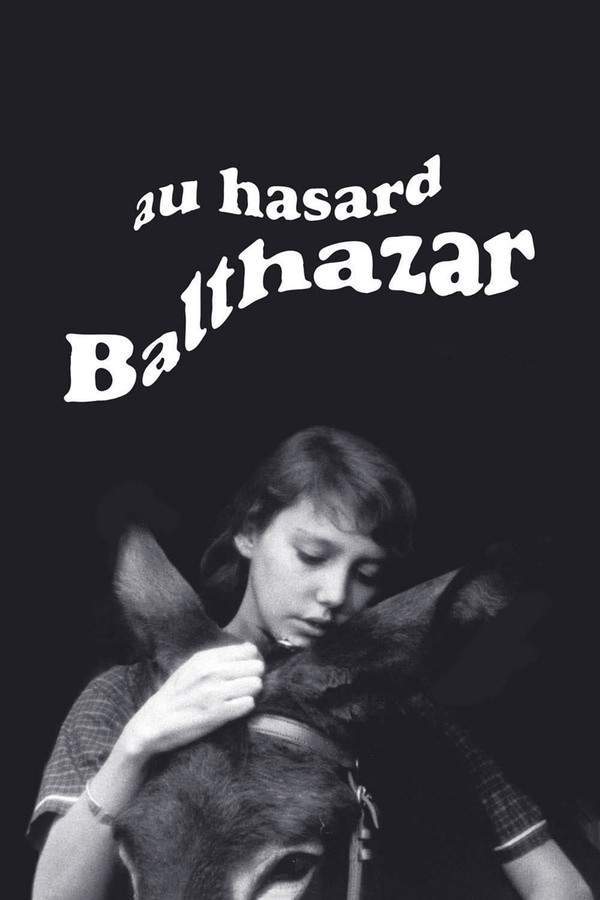
Au hasard Balthazar (1966) movie poster

Plot Summary

Au hasard Balthazar (1966) Plot Summary Explained

Release, runtime and language
1966 · 95 min · French
Loading streaming availability…
Directed by
Robert Bresson
Starring
Anne Wiazemsky, François Lafarge, Guy Renault, Jean-Claude Guilbert, Jean-Joël Barbier, Marie-Claire Fremont

A tender relationship develops between Marie, a young woman from a rural family, and Balthazar, a kind-hearted donkey. Their lives intertwine as they experience the hardships and joys of the French countryside. Through various owners and circumstances, Balthazar remains a constant presence, witnessing both the beauty and the cruelty of the world around him, while Marie grapples with her own personal struggles and the complexities of human relationships.

On this page (7)
  1. 1 Where to watch
  2. 2 What happens: full plot
  3. 3 Plot questions answered
  4. 4 The book behind the movie
  5. 5 Movie threads
  6. 6 Movies like Au hasard Balthazar
  7. 7 Every angle
Loading streaming availability…

Full plot summary · contains spoilers

What Happens in Au hasard Balthazar: Full Plot Summary

The whole story of Au hasard Balthazar (1966) explained, from the opening scene to the final frame: every key event, every twist and what it all adds up to. Read it as a quick recap before the sequel, to check a scene you missed, or to finally understand what really happened.

In the picturesque French countryside, close to the majestic Pyrenees, a young donkey finds itself adopted by the adventurous children, Jacques and his sisters, who reside on a quaint farm. They lovingly name the donkey Balthazar, with the help of Marie, Jacques's childhood love, whose father teaches at the nearby school. Tragedy strikes when one of Jacques's sisters passes away, prompting their family to leave the farm, which is then taken over by Marie's family in a somewhat informal arrangement. Unfortunately, Balthazar ends up in the hands of local farm workers who subject him to relentless toil.

As the years roll by, a mishap sends Balthazar fleeing back to Marie, who has grown into a young woman. However, discord brews between their families as Marie's father becomes embroiled in legal disputes with Jacques's father over the farm, leading to Balthazar being given away to a local bakery for deliveries. Among those at the bakery is Gérard, the leader of a youthful criminal gang who feels a pang of jealousy towards Balthazar because of Marie's affection for the donkey. Under Gérard's cruel management, Balthazar's suffering intensifies.

One fateful day, while driving her 2CV, Marie spots Balthazar by the roadside and stops to reconnect. Yet, Gérard, having been resting nearby, insists on joining her in the car, which leads to a harrowing implication of a sexual assault. This dark encounter marks the beginning of Marie's tumultuous and abusive relationship with Gérard, culminating in her estrangement from her family. In a tense turn of events, Gérard finds himself questioned by the police alongside Arnold, a local alcoholic also entwined in a murder investigation, but neither is apprehended.

As Balthazar falls ill and is at risk of euthanasia, Arnold intervenes, taking the donkey under his care. Balthazar rebounds and starts guiding tourists through the stunning Pyrenees with Arnold's help. However, his spirit remains restless, leading him to escape and join a circus. When he spots Arnold in the crowd during a show, his instinctual loyalty drives him to chaos, prompting Arnold to reclaim him. As fate would have it, Arnold inherits a fortune after the death of his uncle and throws a celebratory party. Meanwhile, Marie and her mother have a heart-to-heart, but Marie resolutely refuses to return home.

Tragedy strikes again when Gérard forces Arnold to ride Balthazar in his drunken state, resulting in a fatal accident. Subsequently, the police send Balthazar to the market where he is purchased by a greedy local miller who mistreats him for labor. One stormy night, Marie, drenched and desperate, pleads for refuge at the miller's door, having fled from Gérard. The miller offers help, posing as a compassionate ally, but the next morning surprises Marie by inviting her parents and offering them the donkey—an implication that she might return to her troubled home life. Torn between her feelings for Jacques, who wishes to marry her, and her traumatic past with Gérard, Marie faces an emotional dilemma.

One day, determined to confront Gérard, she seeks out the barn that holds bittersweet memories. However, she falls into a trap set by Gérard and his gang, enduring a brutal assault before being rescued by her father and Jacques, who hastily take her home with Balthazar's help. In a shocking twist, after her father dies—which follows a visit from a priest—Gérard pressures Marie's grieving mother into yielding Balthazar for use in his criminal endeavors.

In the dead of night, Gérard steals Balthazar for smuggling operations across the Spanish border. When the plan goes awry, resulting in a violent confrontation with custom guards, Balthazar is left to meet a tragic fate. In a poignant scene the next day, the once valiant donkey lies down, succumbing to its wounds as a flock of sheep gathers around him, their bells tinkling softly, marking the somber end of Balthazar's journey.

Last updated: November 16, 2024 at 17:37

Was this helpful?

Plot questions answered

Au hasard Balthazar Plot Explained: Your Questions Answered

The questions people ask most about Au hasard Balthazar (1966): what happens in the confusing scenes, why the characters do what they do, the twists, hidden details and what the ending means. Each answer contains spoilers.

Q1

Why does Marie get involved with Gérard after the roadside incident?

After spotting Balthazar by the roadside and stopping to reconnect with him, Gérard insists on joining Marie in her 2CV. During this encounter, there is a disturbing implication of sexual assault. This traumatic event marks the beginning of Marie's tumultuous and abusive relationship with Gérard, which continues despite the violence she suffers.

Foreshadowing: Gérard's jealousy toward Balthazar because of Marie's affection was already visible at the bakery, hinting at his possessive nature.

  • Marie
  • Gérard
  • abuse
  • relationship
  • 2CV
  • assault
Q2

How does Balthazar end up with so many different owners?

Balthazar passes through multiple hands due to circumstances beyond his control. After Jacques's family leaves the farm following a death in their family, Balthazar is subjected to hard labor by farm workers. He then gets given away to a bakery due to legal disputes between Marie's and Jacques's families. Later, when Balthazar falls ill and risks euthanasia, Arnold rescues him. After Arnold's death, the donkey is sent to market and purchased by a miller, and finally Gérard steals him for smuggling.

Foreshadowing: The initial adoption by Jacques and his sisters establishes Balthazar's role as a passive creature subject to human decisions.

  • Balthazar
  • owners
  • Jacques
  • Arnold
  • miller
  • Gérard
Q3

Why does Arnold take care of Balthazar when he's sick?

Arnold, a local alcoholic who was previously questioned by police in connection with a murder investigation, intervenes when Balthazar is at risk of euthanasia. Despite his own troubled life, Arnold shows compassion for the donkey and takes him under his care. Balthazar recovers and begins guiding tourists through the Pyrenees with Arnold's help, forming a genuine bond between them.

Foreshadowing: Arnold's appearance alongside Gérard during the police questioning establishes him as a morally complex character capable of both good and darkness.

  • Arnold
  • Balthazar
  • euthanasia
  • Pyrenees
  • tourists
Q4

What causes the fatal accident involving Balthazar?

Gérard, in a drunken state, forces Arnold to ride Balthazar. This results in a fatal accident that kills Arnold. This devastating incident compounds the suffering in Marie's life and sets in motion further tragic consequences for Balthazar.

Foreshadowing: Gérard's cruel nature was established through his treatment of Balthazar at the bakery and his abusive relationship with Marie.

  • Gérard
  • Arnold
  • Balthazar
  • accident
  • death
  • drunk
Q5

Why does the miller trick Marie by offering help then returning her to her family?

After fleeing from Gérard during a stormy night, Marie desperately seeks refuge at the miller's door. The miller appears compassionate and offers help, but the next morning he unexpectedly invites Marie's parents and offers them the donkey. This manipulative act suggests Marie might return to her troubled home life, effectively betraying her trust despite his earlier promise of safety.

Foreshadowing: The miller is introduced as greedy, having purchased Balthazar for hard labor, establishing his self-serving nature.

  • Marie
  • miller
  • trap
  • betrayal
  • storm
Q6

Why does Marie refuse to return home after being rescued from Gérard?

After her father and Jacques rescue her from Gérard's brutal assault at the barn, Marie's mother pleads with her to come home. However, Marie resolutely refuses. Her refusal stems from the deep psychological trauma she has suffered through years of abuse, as well as her estrangement from her family during the relationship. She remains haunted by her tumultuous past and cannot bring herself to return to the life she left.

Foreshadowing: Marie already refused to return home after Arnold's party, indicating her persistent psychological distance from her family.

  • Marie
  • family
  • home
  • refuse
  • trauma
  • abuse
Q7

Why does Balthazar escape from the circus?

Balthazar escapes from the circus because of his instinctual loyalty to Arnold. When he spots Arnold in the crowd during a show, he creates chaos, prompting Arnold to reclaim him. This demonstrates the deep bond that formed between them during their time together in the Pyrenees, showing Balthazar's capacity for connection despite being passed from owner to owner.

Foreshadowing: Arnold's rescue of Balthazar from euthanasia established their meaningful connection earlier in the story.

  • Balthazar
  • circus
  • Arnold
  • escape
  • loyalty
Q8

What happens to Gérard after he steals Balthazar for smuggling?

Gérard steals Balthazar under cover of night for smuggling operations across the Spanish border. The plan goes awry during a violent confrontation with customs guards. While Balthazar meets his tragic fate, the film does not explicitly show what happens to Gérard after this incident. He essentially disappears from the narrative, leaving his ultimate fate ambiguous.

Foreshadowing: Gérard was already established as a criminal leader of a youth gang, making smuggling a logical extension of his character.

  • Gérard
  • smuggling
  • Spanish border
  • customs
  • arrest
Q9

What is the significance of Balthazar dying alone in the field?

In the poignant final scene, Balthazar lies down in a field and succumbs to his wounds from the smuggling ordeal. A flock of sheep gathers around him, their bells tinkling softly. This melancholic image symbolizes Balthazar's ultimate innocence and passive suffering, he has been victimized throughout his life by humans, yet he remains gentle to the end. The scene reinforces the film's themes of cruelty against innocence and creates a tragically beautiful conclusion to his journey.

Foreshadowing: The film consistently portrays Balthazar as a pure, passive creature who endures suffering without complaint, making his peaceful death among sheep thematically appropriate.

  • Balthazar
  • death
  • sheep
  • field
  • innocence
  • ending
Q10

Why does Marie go to the barn knowing Gérard might be there?

Determined to confront her past, Marie visits a barn that holds bittersweet memories of her relationship with Balthazar. However, she falls into a trap set by Gérard and his gang, enduring another brutal assault. This action suggests Marie was seeking closure or attempting to reclaim agency over her traumatic memories, but her attempt leads to further victimization.

Foreshadowing: The barn represents a place of both positive memories with Balthazar and negative experiences with Gérard, making it a symbolically charged location.

  • Marie
  • Gérard
  • barn
  • assault
  • trap
  • confrontation
Q11

Why does Marie's father give Balthazar to Gérard after his death?

After Marie's father dies, which follows a visit from a priest, Gérard pressures Marie's grieving mother into yielding Balthazar for use in his criminal endeavors. This reveals the extent of Gérard's manipulation and control over the family, exploiting their vulnerability during grief to further his criminal activities.

Foreshadowing: Gérard had already demonstrated his willingness to exploit the family through various means, including pressing Marie's mother for the donkey.

  • Marie father
  • Gérard
  • Balthazar
  • pressure
  • criminal
Q12

Why is Arnold questioned by police alongside Gérard?

Arnold, a local alcoholic, is questioned by the police alongside Gérard in connection with a murder investigation. Neither man is apprehended, allowing their activities to continue. This connection establishes Arnold as a morally ambiguous character living on the fringes of society, while also highlighting the film's theme that those who perpetrate violence often escape consequences.

Foreshadowing: The murder investigation is never fully resolved in the film, leaving Arnold's true involvement ambiguous.

  • Arnold
  • police
  • murder
  • investigation
  • Gérard

Movie threads

More Movies Like Au hasard Balthazar, by Mood & Story

Curated lists built around what makes Au hasard Balthazar tick: the same mood, the same kind of story or the same emotional payoff. Each list explains why these movies belong together.

Movies with a Silent Witness like in Au hasard Balthazar

Tales of passive observers who bear witness to human suffering and cruelty. If you were moved by the perspective of Balthazar the donkey in Au hasard Balthazar, explore more films that use a silent observer to frame the narrative. These movies share a similar melancholic tone and heavy emotional weight, focusing on characters who watch and endure, offering a unique lens on human nature and suffering.

  • observational
  • tragic
  • somber
  • meditative
  • poetic
  • devastating
  • Tone: melancholic, observant
  • Pacing: slow, deliberate
Why these movies?

The story pattern: Stories in this thread often unfold from a detached viewpoint, where the central character is more of an observer than an active participant. The plot is driven by the events that happen around them, with the emotional journey stemming from their endurance and the cumulative impact of what they witness. The climax typically reinforces the observer's helplessness in the face of inevitable tragedy.

Why they belong together: These films are grouped together because they share a specific narrative device: the use of a silent or passive witness. This creates a distinct melancholic and observational mood, a slow, deliberate pacing that allows for reflection, and a consistently heavy emotional weight as the audience experiences the story through this unique, often heartbreaking, lens.

Bleak Stories of Cyclical Suffering like Au hasard Balthazar

Stories where characters are trapped in an inescapable loop of hardship and despair. For viewers affected by the tragic cycle of suffering in Au hasard Balthazar, this collection features similar movies with bleak endings and heavy themes. These films often unfold in rural or harsh settings, depicting characters grappling with fate, injustice, and the heartbreaking repetition of pain, much like the journey of Marie and Balthazar.

  • bleak
  • tragic
  • fatalistic
  • grim
  • heavy
  • devastating
  • Tone: bleak, tragic
  • Pacing: slow, cumulative
Why these movies?

The story pattern: Narratives in this thread typically follow a downward spiral or a repetitive cycle of negative events. Characters attempt to break free but are ultimately pulled back by circumstance, systemic forces, or their own trapped destinies. The story structure reinforces the theme of inevitability, leading to conclusions that are bleak and cathartic in their tragic finality.

Why they belong together: These movies are connected by their central theme of inescapable fate and cyclical suffering. They share a bleak tone, a slow but intense pacing that allows the weight of repetition to be felt, and a profound emotional heaviness. The viewing experience is defined by a sense of tragic inevitability and a meditation on human endurance against overwhelming odds.

If you liked this

Movies Like Au hasard Balthazar

Similar movies to Au hasard Balthazar: the same genre, themes or kind of story. Each one comes with its own plot summary, timeline and ending explained.

Browse all movie summaries

Every angle

Au hasard Balthazar (1966) Explained: Plot, Timeline & Characters

Everything about Au hasard Balthazar in one place: what happens in the plot summary, the timeline in chronological order, the characters and meaning and a spoiler-free summary. What's After the Movie adds the cast, box office and post-credit scenes.

Coming soon on iOS and Android

The Plot Explained Movie Summary App

Plot summaries, endings explained and timelines on your phone. Catch up on any movie in minutes, save your favorites and never miss a twist again.

Be the first to know when we launch. Your email stays private, always.

Learn more about the app