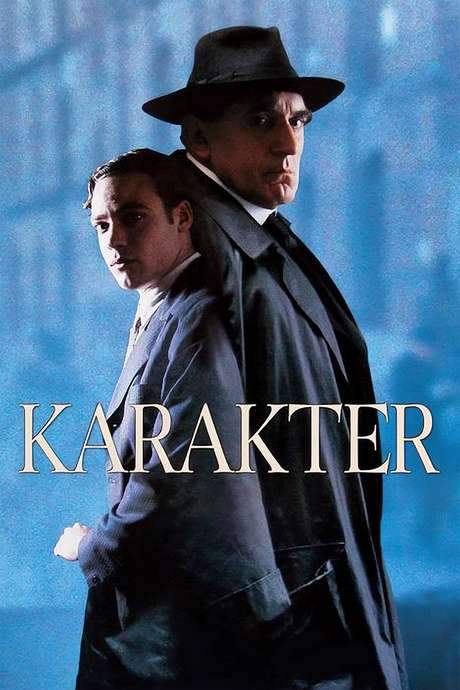
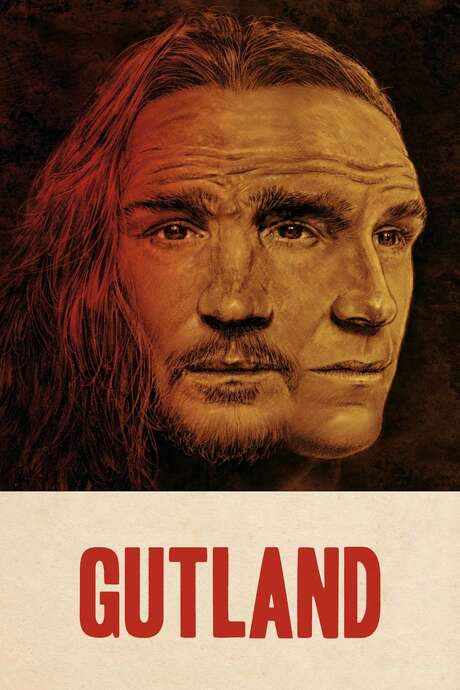
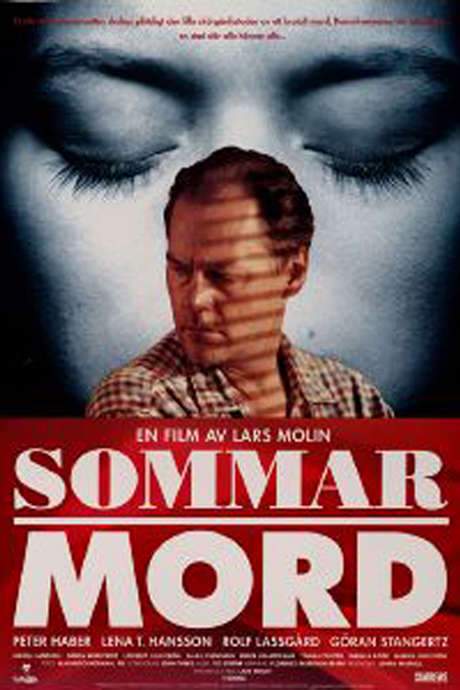
Set in 1930s Skåne, Sweden, the story follows Sven Stellan Skarsgård, a hare-lipped man who is too often dismissed as an idiot by a world that doesn’t understand him.
The film opens with Sven and a woman named Anna Maria Johansson driving a Rolls Royce across a fading orange horizon. As the sun sinks, Sven glimpses three angels in the sky and, seeking safety, he and Anna retreat to an old house. In the same moment, Sven hurls a bloodstained blade into a nearby well and then lies down beside Anna, beginning a quiet, inward monologue that traces the roots of his turmoil and his longing for belonging.
Sven’s life takes a hard turn after his mother dies, when Höglund Hans Alfredson—a cruel, wealthy factory owner who runs a farm and harbors ties to the local Nazi party—takes him in as unpaid labor. On Höglund’s farm, Sven sleeps among the cows in the stables and endures torment, even when a rat pesters him; he cannot bring himself to drown the animal, because taking a life feels beyond his nature.
Despite the mistreatment, Sven remains deeply spiritual, guided by Bible verses gifted by his sister and visions of the three angels who he speaks to in his own clear voice. His life shifts when he meets Anna, a wheelchair user who welcomes him into her family. At Anna’s home, Sven is treated as an adult for the first time: he gets a real bed, earns real wages, and works on a proper family farm. Anna’s father, Mr. Andersson Per Myrberg, even pays him “in real money,” a detail that underscoring Sven’s dignity in a world that had denied him respect—though Höglund later arrives to challenge this.
Driven by a desire for independence, Sven saves up to buy a motorcycle—a genuine Indian—and begins to ride the town with a new sense of freedom. But Höglund refuses to yield and uses his influence to block Sven’s driver’s license. After a drawn-out public dispute backed by Andersson, Sven finally secures the license, only to have his victory chipped away when Höglund’s loyal chauffeur meddles, sabotages plans, and destroys the beloved motorcycle.
Tension erupts as Anna’s fear deepens; in a moment of anger Sven shoves Anna out of her chair, instantly regretting the act but feeling the weight of the ongoing confrontation with Höglund. Enraged by the suffering inflicted on Sven and his loved ones, Sven retrieves a blade from a chaff cutter and heads toward Höglund’s factory, with the symbolic three angels accompanying him in song. He steals Höglund’s car and carries Anna away to the deserted house where the story began. As dawn breaks, police close in and the Anderssons plead for mercy.
The final confrontation culminates in a tense volley of shots, but the film ends on a stark, meditative note: the sun rises over the southern Swedish landscape, leaving the outcome morally ambiguous and the memory of Sven’s struggle etched in the minds of those he touched.
In the background of Sven’s trials stand a cast of vivid figures, including the ruthless Höglund and the compassionate Andersson family, with Anna as the anchor of Sven’s humanity. The film probes themes of dignity, abuse of power, and the quiet resistance of a man who refuses to be crushed by a world that misreads him, all conveyed through a restrained yet emotionally resonant storytelling style that invites reflection long after the final scene.