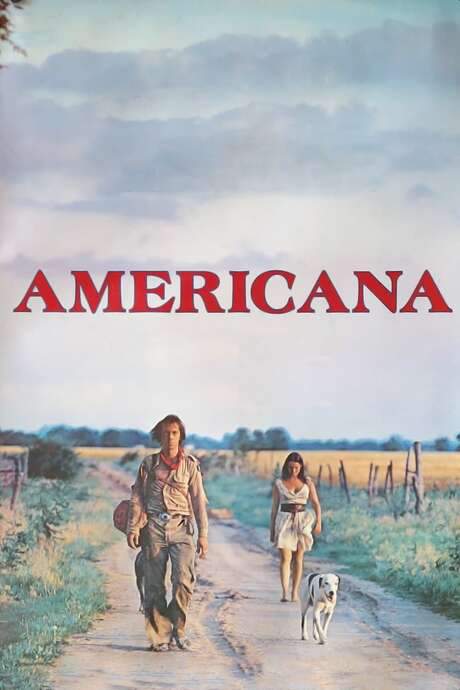
A down-on-his-luck, former Green Beret captain—the American Soldier David Carradine—recently discharged from the Vietnam War, drifts into Drury, Kansas, and a derelict merry-go-round catches his eye. He feels compelled to breathe new life into it, to restore the faded beauty of a beloved local landmark, and so he dedicates himself to the long, meticulous process of repair and restoration.
The town greets his endeavor with a spectrum of reactions. Some residents rally around the project, drawn to the idea of reclaiming a piece of their past, while others stand in the way, wary of the veteran’s presence and the disruption his work could bring. Among the supporters are two local businessmen: a hardware store owner who offers hands-on help and, more notably, Mike Michael Greene the Garageman, a gas station proprietor who provides steady employment and the crucial parts and tools needed for the restoration. Their aid gives the project momentum, turning a fragile dream into a stubborn, stubbornly hopeful mission.
A young local girl watches from a distance, quietly offering a toolbox and a few meals when she can, and she slips away whenever she is noticed. Her small acts of quiet generosity serve as a subtle thread of kindness in a town that is both curious and wary. Yet the veteran’s presence also brings tension: the sheriff’s scrutiny and a camp of local teenagers who harass him, casting a shadow over his quiet labor.
When the town’s rough-edged ruffians vandalize the half-restored carousel, the soldier redoubles his efforts, determined to see the project through. It’s during this turmoil that he uncovers a troubling detail about Mike’s life—cockfighting is Mike’s weekly pastime—and a dispute grows between them. Mike refuses to supply a much-needed part for the carousel unless the veteran agrees to fight a dog, revealing a cruel demand behind the supportive facade. The soldier agrees, driven by the stubborn hope that the restoration can still be salvaged, even if it means crossing a line he never imagined.
The confrontation culminates in a brutal and sobering moment: the soldier faces the fighting dog Masagwa in the ring, and the fight ends with the dog dead. After overcoming the final obstacle and installing the last piece that completes the carousel’s restoration, he places the dog’s body inside the now-animated machine, starts it up, and walks away as the townspeople gather to witness the eerie tableau. The carousel roars to life, turning a symbol of renewal into a stark reminder of the costs attached to rebuilding—and the closing image leaves the community staring in a mix of awe, discomfort, and reflection at the edge of what they’ve chosen to celebrate.