Plot Explained Spoilers guaranteed!
Plot Explained

Browse by genre

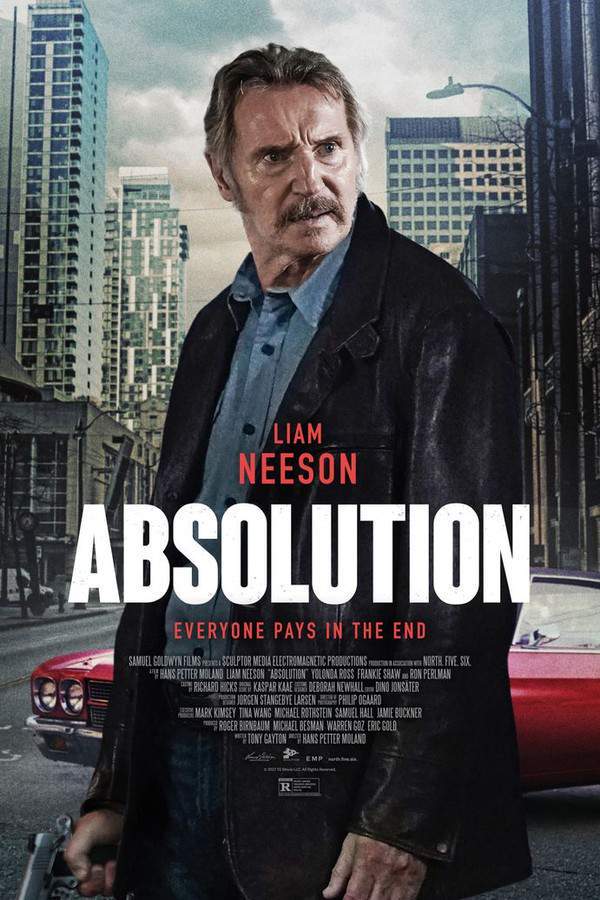
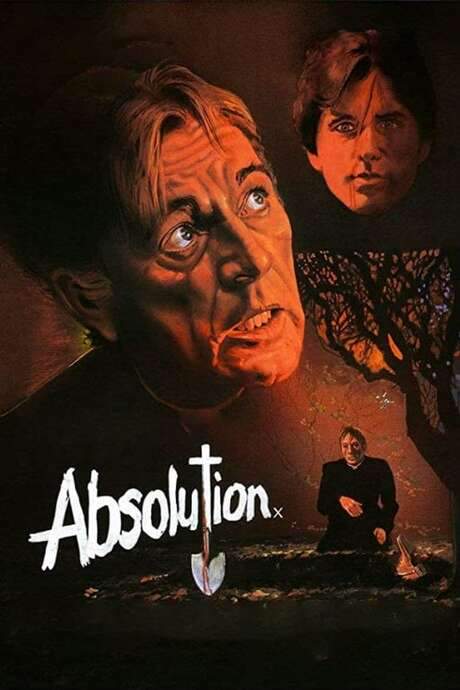
Absolution (1978) movie poster

Timeline

Absolution (1978) Timeline Explained – Every Event in Order

Release, runtime and language
1978 · 95 mins · English
Loading streaming availability…
Directed by
Anthony Page
Starring
Kevin Hart, Billy Connolly, David Bradley, Robin Soans, Hilary Mason, Richard Burton

A strict Catholic boarding school is ruled by the iron‑fisted Father Goddard. When a student confesses to murder, the dogmatic, deeply repressed priest’s faith is suddenly challenged, pulling him into a deadly psychological game that threatens to unravel his authoritarian control and his very sense of purpose.

On this page (6)
  1. 1 Where to watch
  2. 2 Events in order (12)
  3. 3 Timeline questions answered
  4. 4 Movie threads
  5. 5 Movies like Absolution
  6. 6 Every angle
Loading streaming availability…

12 events in order · contains spoilers

Absolution Timeline: Events in Chronological Order

Every key event of Absolution (1978) in order, scene by scene, with when and where it takes place. Use it to untangle flashbacks, time jumps and parallel storylines, to refresh your memory before the sequel or to find the exact scene you are thinking of.

  1. Blakey arrives and asks for odd work

    A travelling motorcyclist named Blakey arrives at the rural Catholic school and asks Fr. Goddard if there are any odd jobs he can do. He is told there are none available. This meeting sets the tension between the outsider and the school's authorities and foreshadows his uneasy place at the school.

    When
    Opening
    Where
    School grounds
  2. Blakey camps near the woods and befriends Stanfield

    Blakey establishes a camp in the woods near the school and quietly begins stealing food from the kitchen at night. Stanfield, a unpopular schoolboy, notices him and forms an uneasy friendship with the outsider. The two outsiders become allies while Fr. Goddard watches from a distance.

    When
    Next day
    Where
    Woods near the school
  3. Goddard explains confession and the seal

    Fr. Goddard uses a class to discuss the Catholic concept of confession, stressing that a priest cannot break the seal of confession. He warns that even serious crimes, including murder, must remain secret. The lesson foreshadows the moral trap waiting for the boys.

    Where
    Classroom
  4. Stanfield disobeys and Blakey pushes him to lie

    Stanfield grows closer to Blakey and begins spending less time with his friend Dyson. Goddard forbids Stanfield to see Blakey, but Stanfield disobeys. Blakey prods him to make up stories about sexual dalliances, which Stanfield later recounts to Fr. Goddard in confession.

    When
    Later that day
    Where
    School
  5. Police remove Blakey and tension escalates

    Two policemen arrive at the school invited by Fr. Goddard to remove Blakey from the grounds. They beat him and tell him to move on. Stanfield arrives later and Blakey, still upset, swears at him while Stanfield nervously clutches a rock.

    When
    Evening
    Where
    School grounds
  6. Stanfield confesses an accidental murder in confession

    During confession, Stanfield tells Fr. Goddard that he has accidentally killed Blakey and buried the body in the woods. Goddard goes to the burial site to verify what he has heard. He digs and finds what looks like a head, but it is revealed to be a pumpkin, signaling that this is a cruel prank by the boys.

    When
    Later that day
    Where
    Woods near the school
  7. Dyson offers to take the blame; Stanfield resists

    Dyson appears and offers to take the blame for the prank, but Stanfield pushes him away and walks off. The tension between the boys grows as the idea of guilt and confession becomes tangled with fear of the seal of confession.

    When
    Following confession
    Where
    School chapel / woods
  8. Dyson and Stanfield's confessions collide

    In the chapel, Dyson enters the confessional to say he was a willing accomplice. An unseen person then enters, but Stanfield's voice is heard confessing that this time he really has murdered Blakey. Fr. Goddard realizes the confessions have become a dangerous tangle of lies and truth.

    When
    During confession
    Where
    Chapel / confessional
  9. Goddard discovers signs in the woods

    Unable to ignore the mounting danger, Goddard returns to the woods and finds what looks like a leg brace half-exposed in the ground, surrounded by the boys' laughter. He demands the culprit reveal themselves and the scene signals a fatal confrontation looming on the horizon.

    When
    Evening
    Where
    Woods
  10. Goddard confronts Stanfield and kills him

    Goddard locates Stanfield in the woods and, in a moment of desperate resolve, strikes him repeatedly with a shovel, killing him. He staggers back toward the chapel, overwhelmed by guilt and the moral burden of the confession.

    When
    Confrontation
    Where
    Woods
  11. Dyson reveals the real killer and the motive

    Back in the chapel, Dyson reveals that he actually killed Blakey and later moved the body, motivated by revenge for Fr. Goddard's cruelty. He explains the other confessions were part of a dangerous deception and presses the priest to confront the truth.

    When
    After Stanfield's death
    Where
    Chapel
  12. Goddard takes responsibility and Dyson departs

    Fr. Goddard declares that he will take the blame for both killings and asks Dyson for forgiveness, a decision complicated by the seal of confession. Dyson offers the choice of confessing or suicide, refuses forgiveness, and walks away whistling as the priest collapses in mortification.

    When
    Finale
    Where
    Chapel / Woods

Last updated: October 09, 2025 at 12:41

Was this helpful?

Timeline questions answered

Absolution Timeline Explained: Your Questions Answered

When does it happen, and why in that order? The questions people ask about the chronology of Absolution (1978): time jumps, flashbacks, cause and effect between scenes and the correct order of events, each answered with spoilers.

Q1

Why does Stanfield confess to killing Blakey when he didn't actually do it?

Stanfield confesses to a murder he didn't commit because Blakey had previously pressured him to make up sexual stories, which Stanfield had repeated in confession. When Blakey is beaten and forced to leave, Stanfield feels guilty about his role in the events and decides to confess to something dramatic to tests the seal of confession and gain attention. He later claims it was a prank, but the lie spirals out of control when others begin confessing to the same event.

Foreshadowing: Blakey earlier pushed Stanfield to spin false sexual stories, establishing Stanfield's pattern of lying in confession.

  • false confession
  • Blakey
  • Stanfield
  • confession seal
  • lies
Q2

Who really kills Blakey in Absolution?

Arthur Dyson is the actual killer of Blakey, not Stanfield. Dyson kills Blakey as revenge for the cruelty he has suffered at the school, particularly from Fr. Goddard's authoritarian rule. Dyson later moves the body and orchestrates the entire situation to frame Stanfield and destroy Fr. Goddard by exploiting the confessional system.

Foreshadowing: Dyson offers to take blame for Stanfield's prank early on, showing his willingness to sacrifice himself for others while harboring deeper destructive intentions.

  • Dyson
  • killer
  • murder
  • Blakey
  • revenge
Q3

Why does Father Goddard kill Stanfield in the woods?

Goddard kills Stanfield because he believes Stanfield has genuinely murdered Blakey and is coming to confess more details. Driven by fear, moral panic, and the overwhelming burden of the seal of confession which prevents him from revealing what he knows, Goddard attacks Stanfield with a shovel in the woods, believing he is eliminating a dangerous criminal. He is also trying to protect the confessional secret and prevent further sin.

Foreshadowing: Goddard's earlier lesson about the seal of confession and his rigid belief that it must be protected at all costs foreshadows his extreme actions to maintain that principle.

  • Goddard
  • Stanfield
  • kill
  • murder
  • shovel
  • woods
Q4

What is the seal of confession and why does it trap Father Goddard?

The seal of confession is the Catholic priest's absolute duty to keep secret anything revealed during confession, even murder. If a priest breaks this seal, he commits a grave sin. This traps Goddard because he knows about multiple confessions involving crimes - Stanfield's false confession, the real murder of Blakey, and later the truth - but he cannot reveal any of it without betraying his faith and damning himself. The seal becomes both his moral prison and the weapon Dyson uses against him.

Foreshadowing: Goddard explicitly teaches this principle in class early in the film, warning that not even murder can be revealed.

  • confession seal
  • priest
  • confidentiality
  • Catholic
  • Goddard
Q5

What is the pumpkin that Father Goddard finds in the woods?

When Goddard digs up what he believes is Blakey's buried body after Stanfield's confession, he discovers a pumpkin instead of a human head. The boys have staged this as a cruel prank to test the priest and mock the confessional system. The pumpkin represents the twisted game the students are playing with Goddard's rigid beliefs, and it also marks the moment Stanfield realizes his confession could trap him in his own lie.

Foreshadowing: Stanfield and Dyson earlier demonstrated their willingness to deceive and test boundaries with their pranks and stories.

  • pumpkin
  • woods
  • prank
  • confession
  • burial
Q6

Why does Dyson frame Stanfield for Blakey's murder?

Dyson frames Stanfield because he is consumed by revenge against Fr. Goddard for years of oppressive cruelty at the school. By imitating Stanfield's voice in confession and confessing to the murder, Dyson orchestrates a plan to trap the priest in an impossible moral situation. He wants to destroy Goddard by forcing him to choose between breaking the seal of confession or harboring a murderer, thus exposing the hypocrisy of religious authority.

Foreshadowing: Dyson's growing resentment toward Goddard is evident throughout, and his offer to take blame for Stanfield's earlier prank shows his willingness to manipulate situations.

  • Dyson
  • Stanfield
  • frame
  • revenge
  • voice imitation
Q7

What does Dyson force Father Goddard to choose at the end of Absolution?

After revealing he killed Blakey, Dyson gives Goddard an impossible choice: confess to both killings (Stanfield's and Blakey's) and go to prison or an asylum, or commit suicide. Dyson refuses to forgive Goddard or offer absolution, leaving the priest trapped by his own doctrines. Goddard ultimately chooses to take responsibility but collapses in moral mortification, unable to act.

Foreshadowing: The entire film builds toward this moment where the rigid system Goddard enforced backfires completely.

  • Goddard
  • Dyson
  • choice
  • confess
  • suicide
  • prison
Q8

What is the leg brace Goddard finds in the woods?

The leg brace that Goddard discovers half-exposed in the ground belongs to Dyson, who wears it due to a physical disability. This discovery adds to the confusion and dread, making Goddard believe the boys are involved in something sinister. It also connects to Dyson's deeper motive - his resentment toward Goddard for years of abuse, partly possibly stemming from his physical vulnerability and the priest's harsh treatment.

Foreshadowing: Dyson's physical condition and his status as an outsider among students has been established earlier.

  • leg brace
  • woods
  • Dyson
  • disability
Q9

Why does Dyson want revenge against Father Goddard?

Dyson's desire for revenge stems from years of oppressive treatment under Fr. Goddard's harsh authority at the boarding school. As a physically disabled student who is already unpopular, Dyson has suffered greatly under the priest's rigid, cruel discipline. Killing Blakey and orchestrating the elaborate confession trap is his way of destroying Goddard by exposing the priest's moral hypocrisy and trapping him in the very system he enforces.

Foreshadowing: The film establishes early that Dyson is close to Stanfield but increasingly marginalized, and Goddard's treatment of students is uniformly harsh and controlling.

  • Dyson
  • Goddard
  • revenge
  • abuse
  • oppression
Q10

How does the confessional become a weapon in Absolution?

The confessional transforms from a sacred space into a deadly psychological weapon when the boys exploit it to manipulate Goddard. They test whether the seal will truly protect lies, use false confessions to create confusion, and ultimately trap Goddard with impossible knowledge. Each confession - Stanfield's false claim, Dyson's voice imitation, the real admission - forces Goddard deeper into moral paralysis until the system he venerates becomes his destruction.

Foreshadowing: Goddard's classroom lesson about the absolute seal of confession establishes early that this principle will be tested to its breaking point.

  • confession
  • weapon
  • trap
  • seal
  • deception

Movie threads

More Movies Like Absolution, by Mood & Story

Curated lists built around what makes Absolution tick: the same mood, the same kind of story or the same emotional payoff. Each list explains why these movies belong together.

Movies set in oppressive institutions like Absolution

Stories of characters trapped within rigid, morally corrupt systems of authority. If you liked the suffocating atmosphere of Absolution's boarding school, explore more movies like it. This list features stories set within rigid, closed systems—such as convents, military academies, or isolated communities—where authority is absolute and rebellion comes at a high psychological cost. These films share a similar feeling of claustrophobia and a deep exploration of power dynamics.

  • claustrophobic
  • authoritarian
  • unsettling
  • somber
  • psychological
  • morally complex
  • Tone: dark, oppressive, morally ambiguous
  • Pacing: slow, deliberate
Why these movies?

The story pattern: Narratives in this thread typically follow a character's awakening or downfall within a microcosm governed by strict, often hypocritical, rules. The central conflict arises from the collision between individual conscience and the demands of the system, frequently culminating in a confrontation that exposes the institution's inherent corruption.

Why they belong together: These movies are grouped together because they create a powerful, immersive sense of place defined by institutional power. They share a focus on the dynamics of control, the psychology of submission and rebellion, and an atmospheric tension born from being trapped within an unchangeable structure.

Movies about the collapse of authority like Absolution

Character studies where a rigid, controlling figure is psychologically dismantled. For viewers who appreciated the character arc in Absolution, this section collects movies like it that feature a similar narrative. These films follow a dogmatic authority figure—a priest, a teacher, a leader—whose worldview is shattered by a psychological game or a hidden truth, resulting in a bleak and heavy emotional journey.

  • psychological
  • unraveling
  • morally ambiguous
  • somber
  • tense
  • tragic
  • Tone: dark, psychological, bleak
  • Pacing: slow burn
Why these movies?

The story pattern: The narrative pattern involves a staunch, often hypocritical, authority figure who is pushed to their limits. Through a series of provocations, manipulations, or revelations, their carefully constructed persona cracks, leading them on a downward spiral where they confront the emptiness or corruption of their own dogma.

Why they belong together: These films share a specific character archetype and arc: the fall of a powerful, repressed individual. They are united by a dark tone, a slow-burn pacing that allows for deep psychological exploration, and a heavy emotional weight stemming from the protagonist's inevitable and tragic disintegration.

If you liked this

Movies Like Absolution

Similar movies to Absolution: the same genre, themes or kind of story. Each one comes with its own plot summary, timeline and ending explained.

Browse all movie summaries

Every angle

Absolution (1978) Explained: Plot, Timeline & Characters

Everything about Absolution in one place: what happens in the plot summary, the timeline in chronological order, the characters and meaning and a spoiler-free summary. What's After the Movie adds the cast, box office and post-credit scenes.

Coming soon on iOS and Android

The Plot Explained Movie Summary App

Plot summaries, endings explained and timelines on your phone. Catch up on any movie in minutes, save your favorites and never miss a twist again.

Be the first to know when we launch. Your email stays private, always.

Learn more about the app