Plot Explained Spoilers guaranteed!
Plot Explained

Browse by genre

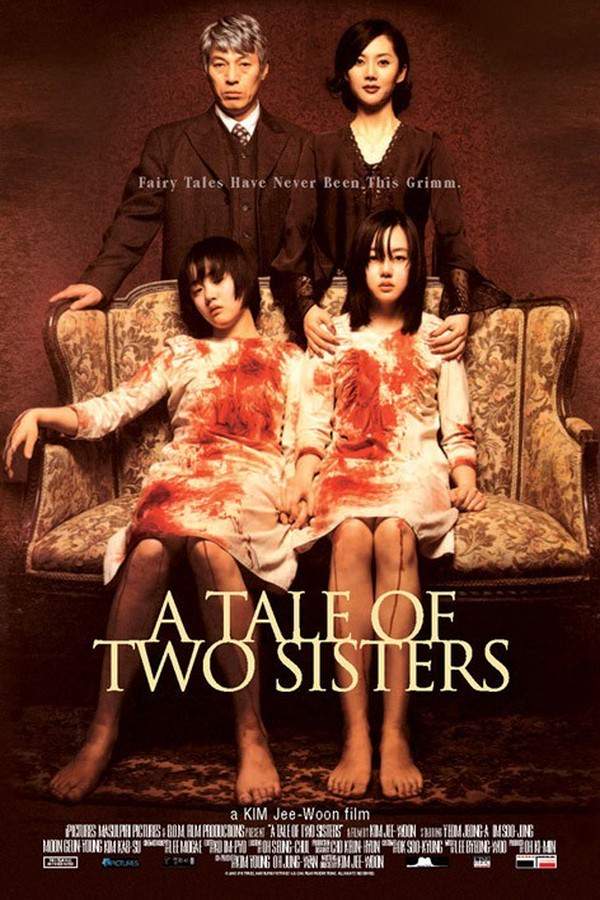
A Tale of Two Sisters (2004) movie poster

Plot Summary

A Tale of Two Sisters (2004) Plot Summary Explained

Release, runtime and language
2004 · 115 min · Korean
Loading streaming availability…
Directed by
Ji-woon Kim

After a painful separation, two sisters return home to their family’s isolated country house. There, they find themselves struggling to reconnect and confront unsettling truths about their father and his new wife. Strange and disturbing events begin to occur, blurring the lines between reality and illusion as the sisters grapple with a growing sense of dread and the possibility of a sinister presence within the house. They must uncover the source of the disturbing occurrences before they lose their grip on sanity.

On this page (6)
  1. 1 Where to watch
  2. 2 What happens: full plot
  3. 3 Plot questions answered
  4. 4 Movie threads
  5. 5 Movies like A Tale of Two Sisters
  6. 6 Every angle
Loading streaming availability…

Full plot summary · contains spoilers

What Happens in A Tale of Two Sisters: Full Plot Summary

The whole story of A Tale of Two Sisters (2004) explained, from the opening scene to the final frame: every key event, every twist and what it all adds up to. Read it as a quick recap before the sequel, to check a scene you missed, or to finally understand what really happened.

A teenage girl, Su-mi, currently undergoing treatment for shock and psychosis in a mental institution, is eventually brought back to her family's secluded country estate by her father, Moo-hyeon, and her younger sister, Su-yeon, whom she feels a strong protective instinct for. Upon arrival, the sisters experience a chilly reunion with their stepmother, Eun-joo, who seems to be in constant need of medication due to her mental health struggles. The relationship between Eun-joo and Moo-hyeon is also notably tense, characterized by an emotional distance and the absence of intimacy in their marriage.

Throughout their time together, Su-mi and Eun-joo engage in numerous verbal confrontations. Moo-hyeon remains indifferent to Su-mi's grievances and dismisses her requests to remove a wardrobe in Su-yeon's room, believing it will only upset her. One troubling night, Su-yeon is plagued by a nightmare involving the ghost of their deceased mother and seeks comfort in Su-mi's room. As Su-yeon finds solace, Su-mi too experiences a haunting vision while sharing the bed with her sister. The following day, a shocking discovery leads Su-mi to find family photos that reveal Eun-joo was once the in-home nurse for her terminally ill mother. Alarmed, she observes bruises on Su-yeon's arms, suspecting Eun-joo's involvement. However, Su-yeon remains uncommunicative, only managing to express her distress through tears when confronted, which deepens Su-mi's growing anger towards Eun-joo, who coldly refers to the marks as "retribution."

The family dynamic takes a further turn during a dinner visit from their uncle, Sun-kyu, and aunt, Mi-hee. In an unsettling moment, Mi-hee suffers a seizure, and upon regaining her composure, claims to have seen "a girl" beneath the kitchen sink during her ordeal. This conviction prompts Eun-joo to inspect the area, where a hair clip mysteriously appears, only for a ghostly presence to violently grasp her arm when she reaches for it.

Eun-joo’s rapport with her stepdaughters deteriorates rapidly after her pet bird is discovered dead and private photos are vandalized. Suspected of the vandalism, Eun-joo retaliates by locking Su-yeon in the wardrobe. Su-mi manages to free her sister and pleads with Moo-hyeon after he uncovers another deceased bird. However, Moo-hyeon drops a bombshell revelation, asserts that Su-yeon is dead, leading Su-mi into an emotional spiral as she insists her sister is by her side. The tension escalates when Eun-joo is seen dragging a bloodied sack through the house, which Su-mi fears contains Su-yeon. This culminates in a brutal altercation between Eun-joo and Su-mi, ultimately ending with Su-mi losing consciousness.

As the story unfolds, it becomes clear that only Su-mi and her father actually inhabit the house. Struggling with dissociative identity disorder, Su-mi harbors two identities: her own and a harsher persona reminiscent of Eun-joo. The sack turns out to hold a porcelain doll, and the revelations deepen, confirming that Su-yeon has been dead and that her presence was an illusion crafted by Su-mi’s troubled mind. With Eun-joo seeking to mend their fractured relationship, she promises visits while Su-mi's rejection is marked by a painful gesture, mirroring the injuries seen on Su-yeon. That night, Eun-joo is left haunted by the sounds emanating from Su-yeon’s former room, where the lost girl’s spirit emerges from the wardrobe and ultimately brings about Eun-joo’s demise. In the meantime, Su-mi finds a bittersweet peace as she smiles through tears, suggesting a resolution to her turmoil.

In a poignant flashback, the events leading to Su-mi's institutionalization surface. A young Moo-hyeon engages in an affair with Eun-joo, causing deep rifts within the family while their terminally ill mother is still alive. The sisters are distraught, and after a confrontation during a tense family dinner, their mother’s tragic end serves as the catalyst for all ensuing events. The scene unfolds with Su-yeon discovering their mother’s lifeless body in the wardrobe, an accident that seals the fates of everyone involved when the wardrobe collapses upon them amidst the chaos, witnessed by all. Even as Su-mi chases after the truth, the losses they suffer weave a tragic tapestry that locks them in cycles of pain, regret, and unresolved conflicts.

Last updated: November 15, 2024 at 15:39

Was this helpful?

Plot questions answered

A Tale of Two Sisters Plot Explained: Your Questions Answered

The questions people ask most about A Tale of Two Sisters (2004): what happens in the confusing scenes, why the characters do what they do, the twists, hidden details and what the ending means. Each answer contains spoilers.

Q1

Why does Su-mi believe Su-yeon is still alive when she isn't?

Su-mi suffers from dissociative identity disorder, which causes her to hallucinate Su-yeon's presence throughout the film. Her mind created this illusion as a coping mechanism to deal with the traumatic loss of her younger sister. The revelation comes when Su-mi discovers she has been talking to and interacting with someone who only exists in her imagination.

Foreshadowing: Early scenes show Su-yeon only appearing when Su-mi is present, while other characters never directly interact with her.

  • dissociative identity disorder
  • su-yeon death
  • hallucination
  • mental illness
Q2

How did Su-yeon actually die?

Su-yeon died in a tragic accident during a family confrontation. After discovering her mother hanging herself in the wardrobe, Su-yeon was crushed when the wardrobe collapsed onto her during the chaos. The accident was witnessed by the entire family, including young Su-mi, and this traumatic event became the catalyst for Su-mi's psychological breakdown.

Foreshadowing: The wardrobe in Su-yeon's room is repeatedly emphasized, and Su-mi pleads with her father to remove it.

  • su-yeon death
  • wardrobe accident
  • family trauma
  • mother suicide
Q3

Who is Eun-joo really? Is she real or Su-mi's imagination?

Eun-joo is Su-mi's alternate personality, not a real person. The 'stepmother' character is actually Su-mi's own harsher, more abusive persona manifesting as someone who mistreats her and her sister. This explains why only Su-mi experiences conflicts with Eun-joo while other family members like the aunt and uncle never interact with her directly.

Foreshadowing: Eun-joo only appears in scenes involving Su-mi, and her behavior mirrors Su-mi's own self-critical thoughts.

  • eun-joo identity
  • alternate personality
  • dissociative identity disorder
  • unreliable narrator
Q4

What happened to the sisters' mother?

The mother died by suicide. She hanged herself in the wardrobe of the family home after discovering her husband Moo-hyeon's affair with Eun-joo, their former in-home nurse. Her death occurred while the children were present, and Su-yeon was the one who discovered her body, which became a deeply traumatic moment that contributed to the family's undoing.

Foreshadowing: Su-yeon's nightmare features the ghost of their deceased mother, and later flashbacks reveal the affair.

  • mother death
  • suicide
  • affair
  • moo-hyeon eun-joo relationship
Q5

What was in the bloodied sack that Eun-joo was carrying?

The bloodied sack contained a porcelain doll, not Su-yeon as Su-mi feared. This moment represents Su-mi's paranoid delusions about her stepmother harming her sister. The entire confrontation was a manifestation of Su-mi's mental state, where she imagined threats to the sister who was already dead.

Foreshadowing: Earlier scenes show Su-mi becoming increasingly paranoid about Su-yeon's safety.

  • bloodied sack
  • doll
  • su-mi paranoia
  • delusion
Q6

Why did Mi-hee see a girl under the kitchen sink?

Mi-hee's seizure and vision of 'a girl' beneath the kitchen sink was a supernatural manifestation of Su-yeon's spirit. The hair clip that appears belongs to Su-yeon, indicating her ghost is present in the house. When Eun-joo (the alternate personality) investigates, she is attacked by the ghost, proving the spiritual layer exists separate from Su-mi's psychological delusions.

Foreshadowing: The ghost of Su-yeon is seeking vengeance for her death and the family's betrayal.

  • mi-hee seizure
  • ghost
  • girl under sink
  • supernatural
Q7

Why does Su-mi have bruises on her arm at the end?

The bruises on Su-mi's arm mirror the bruises that appeared on Su-yeon throughout the film, which were actually self-inflicted by Su-mi's alternate personality. At the end, when Su-mi rejects Eun-joo's attempt at reconciliation, she makes a cutting gesture on her own arm, indicating that Eun-joo was always Su-mi herself, and the 'abuse' Su-yeon suffered was actually Su-mi's self-harm.

Foreshadowing: The bruises on Su-yeon were dismissed by Eun-joo as 'retribution,' hinting they were self-inflicted.

  • bruises
  • self-harm
  • su-mi injury
  • alternate personality
Q8

What happens to Eun-joo at the end of the film?

Eun-joo is killed by Su-yeon's ghost. While Su-mi achieves a bitter peace, Eun-joo is confronted in Su-yeon's former room by the dead girl's spirit emerging from the wardrobe. The ghost strangles or attacks Eun-joo, resulting in her death. This represents Su-yeon's vengeance against the 'stepmother' figure who, in reality, was the manifestation of her sister's self-destructive personality.

Foreshadowing: The wardrobe has been the site of death twice, both the mother and Su-yeon died there.

  • eun-joo death
  • su-yeon ghost
  • vengeance
  • wardrobe
Q9

How did Moo-hyeon's affair lead to the tragedy?

Moo-hyeon's affair with Eun-joo while their mother was terminally ill created the psychological foundation for all subsequent tragedy. When the mother discovered the affair, she hanged herself. Su-yeon's death followed immediately after during the family's chaotic response. This trauma shattered Su-mi's mind, creating the dissociative identity disorder that drives the entire narrative.

Foreshadowing: The tense dinner scene early in the film hints at family secrets waiting to be revealed.

  • affair consequences
  • moo-hyeon betrayal
  • family destruction
  • psychological trauma
Q10

Who actually lives in the house with Su-mi?

Only Su-mi and her father Moo-hyeon actually live in the house. Su-yeon has been dead for years, and Eun-joo never existed as a separate person. The entire conflict with the stepmother took place entirely within Su-mi's mind, created by her dissociative identity disorder. The relatives who visit (Uncle Sun-kyu and Aunt Mi-hee) are the only other real people.

Foreshadowing: No other character ever directly speaks to or acknowledges Eun-joo aside from Su-mi.

  • real characters
  • hallucination
  • household members
  • unreliable narrator

Movie threads

More Movies Like A Tale of Two Sisters, by Mood & Story

Curated lists built around what makes A Tale of Two Sisters tick: the same mood, the same kind of story or the same emotional payoff. Each list explains why these movies belong together.

Slow burn psychological horror movies like A Tale of Two Sisters

Stories where quiet tension and psychological unease slowly suffocate the characters. If you liked the oppressive, slow-building tension of A Tale of Two Sisters, you'll find similar movies here. These psychological thrillers and horror films use a deliberate pace to explore trauma, fractured realities, and a deep, unsettling sense of dread.

  • slow burn
  • psychological
  • dread-filled
  • unsettling
  • oppressive
  • claustrophobic
  • Tone: dark, unsettling, melancholic
  • Pacing: slow burn, deliberate
Why these movies?

The story pattern: The narrative unfolds slowly, often through the distorted perception of an unreliable narrator. The central conflict is internal and psychological, with the plot gradually revealing a hidden trauma or truth that shatters the protagonist's understanding of reality, leading to a bleak or ambiguous resolution.

Why they belong together: These movies are grouped by their shared reliance on atmospheric tension over action, a focus on psychological breakdown, and a pacing that allows dread to accumulate naturally, creating a deeply immersive and unsettling viewing experience.

Movies about gothic family trauma like A Tale of Two Sisters

Haunted houses where the real ghosts are the secrets of a broken family. For viewers who enjoyed the gothic atmosphere and exploration of deep family trauma in A Tale of Two Sisters, this collection features similar movies where a haunted house setting reflects the psychological scars of its inhabitants, blurring lines between supernatural horror and real-life tragedy.

  • gothic
  • family secrets
  • haunted past
  • psychological
  • claustrophobic
  • tragic
  • Tone: dark, melancholic, bleak
  • Pacing: slow, atmospheric
Why these movies?

The story pattern: The narrative is set in an isolated house that acts as a physical manifestation of the family's unresolved grief and secrets. Characters are forced to confront a traumatic event from the past, which is often revealed through non-linear storytelling, hallucinations, or ghostly apparitions that may or may not be real.

Why they belong together: These films share a core focus on family trauma explored within a specific atmospheric and setting-based framework. The combination of a gothic or isolated location with themes of severe psychological distress and a complex, often tragic, narrative structure creates a distinct and cohesive vibe.

If you liked this

Movies Like A Tale of Two Sisters

Similar movies to A Tale of Two Sisters: the same genre, themes or kind of story. Each one comes with its own plot summary, timeline and ending explained.

Browse all movie summaries

Every angle

A Tale of Two Sisters (2004) Explained: Plot, Timeline & Characters

Everything about A Tale of Two Sisters in one place: what happens in the plot summary, the timeline in chronological order, the characters and meaning and a spoiler-free summary. What's After the Movie adds the cast, box office and post-credit scenes.

Coming soon on iOS and Android

The Plot Explained Movie Summary App

Plot summaries, endings explained and timelines on your phone. Catch up on any movie in minutes, save your favorites and never miss a twist again.

Be the first to know when we launch. Your email stays private, always.

Learn more about the app