Plot Explained Spoilers guaranteed!
Plot Explained

Browse by genre

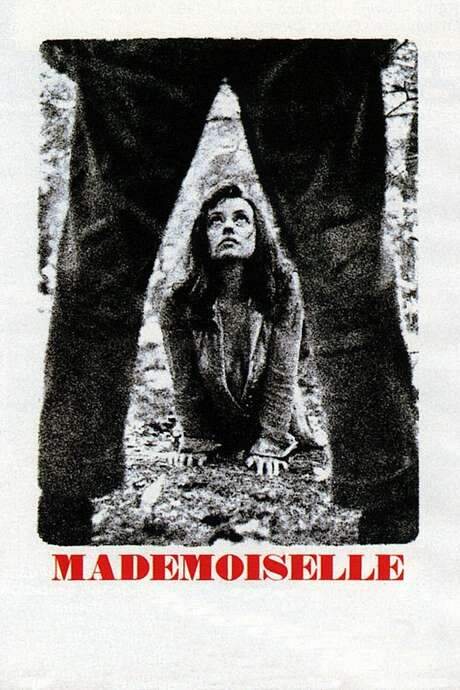
Mademoiselle (1966) movie poster

Plot Summary

Mademoiselle (1966) Plot Summary Explained

Release, runtime and language
1966 · 105 mins · English
Loading streaming availability…
Directed by
Tony Richardson
Starring
Jeanne Moreau, Pierre Collet, Charles Lavialle, Paul Barge, Annie Savarin, Umberto Orsini

A sexually repressed school teacher releases her pent up passions in a series of shocking crimes.

On this page (6)
  1. 1 Where to watch
  2. 2 What happens: full plot
  3. 3 Plot questions answered
  4. 4 Movie threads
  5. 5 Movies like Mademoiselle
  6. 6 Every angle
Loading streaming availability…

Full plot summary · contains spoilers

What Happens in Mademoiselle: Full Plot Summary

The whole story of Mademoiselle (1966) explained, from the opening scene to the final frame: every key event, every twist and what it all adds up to. Read it as a quick recap before the sequel, to check a scene you missed, or to finally understand what really happened.

In a quiet corner of rural France, a small farming village becomes the stage for jealousy, envy, and a creeping sense of danger when an itinerant Italian logger named Ettore Manni and his young son Bruno Keith Skinner sleep in a barn nearby. What starts as curiosity and wandering glances soon grows into something more troubling as Manou’s casual closeness with the village women stirs resentment among the men, who see his presence as a threat to their own standing and routines. The atmosphere in the village darkens as rumors spread about fires and a flood that seem to follow in his wake.

The real tension, however, centers on the local school teacher known as Mademoiselle Jeanne Moreau. Admired by many for her poised exterior and refined manners, she hides a private life that contrasts sharply with her public persona. Behind the doors of her apartment, she sports city footwear and chic clothing, and she dresses in more suggestive attire for occasions when she quietly toys with the village’s harmony. The fires and the flood are not accidents to her; they are instruments of a dangerous fixation aimed at Manou, a calculated attempt to draw his gaze and prove her pull over him.

In parallel, Manou’s son Bruno witnesses a disturbing double life. He sees the subtle kindness she sometimes shows in the classroom alongside sharper, sociopathic impulses that she unleashes in private. She initially favors him as a pupil, only to alternately demean and humiliate him with verbal abuse. Bruno gradually pieces together evidence that points to Mademoiselle, not his father, as the true orchestrator of the havoc—but as an outsider in the village, he keeps quiet.

The charade grows more ominous when livestock are poisoned, a devastating blow that the villagers misconstrue as the work of Manou. In a bid to restore order, a portion of the community takes matters into their own hands, seeking to punish the father before the truth can surface. Amid the escalating fear, Mademoiselle and Manou share a charged encounter in the forest, followed by a passionate night that leaves her returning to the village with the impression of someone who has been violated. The villagers press her for answers, and she confirms the worst with a single, chilling admission: "Yes." Then she slips back into her apartment, leaving the truth unopened to the rest of the community.

As the tension peaks, the men of the village finally find Manou and strike him down, ending his presence in a brutal act that shakes everyone to their core. Mademoiselle departs the village with her secrets intact for the moment, but Bruno—the boy who saw too much—knows the truth and spits at the woman as she disappears from sight. The story leaves a lingering sense of tragedy, showing how appearances can mask dangerous depths and how the cruelty of rumors and fear can drive a community to lethal extremes.
Last updated: October 05, 2025 at 11:31

Was this helpful?

Plot questions answered

Mademoiselle Plot Explained: Your Questions Answered

The questions people ask most about Mademoiselle (1966): what happens in the confusing scenes, why the characters do what they do, the twists, hidden details and what the ending means. Each answer contains spoilers.

Q1

Why does Mademoiselle set fire to the village?

Mademoiselle deliberately sets the first fire to draw Manou's attention. The flashback reveals that she ignites the blaze and then delights in watching Manou perform heroic rescues. This reveals her dangerous obsession with the Italian logger, she creates chaos specifically to demonstrate her pull over him and to insert herself into his heroic actions.

  • mademoiselle
  • fires
  • manou
  • obsession
  • attention
Q2

What does Mademoiselle mean when she says 'Yes' after returning from the forest?

When Mademoiselle returns from her secret meeting with Manou in the forest, she presents herself as someone who has been assaulted. The villagers ask her if Manou did this to her, and she answers 'Yes.' This single word confirms the villagers' worst suspicions about the outsider, hardening their resolve to punish him. The truth of what actually happened in the forest remains ambiguous, but her lie accelerates the tragedy.

  • yes
  • forest
  • manou
  • assault
  • villagers
Q3

Why doesn't Bruno tell the village that Mademoiselle is responsible?

Bruno, Manou's young son, gradually pieces together evidence that points to Mademoiselle as the true orchestrator of the catastrophes. However, he remains silent because he is an outsider in the village, a foreigner with his father, and fears he would not be believed or could face retaliation. His knowledge makes him a tragic witness to the injustice that follows.

  • bruno
  • outsider
  • truth
  • silence
  • witness
Q4

How does Mademoiselle poison the livestock?

Mademoiselle poisons the village livestock as part of her campaign to frame Manou and increase the community's hostility toward him. The poisoning devastates the farmers' livelihoods and further convinces the villagers that the outsider is intentionally destroying their world. She uses her knowledge of the village and access to private moments to carry out these acts undetected.

  • livestock
  • poisoning
  • frame
  • manou
  • sabotage
Q5

Was Manou actually responsible for the fires and flood?

No. Manou is completely innocent of the disasters that befall the village. The fires and flood are orchestrated by Mademoiselle, who uses them as instruments to manipulate the situation and draw Manou's attention. The villagers wrongly blame the outsider for events he had no part in, and this false accusation ultimately leads to his murder.

  • manou
  • innocent
  • fires
  • flood
  • blame
Q6

What triggers the villagers to murder Manou?

The villagers' decision to kill Manou is triggered by a combination of fear, jealousy, and Mademoiselle's false confirmation of assault. After she returns from the forest claiming he attacked her, the men of the village confront and hack him to death. The murder is a consequence of accumulated suspicion, manipulated appearances, and the community's readiness to blame the outsider for their troubles.

  • mob
  • murder
  • manou
  • villagers
  • violence
Q7

Why does Mademoiselle claim she was assaulted by Manou?

Mademoiselle lies about being assaulted to further demonize Manou in the eyes of the villagers and justify their violent actions against him. After their secret meeting in the forest, which was a consensual encounter, she returns with the appearance of a victim and confirms the villagers' suspicions with her 'Yes.' This manipulation seals Manou's fate and allows her to maintain her respected public facade while the community commits murder in her name.

  • lie
  • assault
  • manipulation
  • villagers
  • manou
Q8

How does Bruno discover Mademoiselle is the real culprit?

Bruno witnesses Mademoiselle's double life over time, her sociopathic impulses in private contrasted with her respected public persona as a teacher. He sees her orchestrating disturbances and collecting clues that point to her as the mastermind behind the catastrophes. As an outsider in the village, he keeps his knowledge to himself, knowing the adults would not believe a foreign child over the respected schoolteacher.

  • bruno
  • evidence
  • discovery
  • mademoiselle
  • culprit
Q9

What happens to Mademoiselle at the end of Mademoiselle?

Mademoiselle escapes consequences entirely. After the villagers murder Manou based on her false accusation, she simply departs the village with her crimes undisclosed. She walks away freely while Bruno, the boy who saw everything, watches and spits at her in a final act of defiance. The real culprit never faces justice, and the community moves on without acknowledging the truth.

  • mademoiselle
  • escape
  • justice
  • departure
  • bruno
Q10

Why is Mademoiselle obsessed with Manou?

Mademoiselle is sexually repressed and lives a double life, maintaining a refined public exterior as a respected schoolteacher while harboring dangerous private desires. Manou represents something outside her controlled world, and her obsession manifests as a fixation that drives her to commit increasingly extreme acts to attract his attention. Her repressed sexuality transforms into sociopathic behavior, using chaos and destruction as a means of insertion into his life.

  • obsession
  • manou
  • repression
  • sexuality
  • fixations
Q11

Why do the villagers blame Manou instead of investigating the truth?

The villagers blame Manou because he is an outsider, an Italian logger who arrives with his son and sleeps in their barn. His relationships with local women spark jealousy among the men, and his foreign status makes him an easy target for suspicion. Rather than investigate properly, the community succumbs to fear, rumors, and prejudice, allowing Mademoiselle's manipulation to direct their rage toward an innocent man.

  • villagers
  • prejudice
  • outsiders
  • blame
  • investigation
Q12

What is Mademoiselle's double life?

Mademoiselle maintains a stark contrast between her public and private personas. In public, she is admired as a poised, refined schoolteacher with impeccable manners. In private, she dons city footwear, sexier clothing, and plots destructive acts against the village to manipulate situations toward Manou. This duality allows her to commit crimes while maintaining an untouchable reputation in the community.

  • double life
  • facade
  • private
  • public
  • teacher

Movie threads

More Movies Like Mademoiselle, by Mood & Story

Curated lists built around what makes Mademoiselle tick: the same mood, the same kind of story or the same emotional payoff. Each list explains why these movies belong together.

Slow burn descent stories like Mademoiselle

Stories where repressed interior lives erupt in violent, shocking acts. Explore movies like Mademoiselle, where a character's inner turmoil leads to a shocking criminal spiral. This thread groups psychological dramas and thrillers with a slow pacing, heavy emotional weight, and a bleak tone, focusing on the tragic consequences of repressed desires breaking loose.

  • oppressive
  • repressed
  • psychological
  • chilling
  • suspenseful
  • troubling
  • Tone: dark, bleak, oppressive
  • Pacing: slow, deliberate, atmospheric
Why these movies?

The story pattern: This narrative pattern centers on a protagonist, often living a constrained or respectable life, who harbors a deep, unacknowledged darkness. The story unfolds slowly, charting the increasing instability of their psyche until a point of no return is crossed, leading to criminal acts or moral collapse that shatters their world.

Why they belong together: These films are grouped by their shared focus on psychological unraveling. They combine a slow, atmospheric pace with high emotional intensity and a dark, often bleak tone, creating a deeply unsettling experience centered on the dangers of suppressed humanity.

Claustrophobic village thrillers like Mademoiselle

Tales of prejudice and suspicion festering in an isolated community. Find movies similar to Mademoiselle that explore the dark side of small-town life. This collection features dramas and thrillers set in isolated communities where secrets, prejudice, and collective hysteria lead to devastating misunderstandings and crimes, all with a slow, tense pace.

  • claustrophobic
  • suspenseful
  • oppressive
  • lonely
  • troubling
  • melancholic
  • Tone: dark, tense, melancholic
  • Pacing: slow, steady build
Why these movies?

The story pattern: The narrative revolves around an isolated setting—a village, a small town, an institution—that functions as a pressure cooker. A disruptive element, often a crime or an outsider, exposes the community's ingrained biases and secrets. The story focuses on the collective response, which is typically irrational, cruel, and results in a miscarriage of justice or violence.

Why they belong together: These movies share a specific world-building element: the oppressive small community. They are united by a mood of claustrophobic dread, themes of xenophobia and scapegoating, and a tone that is dark and suspenseful, showing how groupthink can lead to dark outcomes.

If you liked this

Movies Like Mademoiselle

Similar movies to Mademoiselle: the same genre, themes or kind of story. Each one comes with its own plot summary, timeline and ending explained.

Browse all movie summaries

Every angle

Mademoiselle (1966) Explained: Plot, Timeline & Characters

Everything about Mademoiselle in one place: what happens in the plot summary, the timeline in chronological order, the characters and meaning and a spoiler-free summary. What's After the Movie adds the cast, box office and post-credit scenes.

Coming soon on iOS and Android

The Plot Explained Movie Summary App

Plot summaries, endings explained and timelines on your phone. Catch up on any movie in minutes, save your favorites and never miss a twist again.

Be the first to know when we launch. Your email stays private, always.

Learn more about the app