Plot Explained Spoilers guaranteed!
Plot Explained

Browse by genre

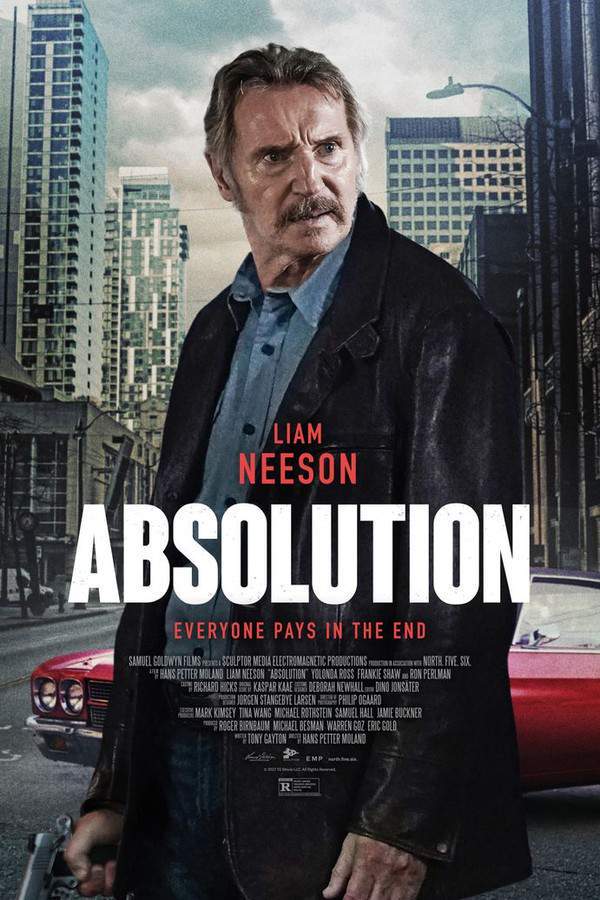
Absolution (1978) movie poster

Spoiler-Free Summary

Absolution (1978) Spoiler-Free Summary – What It's About

Release, runtime and language
1978 · 95 mins · English
Loading streaming availability…
Directed by
Anthony Page
Starring
Kevin Hart, Billy Connolly, David Bradley, Robin Soans, Hilary Mason, Richard Burton

A strict Catholic boarding school is ruled by the iron‑fisted Father Goddard. When a student confesses to murder, the dogmatic, deeply repressed priest’s faith is suddenly challenged, pulling him into a deadly psychological game that threatens to unravel his authoritarian control and his very sense of purpose.

On this page (7)
  1. 1 Where to watch
  2. 2 What it is about
  3. 3 Is it worth watching?
  4. 4 After you watch
  5. 5 Movie threads
  6. 6 Movies like Absolution
  7. 7 Every angle
Loading streaming availability…

Spoiler-free summary · safe to read

What Is Absolution About? (No Spoilers)

The plot of Absolution (1978) without spoilers: what it is about, who it follows and where it takes place, told without the twists or the ending. Enough to decide whether it is your next watch, not enough to ruin it.

In the remote countryside of England, a solemn Catholic boarding school stands as a fortress of tradition, its stone corridors echoing with hymns and the muted rustle of disciplined routine. The institution’s austere routines are enforced by an unyielding hierarchy that leaves little room for dissent, creating a pressure‑cooked environment where every whisper feels like a transgression. Within these walls, the very act of confession is both a solace and a weapon, a sacred rite that binds the community together while also holding the power to unravel it.

Father Goddard presides over the school with an iron fist, his authority rooted in doctrine and an unbending sense of order. He is a man whose faith is as rigid as the rules he enforces, and his presence looms over the boys like an unspoken verdict. Among the students, Benjie Stanfield navigates the strict regime with a quiet intensity, his curiosity often pushing him toward the fringes of accepted behavior. His companion, Arthur Dyson, is an outsider by choice, skittish yet observant, providing a counterpoint to Benjie’s restless drive. The arrival of a wandering motorcyclist, Blakey, adds an unpredictable element to the tightly controlled world, his mere presence stirring the latent tensions that the school’s walls have long tried to contain.

When a confession of murder slips into the sanctity of the confessional, Father Goddard’s doctrinal certainty is abruptly challenged. The revelation forces him into a psychological contest where the boundaries between sin and obedience blur, and his once‑unshakeable control begins to crack. The priest must grapple with the paradox of his vows—the seal of confession and the demand for moral accountability—while the boys, each bearing their own hidden motives, linger on the edge of revelation.

The film unfolds as a slow‑burning study of power, guilt, and the limits of forgiveness. Its atmosphere is thick with foreboding, the muted clang of chapel bells punctuating an ever‑tightening web of secrets. As the characters drift between authority and rebellion, the narrative invites viewers to ponder how deeply held beliefs can be both a shield and a cage when confronted with the darkness that lies just beneath the surface.

Last updated: December 04, 2025 at 18:00

Was this helpful?

What to expect

Is Absolution Worth Watching? What It Feels Like

Is it dark, sad, slow, intense or confusing? The mood of Absolution (1978) in a few tags, without a word about how it ends. Each tag opens a list of movies that feel the same.

After you watch

Seen Absolution? Now Read the Spoilers

Once you have watched Absolution (1978), come back for the full story: the plot summary with spoilers, the timeline in chronological order, the characters and meaning.

Movie threads

More Movies Like Absolution, by Mood & Story

Curated lists built around what makes Absolution tick: the same mood, the same kind of story or the same emotional payoff. Each list explains why these movies belong together.

Movies set in oppressive institutions like Absolution

Stories of characters trapped within rigid, morally corrupt systems of authority. If you liked the suffocating atmosphere of Absolution's boarding school, explore more movies like it. This list features stories set within rigid, closed systems—such as convents, military academies, or isolated communities—where authority is absolute and rebellion comes at a high psychological cost. These films share a similar feeling of claustrophobia and a deep exploration of power dynamics.

  • claustrophobic
  • authoritarian
  • unsettling
  • somber
  • psychological
  • morally complex
  • Tone: dark, oppressive, morally ambiguous
  • Pacing: slow, deliberate
Why these movies?

The story pattern: Narratives in this thread typically follow a character's awakening or downfall within a microcosm governed by strict, often hypocritical, rules. The central conflict arises from the collision between individual conscience and the demands of the system, frequently culminating in a confrontation that exposes the institution's inherent corruption.

Why they belong together: These movies are grouped together because they create a powerful, immersive sense of place defined by institutional power. They share a focus on the dynamics of control, the psychology of submission and rebellion, and an atmospheric tension born from being trapped within an unchangeable structure.

Movies about the collapse of authority like Absolution

Character studies where a rigid, controlling figure is psychologically dismantled. For viewers who appreciated the character arc in Absolution, this section collects movies like it that feature a similar narrative. These films follow a dogmatic authority figure—a priest, a teacher, a leader—whose worldview is shattered by a psychological game or a hidden truth, resulting in a bleak and heavy emotional journey.

  • psychological
  • unraveling
  • morally ambiguous
  • somber
  • tense
  • tragic
  • Tone: dark, psychological, bleak
  • Pacing: slow burn
Why these movies?

The story pattern: The narrative pattern involves a staunch, often hypocritical, authority figure who is pushed to their limits. Through a series of provocations, manipulations, or revelations, their carefully constructed persona cracks, leading them on a downward spiral where they confront the emptiness or corruption of their own dogma.

Why they belong together: These films share a specific character archetype and arc: the fall of a powerful, repressed individual. They are united by a dark tone, a slow-burn pacing that allows for deep psychological exploration, and a heavy emotional weight stemming from the protagonist's inevitable and tragic disintegration.

If you liked this

Movies Like Absolution

Similar movies to Absolution: the same genre, themes or kind of story. Each one comes with its own plot summary, timeline and ending explained.

Browse all movie summaries

Every angle

Absolution (1978) Explained: Plot, Timeline & Characters

Everything about Absolution in one place: what happens in the plot summary, the timeline in chronological order, the characters and meaning and a spoiler-free summary. What's After the Movie adds the cast, box office and post-credit scenes.

Coming soon on iOS and Android

The Plot Explained Movie Summary App

Plot summaries, endings explained and timelines on your phone. Catch up on any movie in minutes, save your favorites and never miss a twist again.

Be the first to know when we launch. Your email stays private, always.

Learn more about the app