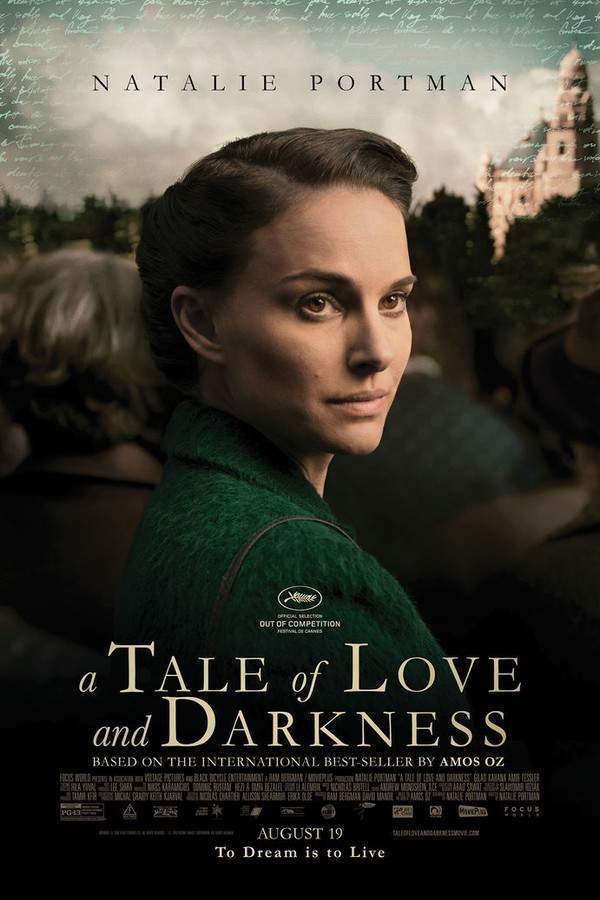
A Tale of Love and Darkness

A Tale of Love and Darkness

Year: 2016

Runtime: 95 min

Language: Hebrew

BiographyDramaHistory

During the early years of Israel, a young Amos Oz experiences a formative period marked by personal struggles and national upheaval. The film explores his coming-of-age through his complex relationship with his mother, portrayed by Natalie Portman. As Amos finds his voice as a writer, the boundaries between reality and imagination become blurred, forcing him to confront the challenges of reconciling his individual experiences with the broader historical context.

Where to Watch A Tale of Love and Darkness?

Find where to stream, rent, or buy A Tale of Love and Darkness (2016) in the US with current JustWatch availability, up-to-date pricing, and platform listings for subscription, rental, and digital purchase options.

Warning: spoilers below!

Haven’t seen A Tale of Love and Darkness yet? This summary contains major spoilers. Bookmark the page, watch the movie, and come back for the full breakdown. If you're ready, scroll on and relive the story!

Timeline – A Tale of Love and Darkness (2016)

Trace every key event in A Tale of Love and Darkness (2016) with our detailed, chronological timeline. Perfect for unpacking nonlinear stories, spotting hidden connections, and understanding how each scene builds toward the film’s climax. Whether you're revisiting or decoding for the first time, this timeline gives you the full picture.

1

Amos's Early Childhood

Amos recalls his early childhood spent in Jerusalem during the British Mandate of Palestine. He shares a particularly close bond with his mother, Fania, who often recounts stories from her past, many filled with sorrow and violence.

Jerusalem
2

Immigrant Life in Jerusalem

Amos's Ashkenazi Jewish parents navigate the challenges of life in a new country, far from Fania's family in Tel Aviv. The harsh desert landscape poses numerous difficulties, and communication with relatives is often sparse.

Jerusalem
3

Injury Incident

Amos is entrusted by his parents to a childless couple who introduce him to a Palestinian Arab friend. In a moment of playfulness, he accidentally injures the Arab boy on a swing, leading to panic and a hurried call from his father to ensure the boy receives medical care.

4

UN General Assembly Resolution 181

On November 29, 1947, Amos and his family gather with neighbors to hear the broadcast announcing the UN's proposal for the partition of Mandatory Palestine. The news brings joy to his parents, particularly as Arieh shares stories of the anti-Semitic violence faced by his own family in Europe.

November 29, 1947
5

Civil War Erupts

Following the UN announcement, civil war breaks out as tensions rise between Jews and Arabs. Arieh enlists in the fight, leaving Amos and the other children to support the effort by collecting materials for the war.

6

Tragedy Strikes

The conflict takes a personal toll when one of Fania's friends is killed by a Palestinian sniper. This event heightens the fear and sense of loss within Amos's family and their community during a time of strife.

7

Fania's Struggles

In the aftermath of the war, Fania falls into a deep depression marked by insomnia and a loss of appetite. Both she and Arieh struggle to cope with their shared grief, which puts immense pressure on their family dynamics.

8

Heartbreaking Decision

Despite attempts at finding relief through medication, Fania's condition worsens. In 1952, she tragically chooses to end her life through an overdose, reflecting the pain that had overwhelmed her throughout the years.

1952
9

Amos on the Kibbutz

In the years that follow, Amos finds purpose on a kibbutz, working to fulfill his mother's dream of transforming the desert into a thriving land. This experience shapes his character, yet he grapples with his complex identity as an intellectual.

Kibbutz
10

Teenage Reflections

As a teenager, Amos visits his father and shares stories about his new life on the kibbutz. He acknowledges his efforts to become more robust, but admits that he still feels pale and weak due to his intellectual inclination.

11

Writing Memoirs

Years later, an elderly Amos Oz begins to pen his memoirs, capturing his life's experiences and memories. He starts this journey with a poignant invocation of the word 'Mother,' signifying her lasting impact on his life.

Last updated: November 09, 2024 at 11:28

Was this helpful?

A Tale of Love and Darkness (2016) Timeline Questions Answered – Chronology FAQ

Find frequently asked questions about the A Tale of Love and Darkness (2016) timeline, including chronological order, nonlinear jumps, cause-and-effect links, and scene sequence clarifications. This timeline FAQ helps explain when key events happen, how moments connect, and why the story unfolds in that specific order.

Q1

Why did Fania commit suicide

A.

Fania fell into deep depression after the civil war, suffering from insomnia and loss of appetite. Despite attempts with anti-depressants, her condition continued to worsen. In 1952, she chose to end her life through an overdose. As Amos reflects in the film, she felt so much pain that she came to see death as a lover she longed to unite with. The accumulated trauma of the war, the loss of her friend to a sniper, and her underlying struggles proved overwhelming.

Earlier scenes show Fania often recounting tales from her youth laced with sorrow and violence, hinting at her melancholic nature.

faniasuicidedepressionmother1952
Q2

What caused Fania's depression after the war

A.

Fania's depression deepened following the 1948 Arab-Israeli War. While the Jews ultimately won, the conflict took a severe personal toll on her when one of her friends was killed by a Palestinian sniper. This tragedy, combined with the general atmosphere of fear and loss during the war years, left her unable to recover. Her insomnia and loss of appetite worsened despite medical intervention.

The film shows the increasing tension and violence in Jerusalem following the UN partition announcement, with Fania's friend becoming a direct victim.

faniadepressionwarsnipertrauma
Q3

Why did Amos move to the kibbutz after his mother's death

A.

After Fania's suicide in 1952, Amos found purpose by joining a kibbutz. He worked to transform the barren desert into a thriving landscape, which fulfilled his mother's dream of seeing the land bloom. This move represented both an escape from his painful memories and an attempt to honor her vision for the new Jewish homeland.

Earlier scenes show Fania telling stories about her youth and dreams for the future, establishing her hope for the desert to become green and productive.

kibbutzmotherdesertdreamamos
Q4

What happened on November 29, 1947

A.

On November 29, 1947, the United Nations General Assembly passed Resolution 181, proposing the partition of Mandatory Palestine into Jewish and Arab states. Amos and his family gathered with neighbors to listen to the radio announcement. His parents celebrated this news, seeing it as the fulfillment of their hope for a Jewish homeland where they would no longer face anti-Semitic persecution.

Earlier scenes establish the family's immigrant status and their struggles in Jerusalem, making the partition news a culmination of their hopes.

unpartition1947resolutionjewish homeland
Q5

Why did civil war erupt after the UN announcement

A.

Civil war broke out following the UN partition proposal in November 1947, as tensions escalated violently between Arabs and Jews in Mandatory Palestine. The competing claims to the land and the prospect of partition fueled existing ethnic and political tensions, leading to open warfare across the region. Arieh, Amos's father, enlisted to fight, leaving the family to cope with the escalating violence.

The celebration over the UN resolution was immediately followed by ominous signs of rising tension between Arab and Jewish communities.

civil wararabjewpartitionviolence
Q6

What happened when Amos injured the Arab boy on the swing

A.

As a young child, Amos was entrusted to a childless couple who took him to meet a Palestinian Arab friend. During play on the swing, he accidentally injured the Arab boy. Panic ensued, and his father Arieh urgently contacted the injured boy's father to assure him all medical expenses would be covered. This incident highlighted the complex and tense interactions between Jewish and Arab communities during the British Mandate period.

The parents instructed Amos to remain quiet to avoid offending their hosts, establishing the delicate nature of these relationships.

arab boyswinginjurytensionchildhood
Q7

Why does Amos become a writer

A.

Amos's journey toward becoming a writer emerges from his deeply introspective nature and his complex relationship with his mother. As he reflects on his childhood, his mother's stories, and his own experiences during Israel's formative years, writing becomes his way of processing trauma, honoring his mother's memory, and making sense of the blurred boundaries between reality and imagination that characterized his coming-of-age.

The film establishes early on that Amos is intellectually inclined, often feeling pale and weak compared to the more rugged kibbutz life, yet finding strength in his intellectual pursuits.

writermemoirsmotherintellectualstorytelling
Q8

What does the ending mean when Amos writes 'Mother'

A.

The ending shows elderly Amos Oz beginning to write his memoirs with the word 'Mother,' signifying the enduring impact of Fania on his life and work. This invocation represents his attempt to process his mother's suicide and her lasting influence on his identity as a writer. The bittersweet resolution indicates that while he found purpose through his writing and the kibbutz life, his unresolved grief and memory of her remain central to his existence.

Throughout the film, Fania's stories and her struggles dominate Amos's childhood memories, making her the primary shaping force in his life.

endingmemoirsmothermemoryresolution
Q9

Why was Amos so close to his mother Fania

A.

As an only child, Amos shared a particularly close bond with his mother. Fania often recounted tales from her own youth, many filled with sorrow and violence, creating an intimate connection through storytelling. This closeness was intensified by the challenges of immigrant life in Jerusalem, where Amos served as her primary emotional companion as she struggled with depression and isolation far from her family in Tel Aviv.

The film establishes their relationship through scenes of Fania sharing her stories with Amos, establishing their unique bond.

faniamotherclose bondchildhoodstories
Q10

Why did Amos feel pale and weak as a teenager on the kibbutz

A.

As a teenager visiting his father, Amos admitted that despite his efforts to become healthy and rugged on the kibbutz, his intellectual nature still prevailed, leaving him feeling pale and weak. This reflects his ongoing struggle with identity, physically unable to fully embrace the sabra pioneer ideal while being intellectually driven toward writing and reflection, a tension that would define his future career.

Earlier scenes show Amos as a contemplative child who prefers listening to his mother's stories over physical activities.

amosteenagerintellectualkibbutzidentity
Mobile App Preview

Coming soon on iOS and Android

The Plot Explained Mobile App

From blockbusters to hidden gems - dive into movie stories anytime, anywhere. Save your favorites, discover plots faster, and never miss a twist again.

Sign up to be the first to know when we launch. Your email stays private, always.

Explore Movie Threads

Discover curated groups of movies connected by mood, themes, and story style. Browse collections built around emotion, atmosphere, and narrative focus to easily find films that match what you feel like watching right now.

Bittersweet bildungsromans shaped by historical trauma like A Tale of Love and Darkness

Personal stories of growing up overshadowed by national conflict and loss.Explore movies like A Tale of Love and Darkness that blend personal coming-of-age stories with the weight of history. This collection features similar character-driven dramas where a young person's journey is profoundly shaped by national conflict, grief, and the bittersweet process of finding oneself amidst turmoil.

melancholichistoricalsomberreflectivelyricalgrievingoppressive

Narrative Summary

The narrative follows a linear or reflective coming-of-age arc, where a protagonist's personal development is directly challenged and influenced by external historical forces. The climax often involves a confrontation with a profound loss or a moment of historical significance that forces a premature maturation, leading to a resolution tinged with both the wisdom gained and the innocence lost.

Why These Movies?

These films are grouped by their unique blend of intimate character study and epic historical context. They share a melancholic tone, a heavy emotional weight centered on grief and loss, and a bittersweet conclusion where personal growth is achieved at a significant cost.
Somnambulant memoirs of maternal grief like A Tale of Love and Darkness

Lyrical, introspective films where a son's memory is haunted by his mother's depression.Discover movies similar to A Tale of Love and Darkness that delve into the complex bond between a mother and son, marked by depression and loss. These lyrical dramas share a dreamlike quality, heavy emotional weight, and a slow, reflective pace, perfect for viewers seeking profound, melancholy character studies.

dreamlikeintrospectivesomberlyricalgrievingoppressivemelancholicreflective

Narrative Summary

The narrative is less about external plot and more about an internal, psychological journey. It unfolds as a series of memories and impressions, often non-linear, as the protagonist (usually a writer or artist) attempts to reconcile with the trauma of his mother's life and death. The central conflict is an emotional one, wrestling with inherited sadness and the struggle to articulate profound loss.

Why These Movies?

This group is defined by a specific melancholic mood, a slow, almost dreamlike pacing, and a core thematic focus on the psychological effects of maternal grief. They share a heavy emotional weight, an introspective point of view, and a style that blends realism with lyrical, memory-like sequences.

Unlock the Full Story of A Tale of Love and Darkness

Don't stop at just watching - explore A Tale of Love and Darkness in full detail. From the complete plot summary and scene-by-scene timeline to character breakdowns, thematic analysis, and a deep dive into the ending - every page helps you truly understand what A Tale of Love and Darkness is all about. Plus, discover what's next after the movie.

A Tale of Love and Darkness Summary

Read a complete plot summary of A Tale of Love and Darkness, including all key story points, character arcs, and turning points. This in-depth recap is ideal for understanding the narrative structure or reviewing what happened in the movie.

A Tale of Love and Darkness Summary

Characters, Settings & Themes in A Tale of Love and Darkness

Discover the characters, locations, and core themes that shape A Tale of Love and Darkness. Get insights into symbolic elements, setting significance, and deeper narrative meaning - ideal for thematic analysis and movie breakdowns.

Characters, Settings & Themes in A Tale of Love and Darkness

A Tale of Love and Darkness Spoiler-Free Summary

Get a quick, spoiler-free overview of A Tale of Love and Darkness that covers the main plot points and key details without revealing any major twists or spoilers. Perfect for those who want to know what to expect before diving in.

A Tale of Love and Darkness Spoiler-Free Summary

More About A Tale of Love and Darkness

Visit What's After the Movie to explore more about A Tale of Love and Darkness: box office results, cast and crew info, production details, post-credit scenes, and external links - all in one place for movie fans and researchers.

More About A Tale of Love and Darkness

Similar Movies to A Tale of Love and Darkness

Discover movies like A Tale of Love and Darkness that share similar genres, themes, and storytelling elements. Whether you’re drawn to the atmosphere, character arcs, or plot structure, these curated recommendations will help you explore more films you’ll love.