Amrum

Amrum

JustWatch#1,4384

Year: 2026

Runtime: 1 h 33 m

Language: german

Director: Fatih Akin

Echo Score: 71
DramaHistoryWar

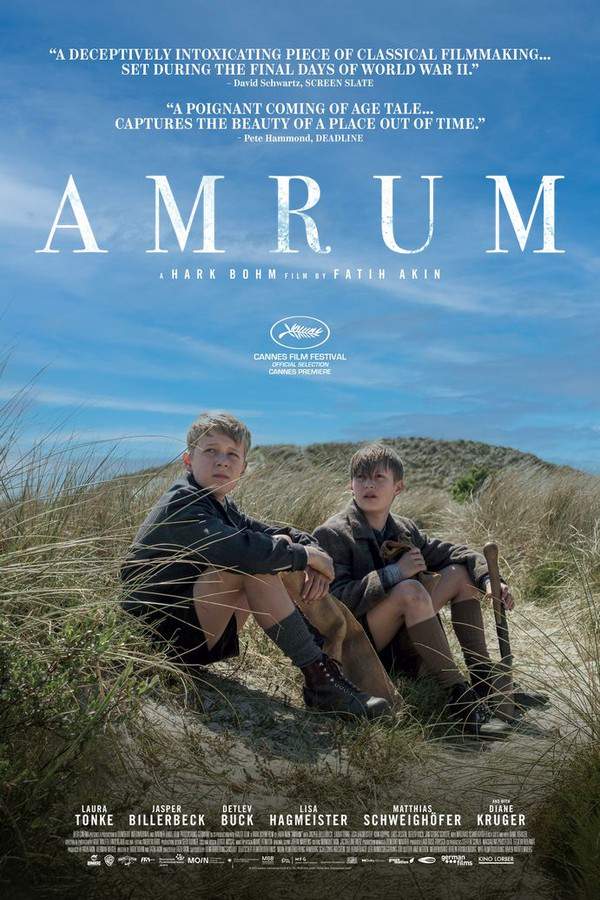
Set in the spring of 1945 on the German North Sea island of Amrum, 12‑year‑old Nanning spends his days tending the farm and his evenings fishing. Though the hardships of the time linger, the windswept isle feels almost idyllic. When farmer Tessa (Diane Kruger) tells him the war will soon end, the innocent boy—unaware of the larger political stakes—is buoyed by the promise of peace.

Where to Watch Amrum?

Find where to stream, rent, or buy Amrum (2026) in the US with current JustWatch availability, up-to-date pricing, and platform listings for subscription, rental, and digital purchase options.

Warning: spoilers below!

Haven’t seen Amrum yet? This summary contains major spoilers. Bookmark the page, watch the movie, and come back for the full breakdown. If you're ready, scroll on and relive the story!

Amrum (2026) – Full Plot Summary & Ending Explained

Read the complete plot breakdown of Amrum (2026), including all key story events, major twists, and the ending explained in detail. Discover what really happened, and what it all means.

In the final weeks of World War II, a small village on the island of Amrum off Germany’s North Sea coast becomes the backdrop for a coming‑of‑age story. Twelve-year-old Nanning Bohm, Jasper Billerbeck, the eldest child in a family marked by conflict, toils in the potato fields and gathers driftwood to help feed his mother, who is pregnant and deeply devoted to the Nazi cause. They had fled bombed‑out Hamburg to the island, seeking safety among neighbors who secretly listen to prohibited jazz on the radio. The father, an SS‑Obersturmbannführer, is away at war, while the mother struggles to keep the household together as fear, scarcity, and a spreading gloom press in.

As the war winds down, Nanning’s mother sinks into a stubborn depression and refuses to eat. He tries to soothe her cravings for white bread with butter and honey, a luxury made scarce by the island’s shortages, trading what little they have in a tense barter economy to obtain the essentials. The boy begins to learn the rhythms of island life: the people, the Frisian language spoken by locals, and the fragile networks that keep a community alive when supplies are thin and fear is thick in the air.

Through his daily tasks—helping with seal hunting, gutting a rabbit, and navigating the rough edges of frontier life—Nanning brushes against danger and the ever‑present shadow of war. He discovers unsettling truths about his family’s past: his uncle Theo, who gave him a whaling knife at birth, was forced to stay in America because of the Nazis, and Ruth, Theo’s fiancée, was murdered. Theo sometimes visits Nanning in dreams, confronting him with a difficult message: > “You are not to blame, but you are still involved.”

The island’s landscape becomes a living classroom where guilt, memory, and responsibility collide. Nanning is the elder child who bears heavy questions about the Nazi era and how a family’s choices ripple outward, shaping the future of the children who inherit the aftermath. He is joined by his aunt Ena, Lisa Hagmeister, and two younger siblings in their flight from a bombed city, seeking shelter and a sense of normalcy on the coast. Yet the calm of Amrum remains fragile, cracked by scarcity, whispered histories, and the constant presence of war’s lingering echoes.

As the seasons turn, Nanning grows more skilled at reading people and negotiating the world around him. He learns to read between the lines of kindness and cruelty in the island’s inhabitants, to listen not only with his ears but with his heart, and to hold fast to moments of ordinary life—sharing bread, tending a fire, and dreaming of a future where the past no longer defines the present. The story unfolds with quiet conviction, tracing a boy’s resilient spirit as he navigates a landscape where love, loss, and moral complexity intertwine.

In the end, the film leaves us with a tempered portrait of growth under pressure: a young boy who cannot escape the shadows of his parents’ past, yet who finds his own path forward by staying attentive to the people around him, the language they speak, and the small, stubborn acts of care that sustain a family in crisis.
Last updated: April 17, 2026 at 20:05

Was this helpful?

Amrum (2026) Plot Questions Answered – Summary FAQ

Explore frequently asked questions about Amrum (2026) with spoiler-rich answers covering the full plot summary, major story beats, character motivations, hidden details, and ending meaning. This movie summary FAQ helps explain confusing scenes, plot twists, and narrative decisions in clear, searchable detail.

Q1

Why does Nanning's mother fall into depression and refuse to eat?

A.

Nanning's mother sinks into depression after two traumatic events converge: the birth of her daughter and Adolf Hitler's death. As a staunch Nazi, Hitler's defeat represents the collapse of her ideological worldview. The combination of postpartum emotional vulnerability and the political defeat triggers her refusal to eat, leaving 12-year-old Nanning to somehow find the scarce white bread with butter and honey she craves.

Earlier scenes show her rigid Nazi loyalty and the family's isolation, hinting at how deeply the regime's fall would affect her.

nanning mother depressionhitler deathww2 endingpsychological breakdown
Q2

What happened to Nanning's uncle Theo?

A.

Theo is Nanning's uncle who was forced to stay in America because the Nazis forbade his return to Germany. He had given Nanning a whaling knife at birth as a family heirloom. Theo reveals in a dream that Nazis murdered his fiancée Ruth, linking the family's history of persecution to the regime's crimes.

The whaling knife appears early in the film as a mysterious family artifact, suggesting a deeper backstory.

uncle theoamericawhaling kniferuth murder
Q3

What does Theo mean when he tells Nanning "You are not to blame, but you are still involved"?

A.

Theo's message distinguishes between personal guilt and inherited responsibility. As a child, Nanning bears no blame for his parents' Nazi allegiance and crimes committed in his name. However, he cannot escape the legacy, the family name, the questions from others, and the psychological weight of complicity. He is involved through blood and history, not through personal choice.

This dream confrontation follows Nanning's growing awareness of his father's SS role and the whispers in the village.

inherited guiltfamily legacypersonal responsibilityNazi past
Q4

Why is white bread with butter and honey so important to Nanning's mother?

A.

White bread with butter and honey represents an impossible luxury during wartime scarcity on Amrum. Nanning's mother craves it obsessively while refusing to eat anything else, and Nanning spends much of the film bartering to find these ingredients. The quest symbolizes his desperate attempt to nurture his mother back to health and maintain family cohesion despite the collapse of the world she believed in.

The film establishes severe island shortages early, making every barter transaction a struggle.

white breadbutterhoneyscarcitybarterwartime shortage
Q5

Why did Nanning's family flee Hamburg?

A.

Nanning's family fled bombed-out Hamburg for the relative safety of Amrum island. The city suffered devastating Allied bombing campaigns, forcing civilians to evacuate. As the eldest child, Nanning must now work in potato fields and gather driftwood to help his pregnant mother feed the family.

The timeline establishes the family's displacement as the opening event that shapes Nanning's new life.

hamburg bombingevacuationrefugeefamily displacement
Q6

What is the significance of the whaling knife?

A.

The whaling knife was given to Nanning by his uncle Theo at birth, connecting the boy to a family history that spans continents. Theo was trapped in America by Nazi restrictions, and the knife serves as a physical link between Nanning and a relative who represents resistance to the regime rather than participation in it.

The knife appears early as a mysterious possession, explained only later through Theo's backstory.

whaling knifeuncle theofamily heirloominheritance
Q7

Who was Ruth and why is her death significant?

A.

Ruth was the fiancée of Nanning's uncle Theo. She was murdered by the Nazis, likely as part of the regime's persecution of those who opposed it or who were deemed undesirable. Her death crystallizes the personal cost of Nazi ideology on Nanning's own family, transforming abstract historical events into intimate tragedy.

Theo's dream confrontation introduces Ruth's murder as a revelation that deepens Nanning's understanding of his family's pain.

ruththeo fiancéenazi murderpersecutionfamily tragedy
Q8

Why do the villagers secretly listen to jazz despite it being banned?

A.

The villagers listen to proscribed jazz on the radio as an act of quiet defiance against the Nazi regime. Jazz was considered 'degenerate' music and was forbidden. By secretly listening, the islanders assert their humanity and resistance, however small, against the cultural oppression of the regime they outwardly support or tolerate.

This detail appears early, establishing the community's complex relationship with Nazi rule.

jazz musicbanned radioresistancecultural defianceww2
Q9

How does Nanning deal with his family's Nazi involvement?

A.

Nanning grapples with the weight of his father's SS role and his mother's steadfast Nazi loyalty through his daily labor and his dream encounter with uncle Theo. Theo's message, that Nanning bears no guilt but cannot escape involvement, offers him a framework for processing inherited history without being crushed by it.

Nanning's increasing awareness throughout the film builds toward the dream confrontation that provides emotional resolution.

nazi familyfather ssprocessing guiltemotional burdencoming of age
Q10

Why does Nanning work so hard to provide for his family?

A.

As the eldest child in a family where his mother is depressed and unable to function, Nanning assumes adult responsibilities. He works in potato fields, gathers driftwood for firewood, and barter with islanders to find food, especially the white bread his mother craves. His labor is an act of love, duty, and survival.

The film opens with Nanning already hard at work, establishing his role as the family's backbone.

eldest childfamily responsibilitysurvivallaborhardship
Q11

What happens to Nanning and his family after the war ends?

A.

The film ends with Nanning recognizing the weight of history on his life while maintaining his innocence. His mother remains depressed, his father is absent or dead, and the family faces an uncertain future on Amrum. Nanning's coming of age is bittersweet, he gains awareness of his family's complicity but must now carry that knowledge forward.

The closing scenes show Nanning's quiet resilience as he continues caring for his family despite understanding their dark history.

war endingfamily futurecoming of agebittersweet endingamrum island
Mobile App Preview

Coming soon on iOS and Android

The Plot Explained Mobile App

From blockbusters to hidden gems - dive into movie stories anytime, anywhere. Save your favorites, discover plots faster, and never miss a twist again.

Sign up to be the first to know when we launch. Your email stays private, always.

Explore Movie Threads

Discover curated groups of movies connected by mood, themes, and story style. Browse collections built around emotion, atmosphere, and narrative focus to easily find films that match what you feel like watching right now.

War through a child's eyes like in Amrum

Young protagonists confronting the harsh truths of conflict and adult complicity.Discover movies like Amrum that explore World War II and other conflicts through the perspective of children. These similar coming-of-age stories capture the loss of innocence and emotional weight of wartime survival with melancholic tone and heavy themes.

sombernostalgicgrievingcontemplativeatmosphericreflectiveisolated

Narrative Summary

These narratives follow young protagonists who initially experience war as a distant reality, only to gradually confront its brutal truths. The journey typically involves uncovering family secrets, witnessing adult failures, and ultimately losing their childhood innocence while gaining painful awareness of the world's complexities.

Why These Movies?

These films share a focus on childhood perspective during wartime, melancholic tone, heavy emotional weight, and themes of innocence lost. They use slow pacing to emphasize the psychological impact of war rather than action sequences.

Slow melancholic dramas like Amrum

Quiet, contemplative films where atmosphere carries profound emotional depth.Find movies similar to Amrum with slow pacing, atmospheric settings, and heavy emotional weight. These melancholic dramas feature contemplative storytelling and bittersweet endings that linger long after viewing.

atmosphericcontemplativemelancholicsomberreflectiveisolatednostalgicgrieving

Narrative Summary

These films prioritize mood and atmosphere over plot, using slow pacing to immerse viewers in the characters' internal worlds. The narratives often unfold in isolated settings that mirror the characters' emotional states, with tension building through subtle interactions and unspoken truths rather than overt conflict.

Why These Movies?

They share a distinctive combination of slow pacing, melancholic tone, heavy emotional weight, and atmospheric storytelling. The films create a similar viewing experience through contemplative rhythm and profound emotional resonance.

Unlock the Full Story of Amrum

Don't stop at just watching - explore Amrum in full detail. From the complete plot summary and scene-by-scene timeline to character breakdowns, thematic analysis, and a deep dive into the ending - every page helps you truly understand what Amrum is all about. Plus, discover what's next after the movie.

Amrum Timeline

Track the full timeline of Amrum with every major event arranged chronologically. Perfect for decoding non-linear storytelling, flashbacks, or parallel narratives with a clear scene-by-scene breakdown.

Amrum Timeline

Characters, Settings & Themes in Amrum

Discover the characters, locations, and core themes that shape Amrum. Get insights into symbolic elements, setting significance, and deeper narrative meaning - ideal for thematic analysis and movie breakdowns.

Characters, Settings & Themes in Amrum

Amrum Spoiler-Free Summary

Get a quick, spoiler-free overview of Amrum that covers the main plot points and key details without revealing any major twists or spoilers. Perfect for those who want to know what to expect before diving in.

Amrum Spoiler-Free Summary

More About Amrum

Visit What's After the Movie to explore more about Amrum: box office results, cast and crew info, production details, post-credit scenes, and external links - all in one place for movie fans and researchers.

More About Amrum