Plot Explained Spoilers guaranteed!
Plot Explained

Browse by genre

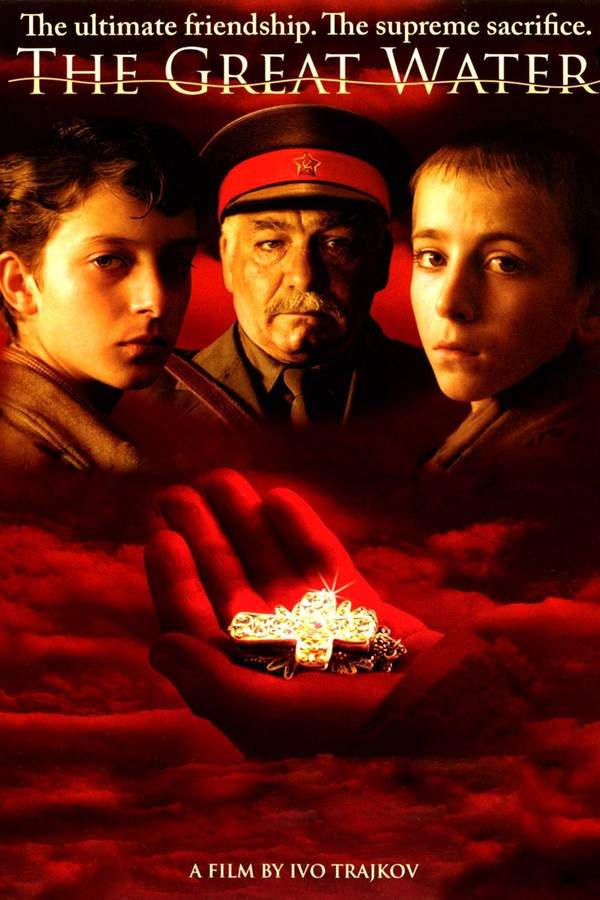
The Great Water (2005) movie poster

Plot Summary

The Great Water (2005) Plot Summary Explained

Release, runtime and language
2005 · 93 min · Macedonian
Loading streaming availability…
Directed by
Ivo Trajkov

As an elderly war hero nears his end, deeply buried memories of his youth surface, revealing a poignant story of friendship and loss. Flashbacks transport viewers to his formative years, where the bonds of loyalty are tested by betrayal and the consequences of past actions linger. The film explores themes of resilience and the enduring impact of childhood experiences.

On this page (5)
  1. 1 Where to watch
  2. 2 What happens: full plot
  3. 3 Plot questions answered
  4. 4 Movie threads
  5. 5 Every angle
Loading streaming availability…

Full plot summary · contains spoilers

What Happens in The Great Water: Full Plot Summary

The whole story of The Great Water (2005) explained, from the opening scene to the final frame: every key event, every twist and what it all adds up to. Read it as a quick recap before the sequel, to check a scene you missed, or to finally understand what really happened.

Inspired by Živko Čingo's cherished children's book from the 1970s, this emotional film explores the tumultuous aftermath of the war in Macedonia. The story opens in contemporary times, where Meto Jovanovski (Meto Jovanovski), a seasoned politician grappling with a critical heart condition, is taken to the hospital for urgent medical care. As he begins to recover, Jovanovski's mind drifts to his childhood during the year 1945, a period rife with uncertainty and change.

As these vivid memories come flooding back, we find ourselves in an orphanage where children are being shaped into loyal supporters of the nascent regime. Jovanovski reflects on the challenges he endured as a boy, forced to conform to a society that prioritized obedience over individuality. In the midst of this stark environment, he forms an unexpected friendship with Isak, a charming and radiant child who ignites a flicker of hope amid the somber backdrop.

As the tale progresses, underlying tensions begin to surface, highlighting the stark contrast between the Communist regime's harsh dismissal of faith and the profound human need for spiritual connection. The narrative grapples with the complex legacies left by leaders like Stalin and Tito, alongside the difficult adjustment to a new political order intent on erasing national pride. Ultimately, it poignantly depicts the tragic metamorphosis of children into mere instruments of the state, robbed of their unique identities and the innocent pleasures of childhood camaraderie.

Last updated: November 17, 2024 at 22:31

Was this helpful?

Plot questions answered

The Great Water Plot Explained: Your Questions Answered

The questions people ask most about The Great Water (2005): what happens in the confusing scenes, why the characters do what they do, the twists, hidden details and what the ending means. Each answer contains spoilers.

Q1

Why is Meto Jovanovski taken to the hospital?

Meto Jovanovski is an elderly politician who is hospitalized due to a critical heart condition. This medical emergency occurs in the contemporary timeline and serves as the catalyst for his reflective journey back to his childhood memories of 1945.

Foreshadowing: The film opens with this hospitalization scene, immediately establishing the frail connection between his present health crisis and the traumatic past about to unfold.

  • Meto Jovanovski
  • hospital
  • heart condition
  • politician
  • elderly
Q2

Why does the film flash back to 1945?

The film uses flashback to 1945 because Meto, while recovering in the hospital, begins reflecting on his childhood during that pivotal year. The memories surface as he processes his mortality, revealing how his experiences in 1945 shaped his adult life and character.

Foreshadowing: The opening scene establishes that Meto's hospitalization triggers these memories, suggesting a psychological connection between his present vulnerability and past trauma.

  • flashback
  • 1945
  • childhood
  • memory
  • orphanage
Q3

Why was Meto Jovanovski living in an orphanage?

Meto was placed in an orphanage in 1945 as part of the broader social upheaval following the war in Macedonia. The post-war period saw children being gathered into state institutions where they were molded into loyal supporters of the new Communist regime, prioritizing obedience over individuality.

Foreshadowing: The orphanage setting is introduced early in the flashback, establishing it as the central environment where the story's emotional events unfold.

  • orphanage
  • Macedonia
  • 1945
  • children
  • Communist regime
Q4

Who is Isak in the film?

Isak is a charming and radiant child at the orphanage who becomes Meto's close friend. He represents hope and emotional connection amidst the bleak surroundings, serving as a catalyst for Meto's capacity for friendship and loyalty despite the oppressive environment.

Foreshadowing: Isak's introduction is marked by his distinctive warmth, which contrasts sharply with the orphanage's harsh atmosphere, suggesting his importance to the story's emotional core.

  • Isak
  • friend
  • orphanage
  • childhood friendship
  • hope
Q5

Why is the friendship between Meto and Isak significant?

Their friendship matters because it represents the preservation of human connection and emotional warmth in an environment designed to suppress individuality. Isak's radiance sparks hope in Meto, and their bond becomes the emotional anchor of the film, illustrating how childhood friendships can provide resilience against systemic oppression.

Foreshadowing: The friendship is established as a contrast to the regime's attempt to mold children into compliant instruments of the state.

  • friendship
  • Meto
  • Isak
  • loyalty
  • childhood bond
Q6

How does the film portray the Communist regime's effect on the children?

The film depicts the regime's harsh dismissal of faith and spiritual needs, instead forcing children into conformity and loyalty to the state. Children were stripped of their unique identities and transformed into instruments of political ideology, robbed of both national pride and individual spirit.

Foreshadowing: Early scenes in the orphanage show the systematic pressure placed on children to abandon personal identity in favor of collective obedience.

  • Communism
  • regime
  • children
  • oppression
  • ideology
Q7

What happens to the children in the orphanage by the end?

The children undergo a tragic transformation, losing their innocence and individuality as they become instruments of the state. They are denied the simple joys of childhood camaraderie and forced to navigate a world that erases their unique identities in favor of ideological conformity.

Foreshadowing: The narrative explicitly tracks this metamorphosis from individual children with hopes and fears to compliant supporters of the regime.

  • children
  • loss of innocence
  • identity
  • state instruments
  • trauma
Q8

Why does the film explore spiritual struggles among the children?

The film explores spiritual struggles because the Communist regime actively suppressed religious faith, yet children inherently possessed a profound need for spiritual connection. This tension between state-mandated atheism and human spiritual yearning highlights the regime's assault on fundamental aspects of human identity.

Foreshadowing: Tensions between faith and ideology are introduced as underlying conflicts throughout the orphanage narrative.

  • faith
  • spirituality
  • religion
  • regime
  • suppression
Q9

Why does the new political order seek to erase national pride?

The new Communist order aimed to erase national pride as part of establishing a unified ideological state. This involved erasing historical context and sense of belonging, leaving lasting impacts on the children's identities and their understanding of their cultural heritage.

Foreshadowing: The timeline explicitly notes this erasure as a key element of the regime's impact on the younger generation.

  • national pride
  • Macedonia
  • political order
  • identity
  • history
Q10

What are the main themes of the film?

The film explores themes of resilience, the enduring impact of childhood experiences, loss of innocence, and the lasting effects of systemic oppression. It examines how early trauma shapes adult identity and how bonds of friendship can provide hope even amid betrayal and hardship.

Foreshadowing: The melancholic tone and bittersweet ending reinforce these thematic concerns throughout the narrative.

  • themes
  • resilience
  • childhood
  • loss
  • trauma
  • friendship

Movie threads

More Movies Like The Great Water, by Mood & Story

Curated lists built around what makes The Great Water tick: the same mood, the same kind of story or the same emotional payoff. Each list explains why these movies belong together.

Movies about childhood trauma like The Great Water

Stories where adult reflection uncovers the deep scars of a lost youth. If you liked The Great Water's exploration of youth under oppressive systems, you'll find similar stories here. This list features character-driven dramas that use flashbacks to connect a character's present with their traumatic or politically charged childhood, focusing on memory, loss of innocence, and identity.

  • nostalgic
  • somber
  • reflective
  • tragic
  • poignant
  • oppressive
  • Tone: melancholic, somber, poignant
  • Pacing: slow, reflective
Why these movies?

The story pattern: These narratives typically employ a dual-timeline structure, connecting a character's reflective present with key events from their youth. The journey is one of uncovering and understanding, where revisiting the past brings clarity—and often pain—about the person they have become.

Why they belong together: Movies in this thread share a focus on the long-term psychological impact of childhood. They are united by a melancholic tone, heavy emotional weight, and a contemplative pace that allows for deep immersion in the character's internal world and memories.

Bittersweet historical friendship stories like The Great Water

Tales of loyalty tested by historical turmoil, leaving a bittersweet legacy. For viewers seeking movies similar to The Great Water's focus on friendship amidst hardship. These films feature powerful relationships tested by war, oppression, or societal collapse, leading to emotionally heavy and bittersweet conclusions about loyalty and memory.

  • bittersweet
  • tragic
  • poignant
  • hopeful
  • somber
  • historical
  • Tone: bittersweet, melancholic, tragic
  • Pacing: slow, character-driven
Why these movies?

The story pattern: The plot revolves around a central friendship that serves as an emotional anchor. As the larger historical forces create tension and danger, the bond is challenged, sometimes leading to betrayal or profound loss. The ending acknowledges the pain of the past while honoring the fragile beauty of the connection.

Why they belong together: These films are grouped by their shared setting in turbulent historical periods, their focus on the emotional core of a key relationship, and their consistent delivery of a bittersweet, poignant conclusion that weighs loss against the memory of human connection.

Every angle

The Great Water (2005) Explained: Plot, Timeline & Characters

Everything about The Great Water in one place: what happens in the plot summary, the timeline in chronological order, the characters and meaning and a spoiler-free summary. What's After the Movie adds the cast, box office and post-credit scenes.

Coming soon on iOS and Android

The Plot Explained Movie Summary App

Plot summaries, endings explained and timelines on your phone. Catch up on any movie in minutes, save your favorites and never miss a twist again.

Be the first to know when we launch. Your email stays private, always.

Learn more about the app