






Plot Explained Spoilers guaranteed!
Plot Explained

Browse by genre

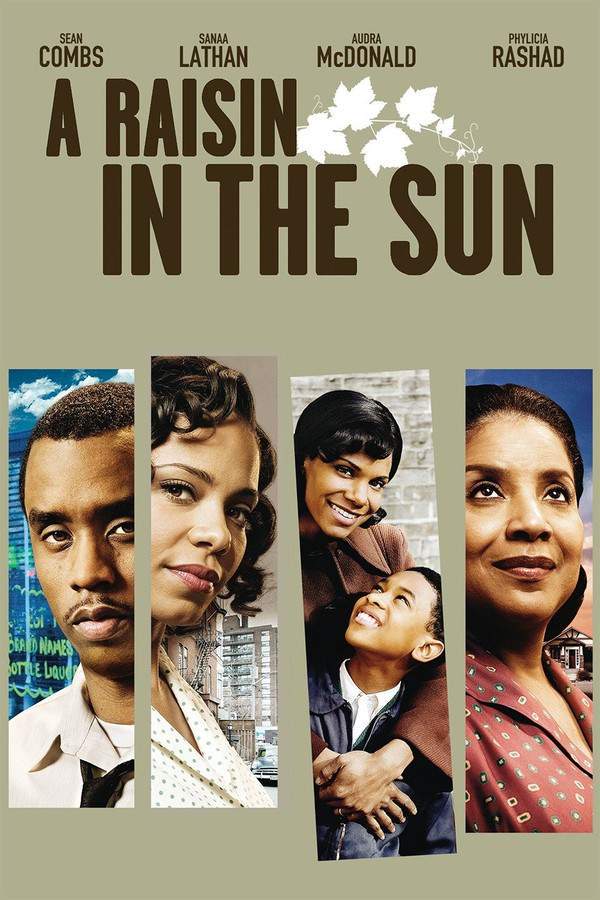
A Raisin in the Sun (1961) movie poster

Timeline

A Raisin in the Sun (1961) Timeline Explained – Every Event in Order

Release, runtime and language
1961 · 128 min · English
JustWatch #19,550 3
Directed by
Daniel Petrie
Starring
Sidney Poitier, Diana Sands, Louis Gossett Jr., Ivan Dixon, Ruby Dee, John Fiedler

Following the death of her husband, Lena Younger finds her family’s life irrevocably changed by an inheritance. The money offers the Younger family—Lena, her husband Walter, his son Walter Jr., and her sister Beneatha—the opportunity to pursue their individual dreams. Walter yearns to start a liquor store, while Beneatha hopes to become a doctor. Lena envisions a home for her family, but differing aspirations and financial pressures threaten to tear them apart as they grapple with questions of race, identity, and the true meaning of success.

On this page (6)
  1. 1 Where to watch
  2. 2 Events in order (14)
  3. 3 Timeline questions answered
  4. 4 Movie threads
  5. 5 Movies like A Raisin in the Sun
  6. 6 Every angle

Where to watch

Where to Watch A Raisin in the Sun (1961)

Where can you watch A Raisin in the Sun? Stream, rent or buy it in the US, including on Amazon Video, Apple TV Store and Fandango At Home: current JustWatch availability with up-to-date prices.

Streaming availability powered by JustWatch

14 events in order · contains spoilers

A Raisin in the Sun Timeline: Events in Chronological Order

Every key event of A Raisin in the Sun (1961) in order, scene by scene, with when and where it takes place. Use it to untangle flashbacks, time jumps and parallel storylines, to refresh your memory before the sequel or to find the exact scene you are thinking of.

  1. Family Dynamics

    The Younger family resides in a cramped and decaying apartment on Chicago's South Side, struggling with financial burdens. Each family member copes with their circumstances differently, ranging from Walter's ambition to Ruth's resignation.

    Where
    Chicago, South Side
  2. Loss of the Patriarch

    The family is dealing with the emotional aftermath of losing their patriarch. This loss has intensified the pressure on them, particularly as they await a life insurance payout that promises hope for a better future.

  3. Awaiting Insurance Money

    Lena, or Mama, eagerly anticipates a $10,000 life insurance check, seeing it as a critical opportunity for her family. Her plans for the money fuel tension, especially with Walter’s ambitions steering in a different direction.

  4. Walter's Aspirations

    Walter dreams of investing in a liquor store with his friends Willy and Bobo. His aspirations highlight a clash between his material desires and Mama's more traditional values, creating friction within the family.

  5. Mama's Decision

    Choosing to secure a new house for the family, Mama decides to use part of the insurance money for this purpose. The choice to move into an all-white neighborhood signals both hope and underlying racial tensions.

    Where
    All-white neighborhood
  6. Fund Allocation Conflict

    As they discuss the allocation of the insurance money, Walter is given $6,500 for his business venture. However, tensions rise when it is revealed that Mama has reserved $3,000 for Beneatha's education.

  7. Tragedy Strikes

    Walter's hope is shattered when Willy absconds with the money he entrusted to him. This betrayal leaves the Younger family in a precarious financial situation, amplifying their struggles.

  8. Devastating News

    Bobo arrives with the heartbreaking news of Walter's lost investment, which leaves the family in despair. The reality of their financial plight weighs heavily on Walter and Beneatha as they confront their shattered dreams.

  9. Lindner's Proposal

    Karl Lindner approaches the Younger family with an offer to buy them out of their new home, claiming it’s for their own good. This proposal is met with horror by the three women, who perceive it as a racial affront.

  10. Struggle for Dignity

    Mama stands firmly against accepting Lindner's deal, emphasizing the importance of dignity over financial gain. The debate amplifies as Walter contemplates the implications of this decision on their family's identity.

  11. Beneatha's Dilemma

    Beneatha finds herself torn between two suitors: George Murchison, who represents wealth and conformity, and Joseph Asagai, who promotes pride in her roots. This internal conflict reflects the broader themes of identity and aspiration.

  12. Walter's Realization

    As pressures mount, Walter grapples with his aspirations and the contrasting values espoused by George and Joseph. He eventually chooses to prioritize family values over the allure of material wealth, signaling a profound transformation.

  13. Mrs. Johnson's Commentary

    Mrs. Johnson, the inquisitive neighbor, provides a critical perspective on the family's struggles. Her remarks serve to critique societal fears surrounding social changes and underscore the importance of standing up for one’s rights.

  14. Facing an Uncertain Future

    The play concludes with the Younger family standing on the brink of an uncertain future, challenged to confront their realities. It serves as a poignant reminder that true freedom is achieved through collective courage and resolve.

Last updated: November 17, 2024 at 20:27

Was this helpful?

Timeline questions answered

A Raisin in the Sun Timeline Explained: Your Questions Answered

When does it happen, and why in that order? The questions people ask about the chronology of A Raisin in the Sun (1961): time jumps, flashbacks, cause and effect between scenes and the correct order of events, each answered with spoilers.

Q1

Why does Walter trust Willy with the family's money?

Walter gives $6,500 to Willy because he desperately wants to prove himself as a provider and see his dream of owning a liquor store become reality. Despite having no business experience, Walter believes this investment will lift his family out of poverty and give him the respect he craves. His naivety and desperation lead him to hand over the money without a formal agreement, making him an easy target for Willy's betrayal.

Foreshadowing: Earlier, the family already tensions between Walter's reckless ambitions and Mama's cautious, faith-based approach to money.

  • walter younger
  • willy
  • liquor store
  • investment
  • betrayal
  • insurance money
Q2

Why does Mama choose to move into an all-white neighborhood?

Mama chooses the all-white neighborhood because it was the most affordable option given their limited finances. She sees this move as providing her family with a real home and better living conditions, believing that owning a house in a better area is worth the sacrifice. Her decision reflects both hope for advancement and the harsh reality of economic constraints facing Black families in 1950s Chicago.

Foreshadowing: The family lives in a cramped, decaying apartment that symbolizes their limited choices.

  • mama lena
  • house
  • neighborhood
  • moving
  • racism
  • housing discrimination
Q3

Why does Walter reject Lindner's buyout offer at the end?

Walter rejects Lindner's offer because he finally realizes that accepting blood money from racists would betray everything his family stands for. After witnessing his mother stand firm against compromising their dignity and seeing how the theft of the insurance money already shattered their dreams, Walter chooses to reject the patronizing offer. This moment marks his transformation from a man obsessed with material wealth to someone who values his family's pride and identity above financial security.

Foreshadowing: Earlier, Mama tells Walter that there is always an answer to the man who has no man in him, emphasizing that dignity matters more than comfort.

  • karl lindner
  • buyout
  • racism
  • dignity
  • pride
  • rejection
  • character arc
Q4

What happens to the $10,000 insurance money?

The $10,000 insurance payout is divided three ways: Mama uses $3,000 for a down payment on a house, gives Walter $6,500 for his liquor store investment, and reserves $3,000 for Beneatha's medical school education. However, Willy disappears with Walter's $6,500, leaving the family in financial crisis. This devastating loss forces them to confront whether they'll accept Lindner's buyout offer or stand their ground.

Foreshadowing: The family debates allocation from the moment they learn about the insurance check, with tensions rising over Walter's business plans.

  • insurance money
  • willy
  • theft
  • liquor store
  • $10
  • 000
  • financial loss
Q5

Why is Beneatha torn between George and Joseph?

Beneatha is torn between George Murchison and Joseph Asagai because they represent two opposing paths: assimilation into white society versus embracing her African heritage. George offers wealth, material comfort, and conformity to mainstream America, while Joseph encourages her to take pride in her roots and pursue meaningful goals beyond money. Her struggle mirrors the larger question facing Black Americans about identity, success, and where one truly belongs.

Foreshadowing: Joseph gives Beneatha African-themed gifts and speaks proudly of his Yoruba heritage, contrasting sharply with George's polished but superficial demeanor.

  • beneatha younger
  • george murchison
  • joseph asagai
  • identity
  • heritage
  • suitors
  • assimilation
Q6

Why does the family react with horror to Lindner's offer?

The family is horrified because Lindner's offer is clearly a racist attempt to buy their home and prevent Black families from moving into the neighborhood. Though he frames it as wanting to spare them trouble, the offer is a bribe rooted in the belief that Black people do not belong in white neighborhoods. The women recognize it as a degrading attempt to purchase their dignity and silence their right to live where they choose.

Foreshadowing: Mama chose the all-white neighborhood knowing it would be challenging, but she never intended to be bought off.

  • karl lindner
  • buyout
  • racism
  • neighborhood
  • discrimination
  • offer
Q7

Why does Mama reserve $3,000 for Beneatha's education?

Mama reserves $3,000 for Beneatha's medical school education because she believes strongly in education as the path to a better life. Unlike Walter's business venture, which Mama views as risky speculation, she sees Beneatha's dream of becoming a doctor as a worthy investment in the family's future. This decision also reflects Mama's desire to give her children opportunities she never had and to secure lasting progress for the family.

Foreshadowing: Beneatha has already been dreaming of becoming a doctor and has been attending college, making this a continuation of her established goals.

  • mama lena
  • beneatha
  • education
  • medical school
  • $3
  • 000
  • dreams
Q8

Why does Walter accept the $6,500 from Mama despite their conflict?

Walter accepts the $6,500 for his liquor store because he sees it as his only chance to prove himself as a man and provider. Though he resents that Mama set aside money for Beneatha's education, the substantial amount gives him hope that he can achieve something meaningful. His acceptance reflects both his desperation to escape his current life as a chauffeur and his inability to see beyond material success as a measure of worth.

Foreshadowing: The family's earlier discussions reveal Walter's deep insecurity about being the man of the house but having no power to change their situation.

  • walter younger
  • mama
  • money
  • liquor store
  • pride
  • provider
Q9

Why does Ruth support Mama's decision to buy the house?

Ruth supports Mama's decision to buy the house because she also desperately wants to escape their cramped, decaying apartment and give Travis a better life. Though Ruth often remains quiet during family conflicts, she shares Mama's belief that homeownership represents dignity and stability. Her support also reflects the generational divide, with Ruth and Mama valuing basic security while Walter pursues grander, riskier ambitions.

Foreshadowing: The family's living conditions are established early as oppressive and suffocating, affecting everyone, especially Travis.

  • ruth younger
  • mama lena
  • house
  • support
  • family unity
Q10

What does the title "A Raisin in the Sun" mean?

The title comes from Langston Hughes' poem "Harlem," asking what happens to a dream deferred like a dried raisin in the sun. The film shows the Younger family's dreams, Walter's business, Beneatha's medical career, Mama's home, and explores how poverty, racism, and internal conflicts threaten to dry up and destroy those aspirations. The ending suggests their dreams may yet survive despite being battered.

Foreshadowing: The poem's theme of deferred dreams echoes throughout as each family member's aspirations face obstacles.

  • title meaning
  • langston hughes
  • dream deferred
  • symbolism
  • poem
Q11

Why does Walter become so withdrawn after losing the money?

Walter becomes withdrawn and despondent after Willy steals the money because his entire identity is tied to providing for his family. The loss represents more than financial devastation, it confirms his deepest fears that he is a failure who cannot protect or advance his family. His shame is so profound that he struggles to face his family, and he briefly considers accepting Lindner's offer as a way to recoup something from the disaster.

Foreshadowing: Earlier, Walter's frustration at being a chauffeur who drives wealthy white men while living in poverty establishes his fragile ego.

  • walter younger
  • depression
  • shame
  • failure
  • money loss
  • despair
Q12

Why does Joseph criticize Beneatha for her materialistic views?

Joseph criticizes Beneatha because he sees her attraction to George Murchison's wealth as abandoning her cultural identity for shallow material gain. Joseph believes Black Americans should embrace their heritage rather than aspire to assimilate into white society. His criticism, though harsh, comes from a place of wanting Beneatha to recognize that true worth comes from pride in one's roots, not from financial success earned through compromising one's identity.

Foreshadowing: Joseph's gifts of African artifacts and his discussions about heritage contrast with George's polished but hollow demeanor.

  • joseph asagai
  • beneatha
  • criticism
  • materialism
  • identity
  • heritage
  • assimilation

Movie threads

More Movies Like A Raisin in the Sun, by Mood & Story

Curated lists built around what makes A Raisin in the Sun tick: the same mood, the same kind of story or the same emotional payoff. Each list explains why these movies belong together.

Movies about families under pressure like A Raisin in the Sun

Tense stories of families fracturing under internal and external pressures. If you liked the intense family conflicts and cramped setting of A Raisin in the Sun, explore more movies like it. These similar dramas feature families grappling with financial strain, racial tensions, and generational divides, all within a confined, pressure-filled environment.

  • claustrophobic
  • anxious
  • gripping
  • oppressive
  • melancholic
  • hopeful
  • Tone: tense, gripping
  • Pacing: steady, character-driven
Why these movies?

The story pattern: Stories in this thread often unfold within a limited physical space, like a small apartment or house, which amplifies the emotional friction. The narrative builds steadily as financial or social pressures force family members' individual aspirations to collide, leading to a crisis that threatens to tear them apart before a moment of truth that either solidifies or shatters their bonds.

Why they belong together: These films are grouped together because they share a specific setting and conflict dynamic. They combine a claustrophobic, anxious mood with a heavy emotional weight, focusing on the raw, intimate drama of a family pushed to its breaking point by forces both inside and outside the home.

Movies about the fractured American Dream like A Raisin in the Sun

Stories where financial hope clashes with harsh systemic barriers. Find more films like A Raisin in the Sun that critically examine the American Dream. These powerful dramas show characters fighting for a better life against financial hurdles and racial discrimination, often ending with a bittersweet or hopeful redefinition of success itself.

  • hopeful
  • melancholic
  • gripping
  • anxious
  • thought-provoking
  • Tone: hopeful, melancholic
  • Pacing: steady, deliberate
Why these movies?

The story pattern: The journey typically begins with a catalyst—an inheritance, an opportunity—that ignites divergent hopes within a group. The central conflict arises from the tension between these dreams and the harsh realities of poverty and prejudice. The story arc often involves a devastating setback or betrayal, forcing characters to choose between compromising their values or finding a more authentic, if less prosperous, version of their dream.

Why they belong together: This thread connects films that share a heavy thematic focus on ambition, class, and systemic injustice. They deliver a similar emotional experience: a mix of hopeful yearning and melancholic struggle, grounded in a steady, character-driven pace that builds to a climactic moral decision about what truly matters.

If you liked this

Movies Like A Raisin in the Sun

Similar movies to A Raisin in the Sun: the same genre, themes or kind of story. Each one comes with its own plot summary, timeline and ending explained.

Browse all movie summaries

Every angle

A Raisin in the Sun (1961) Explained: Plot, Timeline & Characters

Everything about A Raisin in the Sun in one place: what happens in the plot summary, the timeline in chronological order, the characters and meaning and a spoiler-free summary. What's After the Movie adds the cast, box office and post-credit scenes.

Coming soon on iOS and Android

The Plot Explained Movie Summary App

Plot summaries, endings explained and timelines on your phone. Catch up on any movie in minutes, save your favorites and never miss a twist again.

Be the first to know when we launch. Your email stays private, always.

Learn more about the app