Plot Explained Spoilers guaranteed!
Plot Explained

Browse by genre

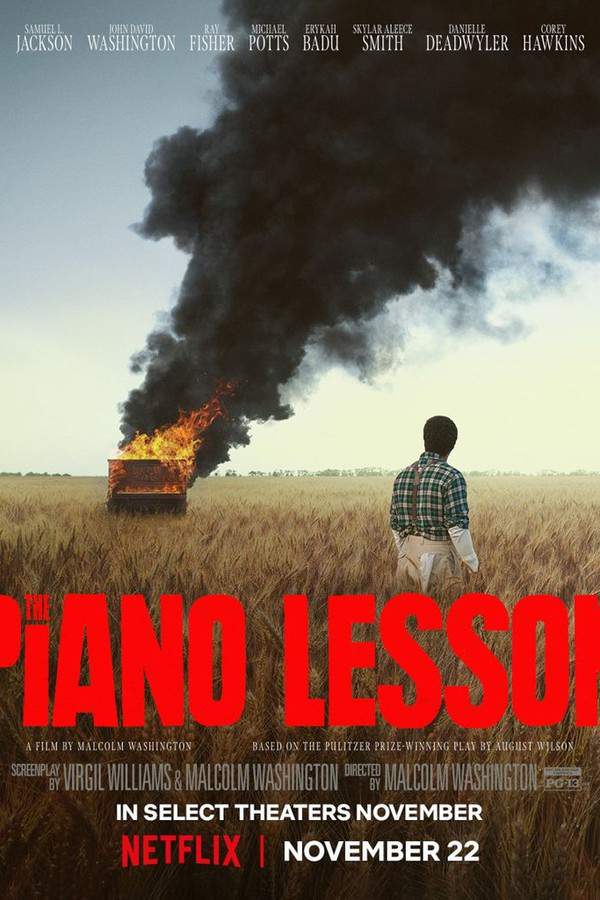
The Piano Lesson (2024) movie poster

Plot Summary

The Piano Lesson (2024) Plot Summary & Ending Explained

Release, runtime and language
2024 · 2 h 5 m · English
Echo score 66
JustWatch #9,459 9
Starring
Samuel L. Jackson, Ray Fisher, Corey Hawkins, John David Washington, Stephan James, Gail Bean

A conflict arises within the Charles family over a cherished heirloom piano. A brother intends to sell the piano to build the family’s financial future, while his sister is determined to preserve it as the last remaining symbol of their heritage. The disagreement escalates into a tense battle between them, threatening to fracture their relationship.

On this page (7)
  1. 1 Where to watch
  2. 2 What happens: full plot
  3. 3 How it ends
  4. 4 The book behind the movie
  5. 5 Movie threads
  6. 6 Movies like The Piano Lesson
  7. 7 Every angle

Where to watch

Where to Watch The Piano Lesson (2024)

Where can you watch The Piano Lesson? Stream, rent or buy it in the US, including on fuboTV, Philo and Hoopla: current JustWatch availability with up-to-date prices.

Streaming availability powered by JustWatch

Full plot summary · contains spoilers

What Happens in The Piano Lesson: Full Plot Summary

The whole story of The Piano Lesson (2024) explained, from the opening scene to the final frame: every key event, every twist and what it all adds up to. Read it as a quick recap before the sequel, to check a scene you missed, or to finally understand what really happened.

In 1911, the story begins with Boy Charles, portrayed by John David Washington, who is desperate to reclaim his family's legacy. He steals a beautifully crafted piano from the Sutter family, a significant symbol of his family's heritage and strength. This piano, with intricate carvings representing African ancestors, holds deep meaning for the Charles family. After giving his family a chance to escape, Boy Charles attempts to flee in a train boxcar, but tragedy strikes when the Sutters catch up with him, ultimately burning the boxcar with Boy Charles trapped inside.

Fast forward to 1936, Boy Willie's arrival in Pittsburgh with his friend Lymon, played by Ray Fisher, marks a pivotal moment as they bring with them a truckload of watermelons. The plot thickens with the backstory of James Sutter's murder, in which Boy Willie seeks reparations offered by the Sutter family. They propose to grant him a portion of Mississippi farmland, spurred by a desire to settle old scores related to his father's tragic fate. Boy Willie is determined to sell the family piano to purchase the land, believing it essential to reclaiming their autonomy.

However, his sister Berniece, portrayed by Danielle Deadwyler, is vehemently opposed to this plan. Living with her young daughter Maretha and their uncle Doaker, played by Samuel L. Jackson, in Pittsburgh, Berniece sees the piano as a sacred artifact and a vital reminder of their shared struggles. Now in a relationship with local preacher Avery, Berniece’s bond with Boy Willie is strained, especially after previous conflicts involving the theft that led to her husband Crawley’s death.

The ongoing disputes between the siblings highlight the piano’s profound significance in both of their lives. While Berniece wishes to preserve it as a family memorial, Boy Willie views its sale as a crucial step towards freedom and self-sufficiency. Yet, the shadow of their father's legacy looms large, reminding Boy Willie of the importance of land ownership.

As supernatural elements come into play, Sutter's ghost begins to haunt the Charles household, raising tensions further, particularly for Berniece and Maretha. Berniece attributes the ghostly disturbances to Boy Willie's arrival and his disruptive ambitions regarding the piano. In contrast, Boy Willie dismisses her concerns. Meanwhile, Lymon finds himself drawn to Berniece, hoping for a fresh start.

The presence of Sutter’s ghost escalates, leading to a climactic confrontation with Boy Willie. In a bid to rid their home of the haunting, Avery attempts an exorcism, but it proves futile. Finally, Berniece courageously decides to play the piano for the first time in years. In doing so, she invokes her ancestors, seeking their aid to banish Sutter’s spirit and protect her brother. A turning point occurs as Boy Willie begins to understand Berniece's perspective, encouraging her to continue playing.

Ultimately, Boy Willie reconsiders his intentions regarding the piano and opts not to sell it. Instead, Berniece takes on the role of mentor, teaching Maretha how to play, thus passing down their family's musical legacy. In one last attempt to connect with the land, Boy Willie returns to the now-publicly available Sutter farmland, connecting with his heritage before moving forward. Grasping the dirt as his father once taught him, he departs, leaving behind a mix of hope and resolution.
Last updated: September 18, 2026 at 08:59

Was this helpful?

Ending explained

What Happens at the End of The Piano Lesson?

How The Piano Lesson (2024) ends, in short: the final scene, the last twist and what it means for the characters. The full ending explained, with every spoiler, lives on its own page.

Read the full ending explained

The ending of The Piano Lesson reveals a profound moment of reconciliation and cultural affirmation. Throughout the film, Berniece has been haunted by her memories of her family's suffering and her personal grief, which she has buried beneath her fear of her past. When her brother Boy Willie arrives determined to sell the family piano to buy Sutter’s land and forge a new future, Berniece resists, viewing the piano as a symbol of their ancestral pain and history. As tensions rise, Sutter’s ghost manifests, illustrating the unresolved trauma tied to the piano and their history of slavery and exploitation. Berniece, overwhelmed by the ghostly presence and her fears, considers surrendering her grief, but she is ultimately reminded that the piano also embodies the strength, resilience, and memories of her ancestors.


In a pivotal moment, Berniece begins to play the piano, channeling the spirits of her ancestors and acknowledging both the pain and the pride embedded within that family heirloom. This act signifies her acceptance of her history and her heritage, allowing the spirits to be at peace and expelling Sutter’s ghost from the house. The act of playing becomes a act of spiritual cleansing, integrating the pain of the past with a newfound sense of pride and hope for the future. Berniece's spiritual awakening also shifts her perspective on the piano from being solely a reminder of suffering to a vessel of empowerment and family unity. When Berniece finally plays the piano with her daughter Maretha, there is a sense of liberation and joy, symbolizing that she has reclaimed her identity and cultural roots.

Continue reading the ending (1 more paragraphs)

Boy Willie’s desire to sell the piano ultimately clashes with Berniece’s need to preserve their history, but his willingness to step back and let her keep it reflects a recognition of the importance of honoring their ancestors. The film ends with a scene that emphasizes the power of family, heritage, and collective memory—showing that through understanding and respect, they can find healing and move forward together. The ending highlights that the true value of the piano lies not in its material worth, but in what it represents: the enduring spirit and resilience of the family, transcending generations and hardships. Through Berniece's spiritual liberation, the film concludes with a message of reconciliation—showing that embracing one’s history and roots is essential to forging a hopeful future.**

The Piano Lesson ending explained in full

Movie threads

More Movies Like The Piano Lesson, by Mood & Story

Curated lists built around what makes The Piano Lesson tick: the same mood, the same kind of story or the same emotional payoff. Each list explains why these movies belong together.

Family heirloom conflicts like in The Piano Lesson

Beloved possessions become battlegrounds where love, memory, and survival collide. Movies like The Piano Lesson where a treasured family possession sparks a bitter dispute between relatives. These dramas explore what it means to hold onto ancestral memory versus chasing a better future, and how love, legacy, and sacrifice can collide over a single meaningful object.

  • family conflict
  • legacy
  • heritage
  • sibling rivalry
  • bittersweet
  • ancestral
  • Tone: bittersweet, tense, somber
  • Pacing: steady, character driven
Why these movies?

The story pattern: Stories in this thread typically open with an inherited object of deep symbolic weight, often tied to a traumatic or culturally significant past. A practical-minded family member pushes to sell, trade, or repurpose it for financial gain, while a more emotionally rooted character insists it must be preserved at all costs. The argument escalates through flashbacks that reveal the object's true history, forcing the family to reckon with grief, identity, and what they owe to those who came before them. Resolution usually comes as a bittersweet compromise: one side yields, but the cost is felt.

Why they belong together: These films share a core dramatic engine: an object charged with memory weaponized by circumstance. They blend intimate family drama with larger questions of cultural memory, economic survival, and the meaning of inheritance. The pacing tends to be steady and character-driven, the emotional weight is heavy, and the conflicts feel painfully real because both sides are right in different ways.

Haunted family dramas like in The Piano Lesson

Supernatural visitations force families to face the unhealed wounds of their ancestors. If you were moved by The Piano Lesson, explore more movies like this where supernatural hauntings expose buried historical trauma. These atmospheric dramas blend ghosts, grief, and family conflict to ask what we owe to the generations who came before us, and what it costs to finally lay the past to rest.

  • supernatural
  • haunted
  • ancestral trauma
  • grief
  • somber
  • spiritual
  • Tone: haunting, somber, bittersweet
  • Pacing: steady, atmospheric build
Why these movies?

The story pattern: Films in this thread begin with a family already fractured by grief or denial, living in a space haunted by something tied to a larger historical injustice. Supernatural manifestations escalate as the family resists confronting the truth, and the climax typically involves a ritual of acknowledgment, an exorcism, or a symbolic act of letting go. The living must reckon with what the dead endured, and the ending is rarely clean: the haunting may lift, but the loss and the lessons remain.
Why they belong together: These stories share a powerful blend of literal and figurative haunting, where the supernatural pressure reflects the weight of unprocessed collective trauma. They tend to be slow, moody, and rooted in specific cultural histories, with steady pacing that allows dread to accumulate. The tone is consistently somber and bittersweet, and the emotional register is heavy, anchored by strong performances and symbolism that rewards patient viewers.

If you liked this

Movies Like The Piano Lesson

Similar movies to The Piano Lesson: the same genre, themes or kind of story. Each one comes with its own plot summary, timeline and ending explained.

Browse all movie summaries

Every angle

The Piano Lesson (2024) Explained: Plot, Ending, Timeline & Characters

Everything about The Piano Lesson in one place: what happens in the plot summary, the timeline in chronological order, the characters and meaning, the ending explained and a spoiler-free summary. What's After the Movie adds the cast, box office and post-credit scenes.

Coming soon on iOS and Android

The Plot Explained Movie Summary App

Plot summaries, endings explained and timelines on your phone. Catch up on any movie in minutes, save your favorites and never miss a twist again.

Be the first to know when we launch. Your email stays private, always.

Learn more about the app