Plot Explained Spoilers guaranteed!
Plot Explained

Browse by genre

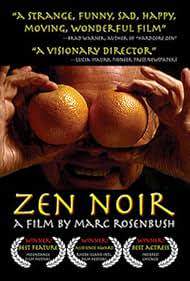
Zen Noir (2006) movie poster

Plot Summary

Zen Noir (2006) Plot Summary Explained

Release, runtime and language
2006 · 71 min · English
Directed by
Marc Rosenbush

A determined detective's search for justice takes an unexpected turn when investigating a murder at a tranquil Buddhist temple. He finds himself entangled with a mysterious monk, a captivating and enigmatic woman, and a wise mentor, all of whom seem intent on obscuring the truth. The case becomes a philosophical puzzle as he struggles to unravel the complex web of secrets and find the killer.

On this page (5)
  1. 1 What happens: full plot
  2. 2 Plot questions answered
  3. 3 Movie threads
  4. 4 Movies like Zen Noir
  5. 5 Every angle

Full plot summary · contains spoilers

What Happens in Zen Noir: Full Plot Summary

The whole story of Zen Noir (2006) explained, from the opening scene to the final frame: every key event, every twist and what it all adds up to. Read it as a quick recap before the sequel, to check a scene you missed, or to finally understand what really happened.

In a somber and tense atmosphere, Detective Duane Sharp receives a chilling phone call from a local temple, ominously predicting the soon-to-come death of one of its monks. Upon his arrival, he is met with a harrowing sight: a meditating monk, Howard Fong, lies lifeless on the floor, igniting a wave of questions and frustration. The other temple residents—Ezra Buzzington as Ed, Debra Miller as Jane, and the mysterious Kim Chan as Master—offer cryptic responses that only deepen the enigma surrounding the monk's death. Despite their claims of innocence, Detective Sharp is resolute in his belief that foul play is involved.

As he investigates the temple's hidden truths, Ed's unsettling appearance in the middle of the night, filled with tension, urges the Detective to meet him for an undisclosed purpose. Meanwhile, a growing wave of anxiety envelops the Detective, exacerbated by the sudden disappearance of his gun and increasingly vivid encounters with the spirit of his deceased wife, Nora.

The narrative shifts drastically when Ed, in an unforeseen act of desperation, takes his own life using the Detective's weapon. Devastated, the Detective seeks comfort from Jane, with whom he shares a poignant, emotional connection that unexpectedly blooms into a romantic affair. Yet, amidst moments of intimate warmth, a haunting realization grips the Detective—he cannot seem to remember his own name.

The situation escalates when Jane reveals that she is suffering from a terminal illness, plunging the Detective into a tumult of fears and insecurities, stirring memories of potential loss. In search of guidance, he turns to the Master, who imparts a profound truth about the interconnectedness of all things. Just as the Master's wisdom begins to resonate, he passes away, forcing the Detective to confront the transient nature of existence.

In a hauntingly beautiful conclusion, the heartbroken Detective finds himself alone, initially overcome by despair, yet gradually embracing a sense of acceptance that brings him solace. As the ghost of Nora finally lets him go, the Detective—now shaven-headed—holds hands with Jane, their serene companionship symbolizing the enduring power of human connection amidst the shadows of mortality.

Last updated: November 19, 2024 at 11:32

Was this helpful?

Plot questions answered

Zen Noir Plot Explained: Your Questions Answered

The questions people ask most about Zen Noir (2006): what happens in the confusing scenes, why the characters do what they do, the twists, hidden details and what the ending means. Each answer contains spoilers.

Q1

Why can't Detective Sharp remember his own name?

The detective's identity crisis stems from his unresolved grief over his deceased wife, Nora. His mental state has deteriorated due to the cumulative trauma of the case, the supernatural encounters with Nora's spirit, and the overwhelming tragedies at the temple. This memory lapse represents his disconnection from his former self and his journey toward psychological transformation.

Foreshadowing: Earlier scenes establish his vivid encounters with Nora's ghost, hinting at his fragile mental state.

  • detective sharp
  • identity crisis
  • memory loss
  • grief
  • psychological trauma
Q2

Why does Ed take his own life using the detective's gun?

Ed's suicide is driven by desperate guilt and the weight of his secrets. Having appeared at midnight to meet the detective for an unspecified purpose, Ed was clearly struggling with something profound, likely related to the monk's death or other temple mysteries. Using the detective's disappeared weapon, Ed ends his life, leaving the detective to grapple with the moral implications and his own potential responsibility for not intervening sooner.

Foreshadowing: Ed's mysterious midnight appearance and cryptic behavior earlier signaled his psychological distress.

  • ed
  • suicide
  • guilt
  • temple resident
  • detective gun
Q3

What did Ed want to tell Detective Sharp during their midnight meeting?

The exact contents of Ed's intended confession remain ambiguous, but given his subsequent suicide, it likely involved crucial information about the monk's death or his own involvement in whatever secrets the temple harbors. The midnight meeting suggests Ed was ready to disclose something that weighed heavily on him, possibly knowledge about Howard Fong's death or a deeper conspiracy within the temple.

Foreshadowing: Ed's unsettling nighttime appearance in the middle of the night was explicitly described as having an undisclosed purpose.

  • ed
  • midnight meeting
  • confession
  • temple secrets
Q4

Why does Detective Sharp keep seeing his dead wife Nora's ghost?

Nora's ghost appears because the detective has not yet processed his grief over her death. The supernatural encounters intensify as the investigation progresses, reflecting his psychological unraveling. Nora represents his unresolved past and emotional baggage. Her eventual departure signals his psychological breakthrough and readiness to move forward with his life.

Foreshadowing: The film establishes early on that the detective is haunted by grief, making Nora's appearances a consistent narrative element.

  • nora
  • ghost
  • deceased wife
  • grief
  • spiritual encounter
Q5

What happened to Detective Sharp's gun that went missing?

The detective's gun was taken, likely by Ed, as part of the chain of events leading to Ed's suicide. The disappearance of the weapon heightens the detective's anxiety and creates a sense of vulnerability. When Ed uses the weapon to take his own life, it creates a devastating moment where the detective's own tool becomes the instrument of another person's death, adding to his psychological burden.

Foreshadowing: The gun's disappearance was noted as an unsettling event that coincided with the detective's growing anxiety.

  • detective gun
  • missing weapon
  • ed
  • suicide weapon
Q6

Why does Jane tell the detective about her terminal illness?

Jane reveals her terminal illness to Detective Sharp because their emotional connection has deepened into a romantic affair, and she feels compelled to be honest about her limited time. This revelation adds another layer of mortality and urgency to their relationship, forcing the detective to confront another potential loss. It also reinforces the film's themes of impermanence and human connection amid grief.

Foreshadowing: Their romantic involvement developed after the detective sought comfort following Ed's suicide.

  • jane
  • terminal illness
  • romance
  • mortality
  • confession
Q7

What is the significance of Master Chan's death?

Master Chan's death serves as a pivotal spiritual moment in the film. Just after imparting wisdom about the interconnectedness of all things, the Master's passing reinforces the theme of impermanence. His death forces Detective Sharp to directly confront mortality and apply the Master's teachings about accepting life's transience. The Master's death is not violent but rather a natural transition that becomes part of the detective's spiritual awakening.

Foreshadowing: The Master's profound teachings about interconnectedness directly precede his death, creating a meaningful narrative connection.

  • master chan
  • death
  • wisdom
  • spiritual teacher
  • impermanence
Q8

Why did the temple call to predict the monk's death before it happened?

The ominous phone call predicting a monk's death serves as the mysterious catalyst for the entire investigation. This cryptic warning establishes the supernatural or mystical undertones of the film. Whether the call was a genuine premonition, a warning from someone involved, or part of a larger scheme at the temple remains intentionally ambiguous, setting the mood for a story that blends detective noir with spiritual mystery.

Foreshadowing: The ominous call opens the entire narrative, establishing the tone for the investigation that follows.

  • phone call
  • prediction
  • monk howard fong
  • mysterious call
Q9

How does Detective Sharp find acceptance after all his losses?

Detective Sharp finds acceptance through a combination of spiritual wisdom from Master Chan, confronting his grief over Nora, and embracing his connection with Jane. The Master's teachings about interconnectedness help him understand that loss is part of a larger natural order. When Nora's ghost finally lets him go, he is liberated from his past grief. His acceptance is symbolized by his shaven head and holding hands with Jane, a physical manifestation of his new peace.

Foreshadowing: Master Chan's wisdom about the interconnectedness of all things planted the seeds for this resolution.

  • acceptance
  • grief resolution
  • peace
  • moving on
  • closure
Q10

Why is a detective investigating a murder at a Buddhist temple?

Detective Sharp investigates the murder at the Buddhist temple because he received an ominous phone call predicting a monk's death, which he takes seriously as a law enforcement officer. Upon arrival, he discovers the monk Howard Fong dead in meditation, and despite the temple residents' cryptic claims of natural death, the detective suspects foul play. His investigation becomes increasingly complex as he uncovers the temple's secrets while dealing with his own psychological and spiritual struggles.

Foreshadowing: The ominous phone call specifically requested police involvement, drawing the detective into this unusual setting.

  • detective investigation
  • buddhist temple
  • murder inquiry
  • howard fong
Q11

What does Master Chan mean by the interconnectedness of all things?

Master Chan's teaching about interconnectedness refers to the Buddhist principle that all beings and events are linked in a larger spiritual whole. For Detective Sharp, this means that the deaths at the temple, his personal losses, and his emotional journey are not isolated events but part of a greater tapestry of existence. This wisdom helps the detective understand that his grief, the tragedies around him, and his eventual healing are all connected aspects of life's natural flow.

Foreshadowing: Master Chan delivers this teaching specifically to help the detective cope with the losses he has endured.

  • interconnectedness
  • master chan
  • buddhism
  • spiritual wisdom
  • unity
Q12

Why does Nora's ghost finally let the detective go?

Nora's ghost lets the detective go because he has finally reached a point where he can process his grief and move forward with his life. Throughout the film, her spirit has been tied to his unresolved mourning. When he achieves acceptance, through the Master's teachings, his relationship with Jane, and his confrontation with mortality, Nora's spirit is freed, and so is he. This mutual release represents the completion of his psychological and emotional journey.

Foreshadowing: The detective's growing acceptance and peace directly precede Nora's departure.

  • nora
  • letting go
  • ghost departure
  • spiritual release
  • closure

Movie threads

More Movies Like Zen Noir, by Mood & Story

Curated lists built around what makes Zen Noir tick: the same mood, the same kind of story or the same emotional payoff. Each list explains why these movies belong together.

Spiritual Detective Stories Similar to Zen Noir

Detective investigations that become journeys of spiritual questioning and self-discovery. For viewers who liked Zen Noir, this section features movies like it that blend a detective's search for answers with a deeper spiritual or philosophical journey. These films are characterized by their meditative pacing, heavy emotional weight, and a focus on existential questions over simple crime-solving.

  • philosophical
  • meditative
  • introspective
  • somber
  • cryptic
  • existential
  • Tone: melancholic, philosophical
  • Pacing: slow, contemplative
Why these movies?

The story pattern: These narratives begin with a conventional investigation, but the clues lead inward rather than outward. The protagonist's pursuit of an external truth forces them to confront internal conflicts, grief, or existential doubt. The plot structure often incorporates surreal or meditative elements that challenge linear storytelling.

Why they belong together: These films are grouped together because they share a unique blend of the mystery genre with spiritual and philosophical themes. They prioritize atmosphere and character transformation over fast-paced action, creating a contemplative and often melancholic viewing experience centered on the search for meaning.


Movies About Bittersweet Acceptance Like Zen Noir

Slow, sorrowful stories that find a fragile peace after navigating profound loss. If you appreciated the heavy emotional weight and bittersweet resolution of Zen Noir, this collection highlights similar films about processing grief and finding peace. These movies share a melancholic tone, slow pacing, and explore themes of loss, memory, and human connection in a deeply moving way.

  • melancholic
  • somber
  • introspective
  • meditative
  • bittersweet
  • grief
  • Tone: melancholic, bittersweet
  • Pacing: slow, deliberate
Why these movies?

The story pattern: The narrative follows a character weighed down by a significant loss—often a death or terminal diagnosis. The story unfolds not as a plot-driven event series, but as an emotional journey through memories, denial, and sorrow, eventually leading to a hard-won, nuanced acceptance that acknowledges the pain but finds a way forward.

Why they belong together: This thread connects movies that offer a similar emotional experience: a slow, meditative, and deeply sad exploration of grief that ultimately arrives at a place of bittersweet peace. They are united by their heavy emotional weight, melancholic tone, and focus on the internal landscape of loss.

If you liked this

Movies Like Zen Noir

Similar movies to Zen Noir: the same genre, themes or kind of story. Each one comes with its own plot summary, timeline and ending explained.

Browse all movie summaries

Every angle

Zen Noir (2006) Explained: Plot, Timeline & Characters

Everything about Zen Noir in one place: what happens in the plot summary, the timeline in chronological order, the characters and meaning and a spoiler-free summary. What's After the Movie adds the cast, box office and post-credit scenes.

Coming soon on iOS and Android

The Plot Explained Movie Summary App

Plot summaries, endings explained and timelines on your phone. Catch up on any movie in minutes, save your favorites and never miss a twist again.

Be the first to know when we launch. Your email stays private, always.

Learn more about the app