Plot Explained Spoilers guaranteed!
Plot Explained

Browse by genre

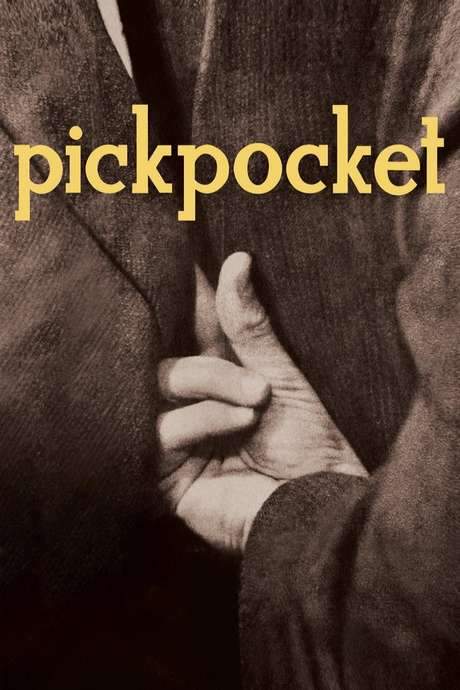
Pickpocket (1959) movie poster

Plot Summary

Pickpocket (1959) Plot Summary Explained

Release, runtime and language
1959 · 75 mins · French
Directed by
Robert Bresson
Starring
Pierre Étaix, Jean Pélégri, Martin LaSalle, Dominique Zardi, Pierre Leymarie, Marika Green

After a whimsical stint as a pickpocket lands Michel in jail, his mother dies soon after his release. Ignoring his friend Jacques and neighbor Jeanne’s concerns, he joins petty thieves to hone his skill. While a police inspector watches, Michel seeks honest work, yet the lure of stealing remains hard to resist.

On this page (7)
  1. 1 Where to watch
  2. 2 What happens: full plot
  3. 3 Plot questions answered
  4. 4 The book behind the movie
  5. 5 Movie threads
  6. 6 Movies like Pickpocket
  7. 7 Every angle

Where to watch

Where to Watch Pickpocket (1959)

Where can you watch Pickpocket? Stream, rent or buy it in the US, including on Amazon Video, Apple TV Store and Fandango At Home: current JustWatch availability with up-to-date prices.

Streaming availability powered by JustWatch

Full plot summary · contains spoilers

What Happens in Pickpocket: Full Plot Summary

The whole story of Pickpocket (1959) explained, from the opening scene to the final frame: every key event, every twist and what it all adds up to. Read it as a quick recap before the sequel, to check a scene you missed, or to finally understand what really happened.

Michel is an unemployed young man living in Paris. His The Mother is sickly, and his friends Jacques and Jeanne try to help him; Jacques finds him several jobs, but Michel considers them beneath him. He also has a distant relationship with his mother and frequently makes up excuses to avoid visiting her, despite his friends’ entreaties.

Michel steals money from a spectator at Longchamp Racecourse. To his surprise, the police arrest him, but Jean Pélégri (the chief inspector) is forced to release him for lack of proof.

At a bar, Michel asks Jacques for help finding a job. Jacques is skeptical, but agrees to help. Coincidentally, the chief inspector is also at the bar. Michel comes to life and subtly gloats to the inspector about his escape. Like Dostoyevsky’s Raskolnikov, he asserts that superior men should not be bound by the same laws as everyone else.

One day, Michel finds himself drawn to the graceful movements of a subway pickpocket. Michel tries to copy the pickpocket’s technique. After some early successes, he proudly tells Jacques he no longer needs a job. However, he is caught after a week, and is forced to lie low for a few days. He sees a mysterious man lurking outside his flat. Although Jacques and Jeanne ask him to visit his mother, who is very ill, Michel pursues the man, a pickpocket proposing a profitable partnership.

Michel’s focus on crime damages his relationship with his family and friends. He goes to a carnival with Jacques and Jeanne, but leaves to steal a man’s watch. Later, he resentfully questions Jacques about whether he is in love with Jeanne. In addition, he neglects to visit his mother until she is on her deathbed; she kindly tells him that he has enough talent to succeed in life “whenever you want.” After she dies, Michel and Jeanne argue about whether she will go to heaven. Michel asserts that moral rules do not exist. Jeanne asks Michel whether he believes in anything. Michel responds, > I believed in God—for three minutes.

Michel’s two accomplices are arrested. Although Michel escapes, the chief inspector visits his flat as a warning. The inspector explains that while he hoped Michel would go straight after the close call at Longchamp, he no longer believes Michel will change. He adds that a month before Michel was arrested at the racetrack, Jeanne filed a police report saying that someone had stolen money from Michel’s mother. However, the report was withdrawn the next day. He does not say who withdrew the complaint, but implies he knows Michel was the thief. After a conversation with Jeanne, Michel realizes that his mother withdrew the complaint, meaning that his mother knew her son stole from her. Jeanne is appalled, but tearfully hugs him.

To avoid the police, Michel flees to London, where he resumes pickpocketing. Two years later, he returns to Paris, having wasted all of his ill-gotten gains on gambling and women. He visits Jeanne and learns that while she had a child with Jacques, she decided to be a single mother because she did not love Jacques. Michel agrees to get an honest job to support the child, but his temptations remain.

One day, Michel finds himself following a racing enthusiast to Longchamp. Although Michel suspects a setup, he cannot resist stealing from him. As it turns out, the man is a plainclothes officer conducting a sting operation. This time, the police actually send Michel to jail.

Jeanne dutifully visits Michel in jail every week, but when she skips three straight weeks, Michel finds himself pained by her absence. She visits the following week, and Michel kisses her. Michel remarks to himself, “Oh, Jeanne, what a strange path I had to take to reach you at last.”

Last updated: October 05, 2025 at 12:37

Was this helpful?

Plot questions answered

Pickpocket Plot Explained: Your Questions Answered

The questions people ask most about Pickpocket (1959): what happens in the confusing scenes, why the characters do what they do, the twists, hidden details and what the ending means. Each answer contains spoilers.

Q1

Why does Michel believe he doesn't have to follow the same laws as everyone else?

Michel adopts a Raskolnikov-like philosophy that superior men are not bound by conventional moral laws. After escaping arrest at Longchamp due to lack of evidence, he explicitly tells the chief inspector that superior men should not be constrained by the same rules as ordinary people. This philosophical justification allows him to rationalize his criminal behavior as a natural expression of his supposed superiority, rather than viewing it as simple theft.

Foreshadowing: His early rejection of honest job opportunities, believing them beneath him, establishes his inflated sense of self-worth.

  • michel
  • philosophy
  • superior men
  • raskolnikov
  • laws
  • justification
Q2

Why did Michel's mother withdraw the police report after he stole from her?

Michel stole money from his own mother, and Jeanne filed a police report on his behalf. However, his mother personally withdrew the complaint the next day, revealing that she knew all along it was her own son who had stolen from her. Despite his neglect and betrayal, she chose to protect him rather than see him prosecuted, demonstrating unconditional maternal love even in the face of his criminal nature.

Foreshadowing: Michel's distant relationship with his mother and his avoidance of visiting her while she was ill hints at his guilt and awareness of having wronged her.

  • mother
  • police report
  • withdrawal
  • stole from mother
  • jeanne
  • unconditional love
Q3

Why does Jeanne continue to care about Michel despite his criminal behavior?

Jeanne's love for Michel persists despite his crimes because she sees his potential for goodness beneath his destructive behavior. Even after learning he stole from his dying mother, she is appalled but still hugs him. Her devotion is tested when she has a child with Jacques but chooses to be a single mother because she doesn't love him. She continues visiting Michel in jail weekly, and her three-week absence causes him real pain, showing their connection has become genuine.

Foreshadowing: Jeanne's early attempts to help Michel find work and her concern for his mother show her patient, supportive nature from the start.

  • jeanne
  • love
  • support
  • devotion
  • michel
  • prison visits
Q4

What causes Michel's emotional transformation at the end of the film?

Michel transforms when Jeanne stops visiting him for three consecutive weeks. Her absence creates genuine pain and loneliness, replacing his previous detachment. This emotional void makes him realize what truly matters to him, not the thrill of theft or his philosophical superiority, but human connection. When she returns, he kisses her and acknowledges their relationship, marking a shift from his earlier emotional isolation and nihilism.

Foreshadowing: Earlier, Michel questions whether Jacques loves Jeanne, revealing his own emotional stake in their relationship despite his denial.

  • transformation
  • emotional breakthrough
  • jeanne
  • jail
  • kiss
  • redemption
Q5

Why does Michel steal money from his own mother?

The film doesn't explicitly state Michel's motivation for stealing from his mother, but the context suggests desperation combined with his growing addiction to theft. By this point, Michel had fully embraced his criminal lifestyle and likely saw his mother as an easy target. The theft represents the depths of his moral decline, he steals from the one person who unconditionally loves him, demonstrating how completely his criminal identity has overwritten any sense of familial duty or morality.

Foreshadowing: Michel's early avoidance of visiting his sick mother and his increasing obsession with theft foreshadow this ultimate betrayal.

  • theft
  • mother
  • stealing
  • moral decline
  • desperation
Q6

What does Michel mean when he says 'what a strange path I had to take to reach you'?

In the final scene, Michel acknowledges that his journey through crime, imprisonment, and emotional isolation was necessary to finally be vulnerable enough to truly connect with Jeanne. His statement suggests that without experiencing the emptiness of his nihilistic philosophy and the pain of losing everyone who cared for him, he would never have been able to accept genuine love. The path was 'strange' because it led him away from Jeanne initially, yet ultimately brought him to her.

Foreshadowing: Michel's earlier declaration that moral rules do not exist, followed by his admission of believing in God 'for three minutes,' shows his philosophical struggle before reaching this conclusion.

  • meaning
  • quote
  • jeanne
  • path
  • redemption
  • emotional journey
Q7

Why does Michel avoid visiting his mother while she is dying?

Michel avoids visiting his dying mother primarily because he has already stolen from her and feels guilty. His philosophy of moral nihilism is a defense mechanism, he must believe rules don't exist to avoid confronting the weight of his actions against his mother. Additionally, his pride prevents him from facing her with any sincerity, so he uses his criminal pursuits as excuses to stay away until she is on her deathbed.

Foreshadowing: His distant relationship with his mother and frequent excuses to avoid her establish this pattern early in the film.

  • mother
  • deathbed
  • avoidance
  • guilt
  • pride
  • moral conflict
Q8

Why is Longchamp Racecourse significant in the story?

Longchamp Racecourse serves as both the setting for Michel's first theft and his eventual downfall. He steals there early in the film and escapes due to lack of evidence, which bolsters his belief in his own superiority and invincibility. Later, when he returns to Paris and promises to go straight, he is drawn back to Longchamp and falls into a sting operation, proving the inspector was right about him all along. The circular structure shows how his obsession with this location leads to his undoing.

Foreshadowing: His early success at Longchamp creates the false confidence that he can escape consequences indefinitely.

  • longchamp
  • racecourse
  • theft
  • sting operation
  • arrest
  • circular structure
Q9

Why does Michel refuse the jobs Jacques finds for him?

Michel rejects honest jobs because his ego and belief in his own superiority make him view them as beneath him. He tells Jacques he no longer needs a job after experiencing success as a thief, and earlier he dismisses job opportunities as unsuitable for someone of his abilities. This pride prevents him from taking the honest path his friends offer, even though he is unemployed and his mother is ill.

Foreshadowing: His belief that 'superior men' shouldn't be bound by ordinary rules directly connects to his refusal to accept humble employment.

  • jobs
  • rejection
  • pride
  • superiority
  • jacques
  • honest work
Q10

Why does the chief inspector release Michel after his first arrest at Longchamp?

The chief inspector is forced to release Michel because there is insufficient proof to convict him, the victim cannot positively identify Michel as the thief. This legal technicality allows Michel to walk free, which only strengthens his belief that he is clever enough to evade consequences. The inspector later admits he hoped this close call would lead Michel to change his ways, but he eventually realizes Michel won't reform.

Foreshadowing: The inspector's later persistence in tracking Michel and setting up the sting operation shows he learned from this initial mistake.

  • chief inspector
  • arrest
  • release
  • lack of proof
  • pursuit
  • sting operation

Movie threads

More Movies Like Pickpocket, by Mood & Story

Curated lists built around what makes Pickpocket tick: the same mood, the same kind of story or the same emotional payoff. Each list explains why these movies belong together.

Slow burn moral descent stories like Pickpocket

Character-driven dramas where a quiet obsession leads to an existential reckoning. If you appreciated the methodical, psychological unraveling in Pickpocket, this collection features movies with similar moral complexity. Discover other character studies where a protagonist's obsessive path leads to alienation and an eventual, often bittersweet, confrontation with their choices.

  • existential
  • somber
  • alienated
  • tense
  • introspective
  • compulsive
  • Tone: melancholic, grim, introspective
  • Pacing: slow, deliberate
Why these movies?

The story pattern: The narrative pattern centers on a protagonist who, driven by an internal compulsion or philosophical curiosity, engages in a transgressive act. The story unfolds slowly, charting their increasing skill and alienation, often under the watchful eye of an authority figure. The climax is typically not an action set piece but a moment of profound moral or emotional collapse, sometimes followed by a glimmer of connection or understanding.

Why they belong together: These films are grouped by their shared commitment to exploring the psychology of transgression. They prioritize a melancholic tone, slow pacing, and heavy emotional weight, creating a cohesive experience for viewers interested in philosophical crime dramas and deep character studies.

Movies about lonely redemption like Pickpocket

Stories of profound loneliness where human connection offers a painful, limited hope. For viewers moved by the bittersweet final connection in Pickpocket, this list features films with similar emotional arcs. Explore stories of isolated characters who find a painful, limited form of hope or redemption after a period of profound alienation and despair.

  • lonely
  • alienated
  • somber
  • redemptive
  • bittersweet
  • introspective
  • Tone: melancholic, bittersweet
  • Pacing: slow, reflective
Why these movies?

The story pattern: The journey involves a protagonist who is emotionally or physically cut off from the world, often due to their own actions or a philosophical stance. They endure significant loss and despair. The story's resolution doesn't offer a simple fix; instead, it presents a fragile, authentic human connection that breaks through their isolation, making the ending feel bittersweet rather than triumphant.

Why they belong together: These movies share a specific emotional mix: a foundation of heavy sadness and alienation, punctuated by a climax that offers a nuanced, bittersweet hope. The tone is consistently melancholic, and the pacing allows the weight of the loneliness and the significance of the connection to fully resonate.

If you liked this

Movies Like Pickpocket

Similar movies to Pickpocket: the same genre, themes or kind of story. Each one comes with its own plot summary, timeline and ending explained.

Browse all movie summaries

Every angle

Pickpocket (1959) Explained: Plot, Timeline & Characters

Everything about Pickpocket in one place: what happens in the plot summary, the timeline in chronological order, the characters and meaning and a spoiler-free summary. What's After the Movie adds the cast, box office and post-credit scenes.

Coming soon on iOS and Android

The Plot Explained Movie Summary App

Plot summaries, endings explained and timelines on your phone. Catch up on any movie in minutes, save your favorites and never miss a twist again.

Be the first to know when we launch. Your email stays private, always.

Learn more about the app