Plot Explained Spoilers guaranteed!
Plot Explained

Browse by genre

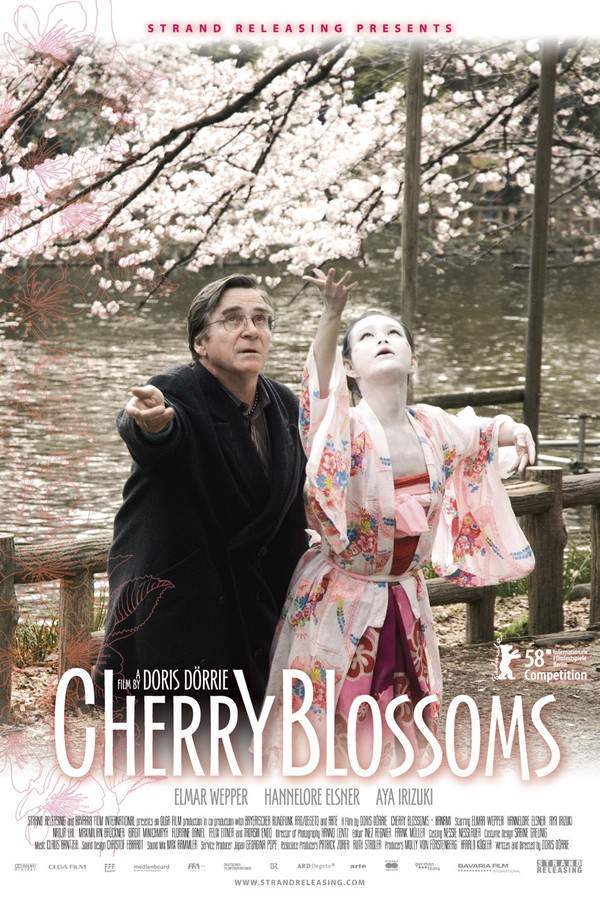
Cherry Blossoms (2009) movie poster

Plot Summary

Cherry Blossoms (2009) Plot Summary Explained

Release, runtime and language
2009 · 127 min · English
Loading streaming availability…
Directed by
Doris Dörrie
Starring
Aya Irizuki, Elmar Wepper, Hannelore Elsner, Maximilian Brückner

As a secret illness progresses, Rudi reunites with his family in Berlin, unknowingly facing their last moments together. Following the sudden loss of his wife, Trudi, Rudi is devastated but determined to find meaning. He travels to Tokyo during the stunning cherry blossom festival, where he begins a deeply moving journey of self-discovery and attempts to find redemption amidst the beauty and fragility of life.

On this page (5)
  1. 1 Where to watch
  2. 2 What happens: full plot
  3. 3 Plot questions answered
  4. 4 Movie threads
  5. 5 Every angle
Loading streaming availability…

Full plot summary · contains spoilers

What Happens in Cherry Blossoms: Full Plot Summary

The whole story of Cherry Blossoms (2009) explained, from the opening scene to the final frame: every key event, every twist and what it all adds up to. Read it as a quick recap before the sequel, to check a scene you missed, or to finally understand what really happened.

Trudi Angermeir, who has long held a dream of visiting Japan with her husband, Rudi, is devastated to discover that he is terminally ill. Rather than revealing the heartbreaking news to him, she suggests they take a trip to see their youngest son, Karl, in Tokyo—a plan Rudi ultimately declines. In a slight compromise, he agrees to visit their daughter and other son in Berlin.

Once they arrive in Berlin after their journey from their quaint Bavarian village, their oldest son, Klaus, picks them up and takes them home, where they are greeted by his wife, Emma, and their children, Celine and Robert. The mood is less than warm, and the visit feels burdensome to Klaus and the others, who reminisce about feeling neglected while growing up in comparison to their younger brother.

The next day, Karolin's girlfriend, Franzi, who seems to have a fondness for the elderly couple, takes them out to see the sights. Later that day, their daughter joins them at her and Franzi's place, but the visit quickly turns tense, prompting Trudi and Rudi to return to Klaus’s home. A minor hiccup occurs when they struggle to purchase their S-Bahn tickets, leading to a snap from Rudi. In an effort to lighten the mood, Trudi suggests they visit a nearby beach.

As the days unfold, the elderly couple venture to a beach resort, spending tranquil days strolling along the coastline. However, tragedy strikes when Rudi discovers Trudi has passed away in her sleep. In the aftermath, their children—alongside Karl who flies in from Tokyo—rally around Rudi, who is lost in his grief. He resents returning to a home filled with silence, and the only attendees at Trudi's burial are Franzi and himself.

Time passes and Rudi finds himself compelled to fly to Tokyo, staying in Karl's modest flat. Unfortunately, Karl’s hectic schedule leaves little room for shared experiences, leaving Rudi alone with memories of Trudi. In a touching tribute to her memory, he begins wearing her clothes, determined to keep her spirit alive. As Rudi navigates through the bustling Tokyo streets, he gradually discovers the city’s quieter corners, feeling a connection to Trudi in the process. One day, while leisurely wandering, he encounters a young dancer named Yu in a park.

As they form a bond, Rudi learns that Yu is an orphan, using dance, particularly Butoh, to cope with her grief. Their friendship deepens, although it causes tension with Karl, who disapproves of Rudi's choices. After learning that Yu is homeless, Rudi invites her to stay with them, eliciting a dispute with Karl. The following morning, Rudi leaves quietly and proposes a trip to Mount Fuji, determined to fulfill Trudi's dream. They embark on this journey, but upon arrival, the mountain remains elusive behind clouds.

They register at a ryokan and spend days hoping for a clearing. Rudi’s health begins to falter, and one night, as he succumbs to fever, Yu tends to him. One clear dawn, Rudi awakens to find Mount Fuji visible—a moment of joy that compels him to don Trudi's kimono and rush to the lakeshore for a Butoh dance inspired by her spirit. The poignant moment is followed by Rudi collapsing and passing away.

In the wake of his death, Yu discovers an envelope filled with Rudi's savings, a heartfelt gift left for her. Karl arrives, and together they perform a traditional ceremony to honor Rudi's ashes. After returning to Tokyo, they say their goodbyes outside Karl's building.

Back at their parents' home, Klaus, Karolin, and Karl ponder the loss of both Trudi and Rudi. Franzi reflects on Rudi’s later happiness, stating that “he probably was happy in the end.” The film concludes with Yu back in the park, dancing under the cherry blossoms, wearing Rudi's hat amidst her grief, a beautiful homage to the love and memories they shared.
Last updated: November 08, 2024 at 03:41

Was this helpful?

Plot questions answered

Cherry Blossoms Plot Explained: Your Questions Answered

The questions people ask most about Cherry Blossoms (2009): what happens in the confusing scenes, why the characters do what they do, the twists, hidden details and what the ending means. Each answer contains spoilers.

Q1

Why does Trudi hide Rudi's illness and suggest going to Berlin instead of Tokyo?

Trudi learned that Rudi is terminally ill and chose to keep this devastating news from him to protect his remaining time together from being overshadowed by fear and sadness. Instead of revealing the truth, she suggested visiting their youngest son Karl in Tokyo as a final trip, but when Rudi declined, she agreed to visit their daughter and other son in Berlin as a compromise, perhaps wanting to spend his remaining time surrounded by family, even if those relationships were strained.

Foreshadowing: Early in the film, Trudi's insistence on traveling and her quiet sadness hint at her knowledge of his condition.

  • trudi
  • rudi
  • terminal illness
  • secret
  • berlin
  • tokyo
Q2

Why does Rudi refuse to go to Tokyo but agree to visit Berlin?

Rudi declines the Tokyo trip likely because he senses something is wrong or simply isn't ready for such a long journey. His resistance may also stem from his complicated relationship with Karl, the youngest son who lives independently in Tokyo. Berlin, being more familiar and closer to their Bavarian home, represents a less daunting destination for a man who may already be feeling unwell.

  • rudi
  • tokyo
  • berlin
  • karl
  • travel
Q3

Why are Klaus and his family so cold toward Rudi and Trudi during their visit?

Klaus and his family harbor resentment from their childhood, feeling neglected in comparison to their younger brother Karl, who seemed to receive more attention from their parents. This long-standing feeling of being less valued creates tension during the visit, making the elderly couple feel like a burden rather than welcomed guests.

Foreshadowing: The tension is introduced early when Klaus picks them up and the atmosphere remains cold despite the family reunion.

  • klaus
  • family
  • tension
  • neglect
  • children
Q4

What causes Trudi's sudden death?

Trudi dies in her sleep at the beach resort. The summary does not specify whether her death was related to illness or natural causes, but given the context of the film, it appears to be a sudden, unexpected passing that leaves Rudi devastated, adding to the tragic timing of their journey.

  • trudi
  • death
  • sleep
  • beach resort
Q5

Why does Rudi start wearing Trudi's clothes after her death?

After Trudi's death, Rudi begins wearing her clothes as a way to keep her spirit close and feel connected to her memory. This act of wearing herkimono in Tokyo and later at Mount Fuji represents his deep grief and his desire to carry her with him as he fulfills their shared dream of visiting Japan.

  • rudi
  • trudi
  • clothes
  • kimono
  • memory
Q6

Who is Yu and why does Rudi form such a strong bond with her?

Yu is a young orphan living in Tokyo who uses Butoh dance to cope with her own grief and loss. Rudi meets her in a park and recognizes a shared sense of bereavement, both are dealing with profound loss. Their connection deepens as they both processing grief through artistic expression, and Yu helps Rudi reconnect with life after Trudi's death.

Foreshadowing: Rudi's discovery of Yu in the park mirrors his own search for meaning after losing Trudi.

  • yu
  • butoh
  • dance
  • orphan
  • grief
Q7

Why does Karl disapprove of Rudi's friendship with Yu?

Karl is concerned about his father's judgment and choices following Trudi's death. He worries that Rudi, grieving and possibly in declining health, is making unwise decisions, particularly when Rudi invites Yu, a homeless young woman, to stay in his apartment. Karl's disapproval stems from paternal concern, though it also reflects their strained relationship and inability to communicate openly.

  • karl
  • yu
  • conflict
  • father
  • disapproval
Q8

Why is Mount Fuji so important to Rudi and Trudi?

Mount Fuji represents Trudi's unfulfilled dream of visiting Japan, the trip she had long imagined taking with her husband. When Rudi decides to travel to Tokyo after her death, fulfilling this dream becomes his personal mission. The mountain symbolizes her aspirations, their shared hope, and ultimately Rudi's final act of love and dedication to her memory.

Foreshadowing: Trudi's dream of Japan is mentioned at the beginning of the film, establishing Mount Fuji as the ultimate destination.

  • mount fuji
  • trudi
  • dream
  • japan
  • tokyo
Q9

What does Rudi's Butoh dance at Mount Fuji mean?

When Rudi sees Mount Fuji clearly for the first time, he puts on Trudi's kimono and performs a Butoh dance by the lake. This dance is a tribute to Trudi, a way of honoring her memory and expressing his love through the same art form Yu uses to process grief. It represents Rudi finally finding peace and meaning, merging his grief with beauty and artistic expression.

  • rudi
  • butoh
  • dance
  • mount fuji
  • kimono
Q10

What does Rudi leave for Yu after his death?

After Rudi collapses and dies at Mount Fuji, Yu discovers an envelope filled with Rudi's savings, a heartfelt gift left to support her future. This act demonstrates that Rudi's journey was not just about fulfilling his own dream but also about helping Yu find stability and hope, continuing the cycle of care and connection.

  • rudi
  • yu
  • money
  • savings
  • envelope
Q11

What does the final scene with Yu dancing under the cherry blossoms represent?

The ending shows Yu dancing in the park wearing Rudi's hat, continuing the dance of remembrance she shared with him. The cherry blossoms, which frame the film, symbolize the fleeting nature of life and love. Yu carrying on the dance represents Rudi's legacy, he found peace and meaning through their connection, and she now honors that memory through her art.

Foreshadowing: The cherry blossoms appear throughout the film, from Tokyo to the final scene, symbolizing life's transience.

  • yu
  • cherry blossoms
  • dance
  • ending
  • legacy
Q12

Why is Franzi the only other person at Trudi's burial?

Franz is the only person besides Rudi at Trudi's burial because the rest of the family, Klaus, Karolin, and Karl, did not attend. This highlights the isolation Rudi feels after Trudi's death and the fractured state of their family. Franzi's presence, despite being only their daughter's girlfriend, underscores her genuine affection for the elderly couple.

  • franzi
  • burial
  • family
  • trudi
Q13

Why do Rudi and Yu wait days at the ryokan to see Mount Fuji?

Upon arriving at Mount Fuji, the mountain remains hidden behind clouds. Rather than leaving, Rudi and Yu register at a ryokan and wait for several days, hoping for a clear view. This patience reflects Rudi's determination to fulfill Trudi's dream completely, he wants to see the mountain as she would have wanted to see it, not just visit it blindly.

  • mount fuji
  • ryokan
  • clouds
  • waiting

Movie threads

More Movies Like Cherry Blossoms, by Mood & Story

Curated lists built around what makes Cherry Blossoms tick: the same mood, the same kind of story or the same emotional payoff. Each list explains why these movies belong together.

Movies like Cherry Blossoms about elderly self-discovery

Quiet stories of elderly characters finding new meaning after profound loss. Discover films similar to Cherry Blossoms that explore quiet, profound journeys of self-discovery later in life. If you liked watching Rudi's pilgrimage to Tokyo, you'll appreciate these character-driven stories about finding new meaning and connection after a deep personal loss.

  • contemplative
  • lonely
  • reflective
  • somber
  • tender
  • autumnal
  • Tone: melancholic, tender, reflective
  • Pacing: slow, contemplative, deliberate
Why these movies?

The story pattern: These narratives typically follow a linear, straightforward path, beginning with a catalyst of loss or disillusionment. The main character then steps outside their familiar world, often traveling, to process their grief and reassess their life. The conflict is primarily internal, focusing on coming to terms with the past and finding a bittersweet but meaningful resolution.

Why they belong together: Movies in this thread share a melancholic yet tender tone, a slow, contemplative pacing, and a heavy emotional weight centered on themes of grief and aging. They are united by their focus on the quiet dignity of an elderly protagonist navigating a new chapter, offering a poignant, reflective viewing experience.

Movies like Cherry Blossoms about finding solace in grief

Stories where profound loss is met with quiet, beautiful moments of connection. Explore films similar to Cherry Blossoms that handle grief with a tender, bittersweet approach. If you appreciated how beauty and ritual provided comfort in the face of loss, you will find these movies resonate. They are quiet, heavy dramas that balance sadness with moments of profound connection.

  • melancholic
  • somber
  • tender
  • contemplative
  • quiet
  • bittersweet
  • Tone: melancholic, bittersweet, tender
  • Pacing: slow, gentle, observational
Why these movies?

The story pattern: The narrative pattern involves a character engulfed by a significant loss, whose journey is not about a quick recovery but about learning to carry the weight. The plot is often sparse, prioritizing mood and small, significant encounters over complex events. Resolution comes not from solving the grief but from achieving a fragile peace, often through an unexpected friendship or the calming influence of nature and tradition.

Why they belong together: These films are grouped by their specific emotional mix: a heavy core of sadness balanced by a tender, almost delicate presentation. They share a slow pace, a melancholic tone, and a focus on the sensory and emotional details that make grief bearable, resulting in a deeply moving yet not devastating experience.

Every angle

Cherry Blossoms (2009) Explained: Plot, Timeline & Characters

Everything about Cherry Blossoms in one place: what happens in the plot summary, the timeline in chronological order, the characters and meaning and a spoiler-free summary. What's After the Movie adds the cast, box office and post-credit scenes.

Coming soon on iOS and Android

The Plot Explained Movie Summary App

Plot summaries, endings explained and timelines on your phone. Catch up on any movie in minutes, save your favorites and never miss a twist again.

Be the first to know when we launch. Your email stays private, always.

Learn more about the app