Plot Explained Spoilers guaranteed!
Plot Explained

Browse by genre

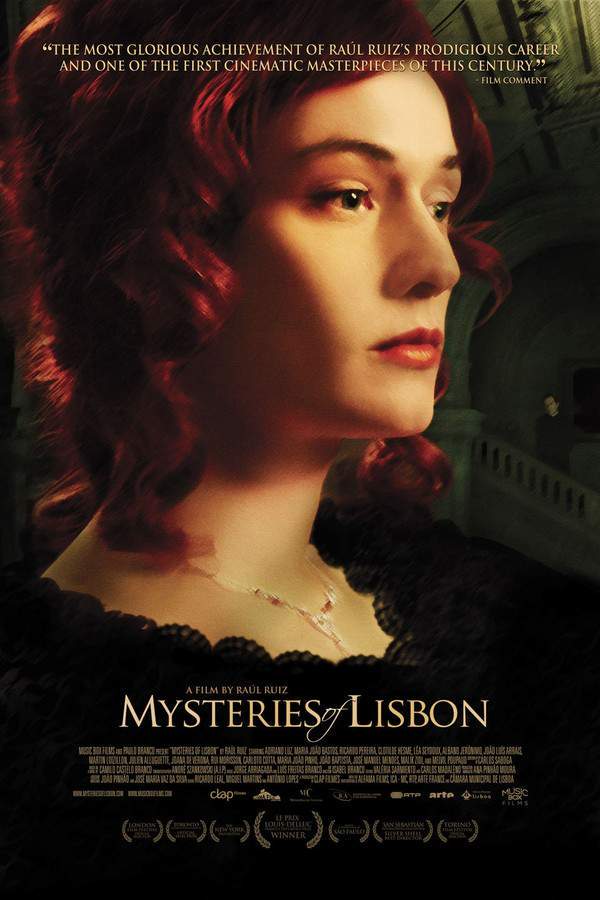
Mysteries of Lisbon (2011) movie poster

Plot Summary

Mysteries of Lisbon (2011) Plot Summary Explained

Release, runtime and language
2011 · 272 min · Portuguese
Loading streaming availability…
Directed by
Raoul Ruiz

Born from a forbidden love, João embarks on a quest to uncover his mysterious origins in 19th-century Lisbon. His search leads him through a complex web of secrets and connections, spanning Portugal, Spain, France, and Italy. Over three decades, João’s path intersects with a diverse cast of characters, their lives intricately woven together through love, loss, and unexpected turns of fate as he attempts to understand his place in a world of shifting alliances and long-held secrets.

On this page (6)
  1. 1 Where to watch
  2. 2 What happens: full plot
  3. 3 Plot questions answered
  4. 4 Movie threads
  5. 5 Movies like Mysteries of Lisbon
  6. 6 Every angle
Loading streaming availability…

Full plot summary · contains spoilers

What Happens in Mysteries of Lisbon: Full Plot Summary

The whole story of Mysteries of Lisbon (2011) explained, from the opening scene to the final frame: every key event, every twist and what it all adds up to. Read it as a quick recap before the sequel, to check a scene you missed, or to finally understand what really happened.

As the story unfolds, we meet João Arrais (João Arrais), a young orphan navigating the challenges of life within a Portuguese school under the care of the kind-hearted Father Dinis (Adriano Luz). Set against the backdrop of the Revolução Liberal, João's innocent nature is brutally challenged as he faces relentless bullying from a classmate who cruelly accuses him of being the child of a criminal. The hardships compound when João falls ill, seemingly marking the climax of his disastrous fate.

In the midst of his suffering, a surprising glimmer of hope appears in the form of a nurturing woman who stays by his bedside with a maternal gaze. Upon his recovery, Father Dinis reveals that this figure is none other than João's long-lost mother, Countess Ângela de Lima (Maria João Bastos). Imprisoned in her home by her oppressive husband, the Count of Santa Bárbara (Albano Jerónimo), she has led a life steeped in quiet despair. Father Dinis plays a pivotal role in facilitating her escape while her husband fights for his revolutionary beliefs.

As the narrative progresses, we learn that João's genuine lineage is linked to Pedro da Silva (João Baptista), a young nobleman struggling against poverty and the burdens of status. The situation intensifies when Ângela's father, the Marquis of Montezelos (Rui Morrison), dismisses da Silva's marriage proposal and instead opts for the infamous assassin Knife Eater (Ricardo Pereira) to eliminate the financially burdened nobleman. A poignant encounter unfolds as da Silva seeks refuge with Father Dinis, recounting his tale until his untimely demise.

Transforming into a gypsy, Dinis trails Ângela to the countryside, where she gives birth to João. He confronts Knife Eater and secures the assassin's silence when learning about the plot orchestrated by Ângela's father to abduct and murder the newborn. Father Dinis, with unwavering resolve, takes on the role of João's protector while Ângela is forced into marriage with the Count of Santa Bárbara.

In the present, the Count maliciously spreads rumors of Dinis's presumed affair with Ângela. When Dinis approaches him for a confrontation, he stumbles upon the Count's dying moments, attended by his devoted maid and lover, Eugénia (Joana de Verona). Dinis also crosses paths with Knife Eater, now known as Alberto de Magalhães, who has returned from Brazil, dripping with wealth accrued through dubious means, and who mockingly taunts the Count's falsehoods. Following the Count’s death, Ângela chooses to reject her inheritance, opting instead to leave João with Dinis before seeking refuge in a convent.

The narrative deepens as mysteries surrounding Father Dinis's life begin to unravel, thanks in part to Friar Baltasar da Encarnação's revelations about his past. Once known as Álvaro de Albuquerque, he had been embroiled in a forbidden romance with the Countess de Vizo, leading them to flee to Italy, where tragedy struck during childbirth. The aftermath of this loss saw Dinis placed in the care of a French nobleman, setting into motion a series of life-altering events.

As Dinis matured, he found himself caught up in Napoleon's army in Spain under the alias Sebastião de Melo. Meanwhile, Alberto de Magalhães, having reinvented his life, now enjoyed a stable marriage with Eugénia, who once served as the Count's mistress. However, the past resurfaces in the form of Elisa de Montfort, a vengeful French duchess, determined to settle the score regarding her previous financial entanglements with him.

The intricate connections between characters escalate further when Dinis confides in Elisa regarding her mother’s tragic end. Tensions mount as De Magalhães confronts her, driven by anger, but it is Dinis who intervenes just in time to prevent catastrophe, revealing the depth of animosity lingering between Elisa and De Magalhães.

The evolving tale emphasizes Dinis’s psychological struggles, particularly with his love for Blanche de Montfort, a relationship marred by tragedy caused by her jealous husband, Benoît. Years later, as João grows into a contemplative poet, he encounters Elisa, whose striking resemblance to his mother captivates him. This sparks a love story riddled with vengeance as Elisa persuades him to challenge De Magalhães to a duel. Yet, in a twist, De Magalhães reveals the chilling truths of their shared history and his involvement in the accidental death of Elisa's twin brother, Arthur.

As João faces his impending fate, he finds peace in dictating his memoirs, haunted by the memories of his mother’s steadfast presence during his childhood ailments. The film reaches its conclusion as João embarks on a journey to a distant colony, irrevocably altered by the harrowing truths unearthed about his family's complex legacy.

Last updated: November 22, 2024 at 16:01

Was this helpful?

Plot questions answered

Mysteries of Lisbon Plot Explained: Your Questions Answered

The questions people ask most about Mysteries of Lisbon (2011): what happens in the confusing scenes, why the characters do what they do, the twists, hidden details and what the ending means. Each answer contains spoilers.

Q1

Why was Countess Ângela separated from her son João?

Countess Ângela was forced to give up her newborn son because her father, the Marquis of Montezelos, plotted to kill the baby after rejecting Pedro da Silva's marriage proposal. To protect João, Father Dinis took the child to a Portuguese school and arranged for Ângela to marry the Count of Santa Bárbara, believing this would ensure the child's safety while allowing her to live.

Foreshadowing: Earlier, the Marquis dismisses da Silva's proposal and hires the assassin Knife Eater to eliminate him, showing the father's ruthless determination to control his daughter's fate.

  • countess angela
  • joao
  • father dinis
  • separation
  • baby
Q2

What happened to Pedro da Silva and why was he killed?

Pedro da Silva was a young nobleman in love with Countess Ângela, but her father the Marquis of Montezelos rejected him due to his poverty. The Marquis hired the assassin known as Knife Eater to murder da Silva. He sought refuge with Father Dinis but died there, leaving Ângela pregnant with João.

Foreshadowing: The Marquis explicitly chooses Knife Eater over da Silva as a suitor, directly setting the murder plot in motion.

  • pedro da silva
  • knife eater
  • assassination
  • marquis of montezelos
Q3

Who is Father Dinis really and what is his past?

Father Dinis was originally Álvaro de Albuquerque, a Portuguese nobleman who fled to Italy with the Countess de Vizo after a forbidden romance. After she died in childbirth, he was placed in the care of a French nobleman. He later joined Napoleon's army in Spain under the alias Sebastião de Melo before becoming a priest.

Foreshadowing: Friar Baltasar da Encarnação reveals these secrets gradually throughout the film, showing Dinis has lived under multiple identities.

  • alvaro de albuquerque
  • father dinis
  • sebastiao de melo
  • past identity
Q4

Why did the Count of Santa Bárbara spread rumors about Father Dinis?

The Count of Santa Bárbara maliciously spread rumors of an affair between Dinis and his wife Ângela, despite knowing this was false. This appears to be an act of spite and manipulation, perhaps motivated by resentment over Ângela's prior love for another man and the child she bore.

Foreshadowing: The Count fights for revolutionary beliefs while simultaneously engaging in personal deception, showing his hypocritical character.

  • count of santa barbara
  • rumors
  • father dinis
  • angela
Q5

Who is Alberto de Magalhães and why does he return?

Alberto de Magalhães is the alias of Knife Eater, the assassin hired by the Marquis of Montezelos. He returns from Brazil having amassed great wealth through dubious means. He now lives peacefully with Eugénia, the Count's former mistress, and mocks the Count's lies about Dinis's affair.

Foreshadowing: Dinis confronted Knife Eater in the countryside and learned of the plot against the newborn João, binding their fates together.

  • alberto de magalhaes
  • knife eater
  • assassin
  • brazil
  • wealth
Q6

Why did Countess Ângela reject her inheritance and go to a convent?

After the Count dies, Ângela chooses to reject her inheritance and entrusts João to Father Dinis before seeking refuge in a convent. This decision reflects her desire to escape the oppressive life she lived with the Count and find peace away from the world of nobility and scandal that defined her marriage.

Foreshadowing: She was described as living a life of 'quiet despair' imprisoned in her home by her husband, making her choice for freedom understandable.

  • countess angela
  • inheritance
  • convent
  • freedom
  • escape
Q7

What is the connection between João and Elisa de Montfort?

João, now a poet, encounters Elisa and is captivated by her striking resemblance to his mother. They fall in love, but Elisa manipulates him into challenging Alberto de Magalhães to a duel, using João for her own revenge. The true connection is revealed when Alberto tells João about their shared history and his involvement in the accidental death of Elisa's twin brother Arthur.

Foreshadowing: Elisa resembles João's mother from the beginning, a visual cue that hints at deeper connections between the families.

  • joao
  • elisa de montfort
  • love
  • revenge
  • duel
  • arthur
Q8

What happened to Arthur de Montfort?

Arthur de Montfort was Elisa de Montfort's twin brother. He died accidentally, and Alberto de Magalhães reveals during his confrontation with João that he was responsible for this death, adding another layer of family tragedy and motive for Elisa's vengeance.

Foreshadowing: Elisa's intense desire for revenge against Alberto stems from this loss, which is revealed only at the climax.

  • arthur de montfort
  • elisa
  • twin brother
  • death
  • accident
Q9

Why does João leave for the colony at the end of the film?

João leaves for a distant colony after coming to terms with the harsh truths about his family's legacy. Haunted by memories of his mother's presence during his childhood illness and now fully understanding the complex web of identities, murder, and lost love that defined his origins, he finds peace by dictating his memoirs before embarking on this journey irrevocably altered.

Foreshadowing: The film opens with João as an orphan facing hardship, and his final journey represents a completion of his quest to understand his origins.

  • joao
  • colony
  • journey
  • memoirs
  • resolution
  • closure
Q10

Why does Elisa de Montfort seek revenge against Alberto de Magalhães?

Elisa de Montfort is a vengeful French duchess who returns to settle old scores with Alberto de Magalhães over previous financial entanglements. Her hatred intensifies when she discovers his role in her twin brother Arthur's accidental death. She uses João as a pawn in her plot to confront Alberto.

Foreshadowing: Elisa's first appearance is marked by her determination to confront Alberto about past grievances, establishing her vendetta early.

  • elisa de montfort
  • vengeance
  • revenge
  • alberto
  • financial entanglement

Movie threads

More Movies Like Mysteries of Lisbon, by Mood & Story

Curated lists built around what makes Mysteries of Lisbon tick: the same mood, the same kind of story or the same emotional payoff. Each list explains why these movies belong together.

Epic Gothic Melancholy Movies like Mysteries of Lisbon

Epic, slow-burn stories draped in a dreamlike, sorrowful atmosphere. Discover movies like Mysteries of Lisbon that share its epic scope and deeply melancholic, gothic atmosphere. If you enjoyed the slow-burn pacing, complex web of secrets, and heavy emotional weight, you'll find similar stories of doomed romance and tragic destiny in these films.

  • melancholic
  • gothic
  • dreamlike
  • sorrowful
  • oppressive
  • doomed
  • Tone: melancholic, dreamlike, sorrowful
  • Pacing: slow burn, deliberate, epic
Why these movies?

The story pattern: These stories often unfold over long periods, using complex narrative structures like embedded flashbacks to reveal hidden connections and tragic pasts. The central journey is typically one of discovery, where characters unravel long-buried family secrets, leading to a bittersweet or sorrowful resolution.

Why they belong together: Movies in this thread are grouped by their shared somber tone, slow pacing, and heavy emotional atmosphere. They create a cohesive experience defined by a dreamlike sense of sorrow, complex plotting, and a focus on the tragic consequences of passion and secrecy.

Movies about Searching for Identity like Mysteries of Lisbon

Characters unravel complex mysteries of their own origin and hidden lineage. Find films similar to Mysteries of Lisbon that center on a protagonist's complex search for their true identity. If you were captivated by João's journey through a web of secrets and the duality of identities, these movies offer equally intricate and emotionally charged quests for the truth.

  • mysterious
  • reflective
  • sorrowful
  • complex
  • psychological
  • searching
  • Tone: mysterious, reflective, bittersweet
  • Pacing: slow, intricate, character-driven
Why these movies?

The story pattern: The narrative pattern involves a protagonist, often an orphan or someone with a mysterious background, embarking on an investigation into their origins. This quest unfolds through multiple perspectives and flashbacks, connecting a diverse cast of characters whose lives are secretly intertwined, ultimately leading to a profound redefinition of self.

Why they belong together: This thread groups films based on a shared plot archetype: the intricate search for identity. They are united by complex narratives, themes of duality and hidden lineage, and an emotional journey that is both intellectually puzzling and deeply personal.

If you liked this

Movies Like Mysteries of Lisbon

Similar movies to Mysteries of Lisbon: the same genre, themes or kind of story. Each one comes with its own plot summary, timeline and ending explained.

Browse all movie summaries

Every angle

Mysteries of Lisbon (2011) Explained: Plot, Timeline & Characters

Everything about Mysteries of Lisbon in one place: what happens in the plot summary, the timeline in chronological order, the characters and meaning and a spoiler-free summary. What's After the Movie adds the cast, box office and post-credit scenes.

Coming soon on iOS and Android

The Plot Explained Movie Summary App

Plot summaries, endings explained and timelines on your phone. Catch up on any movie in minutes, save your favorites and never miss a twist again.

Be the first to know when we launch. Your email stays private, always.

Learn more about the app