Plot Explained Spoilers guaranteed!
Plot Explained

Browse by genre

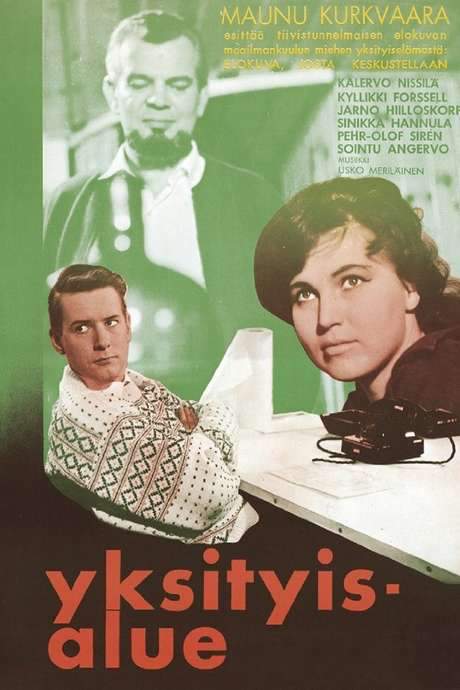
Yksityisalue (1962) movie poster

Plot Summary

Yksityisalue (1962) Plot Summary Explained

Release, runtime and language
1962 · 83 mins · Finnish
Loading streaming availability…
Directed by
Maunu Kurkvaara
Starring
Nils Brandt, Pehr-Olof Sirén, Aimo Tepponen, Tauno Söder, Sasu Haapanen, Esko Mannermaa

The apparent suicide of a prominent architect triggers a probe that a young assistant is tasked with. Skeptical that his respected mentor could have taken his own life, he uncovers a loveless marriage, an affair, and a pervasive malaise stemming from the architect’s near‑betrayal of his principles in pursuit of wealth.

On this page (6)
  1. 1 Where to watch
  2. 2 What happens: full plot
  3. 3 Plot questions answered
  4. 4 Movie threads
  5. 5 Movies like Yksityisalue
  6. 6 Every angle
Loading streaming availability…

Full plot summary · contains spoilers

What Happens in Yksityisalue: Full Plot Summary

The whole story of Yksityisalue (1962) explained, from the opening scene to the final frame: every key event, every twist and what it all adds up to. Read it as a quick recap before the sequel, to check a scene you missed, or to finally understand what really happened.

Young architect Pentti Vaara discovers the body of his superior, Toivo Koski at Koski’s villa. The cause of death is ruled a suicide. Koski’s wife Margit Koski and Dr. Carlstedt agree to report the death as a heart attack, though the true cause remains a secret shared only by Pentti Vaara, Margit Koski, and Dr. Carlstedt.

Driven to uncover what happened in the weeks leading up to the tragedy, Pentti teams up with Mäkelä, a worldly and seasoned figure whose experience helps guide the investigation. The story unfolds through a careful examination of personal objects and a diary, and it slips into flashbacks that reveal Toivo’s last weeks. Through these fragments, we see a man who has grown increasingly disillusioned with modern Finnish architecture, perceiving it as both artistically and ethically bankrupt, a critique that sits at the heart of his personal crisis.

It emerges that Toivo had affairs with two young employees at his office, Kaisu and Soili. He was also deeply dissatisfied with an earlier competition entry and exhausted by his own mounting frustrations. In a calculated move, Toivo arranges events so that Pentti will be the one to discover his body, twisting the final act of the tragedy into a personal ordeal for his successor.

In the closing winter scene, Pentti and Mäkelä attend Toivo’s funeral, a somber rite that underscores the distance between public reputation and private despair. The encounter with Soili at the ceremony leaves Pentti at a crossroads, and the two of them walk away together along a birch-lined avenue, a quiet pivot toward an uncertain future.

Last updated: March 05, 2026 at 18:41

Was this helpful?

Plot questions answered

Yksityisalue Plot Explained: Your Questions Answered

The questions people ask most about Yksityisalue (1962): what happens in the confusing scenes, why the characters do what they do, the twists, hidden details and what the ending means. Each answer contains spoilers.

Q1

Why did Toivo Koski commit suicide?

Koski took his own life because he had become deeply disillusioned with modern Finnish architecture, which he saw as both artistically and ethically bankrupt. This professional crisis was compounded by his exhaustion from a recent competition entry he was dissatisfied with, and the weight of his double life involving affairs with two young employees at his office. The combination of artistic compromise, personal hypocrisy, and mounting frustration created an unbearable situation that led to his suicide.

Foreshadowing: Earlier scenes show Koski expressing growing frustration with the state of architecture, hinting at the despair that would culminate in his decision.

  • Koski suicide
  • architect suicide
  • disillusionment
  • Finnish architecture
  • professional crisis
Q2

Why did Koski arrange for Pentti to find his body?

Koski deliberately orchestrated events so that his protégé Pentti Vaara would be the one to discover his body. This was a calculated final act, Koski wanted to turn his death into a personal ordeal for his successor, using the traumatic discovery as a way to pass on his burden and perhaps test or shape Pentti in some meaningful way.

Foreshadowing: The investigation itself is driven by Pentti's personal connection to Koski, suggesting the mentor-student relationship was central to Koski's final plan.

  • Pentti Vaara
  • Koski body discovery
  • orchestrated death
  • mentor relationship
Q3

Why was Koski's death reported as a heart attack instead of suicide?

Margit Koski and Dr. Carlstedt agreed to report the death as a heart attack to shield Koski's reputation and avoid scandal. The three people who knew the truth, Pentti, Margit, and the doctor, kept the suicide secret to protect the family name and preserve public appearances, as suicide carried significant social stigma at the time.

Foreshadowing: The decision to hide the true cause is made immediately after the body is discovered, showing the priority placed on maintaining reputation over truth.

  • reported cause of death
  • heart attack
  • cover-up
  • scandal
  • reputation
Q4

Why was Koski disillusioned with Finnish architecture?

Koski believed that modern Finnish architecture had become both artistically and ethically bankrupt. He saw the profession he had dedicated his life to as having lost its integrity, representing not just a creative failure but a moral one. This conviction that his life's work had been compromised for commercial and social success deepened his sense of failure and contributed to his decision to end his life.

Foreshadowing: The film's narrative frames architecture as central to Koski's identity, making his disillusionment with the field feel like a personal betrayal of everything he stood for.

  • Finnish architecture
  • artistic integrity
  • ethical bankruptcy
  • professional failure
  • modern architecture
Q5

What was the significance of Koski's affairs with Kaisu and Soili?

Koski had affairs with two young employees at his office, Kaisu and Soili. These extramarital relationships added to his personal conflicts and the growing disconnect between his public persona and private life. The affairs represent another layer of his hypocrisy, while judging modern architecture for its ethical bankruptcy, he himself was engaging in ethically questionable behavior that could damage others and himself.

Foreshadowing: The investigation uncovers these relationships gradually, revealing the extent of the double life Koski was living.

  • Kaisu
  • Soili
  • affairs
  • double life
  • employee relationships
  • personal hypocrisy
Q6

Why did Pentti and Soili walk away together at the end?

After attending Koski's funeral, Pentti encounters Soili at the ceremony and the two walk away together along a birch-lined avenue. This moment represents a pivot toward an uncertain future for Pentti, while he has uncovered the truth about his mentor's downfall, he is also stepping away from that world and toward a new connection, though the nature of their relationship remains ambiguous and open-ended.

Foreshadowing: Soili's presence at the funeral, and specifically her interaction with Pentti, signals that the consequences of Koski's world extend beyond the investigation itself.

  • Pentti
  • Soili
  • ending
  • birch avenue
  • new beginning
  • uncertain future
Q7

What did Koski's diary reveal about his final weeks?

The diary, along with personal objects, drove the investigation and revealed Koski's growing disillusionment during his last weeks. The fragments showed his escalating frustration with modern Finnish architecture, his exhaustion from professional work, and his deepening detachment from life. These diary entries painted a picture of a man consumed by artistic and ethical crisis in the weeks leading up to his death.

Foreshadowing: The investigation's structure itself, using the diary as a primary source, ensures viewers understand that Koski's inner thoughts were gradually being exposed.

  • diary
  • investigation
  • final weeks
  • personal objects
  • flashbacks
  • Koski thoughts
Q8

What was Koski's competition entry about and why did it matter?

Koski had recently entered a competition but was deeply dissatisfied with his entry. This professional failure, combined with his broader disillusionment with the state of architecture, exhausted him emotionally. The competition represented another arena where he felt he had compromised his principles, and his inability to create work he believed in added to his sense of failure.

Foreshadowing: The timeline notes mention his dissatisfaction with the competition entry as a key element of his decline, though the specific details of the entry remain unexplored in the summary.

  • competition entry
  • professional failure
  • architecture competition
  • artistic dissatisfaction
Q9

Why did Margit and Dr. Carlstedt keep the suicide secret?

Margit Koski and Dr. Carlstedt chose to hide the true cause of death to protect Koski's reputation and spare the family from social scandal. In the context of 1960s Finland, suicide was deeply stigmatized, and revealing it would have brought shame not only to Koski's legacy but also to his widow and those connected to him. The three people who knew, Pentti, Margit, and the doctor, agreed to preserve the illusion of a natural death.

Foreshadowing: The decision to cover up the suicide is made quickly and privately, showing how readily the characters prioritize social standing over honesty.

  • Margit Koski
  • Dr. Carlstedt
  • secret
  • scandal
  • cover-up
  • reputation protection
Q10

What triggered Koski's personal crisis in the film?

Koski's crisis was triggered by a combination of factors: his belief that modern Finnish architecture had become artistically and ethically bankrupt, his dissatisfaction with a recent competition entry, and the exhaustion of maintaining a double life with affairs. These pressures converged to create an unbearable situation, leading him to conclude that he could no longer continue in a profession and life that had become fundamentally compromised.

Foreshadowing: The film presents these elements gradually, showing how each layer of frustration and disillusionment contributed to his eventual decision.

  • personal crisis
  • professional crisis
  • disillusionment
  • exhaustion
  • multiple pressures

Movie threads

More Movies Like Yksityisalue, by Mood & Story

Curated lists built around what makes Yksityisalue tick: the same mood, the same kind of story or the same emotional payoff. Each list explains why these movies belong together.

Investigations into Disillusionment like in Yksityisalue

A quiet inquiry uncovers a deeper crisis of faith and principles. Find movies like Yksityisalue where a character's investigation reveals a deeper story of lost principles and personal disillusionment. These somber dramas explore the gap between public success and private despair, perfect for viewers who appreciate thoughtful, melancholic narratives.

  • investigative
  • melancholic
  • reflective
  • disillusioned
  • somber
  • quiet
  • Tone: melancholic, reflective, disillusioned
  • Pacing: slow, deliberate
Why these movies?

The story pattern: The narrative follows an investigator, often an insider or protégé, who peels back the layers of a respected figure's life. Through flashbacks and interviews, the film reveals the hidden compromises, secret sorrows, and deep-seated disillusionment that led to a crisis, questioning the very ideals the characters once held dear.

Why they belong together: These movies are grouped by their shared narrative device: using an investigation to frame an intimate character study. They share a melancholic tone, a deliberate pace, and a focus on the quiet tragedy of failed integrity and the emotional weight of uncovering uncomfortable truths.

Quiet Melancholy of the Creative Soul like in Yksityisalue

Stories exploring the quiet despair and compromises of artists. If you liked Yksityisalue's portrayal of an architect's disillusionment, explore more movies about artists facing a crisis of integrity. These dramas capture the quiet sadness and malaise that can accompany the creative life, offering reflective and somber character studies.

  • melancholic
  • artistic
  • introspective
  • somber
  • disillusioned
  • quiet
  • Tone: somber, bittersweet, reflective
  • Pacing: slow, contemplative
Why these movies?

The story pattern: The narrative centers on an artist or professional at a crossroads, often looking back on their life and career. It examines the conflict between their original passion and the realities of success, money, or personal relationships, leading to a profound sense of loss and a bittersweet reckoning.

Why they belong together: These films share a specific emotional core: the melancholic exploration of an artistic or principled individual's disillusionment. They are united by a somber mood, a slow, contemplative pace, and a medium emotional weight focused on themes of unfulfilled potential and the cost of compromise.

If you liked this

Movies Like Yksityisalue

Similar movies to Yksityisalue: the same genre, themes or kind of story. Each one comes with its own plot summary, timeline and ending explained.

Browse all movie summaries

Every angle

Yksityisalue (1962) Explained: Plot, Timeline & Characters

Everything about Yksityisalue in one place: what happens in the plot summary, the timeline in chronological order, the characters and meaning and a spoiler-free summary. What's After the Movie adds the cast, box office and post-credit scenes.

Coming soon on iOS and Android

The Plot Explained Movie Summary App

Plot summaries, endings explained and timelines on your phone. Catch up on any movie in minutes, save your favorites and never miss a twist again.

Be the first to know when we launch. Your email stays private, always.

Learn more about the app